Feast of St. Anthony of Padua

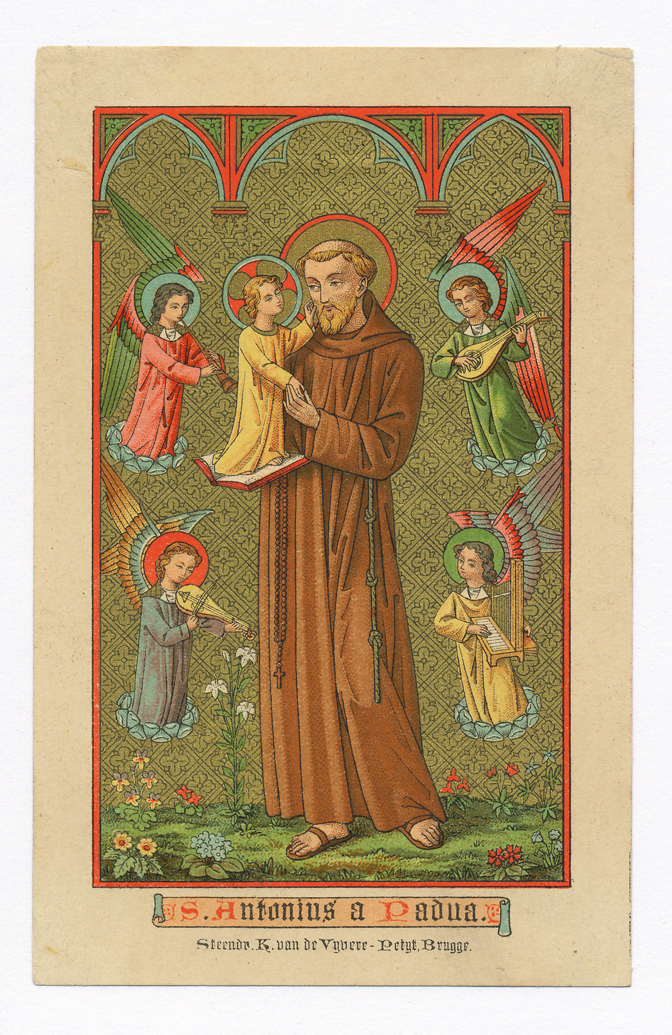
On June 13, Catholics honor the memory of the Franciscan priest St. Anthony of Padua. Although he is popularly invoked today by those who have trouble finding lost objects, he was known in his own day as the “Hammer of Heretics” due to the powerful witness of his life and preaching.

The saint known to the Church as Anthony of Padua was not born in the Italian city of Padua, nor was he originally named Anthony. He was born as Ferdinand in Lisbon, Portugal during 1195, the son of an army officer named Martin and a virtuous woman named Mary. They had Ferdinand educated by a group of priests, and the young man made his own decision to enter religious life at age 15. 

Ferdinand initially lived in a monastery of the Augustinian order outside of Lisbon. But he disliked the distraction of constant visits from his friends, and moved to a more remote house of the same order. There, he concentrated on reading the Bible and the Church Fathers, while living a life of asceticism and heartfelt devotion to God. 

Eight years later, in 1220, Ferdinand learned the news about five Franciscan friars who had recently died for their faith in Morocco. When their bodies were brought to Portugal for veneration, Ferdinand developed a passionate desire to imitate their commitment to the Gospel. When a group of Franciscans visited his monastery, Ferdinand told them he wanted to adopt their poor and humble way of life.

Some of the Augustinian monks criticized and mocked Ferdinand’s interest in the Franciscans, which had been established only recently, in 1209. But prayer confirmed his desire to follow the example of St. Francis, who was still living at the time. 

He eventually obtained permission to leave the Augustinians and join a small Franciscan monastery in 1221. At that time he took the name Anthony, after the fourth-century desert monk St. Anthony of Egypt. 

Anthony wanted to imitate the Franciscan martyrs who had died trying to convert the Muslims of Morocco. He traveled on a ship to Africa for this purpose, but became seriously ill and could not carry out his intention. The ship that was supposed to take him to Spain for treatment was blown off course, and ended up in Italy. 

Through this series of mishaps, Anthony ended up near Assisi, where St. Francis was holding a major meeting for the members of his order. Despite his poor health, Anthony resolved to stay in Italy in order to be closer to St. Francis himself. He deliberately concealed his deep knowledge of theology and Scripture, and offered to serve in the kitchen among the brothers. 

At the time, no one realized that the future “Hammer of Heretics” was anything other than a kitchen assistant and obedient Franciscan priest. Around 1224, however, Anthony was forced to deliver an improvised speech before an assembly of Dominicans and Franciscans, none of whom had prepared any remarks. 

His eloquence stunned the crowd, and St. Francis himself soon learned what kind of man the dishwashing priest really was. In 1224 he gave Anthony permission to teach theology in the Franciscan order –  “provided, however, that as the Rule prescribes, the spirit of prayer and devotion may not be extinguished.” 

Anthony taught theology in several French and Italian cities, while strictly following his Franciscan vows and preaching regularly to the people. Later, he dedicated himself entirely to the work of preaching as a missionary in France, Italy and Spain, teaching an authentic love for God to many people – whether peasants or princes – who had fallen away from Catholic faith and morality.

Known for his bold preaching and austere lifestyle, Anthony also had a reputation as a worker of miracles, which often came about in the course of his disputes with heretics. 

His biographers mention a horse, which refused to eat for three days, and accepted food only after it had placed itself in adoration before the Eucharist that Anthony brought in his hands. Another miracle involved a poisoned meal, which Anthony ate without any harm after making the sign of the Cross over it. And a final often recounted miracle of St. Anthony’s involved a group of fish, who rose out of the sea to hear his preaching when heretical residents of a city refused to listen.

After Lent in 1231, Anthony’s health was in decline. Following the example of his patron – the earlier St. Anthony, who had lived as a hermit – he retreated to a remote location, taking two companions to help him. When his worsening health forced him to be carried back to the Franciscan monastery in Padua, crowds of people converged on the group in hopes of paying their homage to the holy priest.

The commotion surrounding his transport forced his attendants to stop short of their destination. After receiving the last rites, Anthony prayed the Church’s seven traditional penitential psalms, sung a hymn to the Virgin Mary, and died on June 13 at the age of 36. 

St. Anthony’s well-established holiness, combined with the many miracles he had worked during his lifetime, moved Pope Gregory IX – who knew the saint personally – to canonize him one year after his death.

“St. Anthony, residing now in heaven, is honored on earth by many miracles daily seen at his tomb, of which we are certified by authentic writings,” proclaimed the 13th-century Pope.

A poem celebrating devotion to St. Anthony

a barefoot contessa walking down Mulberry Street

wearing the robe of Saint Anthony 

the brown of the robe, two shades darker then her brown sicilian skin

a white thick rope around her waist, knotted at the end, 

a rosary draped around her hands, the cross hanging at the end
she was one of many, in this sea of brown, 

lips moving with silent prayers

and how they formed me

she had green eyes, what visions were forming?

and how they formed me

in silence, not a word spoken

her stories were ancient, stone slabs and sand

celebrating with two lilies in a vase, a reminder

and how they formed me

she was unlike her sisters, they had voices, loud voices

my mother, my aunt, my other aunt

they had modern stories, cigarettes and cat-eye glasses

dresses made to order, nightclubs and frank sinatra

husbands that stayed out all night

and how they formed me

these are my memories along with my dreams

celebrating with two lilies 

lots of laughter 

and how they formed me

copyright:dipasqua

O.C.S.O. Order of Cistercians of the Strict Observance

The Order of Cistercians of the Strict Observance (also known as “Trappists”) is a Roman Catholic contemplative religious order, consisting of monasteries of monks and monasteries of nuns. We are part of the larger Cistercian family which traces its origin to 1098. As Cistercians we follow the Rule of St Benedict, and so are part of the Benedictine family as well. Our lives are dedicated to seeking union with God, through Jesus Christ, in a community of sisters or brothers.

Early Monasticism

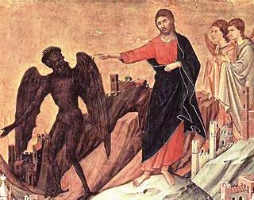
Jesus in the desert

Jesus in the desert

The concept of monasticism is ancient and is found in many religions and philosophies. In the centuries immediately before Christ, Hinduism, Buddhism, and Judaism all developed alternative styles of life which involved renouncing the world in some ways, in order to seek liberation or purification or union with God, sometimes as a solitary ascetic, sometimes in community.

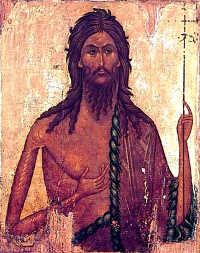
Early Christian monasticism drew its inspiration from the examples of the Prophet Elijah and John the Baptist, who both lived alone in the desert, and above all from the story of Jesus’ time in solitary struggle with Satan in the desert, before his public ministry. Beginning with the Exodus and all through the Old Testament times, the desert was regarded as a place of spiritual renewal and a return to God.  Although there were ascetics, especially women ascetics, among the first generations of Christians, they generally lived in the towns and cities.

St John the Baptist

St John the Baptist

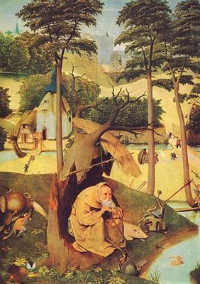
St. Anthony the Great (ca. 251-356) was the first well-known Christian to withdraw to the desert. According to the Life of Anthony written by St Athanasius in the mid fourth century, Anthony retreated to the wastelands of Egypt to lead an intensely ascetic life with the sole purpose of pursuing God in solitary prayer.  He remained alone until his holiness and evident wholesomeness attracted a growing circle of followers. So deep was his influence that he is considered the father, not only of the movement of Desert Fathers and Mothers of fourth – fifth century Egypt, but also the father of the entire Christian monastic family.

St Anthony

St Anthony
While the earliest Desert Fathers lived as hermits, they were rarely completely isolated, but often lived in proximity to one another, and soon loose-knit communities began to form in such places as the Desert of Nitria and the Desert of Skete.  The progression from hermit (“anchorite”) to monk (“cenobite”) living in community under one abbot, came quickly, when in 346 St Pachomius established in Egypt the first cenobitic Christian monastery.

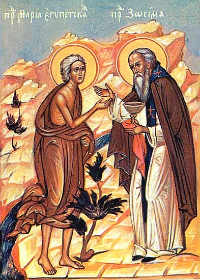
Mary of Egypt

Mary of Egypt

The Eastern monastic teachings were brought to the western church by Saint John Cassian (ca. 360 – ca. 435).  As a young adult, he and his friend Germanus entered a monastery in Palestine but then journeyed to Egypt to visit the eremitic groups in Nitria. Many years later, Cassian founded a monastery of monks and probably also one of nuns near Marseilles, and partly to counter what he felt were the abuses he found in Western monasticism, he wrote two long works, the Institutes and Conferences. In these books he not only transmitted his Egyptian experience (they are perhaps the oldest written record of the thought of the Desert Fathers), but he also gave Christian monasticism a profound evangelical and theological basis.

Cassian’s influence was enormous and lasted for centuries – even the smallest monastic library in Europe’s Dark Ages would have its copy of Cassian. Furthermore, St. Benedict incorporated Cassian’s thought into his monastic Rule, and recommended that his monks read Cassian’s works. Since the Rule of St Benedict is still used by Benedictine, Cistercian, and Trappist monastics, the thought of John Cassian, and the desert tradition behind him, still guides the spiritual lives of thousands of men and women in the Catholic Church.

The fear of the Lord is our cross. Just as someone who is crucified no longer has the power of moving or turning his limbs in any direction as he pleases, so we also ought to fasten our wishes and desires, not in accordance with what is pleasant and delightful to us now, but in accordance with the law of the Lord, where it hems us in. Being fastened to the wood of the cross means: no longer considering things present; not thinking about one’s preferences; not being disturbed by anxiety and care for the future; not being aroused by any desire to possess, nor inflamed by any pride or strife or rivalry; not grieving at present injuries, and not calling past injuries to mind; and while still breathing and in the present body, considering oneself dead to all earthly things, and sending the thoughts of one’s heart on ahead to that place where, one does not doubt, one will soon arrive… 

John Cassian, Institutes, Book IV ch.35
https://ocso.org

Forgotten Souls in Purgatory

One person on earth for one forgotten soul in purgatory!

Lets remember!

O merciful God, take pity on those souls who have no particular friends and intercessors to recommend them to Thee, who, either through the negligence of those that are alive, or through length of time are forgotten by their friends and by all. 

Spare them, O Lord, and remember Thine own mercy, when others forget to appeal to it. Let not the souls which Thou has created be parted from Thee, their Creator. They are Thy work, and though they  have sinned, they have been redeemed by Thee. 

Vouchsafe, therefore, to look upon them  and to deliver them from the intolerable pain of absence from Thee; the light and love of all Thy creatures. Oh! place them in the number of Thy blessed Saints and citizens through Jesus Christ their Savior. Amen.

Saint Rita of Cascia’s Story

A8575 C

Like Elizabeth Ann Seton, Rita of Cascia was a wife, mother, widow, and member of a religious community. Her holiness was reflected in each phase of her life.

Born at Roccaporena in central Italy, Rita wanted to become a nun but was pressured at a young age into marrying a harsh and cruel man. During her 18-year marriage, she bore and raised two sons. After her husband was killed in a brawl and her sons had died, Rita tried to join the Augustinian nuns in Cascia. Unsuccessful at first because she was a widow, Rita eventually succeeded.

Over the years, her austerity, prayerfulness, and charity became legendary. When she developed wounds on her forehead, people quickly associated them with the wounds from Christ’s crown of thorns. She meditated frequently on Christ’s passion. Her care for the sick nuns was especially loving. She also counseled lay people who came to her monastery.

Beatified in 1626, Rita was not canonized until 1900. She has acquired the reputation, together with Saint Jude, as a saint of impossible cases. Many people visit her tomb each year.

Like Elizabeth Ann Seton, Rita of Cascia was a wife, mother, widow, and member of a religious community. Her holiness was reflected in each phase of her life.

Born at Roccaporena in central Italy, Rita wanted to become a nun but was pressured at a young age into marrying a harsh and cruel man. During her 18-year marriage, she bore and raised two sons. After her husband was killed in a brawl and her sons had died, Rita tried to join the Augustinian nuns in Cascia. Unsuccessful at first because she was a widow, Rita eventually succeeded.

Over the years, her austerity, prayerfulness, and charity became legendary. When she developed wounds on her forehead, people quickly associated them with the wounds from Christ’s crown of thorns. She meditated frequently on Christ’s passion. Her care for the sick nuns was especially loving. She also counseled lay people who came to her monastery.

Beatified in 1626, Rita was not canonized until 1900. She has acquired the reputation, together with Saint Jude, as a saint of impossible cases. Many people visit her tomb each year.

Reflection

Although we can easily imagine an ideal world in which to live out our baptismal vocation, such a world does not exist. An “If only ….” approach to holiness never quite gets underway, never produces the fruit that God has a right to expect.

Rita became holy because she made choices that reflected her baptism and her growth as a disciple of Jesus. Her overarching, lifelong choice was to cooperate generously with God’s grace, but many small choices were needed to make that happen. Few of those choices were made in ideal circumstances—not even when Rita became an Augustinian nun.

Learn more about St. Rita on Novena app. Available at app store.

Saint Joseph’s Day

In the West, the oldest reference to the cult of Saint Joseph (Ioseph sponsus Mariae) connected with 19 March appears around the year 800 in the north of France. Thereafter, reference to Joseph, the spouse of Mary, becomes more and more frequent from the 9th to the 14th centuries. In the 12th century, the crusaders built a church in his honor at Nazareth. But it was in the 15th century that the cult of Saint Joseph spread due to the influence of Saint Bernadine of Siena, and especially of Jean Gerson (+ 1420), Chancellor of Notre Dame in Paris, who promoted the cause that a feast to Saint Joseph be officially established. There were already some celebrations in Milan in Augustinian circles, and in many places in Germany. It was in 1480, with Pope Sixtus IV’s approval that the feast began to be celebrated on 19 March. It then became obligatory with Pope Gregory XV in 1621. In 1870, Pope Pius IX declared Saint Joseph the Patron of the Universal Church, and Pope Saint John XXIII inserted his name into the Roman Canon of Holy Mass in 1962. More recently, Pope Francis approved seven new invocations in the Litany to Saint Joseph: Guardian of the Redeemer, Servant of Christ, Minister of Salvation, Support in difficulties, Patron of exiles, Patron of the afflicted, and Patron of the poor.

Prayer

Hail, Guardian of the Redeemer,
Spouse of the Blessed Virgin Mary.
To you God entrusted his only Son;
in you Mary placed her trust
with you Christ became man.
Blessed Joseph, to us too,
show yourself a father
and guide us in the path of life.
Obtain for us grace, mercy and courage,
and defend us from every evil. Amen.

Please leave message if you would like a copy of our novena app for iPhone or iPad. History and prayers of 36 saints.

Novena, The Power of Prayer

Our book is now available as an ebook on amazon https://www.amazon.com/dp/B0D4WQLFRXyou can buy or read free if you subscribe to kindle reading.

This book celebrates the meaningful recitation of novenas, a traditional nine day prayer to a particular saint, angel or Madonna for help in solving a problem.

It was our objective to create a book that would be assessable to all, Catholic and non-Catholics alike.

You will learn about The Saints, Angels and The Madonna. The history of The Saints who lived with us on earth. The many visions of The Madonna as she appeared on earth. And more…

Barbara and Sandy

Saint Clare of Assisi

Alinari / Art Resource

Saint Clare of Assisi’s Story

One of the more sugary movies made about Francis of Assisi pictures Clare as a golden-haired beauty floating through sun-drenched fields, a sort of one-woman counterpart to the new Franciscan Order.

The beginning of her religious life was indeed movie material. Having refused to marry at 15, Clare was moved by the dynamic preaching of Francis. He became her lifelong friend and spiritual guide.

At 18, Clare escaped from her father’s home one night, was met on the road by friars carrying torches, and in the poor little chapel called the Portiuncula received a rough woolen habit, exchanged her jeweled belt for a common rope with knots in it, and sacrificed her long tresses to Francis’ scissors. He placed her in a Benedictine convent, which her father and uncles immediately stormed in rage. Clare clung to the altar of the church, threw aside her veil to show her cropped hair, and remained adamant.

Sixteen days later her sister Agnes joined her. Others came. They lived a simple life of great poverty, austerity, and complete seclusion from the world, according to a Rule which Francis gave them as a Second Order. At age 21, Francis obliged Clare under obedience to accept the office of abbess, one she exercised until her death.


The Poor Ladies went barefoot, slept on the ground, ate no meat, and observed almost complete silence. Later Clare, like Francis, persuaded her sisters to moderate this rigor: “Our bodies are not made of brass.” The greatest emphasis, of course, was on gospel poverty. They possessed no property, even in common, subsisting on daily contributions. When even the pope tried to persuade Clare to mitigate this practice, she showed her characteristic firmness: “I need to be absolved from my sins, but I do not wish to be absolved from the obligation of following Jesus Christ.”

Contemporary accounts glow with admiration of Clare’s life in the convent of San Damiano in Assisi. She served the sick and washed the feet of the begging nuns. She came from prayer, it was said, with her face so shining it dazzled those about her. She suffered serious illness for the last 27 years of her life. Her influence was such that popes, cardinals, and bishops often came to consult her—Clare herself never left the walls of San Damiano.

Francis always remained her great friend and inspiration. Clare was always obedient to his will and to the great ideal of gospel life which he was making real.

A well-known story concerns her prayer and trust. Clare had the Blessed Sacrament placed on the walls of the convent when it faced attack by invading Saracens. “Does it please you, O God, to deliver into the hands of these beasts the defenseless children I have nourished with your love? I beseech you, dear Lord, protect these whom I am now unable to protect.” To her sisters she said, “Don’t be afraid. Trust in Jesus.” The Saracens fled.


Reflection

The 41 years of Clare’s religious life are scenarios of sanctity: an indomitable resolve to lead the simple, literal gospel life as Francis taught her; courageous resistance to the ever-present pressure to dilute the ideal; a passion for poverty and humility; an ardent life of prayer; and a generous concern for her sisters.


Saint Clare is the Patron Saint of:

Eye disorders
Television


Click here for our novena to Saint Clare of Assisi!


Saint Clare of Assisi

Subscribe

Email*Franciscan Media is committed to protecting and respecting your privacy, and we’ll only use your personal information to administer your account and to provide the products and services you requested from us. From time to time, we would like to contact you about our products and services, as well as other content that may be of interest to you. If you consent to us contacting you for this purpose, please tick below to say how you would like us to contact you:

More From Franciscan Media

Sacred Heart of Jesus

FullSizeCard_1 2
“Behold the heart which has so much loved men that it has spared nothing, even exhausting and consuming itself in testimony of its love….”

Patron of: family peace, anything
Feast Day: June 8

The iconography of the Sacred Heart speaks to us on such a basic level that its image can be found everywhere in everyday life – from tattoos on bikers to stained glass windows in cathedrals. Traditionally, many Catholic homes display the Sacred Heart of Jesus to insure domestic peace and a loving atmosphere. This ancient concept depicting Christ’s heart in flames was first meditated on in privacy by the 4th century hermits in the desert and taken up by mystics in religious communities in the 11th and 12th centuries; it did not become a popular devotion until the 17th century.

On December 27, 1673, a young Visitation nun in Burgundy, France, named Margaret Mary Alacoque was praying in the convent chapel when she heard a strong inner voice identifying itself as Jesus Christ. In later visits the voice requested that she begin a devotion to an image of Christ’s heart in flames, bleeding and encircled by thorns. The flames were for His ardent love for mankind, the thorns were to remind us of His sacrifice on the cross and the blood was because He was God made man. There is no indication that Margaret Mary Alacoque had ever seen this image before. Indeed, she was puzzled by it and greatly mistrusted herself as being qualified to relay any spiritual messages no matter who they purportedly came from. When she reported her communications to her Mother Superior she was scoffed at as delusional and forbidden to perform any of the devotions she was instructed to carry out. It was only after her Confessor, Claude de La Columbiere heard her describe her visions that she was taken seriously.

Unlike the Mother Superior or Margaret Mary, he was well aware of the private devotions of Bernard of Clairvaux and Mechtilde of Helfta, religious mystics who lived centuries before, inspired by same image. La Columbiere did much to publicize devotion to the Sacred Heart based on the messages Christ gave to Margaret Mary. According to her, Christ was greatly troubled by the indifference and sacrilege He was being treated with by the average person.

As a reward for contemplating this image He promised: 1. I will give them all the graces necessary for their state of life. 2. I will give peace in their families. 3. I will console them in all their troubles. 4. I will be their refuge in life and especially in death. 5. I will abundantly bless all their undertakings. 6. Sinners shall find in my Heart the source and infinite ocean of mercy. 7. Tepid souls shall become fervent. 8. Fervent souls shall rise speedily to great perfection. 9. I will bless those places wherein the image of My Sacred Heart shall be exposed and venerated. 10. I will give to priests the power to touch the most hardened hearts. 11. Persons who propagate this devotion shall have their names eternally written in my Heart. 12. In the excess of the mercy of my Heart, I promise you that my all powerful love will grant to all those who will receive Communion on the First Fridays, for nine consecutive months, the grace of final repentance: they will not die in my displeasure, nor without receiving the sacraments; and my Heart will be their secure refuge in that last hour.

Since there is no way to physically depict the soul, it is thought that the image of the Sacred Heart comes closest. The heart is the seat of love in the body and the wounded heart represents Christ’s sacrifice at the crucifixion as well as His ongoing pain at the state of mankind.

Novena:

O Lord, Jesus Christ, to your most Sacred Heart I confide this intention. Only look upon me, then do what your love inspires. Let your Sacred Heart decide. I count on you. I trust in you. I throw myself on your mercy. Lord Jesus, you will not fail me.
(Mention your request.)
Sacred Heart of Jesus I trust in you. Sacred Heart of Jesus I believe in your love for me. Sacred Heart of Jesus, your kingdom come. Sacred Heart of Jesus, I have asked you for many favors, but I earnestly implore this one. Take it, place it in your open heart. When the Eternal Father looks upon it, he will see it covered with your Precious Blood. It will no longer be my prayer, but yours, Jesus. Sacred Heart of Jesus, I place all my trust in you. Let me not be disappointed. Amen.

St. Vincent Ferrer

Religious_Cards-00100web

 “Christ, master of humility, manifests his truth only to the humble and hides himself from the proud.”
Patron of: Builders, construction workers, brick makers, epilepsy, fields, headaches, inn keepers, lightning strikes, penance, plumbers, preachers, tile makers, reconciliation, roofers, vineyards
Feast Day: April 5
Symbols: Dominican habit, flame overhead, trumpets, banner

Born in Valencia, Spain to an English father and Spanish mother, Vincent Ferrer’s time on earth was spent during an extremely tumultuous period in history. The Black Death had ravaged Europe, decimating the population and the church was divided in a Great Schism, with three men claiming the papacy at one time. Because of his work in healing this rupture and his untiring labors in revitalizing the faithful, as well as his charismatic ability to convert thousands, he is the patron of builders and those in all of the construction trades.

With encouragement from his parents, Vincent realized his dream of becoming a Dominican friar at an early age. His intellectual gifts were immediately apparent and he soon became an expert on theology and scripture. His advice was much sought after by bishops and cardinals, and eventually, Vincent was summoned to Avignon to advise the schismatic pope Benedict XIII. In 1398 he suffered from a near fatal fever where he had a vision of Christ, Saint Dominic de Guzman (founder of the Dominicans), and Saint Francis of Assisi advising him to unite the world by evangelizing throughout it. Always a popular and skillful preacher, Vincent’s talents were said to have become supernatural after this vision. He left his political duties and took it upon himself to travel throughout Western Europe preaching about the Final Judgment, earning him the title “Angel of the Apocalypse.” Though he could only converse in his native Catalan, he was clearly understood by the tens of thousands who thronged to hear him preach. The Moslem-controlled city of Granada invited him to speak there resulting in 8,000 conversions. At a time when many were left reeling and faithless by the plague which had killed off one fourth of the population, Vincent Ferrer’s message of hope in the face of despair was wildly popular in cities and towns in England, France, Italy the Netherlands, Switzerland, Germany and Spain. Throngs of religious pilgrims drawn from every level of society devoted themselves to a life of penance, following him wherever he went. Along with his spectacular success as an evangelist, he also had the ability to heal the sick and hours were put aside every day for his prayers and cures. Because many of his miracles took place where thousands could gather in fields, one of his patronages is the protection of fields. Because lightning was such a threat to crops, he is also invoked against lightning strikes.

Vincent Ferrer is credited with helping to heal the great schism in the church when he realized that his friend and benefactor Benedict XIII should relinquish his claims on the papacy when he refused to submit himself to a vote among cardinals. Vincent withdrew his support and recognition of him and Benedict XIII was deposed in favor of Gregory XII in Rome.

Prayer

O Saint Vincent Ferrer, our guardian, because God, our eternal Father, has blessed you with and inexhaustible fountain of grace and blessing, we beg you to hear our prayers and to assist us with your powerful intercession which is even more effective now that you are in heaven than it was when you were on earth. Full of confidence in your mercy and compassion, we kneel in prayer before you, and commend to your powerful intercession all our needs, those of our families, our friends, relatives, and especially (your request here).

Glorious Saint Vincent Ferrer, let not our hope and confidence in your protection be deceived. Intercede for us before the throne of God. Watch over our eternal welfare. If our trials and tribulations in this world multiply, may they serve to give us spiritual joy and happiness. If God will only grant us the grace of ever increasing patience to the end that we may save our souls. Amen.

Our Lady of Fatima

Pray to Our Lady of Fatima for Forgiveness and Reparations

The Feast Day of Our Lady of Fatima is the anniversary
of the first apparition, May 13.  

The twentieth century has been the bloodiest and most violent in the history of the world. During Mary’s visits to Fatima, Portugal, in 1917, she foretold not only the terrors of the Russian Revolution and World War II, but also made a third prediction, never released, as it was judged far too terrifying.  In her visits she stressed the recitation of the rosary and taking fifteen minutes to meditate on her Immaculate Heart each week. Expressing the feeling that humanity had drifted away from God, she wanted the world to offer up reparations for the disastrous state of the earth. Our Lady of Fatima is an angry and pained mother, demanding that the world come to its senses and honor its Creator.

Her rules are strict. This novena is said to honor Mary and to atone for the blasphemies and ingratitude that are heaped upon God and his creations. Coming in the midst of the first World War, her warnings were pointedly political. She predicted the suffering imposed by the Communist states as well as the incredible carnage of the next world war. She strongly commanded all of humanity to pray the rosary, insisting this is the only road to peace. On May 13, 1917, three young shepherd children, aged ten, nine, and seven – Lucia, Antonio, and Maria dos Santos – were out tending sheep at a place called Cova da Iria in Fatima. Mary appeared to them in a dazzling light, floating above the trees. She taught them how to pray the rosary and told them she would return on the thirteenth day of each month for the next five months. Though they were initially mocked for their story, a handful of people accompanied them when they returned to the location of Mary’s visit on the thirteenth of June. There they witnessed a burst of lightning and heard the buzzing of bees. The three children stood transfixed, almost fainting with fright. By Mary’s final visit, on October 13, there were several thousand people waiting for her to appear.

It had been pouring rain for two days, and a local priest, who’d believed the children were lying, tried to disperse the crowd. In the east a bolt of lightning rang out and the rain stopped instantly. As the clouds parted, the people looking at the sun fell to their knees. It had begun to tremble and dance, and the entire crowd was engulfed by the spectrum of colors streaming from it. Some saw the face of the Virgin in the sky; others saw a huge whirling wheel of fire spinning toward the earth. The heat emanating from the rays of lights was so intense that by the end of the vision, ten minutes later, those soaked by the rain were completely dry. As far as thirty miles away, people reported sighting strange light forms in the sky.

There were many journalists present who recorded this story, and it filled the newspapers. It was called, “the Miracle of the Sun,” and it is thought that Mary orchestrated it in order to force the world to believe the predictions she had communicated to the three children.

Novena Prayer to Our Lady of Fatima

Most holy Virgin, who came to Fatima to reveal to the three shepherd children the treasures of graces hidden in the recitation of the rosary, inspire our hearts with a sincere love of this devotion, so that by meditating on the mysteries of our redemption that are recalled in it, we may gather their fruits and obtain the conversion of sinners, the conversion of Russia, and (Mention your requests) Which we ask of you in this novena, for the greater glory of God, for your own honor, and for the good of people. Amen   Recite one Our Father, one Hail Mary, one Glory Be   Our Lady of the Rosary of Fatima, pray for us!   Recite this novena nine times in a row for nine days in a row.