Feast of Saints Michael, Gabriel, and Raphael

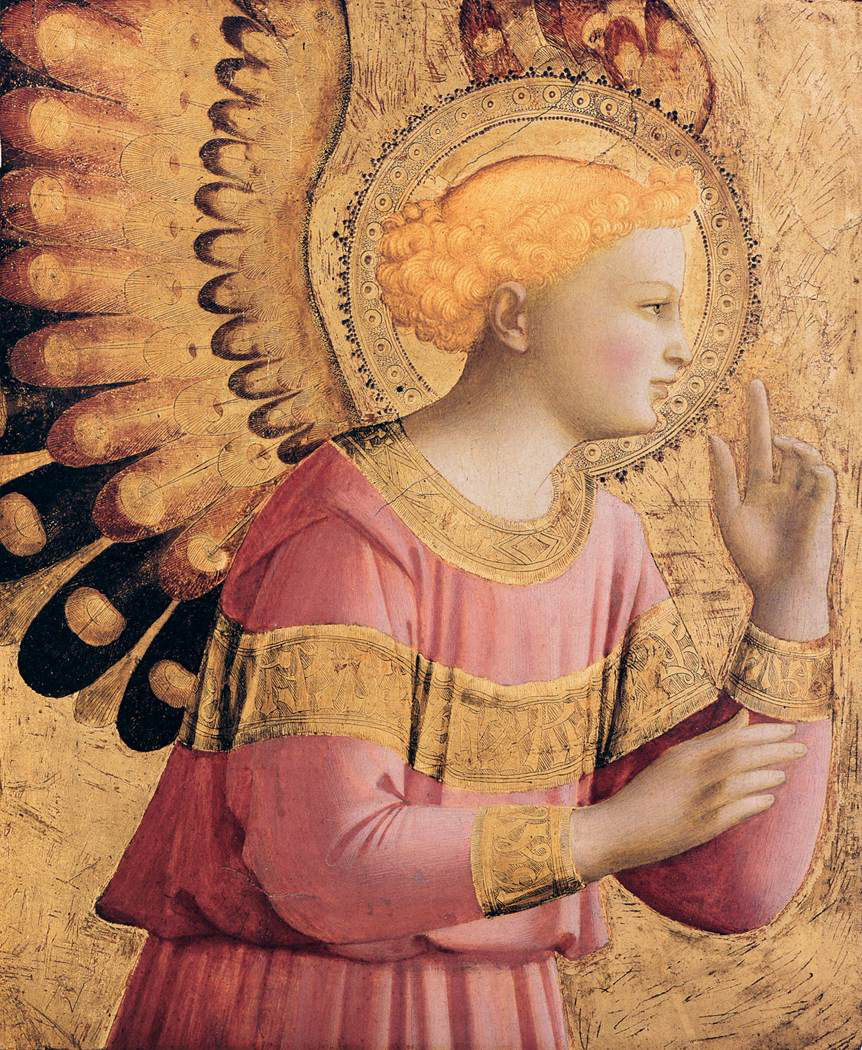
Angels—messengers from God—appear frequently in Scripture, but only Michael, Gabriel and Raphael are named.

Michael appears in Daniel’s vision as “the great prince” who defends Israel against its enemies; in the Book of Revelation, he leads God’s armies to final victory over the forces of evil. Devotion to Michael is the oldest angelic devotion, rising in the East in the fourth century. The Church in the West began to observe a feast honoring Michael and the angels in the fifth century.

Gabriel also makes an appearance in Daniel’s visions, announcing Michael’s role in God’s plan. His best-known appearance is an encounter with a young Jewish girl named Mary, who consents to bear the Messiah.

Raphael’s activity is confined to the Old Testament story of Tobit. There he appears to guide Tobit’s son Tobiah through a series of fantastic adventures which lead to a threefold happy ending: Tobiah’s marriage to Sarah, the healing of Tobit’s blindness, and the restoration of the family fortune.

The memorials of Gabriel and Raphael were added to the Roman calendar in 1921. The 1970 revision of the calendar joined their individual feasts to Michael’s.

Reflection

Each of the archangels performs a different mission in Scripture: Michael protects; Gabriel announces; Raphael guides. Earlier belief that inexplicable events were due to the actions of spiritual beings has given way to a scientific world-view and a different sense of cause and effect. Yet believers still experience God’s protection, communication, and guidance in ways which defy description. We cannot dismiss angels too lightly.

Saints Michael, Gabriel, and Raphael are the Patron Saints of:

Death
Germany
Grocers
Police Officers/First Responders
Radiologists

Saint Gabriel is the Patron Saint of:

Broadcasters/Communicators
Saint Raphael is the Patron Saint of:

The Blind
Travelers

From Franciscan Media

The Archangels in the Jesuit church in Venice

In the heart of Cannaregio in Venice, there is a beautiful 18th century church, built by the Jesuits in 1729 and dedicated to the Assumption. Inside there are many works of art (including a fantastic painting by Tiziano Vecellio), but it is also one of the few churches in the world where the six archangels are represented.


Usually the archangels are Gabriele, Michele and Raffaele, but here there are the statues another three. On either side of the high altar there are Uriel (the guardian of the gates of Heaven) and Barachiele (the archangel of divine goodness) to the four corners of the transept there are four other statues (like the previous work of Giuseppe Torretto): Michele (Prince of the heavenly hosts), Raffaele (the heavenly messenger), Gabriele (the patron of travellers) and Sealtiele (the archangel of temperance).

The other 4 archangels (missing here is Jehudiele, the praise of God) are not explicitly mentioned in the Bible but are found in the Apocalypse and in the book of Tobia. The Jesuits, the great scholars of the Holy Scriptures who were in close contact with the rabbis of the nearby Ghetto, wanted to put all the Archangels to guard and protect their Church.


Today “the other Archangels” are analysed by all those involved in the study of the Kabbalah and esoteric sciences.

Daily Word Of Godjesuit.org.sg

John 1:47-51

When Jesus saw Nathanael coming he said of him, ‘There is an Israelite in who deserves the name, incapable of deceit.’ ‘How do you know me?’ said Nathanael.   ‘Before Philip came to call you’, said Jesus, ‘I saw you under the fig tree.’ Nathanael answered, ‘Rabbi, you are the Son of God, you are the King of Israel.’

Jesus replied, ‘You believe that just because I said: I saw you under the fig tree. You will see greater things than that.’ And then he added, ‘I tell you most solemnly, you will see heaven laid open and, above the Son of Man, the angels of God ascending and descending.’

Today’s Pointers on God’s Word

As you read the passage what words, phases or meanings caught your attention?

  • Archangel Michael, Gabriel and Raphael were created by God to “protect, communicate and heal” us.  These are God’s ways of loving and caring for us at all times.
  • We should be grateful to God at all times for His constant and caring ways that continue to attend to our needs and desires of life.
  • As God is so caring toward us we, in turn, are called to care for the needs of others especially the aged, the weak, and the marginalized of our family, neighbours and the world.

Saint Michael: Luca Giordano, The Fall of the Rebel Angels ( c. 1666), Kunsthistorisches Museum, Vienna

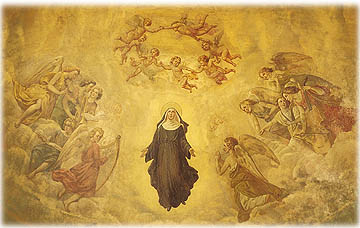
The Assumption of Mary

MARY ASSUMED INTO HEAVEN: INTERCEDE FOR US!

“My soul proclaims the greatness of the Lord; my spirit rejoices in God my Savior for he has looked with favor on his lowly servant. From this day all generations will call me blessed: the Almighty has done great things for me and holy is his Name.”  Luke 1:46–49

Assumption of the Virgin Mary, fresco painting in San Petronio Basilica in Bologna, Italy. | Credit: Zvonimir Atletic/Shutterstock

Today we celebrate one of seventeen different memorials, feasts and solemnities in honor of the Blessed Virgin Mary that are found on the Roman Liturgical Calendar. Today’s celebration is one of the four great Solemnities by which our Blessed Mother is honored. Obviously, no other person other than our Lord is honored and celebrated with as much solemnity as the Mother of God.

The Solemnity of the Assumption honors the fact that when the Blessed Virgin Mary completed her life on earth, she was taken body and soul into Heaven to be with her resurrected Son so as to adore the Most Holy Trinity forever. It’s an amazing fact to consider that she retains her body and soul, united as one in Heaven, in anticipation of that glorious day when the new Heavens and Earth will be created and when all the faithful will rise so as to live in a new bodily form forever with God.

Though this dogma of our faith had been held and believed by the faithful from the earliest times of our Church, especially since it was witnessed by those closest to our Blessed Mother at the time of her glorious Assumption, it wasn’t until November 1, 1950, that Pope Pius XII solemnly proclaimed it to be so, raising this teaching of our faith to the level of a dogma, meaning, it must be held and believed by all. In part, the Holy Father declared, “…we pronounce, declare, and define it to be a divinely revealed dogma: that the Immaculate Mother of God, the ever Virgin Mary, having completed the course of her earthly life, was assumed body and soul into heavenly glory.”

The Gospel passage quoted above comes from the beginning of Mary’s song of praise, her Magnificat, by which she not only gives the greatest glory to God but also reveals who she is. She is the one whom “all generations” will call “blessed.” She is the one for whom “the Almighty has done great things.” She is the one who will eternally proclaim “the greatness of the Lord” and whose spirit will forever rejoice in God her Savior. And she is that lowliest of servants whom God has raised up to the greatest glory.

Reflect, today, with the whole Church, upon the Most Glorious Ever-Virgin Mary who was conceived without sin, remained sinless throughout her life, and was taken body and soul into Heaven where she now adores the Most Holy Trinity and intercedes for you and for the whole Church. This is a Solemnity of great rejoicing! Share in this joy with the whole Church and with all the saints in Heaven!

Most glorious and Ever-Virgin Mary, I rejoice today with you and with the whole Church for the most glorious things that God has done for you. You are beauty beyond beauty, Immaculate in every way, and worthy of our deepest love. As you now share body and soul in the glories of Heaven, please pray for me and for all your dear children on earth. Cover us with your mantle of love and pour forth the mercy of God upon us always. Mother Mary, assumed into Heaven, pray for us who have recourse to thee. Jesus, I trust in You.

Prayer to Mary, Assumed into Heaven

O Immaculate Mary, Assumed into heaven,
you who are most blessed in the vision of God:
of God the Father who exalted you among all creatures,
of God the Son who willed that you bear Him as your Son and that you should be His Mother,
of God the Holy Spirit who accomplished the human conception of the Saviour in you.
O Mary, most pure
O Mary, most sweet and beautiful
O Mary, strong and thoughtful woman
O Mary, poor and sorrowful
O Mary, virgin and mother
woman very human like Eve, more than Eve.
You are near to God by your grace and by your privileges
in your mysteries
in your mission, in your glory.
O Mary, assumed into the glory of Christ
in the complete and transfigured perfection of our human nature.
O Mary, gate of heaven
mirror of divine light
ark of the Covenant between God and mankind,
let our souls fly after you
let them fly long your radiant path,
transported by a hope that the world does not contain eternal beatitude.
Comfort us from heaven, O merciful Mother,
and guide us along your ways of purity and hope
till the day of that blessed meeting with you
and with your divine Son
our Saviour, Jesus. Amen!

(Saint Paul VI)

Solemnity of the Sacred Heart of Jesus

The call which comes from this important feast day is first of all a call to Eucharistic adoration, because in the Sacred Host the Lord Jesus is truly present and He offers each of us His Heart, His Merciful Love. To spend time in the Presence of the Eucharistic Lord, to adore Him, is the best expression of devotion to the Sacred Heart of Jesus which, as we know, spread all over the world thanks to Jesus’ revelations to Saint Margaret Mary Alacoque in the 17th century: “Behold the Heart which so loved mankind”!

As a prolongation and accomplishment of this message, the Lord appeared to another Sister in the 20th century revealing the abyss of His unfathomable mercy; she was Saint Faustina Kowalska who wrote in her Diary, now world famous, these words of Jesus: “I have opened my Heart as a living source of Mercy, from it all souls draw life, all approach with deep confidence this sea of Mercy. Sinners will obtain justification and the just will be strengthened in goodness. I will fill the souls of those who put their trust in My Mercy with My divine peace at the hour of their death. My daughter, continue to spread devotion to My Mercy, in doing so you will refresh My Heart which burns with the fire of compassion for sinners. Tell my priests that hardened sinners will be softened by their words if they speak of my boundless Mercy and of the compassion which My Heart feels for them. I will give priests who proclaim and exalt My Mercy wondrous power, unction to their words and I will move all the hearts to which they speak” (Book 5, 21 January 1938).

The deepest longing of Christ’s Heart is that we discover how much he loves us, the extent of his tender love for creatures who, cooled by their selfishness, look only inwards at themselves, as if they were afraid to let themselves be loved unconditionally by their Creator, who asks nothing and gives all!

Close to the Heart of the Son is the Heart of the Mother whom the Church celebrates the day after the solemnity of the Sacred Heart of Jesus. Let it again be the Holy Father who illuminates us with regard to this mystery: “The heart that resembles that of Christ more than any other is without a doubt the Heart of Mary, his Immaculate Mother, and for this very reason the liturgy holds them up together for our veneration. Responding to the Virgin’s invitation at Fatima, let us entrust the whole world to her Immaculate Heart, which we contemplated yesterday in a special way, so that it may experience the merciful love of God and know true peace” (Benedict XVI, Angelus 5 June 2005). 

Photograph by Lisa Silvestri

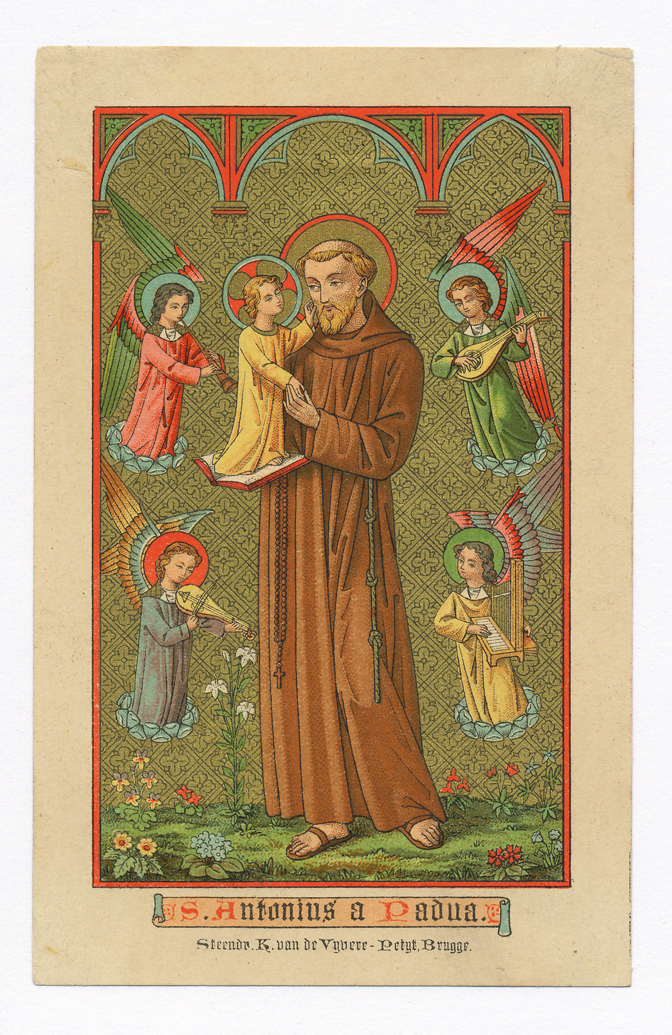
Feast of St. Anthony of Padua

On June 13, Catholics honor the memory of the Franciscan priest St. Anthony of Padua. Although he is popularly invoked today by those who have trouble finding lost objects, he was known in his own day as the “Hammer of Heretics” due to the powerful witness of his life and preaching.

The saint known to the Church as Anthony of Padua was not born in the Italian city of Padua, nor was he originally named Anthony. He was born as Ferdinand in Lisbon, Portugal during 1195, the son of an army officer named Martin and a virtuous woman named Mary. They had Ferdinand educated by a group of priests, and the young man made his own decision to enter religious life at age 15. 

Ferdinand initially lived in a monastery of the Augustinian order outside of Lisbon. But he disliked the distraction of constant visits from his friends, and moved to a more remote house of the same order. There, he concentrated on reading the Bible and the Church Fathers, while living a life of asceticism and heartfelt devotion to God. 

Eight years later, in 1220, Ferdinand learned the news about five Franciscan friars who had recently died for their faith in Morocco. When their bodies were brought to Portugal for veneration, Ferdinand developed a passionate desire to imitate their commitment to the Gospel. When a group of Franciscans visited his monastery, Ferdinand told them he wanted to adopt their poor and humble way of life.

Some of the Augustinian monks criticized and mocked Ferdinand’s interest in the Franciscans, which had been established only recently, in 1209. But prayer confirmed his desire to follow the example of St. Francis, who was still living at the time. 

He eventually obtained permission to leave the Augustinians and join a small Franciscan monastery in 1221. At that time he took the name Anthony, after the fourth-century desert monk St. Anthony of Egypt. 

Anthony wanted to imitate the Franciscan martyrs who had died trying to convert the Muslims of Morocco. He traveled on a ship to Africa for this purpose, but became seriously ill and could not carry out his intention. The ship that was supposed to take him to Spain for treatment was blown off course, and ended up in Italy. 

Through this series of mishaps, Anthony ended up near Assisi, where St. Francis was holding a major meeting for the members of his order. Despite his poor health, Anthony resolved to stay in Italy in order to be closer to St. Francis himself. He deliberately concealed his deep knowledge of theology and Scripture, and offered to serve in the kitchen among the brothers. 

At the time, no one realized that the future “Hammer of Heretics” was anything other than a kitchen assistant and obedient Franciscan priest. Around 1224, however, Anthony was forced to deliver an improvised speech before an assembly of Dominicans and Franciscans, none of whom had prepared any remarks. 

His eloquence stunned the crowd, and St. Francis himself soon learned what kind of man the dishwashing priest really was. In 1224 he gave Anthony permission to teach theology in the Franciscan order –  “provided, however, that as the Rule prescribes, the spirit of prayer and devotion may not be extinguished.” 

Anthony taught theology in several French and Italian cities, while strictly following his Franciscan vows and preaching regularly to the people. Later, he dedicated himself entirely to the work of preaching as a missionary in France, Italy and Spain, teaching an authentic love for God to many people – whether peasants or princes – who had fallen away from Catholic faith and morality.

Known for his bold preaching and austere lifestyle, Anthony also had a reputation as a worker of miracles, which often came about in the course of his disputes with heretics. 

His biographers mention a horse, which refused to eat for three days, and accepted food only after it had placed itself in adoration before the Eucharist that Anthony brought in his hands. Another miracle involved a poisoned meal, which Anthony ate without any harm after making the sign of the Cross over it. And a final often recounted miracle of St. Anthony’s involved a group of fish, who rose out of the sea to hear his preaching when heretical residents of a city refused to listen.

After Lent in 1231, Anthony’s health was in decline. Following the example of his patron – the earlier St. Anthony, who had lived as a hermit – he retreated to a remote location, taking two companions to help him. When his worsening health forced him to be carried back to the Franciscan monastery in Padua, crowds of people converged on the group in hopes of paying their homage to the holy priest.

The commotion surrounding his transport forced his attendants to stop short of their destination. After receiving the last rites, Anthony prayed the Church’s seven traditional penitential psalms, sung a hymn to the Virgin Mary, and died on June 13 at the age of 36. 

St. Anthony’s well-established holiness, combined with the many miracles he had worked during his lifetime, moved Pope Gregory IX – who knew the saint personally – to canonize him one year after his death.

“St. Anthony, residing now in heaven, is honored on earth by many miracles daily seen at his tomb, of which we are certified by authentic writings,” proclaimed the 13th-century Pope.

A poem celebrating devotion to St. Anthony

a barefoot contessa walking down Mulberry Street

wearing the robe of Saint Anthony 

the brown of the robe, two shades darker then her brown sicilian skin

a white thick rope around her waist, knotted at the end, 

a rosary draped around her hands, the cross hanging at the end
she was one of many, in this sea of brown, 

lips moving with silent prayers

and how they formed me

she had green eyes, what visions were forming?

and how they formed me

in silence, not a word spoken

her stories were ancient, stone slabs and sand

celebrating with two lilies in a vase, a reminder

and how they formed me

she was unlike her sisters, they had voices, loud voices

my mother, my aunt, my other aunt

they had modern stories, cigarettes and cat-eye glasses

dresses made to order, nightclubs and frank sinatra

husbands that stayed out all night

and how they formed me

these are my memories along with my dreams

celebrating with two lilies 

lots of laughter 

and how they formed me

copyright:dipasqua

Saint Rita of Cascia’s Story

A8575 C

Like Elizabeth Ann Seton, Rita of Cascia was a wife, mother, widow, and member of a religious community. Her holiness was reflected in each phase of her life.

Born at Roccaporena in central Italy, Rita wanted to become a nun but was pressured at a young age into marrying a harsh and cruel man. During her 18-year marriage, she bore and raised two sons. After her husband was killed in a brawl and her sons had died, Rita tried to join the Augustinian nuns in Cascia. Unsuccessful at first because she was a widow, Rita eventually succeeded.

Over the years, her austerity, prayerfulness, and charity became legendary. When she developed wounds on her forehead, people quickly associated them with the wounds from Christ’s crown of thorns. She meditated frequently on Christ’s passion. Her care for the sick nuns was especially loving. She also counseled lay people who came to her monastery.

Beatified in 1626, Rita was not canonized until 1900. She has acquired the reputation, together with Saint Jude, as a saint of impossible cases. Many people visit her tomb each year.

Like Elizabeth Ann Seton, Rita of Cascia was a wife, mother, widow, and member of a religious community. Her holiness was reflected in each phase of her life.

Born at Roccaporena in central Italy, Rita wanted to become a nun but was pressured at a young age into marrying a harsh and cruel man. During her 18-year marriage, she bore and raised two sons. After her husband was killed in a brawl and her sons had died, Rita tried to join the Augustinian nuns in Cascia. Unsuccessful at first because she was a widow, Rita eventually succeeded.

Over the years, her austerity, prayerfulness, and charity became legendary. When she developed wounds on her forehead, people quickly associated them with the wounds from Christ’s crown of thorns. She meditated frequently on Christ’s passion. Her care for the sick nuns was especially loving. She also counseled lay people who came to her monastery.

Beatified in 1626, Rita was not canonized until 1900. She has acquired the reputation, together with Saint Jude, as a saint of impossible cases. Many people visit her tomb each year.

Reflection

Although we can easily imagine an ideal world in which to live out our baptismal vocation, such a world does not exist. An “If only ….” approach to holiness never quite gets underway, never produces the fruit that God has a right to expect.

Rita became holy because she made choices that reflected her baptism and her growth as a disciple of Jesus. Her overarching, lifelong choice was to cooperate generously with God’s grace, but many small choices were needed to make that happen. Few of those choices were made in ideal circumstances—not even when Rita became an Augustinian nun.

Learn more about St. Rita on Novena app. Available at app store.

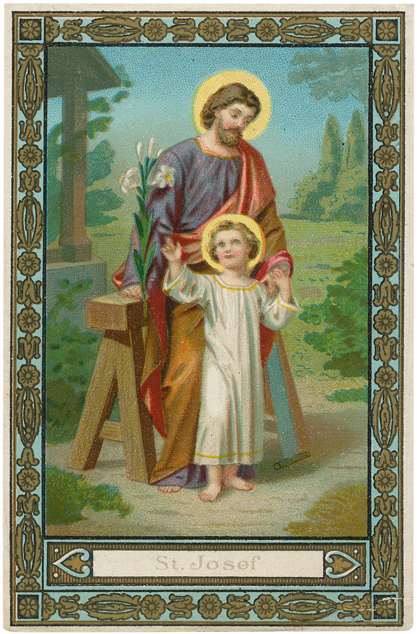
St. Joseph, First Century

St.Joseph copysmall
“I know by experience that the glorious Saint Joseph assists us generally in all necessities. I never asked him for anything which he did not obtain for me.

—Saint Teresa of Avila
Patron of: Fathers

A righteous man who never shirked his responsibilities as protector of his family, Saint Joseph offers a perfect example for fathers everywhere. He is invoked by families for all matters of support needed to sustain a household, both material and spiritual.

A descendant of the House of David, there is very little written about Joseph in the gospels. He was said to be betrothed to Mary when she became pregnant with Jesus. Instead of leaving her in scandal, he accepted the word of the angel Gabriel who told him that the child was divinely given and Joseph and Mary were chosen by God to be his earthly parents. It was Joseph who protected Mary on the journey to Bethlehem when Jesus was born. He also suffered the frustrations of a man who could not find proper shelter for his family as his wife was about to give birth. Upon returning to their native city of Nazareth, Joseph was once again visited by an angel warning him of the impending slaughter of the innocents. On faith alone, he dispensed with his business and personal effects, taking Jesus and Mary to Egypt where they stayed for seven years until Herod’s death. It fell upon Saint Joseph to support his young family in this foreign country.

The last mention of Joseph comes when Jesus is twelve years old and strayed from his family while on a pilgrimage to Jerusalem. It is thought that he died well before Jesus began his mission with Jesus and Mary at his deathbed. For this reason, more than any other saint, he is invoked for a happy death, one where a person is older and has their family at their side.

Though of noble lineage, Joseph was a carpenter and it was from him whom Jesus learned his trade. Because he worked with his hands and frequently put his family ahead of any personal ambitions, workers everywhere who live similar lives call on him as a patron. It is no mystery that the cult of Saint Joseph became more popular in modern times with the advent of the Industrial Revolution. Many saints throughout the ages have declared him to be a powerful advocate as well, since it is thought that Jesus obeyed him in his earthly life, he is inclined to listen to Joseph in his heavenly life. Teresa of Avila always buried medals with his image when she needed land for a new convent. This tradition has extended itself to realtors of all faiths who bury statues of Saint Joseph on properties they wish to sell. It is assumed that since Joseph respected his wife’s virginity that he was an older man when he married. He is depicted in art with a staff, which he led his family ( precursor to the bishop’s staff) a lily for purity, and with carpenter tools or holding the baby Jesus

Novena to Saint Joseph

O glorious Saint Joseph, faithful follower of Jesus Christ, to you we raise our hearts and hands to ask your powerful intercession in obtaining from the compassionate heart of Jesus all the helps and graces necessary for our spiritual and temporal welfare, particularly the grace of a happy death, and the spiritual grace for which we now ask.

(Mention your request.)

O guardian of the Word Incarnate, we feel animated with confidence that your prayers for us will be graciously heard at the throne of God.

(The following is to be said seven times in honor of the seven joys and seven sorrows of Saint Joseph.)

O glorious Saint Joseph, through the love you bear for Jesus Christ, and for the glory of his name, hear our prayers and grant our petitions.


The Prayer of St. Patrick

St.Patrick
I arise today
Through the strength of heaven;
Light of the sun,
Splendor of fire,
Speed of lightning,
Swiftness of the wind,
Depth of the sea,
Stability of the earth,
Firmness of the rock.

I arise today
Through God’s strength to pilot me;
God’s might to uphold me,
God’s wisdom to guide me,
God’s eye to look before me,
God’s ear to hear me,
God’s word to speak for me,
God’s hand to guard me,
God’s way to lie before me,
God’s shield to protect me,
God’s hosts to save me
Afar and anear,
Alone or in a mulitude.

Christ shield me today
Against wounding
Christ with me, Christ before me, Christ behind me,
Christ in me, Christ beneath me, Christ above me,
Christ on my right, Christ on my left,
Christ when I lie down, Christ when I sit down,
Christ in the heart of everyone who thinks of me,
Christ in the mouth of everyone who speaks of me,
Christ in the eye that sees me,
Christ in the ear that hears me.

I arise today
Through the mighty strength
Of the Lord of creation.

Read more at http://www.beliefnet.com/Prayers/Catholic/Morning/The-Prayer-Of-St-Patrick.aspx#CRjRA6usSrQVkwdG.99

Feast of Saint Ann and Saint Joachim

FullSizeCard_1
Saint Ann and Saint Joachim
First Century B.C.
Feast Day: July 26

Patron of : Grandparents

Keywords: child rearing, childless people, fathers, family crisis, infertility, mothers, pregnancy

Quote: “O blessed couple, all the world is indebted to you, for it is by your means that it can offer to its Creator the most excellent gift possible, her who is worthy to be Mother of His only Son.” – St. John Damascene

Symbols: two white doves, meeting at the golden gate, teaching the Virgin Mary

Grandparents are the foundation of a family and we invoke Saints Joachim and Ann for strength in every sort of family crisis. As parents of the Virgin Mary and the grandparents of Jesus Christ, they offer a vast array of earthly experiences relatable to every human being. Infertility, late parenthood, an unmarried pregnant daughter, a grandson who was imprisoned and executed, are all parts of their life together which they accepted with grace and dignity.

Joachim and Ann are important as moral examples rather than truthful historical figures. According to legend, Joachim and Ann were married twenty years and still had not conceived a child. Living in Nazareth they were upstanding citizens, always tithing one third of their income to the temple. After many years, their barrenness was considered a form of divine judgment and eventually their contribution to the temple was refused and they were ostracized by their community. In shame, Joachim went off to live with his shepherds. There he was visited by an angel who told him, that Ann was pregnant with a child named Mary who was to be dedicated to the Lord. He was to return home and find his wife, who would be waiting at the golden gate, the entrance to the city. Doing as he was told, his joyful reunion with Ann at the golden gate has become a famous image in art history.

Mary was raised according to the instructions of the angel, she was consecrated to the Lord at infancy and sent off to live in the temple, away from the world, at the age of three. Accepting this great sacrifice of giving up what is most cherished to God, Joachim and Ann acted out an almost impossible act of faith. Though Saint Ann was younger and lived much longer than her husband, she and Joachim are inseparable in sharing the important patronage of grandparents.

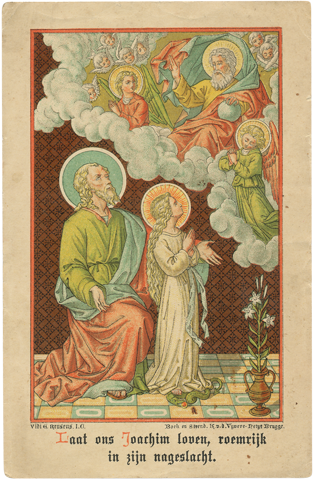
Explanation:
A rare image of Joachim as an older father, and his wife, Ann, instructing the Virgin Mary. They are divinely inspired by the wisdom of the Holy Spirit.

Novena to Saints Joachim and Ann

Saints Joachim and Ann, grandparents of Jesus and parents of Mary, we seek your intercession. We beg you to direct all our actions to the greater glory of God and the salvation of souls. Strengthen us when we are tempted, console us during our trials, help us when we are in need, be with us in life and in death.

O divine savior, we thank you for having chosen saint Joachim and Ann to be the parents of our Blessed Mother Mary and so to be your beloved grandparents. We place ourselves under their patronage this day. We recommend to them our families, our children, and our grandchildren. Keep them from all spiritual and physical harm. Grant that they may ever grow in greater love of God and others.

Saints Joachim and Ann, we have many great needs. We beg you to intercede for us before the throne of your divine grandson. All of us here have our special intentions, our own special needs, and we pray that through your intercession our prayers may be granted. Amen.

(Mention your request here)