O.C.S.O. Order of Cistercians of the Strict Observance

The Order of Cistercians of the Strict Observance (also known as “Trappists”) is a Roman Catholic contemplative religious order, consisting of monasteries of monks and monasteries of nuns. We are part of the larger Cistercian family which traces its origin to 1098. As Cistercians we follow the Rule of St Benedict, and so are part of the Benedictine family as well. Our lives are dedicated to seeking union with God, through Jesus Christ, in a community of sisters or brothers.

Early Monasticism
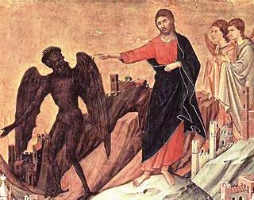
Jesus in the desert

Jesus in the desert

The concept of monasticism is ancient and is found in many religions and philosophies. In the centuries immediately before Christ, Hinduism, Buddhism, and Judaism all developed alternative styles of life which involved renouncing the world in some ways, in order to seek liberation or purification or union with God, sometimes as a solitary ascetic, sometimes in community.

Early Christian monasticism drew its inspiration from the examples of the Prophet Elijah and John the Baptist, who both lived alone in the desert, and above all from the story of Jesus’ time in solitary struggle with Satan in the desert, before his public ministry. Beginning with the Exodus and all through the Old Testament times, the desert was regarded as a place of spiritual renewal and a return to God.  Although there were ascetics, especially women ascetics, among the first generations of Christians, they generally lived in the towns and cities.
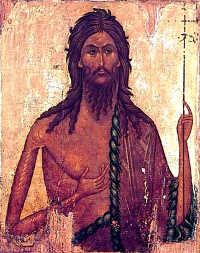
St John the Baptist

St John the Baptist

St. Anthony the Great (ca. 251-356) was the first well-known Christian to withdraw to the desert. According to the Life of Anthony written by St Athanasius in the mid fourth century, Anthony retreated to the wastelands of Egypt to lead an intensely ascetic life with the sole purpose of pursuing God in solitary prayer.  He remained alone until his holiness and evident wholesomeness attracted a growing circle of followers. So deep was his influence that he is considered the father, not only of the movement of Desert Fathers and Mothers of fourth – fifth century Egypt, but also the father of the entire Christian monastic family.
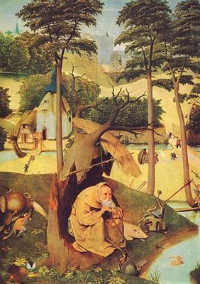
St Anthony

St Anthony
While the earliest Desert Fathers lived as hermits, they were rarely completely isolated, but often lived in proximity to one another, and soon loose-knit communities began to form in such places as the Desert of Nitria and the Desert of Skete.  The progression from hermit (“anchorite”) to monk (“cenobite”) living in community under one abbot, came quickly, when in 346 St Pachomius established in Egypt the first cenobitic Christian monastery.
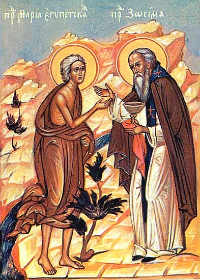
Mary of Egypt

Mary of Egypt

The Eastern monastic teachings were brought to the western church by Saint John Cassian (ca. 360 – ca. 435).  As a young adult, he and his friend Germanus entered a monastery in Palestine but then journeyed to Egypt to visit the eremitic groups in Nitria. Many years later, Cassian founded a monastery of monks and probably also one of nuns near Marseilles, and partly to counter what he felt were the abuses he found in Western monasticism, he wrote two long works, the Institutes and Conferences. In these books he not only transmitted his Egyptian experience (they are perhaps the oldest written record of the thought of the Desert Fathers), but he also gave Christian monasticism a profound evangelical and theological basis.

Cassian’s influence was enormous and lasted for centuries – even the smallest monastic library in Europe’s Dark Ages would have its copy of Cassian. Furthermore, St. Benedict incorporated Cassian’s thought into his monastic Rule, and recommended that his monks read Cassian’s works. Since the Rule of St Benedict is still used by Benedictine, Cistercian, and Trappist monastics, the thought of John Cassian, and the desert tradition behind him, still guides the spiritual lives of thousands of men and women in the Catholic Church.

The fear of the Lord is our cross. Just as someone who is crucified no longer has the power of moving or turning his limbs in any direction as he pleases, so we also ought to fasten our wishes and desires, not in accordance with what is pleasant and delightful to us now, but in accordance with the law of the Lord, where it hems us in. Being fastened to the wood of the cross means: no longer considering things present; not thinking about one’s preferences; not being disturbed by anxiety and care for the future; not being aroused by any desire to possess, nor inflamed by any pride or strife or rivalry; not grieving at present injuries, and not calling past injuries to mind; and while still breathing and in the present body, considering oneself dead to all earthly things, and sending the thoughts of one’s heart on ahead to that place where, one does not doubt, one will soon arrive… 

John Cassian, Institutes, Book IV ch.35
https://ocso.org
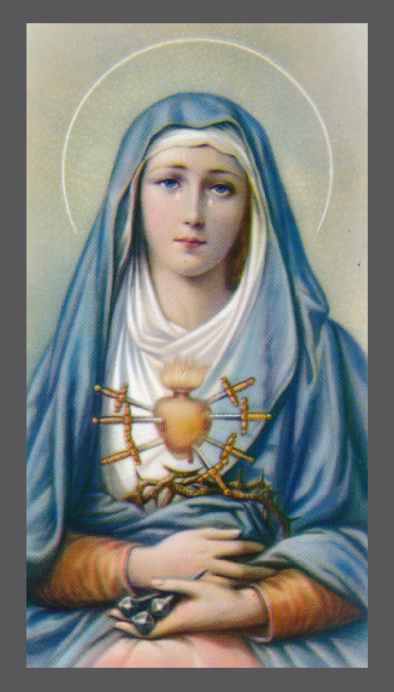
Mother of Sorrows

Sorrows_Small_Image

Mother of Sorrows
Patron of: Grief

When we are overwhelmed with grief, we turn to Mary, Mother of Jesus for help in our suffering. Throughout her life she endured much pain and sorrow and is fully able to empathize with anyone’s personal anguish. She endured the shame of being pregnant and unmarried, being poor, homelessness and having her only son unjustly imprisoned and executed. Most astonishing, Mary knew what was to befall her son yet had to see these events from God’s point of view and have faith that this was all for the good of mankind.

By meditating on the Seven Sorrows of Mary, a devotion from the Middle Ages, which uses scenes from the life of the Virgin Mother as a meditation on accepting the sorrowful part of life with grace.

The Seven Sorrows of Mary are:

1) The Prophecy of Simeon. As a young child, when his parents presented him in the temple, Jesus was met by the holy man Simeon who predicted everything that would happen to him in his address to Mary: “Behold, this child is destined for the fall and rise of many in Israel, and to be a sign that will be contradicted – and you yourself a sword will pierce so that thoughts of many hearts will be revealed.” (Luke 2:34-35).

2) The Flight into Egypt. In Bethlehem, after the birth of Christ, Joseph had a vision of an angel warning him of the impending slaughter of any male child under the age of two by King Herod in order to prevent the coming Messiah. The Holy Family had to travel a secretive route to Egypt and remain in that country until Herod died. Mary not only worried for the welfare of her own son but mourn for the murdered children left behind.

3) The Loss of the Child Jesus in the Temple. While on a pilgrimage to Jerusalem, the 12 year old Jesus vanished from his family. His heartsick parents finally found him three days later, arguing with elders in the temple.

4) The Meeting of Jesus with His Cross. Mary watched helplessly as her son was ridiculed and mocked as he stumbled, carrying the cross he was to be executed on.

5) The Crucifixion. As he was nailed to the cross, most of his disciples ran away. Mary never wavered as she stood at the foot of the cross, witnessing her son’s agony and death.

6) Jesus Taken Down from the Cross. Mary held her dead son’s wound covered body. This, her greatest sorrow is known as the “Pieta”.

7) The Burial of Jesus. As the stone was rolled, closing up his tomb, Mary had to say her final goodbye to her earthly son. Her faith had to be sincerely tested as there was no hint of the resurrection to come.
Prayer

Most holy and afflicted Virgin, Queen of Martyrs, you stood beneath the cross, witnessing the agony of your dying son. Look with a mother’s tenderness and pity on me, who kneel before you. I venerate your sorrows and I place my requests with filial confidence in the sanctuary of your wounded heart. Present them, I beseech you, on my behalf to Jesus Christ, through the merits of his own most sacred passion and death, together with your sufferings at the foot of the cross. Through the united efficacy of both, obtain the granting of my petition. To whom shall I have recourse in my wants and miseries if not to you, Mother of Mercy? You have drunk so deeply of the chalice of your son, you can compassionate our sorrows. Holy Mary, your soul was pierced by a sword of sorrow at the sight of the passion of your divine son. Intercede for me and obtain from Jesus (mention your request) if it be for his honor and glory and for my good. Amen.

XII Station: Jesus dies on the cross

69647-0019-hLeader: We adore you, O Christ, and we praise you.
All: Because by your holy cross You have redeemed the world.

As Jesus hung on the cross, he forgave the soldiers who had crucified him, and prayed for his mother and friends. Jesus wanted all of us to be able to live forever with God, so he gave all he had for us.

Jesus, let me take a few moments now to consider your love for me. Help me thank you for your willingness to go to your death for me. Help me express my love for you!

My Jesus, three hours didst Thou hang in agony, and then die for me; let me die before I sin, and if I live, live for Thy love and faithful service.

Our Father…. Hail Mary…. Glory be to the Father….

Leader: Jesus Christ Crucified.
All: Have mercy on Us.
Leader: May the souls of the faithful departed, through the mercy of God, Rest in peace.
All: Amen.

XI Station: Jesus is nailed to the cross

station11
Leader:
We adore you, O Christ, and we praise you.
All: Because by your holy cross You have redeemed the world.

You are stretched out on the cross you have carried so far. The soldiers take big nails and drive them into your hands and feet. You feel abandoned by the people you loved so much. People seem to have gone mad. You have done nothing but good, yet they drive nails through your hands and feet.

As a child, sometimes I hurt others. Sometimes I join with friends and decide not to like another. We gang up against another and cause them hurt and pain. Sometimes I say or do hurtful things to my brothers and sisters. I can wonder what they’d think about themselves if they believed everything I told them about themselves.

As and adult, sometimes I discriminate against others. Even without thinking, I judge others because of their color, intelligence, income level or name. I forget that I am to live as a brother or sister to all people. Sometimes I use harsh words when I speak to my children and family members. I can find it easy to look for something that isn’t very important and make it very important.

Help me look again at the people around me. Help me see the hurt and pain I have caused in others. Be with me to help me make amends for the harm I have done.

My Jesus, by Thine agony when the cruel nails pierced Thy tender hands and feet and fixed them to the cross, make me crucify my flesh by Christian penance.

Our Father…. Hail Mary…. Glory be to the Father….

Leader: Jesus Christ Crucified.
All: Have mercy on Us.
Leader: May the souls of the faithful departed, through the mercy of God, Rest in peace.
All: Amen.