Like Elizabeth Ann Seton, Rita of Cascia was a wife, mother, widow, and member of a religious community. Her holiness was reflected in each phase of her life.
Born at Roccaporena in central Italy, Rita wanted to become a nun but was pressured at a young age into marrying a harsh and cruel man. During her 18-year marriage, she bore and raised two sons. After her husband was killed in a brawl and her sons had died, Rita tried to join the Augustinian nuns in Cascia. Unsuccessful at first because she was a widow, Rita eventually succeeded.
Over the years, her austerity, prayerfulness, and charity became legendary. When she developed wounds on her forehead, people quickly associated them with the wounds from Christ’s crown of thorns. She meditated frequently on Christ’s passion. Her care for the sick nuns was especially loving. She also counseled lay people who came to her monastery.
Beatified in 1626, Rita was not canonized until 1900. She has acquired the reputation, together with Saint Jude, as a saint of impossible cases. Many people visit her tomb each year.
Like Elizabeth Ann Seton, Rita of Cascia was a wife, mother, widow, and member of a religious community. Her holiness was reflected in each phase of her life.
Born at Roccaporena in central Italy, Rita wanted to become a nun but was pressured at a young age into marrying a harsh and cruel man. During her 18-year marriage, she bore and raised two sons. After her husband was killed in a brawl and her sons had died, Rita tried to join the Augustinian nuns in Cascia. Unsuccessful at first because she was a widow, Rita eventually succeeded.
Over the years, her austerity, prayerfulness, and charity became legendary. When she developed wounds on her forehead, people quickly associated them with the wounds from Christ’s crown of thorns. She meditated frequently on Christ’s passion. Her care for the sick nuns was especially loving. She also counseled lay people who came to her monastery.
Beatified in 1626, Rita was not canonized until 1900. She has acquired the reputation, together with Saint Jude, as a saint of impossible cases. Many people visit her tomb each year.
Reflection
Although we can easily imagine an ideal world in which to live out our baptismal vocation, such a world does not exist. An “If only ….” approach to holiness never quite gets underway, never produces the fruit that God has a right to expect.
Rita became holy because she made choices that reflected her baptism and her growth as a disciple of Jesus. Her overarching, lifelong choice was to cooperate generously with God’s grace, but many small choices were needed to make that happen. Few of those choices were made in ideal circumstances—not even when Rita became an Augustinian nun.
Pope Francis passed away on April 21, 2025, at age 88, and the Jesuit Conference joins people around the world in mourning. May he rest in the peace of Christ.
Born in Buenos Aires, Argentina, on December 17, 1936, Jorge Mario Bergoglio entered the Society of Jesus on March 11, 1958, and was ordained a priest on December 13, 1969. As a Jesuit, he served as novice master, a theology professor and provincial of the Jesuits in Argentina (1973-1979).
Undated photo of Fr. Jorge Mario Bergoglio , SJ (Jesuit Curia)
He was named auxiliary bishop of Buenos Aires in 1992 and archbishop in 1998. Pope Saint John Paul II elevated him to the College of Cardinals in 2001. On March 13, 2013, Jorge Mario Bergoglio was elected pope, making him the first Jesuit pope and the first pope from the Americas and the Southern Hemisphere. Read his full obituary at America magazine.
Below, read a statement from Fr. Brian Paulson, SJ, president of the Jesuit Conference of Canada and the United States, on Pope Francis’ passing:
I join the countless people around the world who are mourning the death of the Holy Father Pope Francis at this hour. I pray for the repose of his soul and for the consolation of his family, friends and brother Jesuits. While more thorough reflections and examinations of Pope Francis’ legacy will be published in the coming weeks and months, I wanted to offer this brief expression of gratitude for the Holy Father’s extraordinary life of service to God’s people, energized by the love of Christ.
First and foremost, Pope Francis was a pastor. He consistently encouraged bishops, priests and all church ministers to meet people wherever they are in their life journeys, in messiness and complexity and ambiguity, and to help them grow in holiness. The Holy Father’s witness as a shepherd “with the smell of the sheep” from closeness to those on the peripheries of the church and society always inspired and challenged me in my own priestly ministry.
Pope Francis met refugees at Centro Astalli’s soup kitchen in Rome in 2013. (Jesuit Refugee Service)
And Pope Francis indeed went to the peripheries time after time: His first official trip outside of Rome as pope was to visit the Mediterranean island of Lampedusa, a common entry point to Europe for migrants, to pray and advocate for those who had left their homes and risked their lives in pursuit of a better future. He washed the feet of prisoners at Holy Thursday liturgies. He directed the construction of showers for the homeless in St. Peter’s Square. And he appointed cardinals from regions on the planet that had never seen a cardinal named there before — the Amazon, the Philippines, South Sudan, Myanmar and more. These decisions and hundreds of similar ones made headlines so often during Francis’ papacy that it’s easy for us to take them for granted, but let us not forget how much his boldness surprised us. I believe Pope Francis will always be remembered for how he brought marginalized individuals and communities to the heart of the church.
Pope Francis with Father General Arturo Sosa, SJ (Jesuit Curia)
I also believe future appreciations of Pope Francis’ leadership will reflect the ways his reforms in church governance, the roles of the laity, and the social engagement of the church in service to the world were rooted in the teachings of Vatican II. The “Francis Project,” as it has sometimes been called, was not his own personal vision alone, but one formed by his experiences as a leader in the Latin American church in the decades following the Council.
The distinctly Ignatian influence on Pope Francis’ ministry was also unmistakable. In listening to Pope Francis and reading his writings, it is clear to me how much his thought was marked by the Spiritual Exercises of St. Ignatius. The Spiritual Exercises are a “school of the heart” that help a retreatant to grow in self-knowledge of their gifts, weaknesses and sinfulness while meditating on the life, death and resurrection of Jesus. Ignatian spirituality is extraordinarily practical; it engages our own hopes, desires, dreams, struggles, joys and sorrows. In works like “Evangelii Gaudium” and “Laudato Si’,” just to name two, Pope Francis offered his own “school of the heart” meditations, inviting all believers to find the joy of the Gospel within their everyday lives and to commit to responding to “the cry of the Earth and the cry of the poor” as an integral, concrete part of discipleship.
Fr. Brian Paulson, SJ, with Pope Francis
In recent years, the Synod on Synodality emerged as a signature moment of Pope Francis’ outreach toward the peripheries, calling the universal Catholic Church to live a deeper and more inclusive process of listening that includes the voices of all stakeholders. I pray this new mode of dialogue and decision-making continues to develop and take root in the church in the years to come.
Before all else, the Gospel invites us to respond to the God of love who saves us, to see God in others and to go forth from ourselves to seek the good of others. -Pope Francis
I will close this brief reflection with a quote from “Evangelii Gaudium,” the richness of which will continue to make the document a gift to the church for generations. In the quote, as in the exhortation as a whole, we get a sense of what Pope Francis saw as the heart of the spiritual life. “Before all else,” Pope Francis writes, “the Gospel invites us to respond to the God of love who saves us, to see God in others and to go forth from ourselves to seek the good of others.” Let us honor Pope Francis by trying to follow that advice every day.
May the Holy Father Pope Francis rest in the peace of Christ, his brother and Lord.
Designed and revealed by Mary, the Medal is unique among all medals.
It was almost midnight when St. Catherine Labouré was awakened by a soft voice, whispering, “Sister, sister, sister.” Mysterious events led her to the chapel where the Blessed Mother appeared and sat down near the altar. St. Catherine knelt at her feet, rested her hands in Mary’s lap, looked into her eyes, and had a heart-to-heart conversation with her. Later, St. Catherine would refer to that night as “the sweetest moment of my life.”
Four months later, in November of 1830, Mary again appeared to St. Catherine at the Rue de Bac Chapel. This time, our Blessed Mother was standing on a globe, with dazzling rays of light streaming from her outstretched hands. Framing the apparition was an inscription: “O Mary, conceived without sin, pray for us who have recourse to thee.” When Mary spoke to St. Catherine, she said “Have a medal struck upon this model. Those who wear it will receive great graces, especially if they wear it around the neck. Those who repeat this prayer with devotion will be, in a special manner, under the protection of the Mother of God. Graces will be abundantly bestowed upon those who have confidence.”
With approval of the Catholic Church, the first medals were made in 1832 and distributed in Paris. Only ten of the original medals are known to exist, and one of them is housed at the Miraculous Medal Shrine.
Almost immediately, the blessings that Mary promised showered down on those who wore her medal, and soon all of France was clamoring for what the people referred to as the “Miraculous Medal.” Use of the Medal spread from country to country, and, at the time of St. Catherine’s death in 1876, more than a billion medals had been made. Today, the Medal is still drawing down from God blessings for body and soul.
Wearing The Miraculous Medal
Here are some rules for wearing a Miraculous Medal:
Wear it around the neck: According to Our Lady, the medal should be worn around the neck.
Have it blessed: It’s best to wear a medal that has been blessed by a priest. A priest or delegated lay person can invest the wearer in the medal using the approved rite.
Wear it with confidence: According to Our Lady, those who wear the medal with confidence will receive great graces.
Wear it as a sign of devotion: The medal is a visible sign of devotion to Mary and Jesus.
Wear it as a reminder of faith: The medal can be a daily reminder of faith.
The Miraculous Medal is a popular piece of jewelry for Catholics, but anyone can wear it. The medal originated from apparitions to French nun Saint Catherine Laboure.The medal’s front and back are full of symbolism.
THE MEANING OF THE MIRACULOUS MEDAL.pdfDuring Our Lady’s visit to Catherine on November 27, 1830, rays of light flowed from rings on her fingers that were made of precio…St Joseph Church | Chehalis, WA
The Hidden Symbolism in the Miraculous Medal – EWTNNov 27, 2023 — The History of the Miraculous Medal During one of many apparitions to French nun Saint Catherine Laboure, Our Lady gav…EWTN
Investiture of the Miraculous Medal – SS. Cyril and Methodius ParishNov 13, 2024 — A person becomes a member by wearing a Miraculous Medal that has been blessed by a priest. It is fitting that the pers…saintcyrils.church
The day of the Poor Clare nun begins at 12:30 a.m. when the Sister designated as “Caller” knocks on each cell door to summon her sisters to prayer. The nuns, clothed in the religious habit adapted for the night, rise in silence like the wise Virgins always ready and waiting for the call: “The Bridegroom is here, come out to meet Him!” At 12:45 a.m. the Sisters assemble in Office Choir (the Sister’s chapel) for the Hour of Matins (Office of Readings). It is an unbroken tradition for the Poor Clare Nuns to rise in the middle of the night after a few hours of sleep in order to pray for a needy world at a time when, under cover of darkness, so many sins are committed. At 1:45 a.m. the Divine Office and a period of meditation come to a close and the Sisters retire to their cells for about three more hours of sleep.
Five O’Clock Duty
At 5:00 a.m. the silence of the early hours of the morning is broken when the bell sounds for rising. The nuns rise promptly, wash in a simple basin in their cells and make their way to their five o’clock duty. These duties vary from dust-mopping the corridors or sweeping the refectory and stairs, to opening windows to air the house, dusting Choir or making preparations for breakfast. Then at 5:30 a.m. the Sisters gather promptly in Choir for the morning Angelus follows by Lauds (Morning Prayer). “With praise I will awake the dawn,” sings the Psalmist and the nuns likewise, by their wholehearted praise of the Creator, anticipate all of creation, which is just awakening from sleep. An hour of meditation in preparation for the Holy Sacrifice of the Mass follows and, at 7:00 a.m., the Rosary is recited communally during which the Sisters ponder the mysteries of Redemption and the role of the most Blessed Mother, making them a part of their own lives. “Nuns relive and perpetuate in the Church the presence and the work of Mary. Welcoming the Word in faith and adoring in silence, they put themselves at the service of the Mystery of the Incarnation, and united to Christ Jesus in His offering of Himself to the Father they become co-workers in the Mystery of Redemption” (Verbi Sponsa, no. 4).
The Mass — the Day’s Climax
The Holy Sacrifice of the Mass at 7:30 a.m. is the center and summit of the Poor Clare day around which everything else revolves. It is precisely from the Mass that the nuns draw their strength and the grace for the new day of prayer, sacrifice, and work for the love of God. The Sisters participate in this august mystery from their Mass Choir, which is separated from the main Chapel by an enclosure grille because of their hidden life of seclusion. “What return shall I make to the Lord for His goodness to me?” sings the Poor Clare in her heart as she spends the next quarter of an hour in thanksgiving for the greatest gift on earth: the Holy Eucharist to which she is united in a most intimate way. By now it is 8:30 a.m. and the Sisters go to the refectory to partake of a simple breakfast while standing, in keeping with the traditional fast. Although Great Silence has ended, a peaceful stillness continues to pervade the monastery as the nuns begin some work until 9:30 a.m. Answering benefactors’ letters and filling orders for spiritual bouquet cards to go out in the morning’s mail or beginning the day’s work in the kitchen are just a few examples. When Reverend Mother Abbess rings the bell, the Sisters assemble in the refectory for the Office announcements and a spiritual thought for the day, which are read aloud. Mother Abbess gives her blessing and the nuns process to the Choir for Exposition of the Blessed Sacrament and the first of the Daytime Hours: Terce(Midmorning Prayer). The Poor Clare nun’s entire day is punctuated by the different hours of the Divine Office in order constantly to return praise to the Blessed Trinity and to sanctify each passing moment. The Holy Sacrifice of the Mass is thus perpetuated throughout the whole of her day by the Liturgy of the Hours. It is in this way that the nun’s whole life becomes one great “Thanksgiving.” Pope John Paul II write of our Holy Mother Saint Clare: “her whole life was a Eucharist because … from her cloister she raised up a continual ‘thanksgiving’ to God in her prayer, praise, supplication, intercession, weeping, offering and sacrifice. She accepted everything from the Father in union with the infinite ‘thanks’ of the only begotten Son.”
A Virtuous Life and the Common Good
The remaining hours of the morning until 11:40 a.m. are spent in some manual work. “Let the Sisters to whom the Lord has given the grace of working work faithfully and devotedly after the hour of Terce at work that pertains to a virtuous life and the common good” (Holy Rule). It may vary greatly according to the day or the season. In the monastic tradition of the Poor Clares there has never been a distinction between Choir Nuns and Lay Sisters; rather, all help with the humble tasks and give themselves with generosity wherever help is needed. Our Extern Sisters, however, are the special guardians of the enclosure. They care for the external services of the monastery but observe the same form of life as the cloistered nuns in all things except the vow of enclosure. Whether hanging the laundry on wash day, answering the phone or the door bells, cooking, sweeping, sewing, gardening or painting, the Poor Clare Nun is motivated by love and therefore no task is too burdensome nor any sacrifice too great. “All for Love,” “All for Jesus” are the frequent aspirations that fill her mind while at work. Although she cannot spend the entire day with Our Lord in Choir, she finds He is present and at her side at every moment and in all the designs of Divine Providence as the day unfolds. Our Holy Mother Saint Clare urges her daughters to always work “in such a way that, while banishing all idleness, the enemy of the soul, they do not extinguish the spirit of holy prayer and devotion to which all other earthly things must contribute.”
Bell Calls to Midday Prayer
At 11:40 the bell calls the Sisters to the hour of Sext (Midday Prayer). “Let the Sisters, immediately ceasing their labors, come without delay” (Saint Colette). The monastic bell summoning the Sisters to work and prayer is understood as the voice of the Beloved calling to them and each Sister makes haste in order not to keep Him waiting. Midday Prayer is followed by the particular examen and the Angelus is said at noon. The community then processes to the refectory while reciting the Veni Creator. A full meal referred to as “dinner” is served at noon. The Poor Clare Colettine nuns observe a perpetual abstinence from meat, but fish is served twice a week and on special feast days. The meal typically consists of a carbohydrate (rice, noodles, or potatoes), a vegetable, salad and a simple dessert. As the Sisters take nourishment for their bodies to renew their physical strength, they are constantly reminded that “man does not live on bread alone but on every word that comes from the mouth of God.” The meals at Corpus Christi Monastery are taken in silence as the Sisters listen to some spiritual reading to nourish their souls. One of the nuns is appointed as “reader” and reads aloud from the biography of some saint, a reflection on the day’s Gospel or perhaps some other text of a religious or edifying nature.
Fruit and Potatoes
After dinner there is a half-hour period of general work. The Sisters help with dishes or prepare the vegetables, fruit or potatoes, which need peeling and slicing for the next day’s meal. At 1:30 p.m. “quiet time” begins. This is a special time of silence during which the Sisters may rest, do some quiet hobby or spend time in private devotions. Daily meditation on the Stations of the Cross is a Franciscan tradition and some may choose to take their quiet time in Choir for this purpose. As Pope John Paul II reminds us: “It is in the contemplation of the Crucified Christ that all vocations find their inspiration” (Vita Consecrata, no. 23). Other nuns may choose to spend time alone with God in their cells. “The solitary cell, the closed cloister, are the place where the nun, bride of the Incarnate Word, lives wholly concentrated with Christ in God” (Verbi Sponsa, no. 3). At 2:00 p.m. the nuns again repair to the Choir where they make ready to chant the hour of None (Midafternoon Prayer). The Blessed Sacrament is again exposed and “the Divine Service is carried out with the greatest possible devotion and the very greatest reverence… they should maintain there a humble and respectful attitude, and observe a profound silence…. Their bearing should be modest and such that it fulfills what is required in the presence of the God of Majesty,” counsels our Holy Mother Saint Colette. The cloistered nun stands before the Throne of Mercy representing the entire Body of Christ. She is entrusted with the divine service and carries it out in the name of the whole Church. This is the Poor Clare’s “greatest privilege and joy” and she remains fully aware of her awesome responsibility.
Weeding and Harvesting
The rest of the afternoon, until 4:30 p.m., is occupied with work. Again the Sisters spend themselves for the common good, each one seeing to her assigned duties or participating in some community task, such as loading a truck with brush to be hauled away, cleaning the monastery from top to bottom, printing holy cards, weeding the shrine, or harvesting rhubarb, apples, or squash and preparing them for freezing. “There is no time to get bored” as one postulant told her family when asked if she ever found the monastic life monotonous. Even if on some days the round of chores are similar to the preceding day, the Divine Bridegroom speaks to each soul in a new way with every passing day. Therefore the Sisters work in silence, communing with God alone, listening to Him and responding to His voice by the love with which they carry out their work, prayers and sacrifices. “In the monastery everything is directed to the search of the face of God, everything is reduced to the essential, because the only thing that matters is what leads to Him” (Pope John Paul II). The enclosure of Corpus Christi Monastery “is intended to create a space of separation, solitude and silence where God can be sought more freely in a life not only for Him and with Him but also in Him alone” (Verbi Sponsa, no. 5).
Interceding for a Troubled World
Vespers (Evening Prayer) is chanted at 4:30 p.m. The Poor Clare Nun leaves the concerns of her daily duties and stands before God interceding for a troubled world. Men, women and children of every land and nation are the subjects of her most sincere prayers. To this end she has renounced the world, only to be more united to it in a supernatural way. She has come apart, making of her life a continual sacrifice of praise for the needs of all. And she understands clearly that “those who become the property of God become God’s gift to all” (Verbi Sponsa, no. 7). This canonical hour is followed by fifteen minutes of Scripture meditation during which the Poor Clare ponders the Word of God in the presence of the Most Blessed Sacrament. In addition to this, at some point during the day, depending on her work, each Sister takes one hour of time reserved for private prayer and adoration of the Blessed Sacrament. This is an essential part of the Poor Clare’s day, for she knows well that “the call to holiness is accepted and can be cultivated only in the silence of adoration before the infinite transcendence of God” (Vita Consecrata, no. 38). At 5:30 p.m. the Sisters gather in Choir for the evening recitation of the Angelus and process to the refectory for collation. “The Sisters shall fast at all times.” This fast which our Holy Rule prescribes consists of refraining from taking any food between meals and “Lenten fare” which traditionally means that breakfast and the evening refection together do not equal the main meal at noon. Two slices of bread, cheese, a fruit and a cup of barley tea constitute a typical collation. Sometimes an egg or cereal, for example, is served in place of the cheese. The Sisters keep their eyes modestly cast down at all times, but especially in Choir and in the refectory. Our Holy Mother Saint Colette exhorts her daughters “that they may have a soul uplifted to God and attentive to what is said there, let them have their eyes cast downward.”
Recreation and a Family Spirit
At 6:30 p.m. the bell summons the nuns to an hour of recreation. This is a special time of joyful fellowship and relaxation for the Sisters. As silence is observed outside of this one hour per day, the recreation period is all the more enjoyable. The nuns speak on a variety of different topics ranging from the work of the day to the edifying examples of the lives of the saints. The Sisters occupy their hands with some needlepoint, artwork, cutting out stamps for the missions, making rosaries, or sewing copes for the Infant of Prague statues while good humor and a family spirit reign. According to the season this time of recreation may be spent outdoors pruning the trees, picking Job’s tears to be used as rosary beads, or planting flowers in the Lourdes grotto to honor the Blessed Mother. The Hour of Compline (Night Prayer) is said at 7:30 p.m. followed by the General Examen during a few moments of silent reflection and then Great Silence descends upon Corpus Christi Monastery. “Let the Sisters keep silence from the hour of Compline until Terce, let them also continually keep silence in the Church, the dormitory and the refectory while they are eating,” says our Holy Rule. The nuns then retire to their cells and are to be in bed by 9:00 p.m. They may read or do some quiet work before they lie down on their straw mattresses or thin rug mats for a few hours of peaceful slumber only to rise again at 12:30 a.m. for a new day of Poor Clare life in Corpus Christi Monastery.
“Nicholas, man of God, look at me,” cried a soul to Nicholas of Tolentino. The young Augustinian priest had just begun to fall asleep when the voice surprised and alarmed him. The soul identified himself as Friar Pellegrino of Osimo, who Nicholas knew when that friar was alive.
“I am tormented in these flames,” Pelligrino lamented. “God did not reject my contrition and instead did not destine me to eternal punishment, which I deserved due to my weakness, but to purgatorial punishment, in virtue of His mercy.”
Then he begged Nicholas to “celebrate a Mass of the Dead for me, so that I may be freed from my torments.” But Nicholas could not because he was assigned to say the monastery’s community Mass.
“Then at least come with me … see our suffering … pity these unfortunates who await your help…If you celebrate Mass for us, most of these people will be liberated,” Pelligrino again pleaded. Nicholas was then shown a great sea of souls of all ages, sexes and conditions, stretching across the land.
Nicholas prayed all night. In the morning once the monastery’s prior heard his story, he gave Nicholas permission to immediately say the Masses for the Dead. Seven days later, Pelligrino appeared again — this time, accompanied by a victorious multitude also freed.
After that occurrence in the late 13th century, Nicholas spent his years praying and offering Masses for the souls in purgatory. He freed countless numbers. During one Mass, Jesus appeared, thanked him and showed him the souls his Masses had released.
In 1884 Pope Leo XIII declared St. Nicholas of Tolentino universal patron of the Holy Souls in Purgatory.
Nicholas’s experience wasn’t a one-time event. Nor was it for other saints along the centuries as they, too, heard or saw souls in purgatory pleading for their help.
We may never see or hear a holy soul from purgatory, but we learn what to do from the encounters saints experienced.
Have Masses said for the Holy Souls there. Our family. Friends. Those abandoned. In relation to what Jesus told Faustina, offer up an annoyance without complaining, like standing in a long line in traffic or the supermarket. Pray a Rosary for them. Say short prayers like, “Jesus have mercy on the souls in purgatory.” Remember what we heard as we grew up — “Offer it up for the holy souls in purgatory.”
Take a minute to pray for a forgotten soul in purgatory!
Pietro Perugino, “Saint Nicholas of Tolentino,” 1507
St. Ignatius Loyola included in his Spiritual Exercises a prayer called “the Examen,” which derives from the Latin word for examination. It is a meditation with roots not only in Ignatian spirituality, but also in the spiritual practices of the ancient Stoics. There are many versions of the Examen today, but all have five steps. Here is a simple rendering of some key elements:
Place yourself in God’s presence. Give thanks for God’s great love for you.
Pray for the grace to understand how God is acting in your life.
Review your day — recall specific moments and your feelings at the time.
Reflect on what you did, said, or thought in those instances. Were you drawing closer to God, or further away?
Look toward tomorrow — think of how you might collaborate more effectively with God’s plan. Be specific, and conclude with the “Our Father.”
Some versions of the Examen place a special emphasis on gratitude and feelings. A detailed example of such a meditation is offered by IgnatianSprituality.com.
“God is in it”
The heart of the Examen is the third part: reviewing your day.
“Think of it as a movie playing in your head,” writes James Martin, S.J., in The Jesuit Guide to (Almost) Everything. “Push the play button and run through your day, from start to finish, from your rising in the morning to preparing to go to bed at night. Notice what made you happy, what made you stressed, what confused you, what helped you be more loving. Recall everything: sights, sounds, feelings, tastes, textures, conversations. Thoughts, words, and deeds, as Ignatius says. Each moment offers a window to where God has been in your day.”
And remember that no experience is too trivial for spiritual investigation.
“Nothing in our lives is so insignificant that it doesn’t deserve God’s attention,” notes Jim Manney in A Simple Life-Changing Prayer, a book about the Examen. “In fact, the mundane and the humdrum parts of our lives give depth and texture to our relationships with God. Washing the windows and cooking dinner are as much a part of the relationship as graduation day. If it’s part of our human experience, God is in it.”
Ignatius was emphatic about the Examen. He told the early Jesuits that if they for some reason did no other spiritual exercises, they should do this one. Then as now, the Examen is a spiritual tool for sizing up your days — and planting the seeds for a more purposeful life.
There’s only one door out of purgatory for the Holy Souls there. It opens only into heaven. But here’s the catch: they can’t open it themselves. We have to open it for them. We have the key.
The question is, will we help unlock it for some of them during this month of November, which the Church dedicates to the Holy Souls?
Here’s the beautiful part: The Church hands us not just one key but a whole ring full of them. We can use any number of them to keep unlocking the door for the single-file lineup of souls who are suffering in purgatory.
They’re all waiting to join the saints in heaven on the other side of the door. They can get there a lot quicker if we unlock that door for them. Notice how the Church puts All Souls Day, Nov. 2, right next to Nov. 1, All Saints’ Day?
So, let’s start with some of the main keys the Church gives us to use. Some work every day, and some work only at a certain time or day, like the one that works from Nov. 1-8 specifically for the souls in purgatory. These are listed in the official Manual of Indulgences (Enchiridion Indulgenarium).
Key for Nov. 1-8
Every year on these eight days the Church grants a plenary indulgence that can be applied only to the souls in purgatory. The faithful can receive this indulgence each of the eight days to apply to a particular soul — a parent, spouse, relative, friend, or anyone even unknown.
How to use this key? On each day from Nov. 1-8 a person seeking the plenary indulgence for a soul must (1) “devoutly visit a cemetery and pray, if only mentally, for the departed; (2) on All Souls’ Day (or according to the ordinary, on the Sunday preceding it or following it…) devoutly visit a church or an oratory and recite an Our Father and the Creed.”
There are a couple of other requirements that have to be fulfilled, too, which apply to any plenary indulgence. More on this detail a bit later, since it will also apply to other keys.
Just in case, for these same dates, there is a key that is a partial indulgence (for example, maybe a person isn’t able to fulfill all the requirements for a plenary indulgence). Again, for these Nov. 1-8 days, it can be applied only to souls in purgatory and granted for (1) devoutly visiting a cemetery and at least mentally praying for the dead; (2) devoutly reciting lauds or vespers from the Office of the Dead or the prayer, “Eternal rest grant unto them, O Lord, and let perpetual light shine upon them. May they rest in peace. Amen.”
But don’t stop with only these eight days. You have all month to gain indulgences (more on requirements in a moment) to apply to the holy souls sending out their SOS’s (Stop Our Suffering). And you can help them every day of the year too, with other keys.
Mighty Keys for Every Day
These are most accessible, handy keys with a plenary indulgence attached (with the usual conditions) since they will readily open that door. These four can gain that plenary indulgence “each day of the year,” but “no more than once a day.”
Eucharistic Adoration. “Visit the Blessed Sacrament for adoration lasting at least a half hour.”
Praying the Rosary. “Devoutly recite the Marian Rosary in a church or oratory, or in a family, a religious community, or an association of the faithful, and in general when several of the faithful gather for some honest purpose…”
Reading or listening to Sacred Scriptures. “Read the Sacred Scriptures as spiritual reading, from a text approved by a competent authority, and with the reverence due to the divine word, for at least a half an hour; if the time is less, the indulgence will be partial.” Or listen to it being read.
Pious exercise of the Way of the Cross. Walk them in church or where legitimately erected.
You choose who the indulgence applies to: either yourself — you cannot give it to another living person — or to a holy soul in purgatory. Remember them this November, and throughout the rest of the year too.
Keys to the Indulgence
We went over the specific requirement for the Nov. 1-8 plenary indulgence, and then for a plenary indulgence that can be gained on any day of the year, one per day, though any of the main four listed.
Here’s a quick refresher of the standard requirements every plenary indulgence must fulfill to become plenary which wipes away all temporal punishment due to sin. Just think of the number of holy souls you help out of purgatory, and in turn what friends they will become helping you get to heaven.
To gain a plenary indulgence you must:
Be baptized and in the state of grace, at least at the time the indulgenced work is done.
Have “the interior disposition of complete detachment from sin, even venial sin.” Otherwise, the indulgence becomes partial, not plenary.
And fulfill these three conditions:
Sacramentally confess your sins
Receive Holy Communion. (“It is certainly better to receive it while participating in Holy Mass, but for the indulgence only Holy Communion is required”).
Pray for the intentions of the Holy Father. One Our Father and one Hail Mary fully satisfies this.
One sacramental confession suffices for gaining several plenary indulgences, but a separate Holy Communion and separate prayer for the intentions of the Holy Father are required for each plenary indulgence. According to the most recent Church guidelines on the subject, “it is sufficient that these sacred rites and prayers be carried out within several days (about 20) before or after the indulgenced act.”
Of course, you must also:
Perform the prescribed work to which the indulgence is attached.
Have at least a general intention to gain the indulgence. You can’t receive an indulgence unintentionally or by accident.
If any part of the requirements is missing, then the indulgence becomes partial. Heaven determines the degree of the partial indulgence.
Helps the Holy Souls and Ourselves
We’re on the receiving end, too, even when we give away the indulgence, plenary or partial, to the holy souls in purgatory. Here’s how.
When Blessed Pope Paul VI updated the enchiridion in 1967, he said that the “aim in granting them is both to help the faithful expiate the punishment due sins and to urge them to works of piety, penance, and charity.”
Then in a 1999 general audience concentrated on indulgences, St. John Paul II explained how the Church “dispenses and applies with authority the treasury of the satisfactions of Christ and the saints … as it were through indulgences.”
He said it is “the expression of the Church’s full confidence of being heard by the Father when — in view of Christ’s merits and, by his gift, those of Our Lady and the saints — she asks him to mitigate or cancel the painful aspect of punishment by fostering its medicinal aspect through other channels of grace. In the unfathomable mystery of divine wisdom, this gift of intercession can also benefit the faithful departed, who receive its fruits in a way appropriate to their condition.”
Even though we give the indulgence away to a holy soul, here’s how we’re helped as we aim for that plenary indulgence. St. John Paul II pointed to the requirement “that the spiritual condition for receiving a plenary indulgence is the exclusion ‘of all attachment to sin, even venial sin.’”
“Therefore, it would be a mistake to think that we can receive this gift by simply performing certain outward acts. On the contrary, they are required as the expression and support of our progress in conversion.”
So at the same time we’re helping the holy souls and getting that indulgence key to quickly open the door to heaven for them, we’re progressing in our spiritual life.
Two More Keys
Simply put, attend Mass for the Holy Souls. Have a Mass offered for a departed soul. What could be more exceptional help for them.
Then there is the St. Gertrude Prayer specifically to release souls from purgatory: “Eternal Father I offer you the most precious blood of your divine son Jesus, in union with all the Masses said throughout the world today, for all the holy souls in purgatory, for sinners everywhere, sinners in the Universal Church, those in my own home and within my family. Amen.”
Once you use these keys and help the holy souls to get through that door in purgatory, they will never forget you. They will become your friends praying for you from heaven — and we certainly can use lots of friends helping us from there.
This article originally appeared Nov. 2, 2017, at the Register.
Joseph Pronechen Joseph Pronechen is staff writer with the National Catholic Register since 2005 and before that a regular correspondent for the paper. His articles have appeared in a number of national publications including Columbiamagazine, Soul, Faith and Family, Catholic Digest, Catholic Exchange, and Marian Helper. His religion features have also appeared in Fairfield County Catholic and in major newspapers. He is the author of Fruits of Fatima — Century of Signs and Wonders. He holds a graduate degree and formerly taught English and courses in film study that he developed at a Catholic high school in Connecticut. Joseph and his wife Mary reside on the East Coast.Show Comments 14
“Whoever shall faithfully serve me by the recitation of the Rosary, shall receive powerful graces.”
“I promise my special protection and the greatest graces to all those who shall recite the Rosary.”
“The Rosary shall be a powerful armor against hell, it will destroy vice, decrease sin, and defeat heresies.”
“It will cause virtue and good works to flourish; it will obtain for souls the abundant mercy of God; it will withdraw the hearts of people from the love of the world and its vanities, and will lift them to the desire of eternal things. Oh, that souls would sanctify themselves by this means.”
“The soul which recommends itself to me by the recitation of the Rosary, shall not perish.”
“Whoever shall recite the Rosary devoutly, applying himself to the consideration of its Sacred Mysteries shall never be conquered by misfortune. God will not chastise him in His justice, he shall not perish by an unprovided death; if he be just, he shall remain in the grace of God, and become worthy of eternal life.”
“Whoever shall have a true devotion for the Rosary shall not die without the Sacraments of the Church.”
“Those who are faithful to recite the Rosary shall have during their life and at their death the light of God and the plenitude of His graces; at the moment of death they shall participate in the merits of the Saints in Paradise.”
“I shall deliver from purgatory those who have been devoted to the Rosary.”
“The faithful children of the Rosary shall merit a high degree of glory in Heaven.”
“You shall obtain all you ask of me by the recitation of the Rosary.”
“All those who propagate the Holy Rosary shall be aided by me in their necessities.”
“I have obtained from my Divine Son that all the advocates of the Rosary shall have for intercessors the entire celestial court during their life and at the hour of death.”
“All who recite the Rosary are my children, and brothers and sisters of my only Son, Jesus Christ.”
“Devotion of my Rosary is a great sign of predestination.”
Our Lady’s Rosary Makers was founded in 1949 by Brother Sylvan Mattingly, C.F.X. This Xaverian Brother taught people to make rosaries on the premise that they would make rosaries and distribute them freely to missionaries. Our Mission, set forth by our founder, Brother Sylvan, who envisioned a world in which all God’s children, possessing an instrument of peace and comfort, would work to fulfill Our Lady’s requests at Fatima, to pray the Rosary daily, is to provide those in need of a Rosary with one.
OLRM provides low cost materials, resources, and support in the spirit of Br. Sylvan’s mission and vision. We are a member driven, non-profit, Catholic lay apostolate within the Archdiocese of Louisville. Our diverse and active members spread devotion through the Immaculate Heart of Mary by making and sharing the Rosary with the world’s spiritually needy.
OLRM publishes FREE instructions for making rosaries. How to make a rosary instructions are available for cord and wire rosaries. In addition to these two there are some instructions for variations on these methods. Printable, online, and video instructions of making rosaries are offered directly on this site below.You may also order FREE copies in bulk, or a DVD for $8.50, through our Online Rosary Parts Catalog.
OUR HISTORY
Long haunted by the urgency of Mary’s words at Fatima, Brother Sylvan, C.F.X., decided in May 1949 to do something extra for Our Lady. He began to teach children how to make rosaries for the missions.
Inspired by Our Lady’s words, and having seen letters from missionaries around the world, he knew of the great need for rosaries in the mission fields.
He thought: The missionary can teach his people Christianity, he can offer the Mass for his people, but what happens when he’s off caring for others? With a few rosaries arriving he could now leave a symbol of the Faith to his people. Even though they could neither read nor write, they could pray the rosary.
Letters began pouring in from missions all over the world. The need was really greater than anyone had imagined.
Brother made a trip to Denver to teach ten people there. This group grew and spread the word to others as far away as a small town in Minnesota. Inspired people of Detroit started a group which today sends over 100,000 rosaries a year to the missions.
He set up a small office in a basement room at St. Xavier High School in Louisville, Kentucky and named his slow-forming club “Our Lady of Fatima Rosary Making Club.”. An elderly couple donated $25 for a typewriter to communicate with missionaries and club members.
In 1951 Brother asked Father Bertrand Rapp, newly ordained parish priest, to take over the duties as Chaplain to the Club. On a cold winter night in December, after working all day to build a fieldstone “Grotto for Mary”, Brother Sylvan died.
Father Rapp worked tirelessly to continue Brother’s work. Teaching here, arranging for volunteers somewhere else. He spent his vacations in Rosary Club endeavors, unselfishly working for Mary. By 1954 membership had grown to 2,500 adults and many children in schools across the nation.
With growth came the need for more capacity to serve our members. Brother Sylvan had a difficult time raising that first $25 for a typewriter, and with growth, there were more expenses. Thirty-four thousand dollars for a bead mold; twenty thousand for a die to mold the needed crucifixes and centers. Wire had to be bought in half ton lots for maximum economy. Where does all the money come from?
Our Blessed Mother inspires, but she doesn’t make it easy; yet the answer came simply enough. The deficit is made up by the Club making catalog sales to those rosary-makers who wish to make a nice gift rosary for a friend or relative. The profit from these catalog parts help make up the mission loss.
Annual members dues of $2 help pay for our newsletter, Our Lady’s Messenger, with the remainder going into the deficit fund. Invariably when there is need, someone helps with a small donation; sometimes a large one.
Today the club has grown from its humble origins to be the world’s leading mission Rosary apostolate. A new International Rosary Center was built in 1968. Today the center is more than double its original size. OLRM staff work diligently five days a week processing and filling orders for rosary supplies, as well as, connecting members with missionaries and missions in need of rosaries.
The International Rosary Center houses our operations, showroom, and Our Lady’s Chapel – in which we pray our morning rosary. The Blessed Sacrament is present and we have a monthly Mass on the First Saturday in honor of Brother Sylvan and all Club members
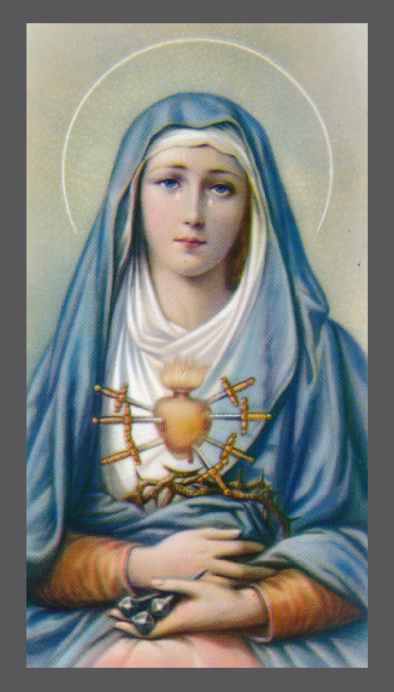
When we are overwhelmed with grief, we turn to Mary, Mother of Jesus for help in our suffering. Throughout her life she endured much pain and sorrow and is fully able to empathize with anyone’s personal anguish. She endured the shame of being pregnant and unmarried, being poor, homelessness and having her only son unjustly imprisoned and executed. Most astonishing, Mary knew what was to befall her son yet had to see these events from God’s point of view and have faith that this was all for the good of mankind.
By meditating on the Seven Sorrows of Mary, a devotion from the Middle Ages, which uses scenes from the life of the Virgin Mother as a meditation on accepting the sorrowful part of life with grace.
The Seven Sorrows of Mary are:
1) The Prophecy of Simeon. As a young child, when his parents presented him in the temple, Jesus was met by the holy man Simeon who predicted everything that would happen to him in his address to Mary: “Behold, this child is destined for the fall and rise of many in Israel, and to be a sign that will be contradicted – and you yourself a sword will pierce so that thoughts of many hearts will be revealed.” (Luke 2:34-35).
2) The Flight into Egypt. In Bethlehem, after the birth of Christ, Joseph had a vision of an angel warning him of the impending slaughter of any male child under the age of two by King Herod in order to prevent the coming Messiah. The Holy Family had to travel a secretive route to Egypt and remain in that country until Herod died. Mary not only worried for the welfare of her own son but mourn for the murdered children left behind.
3) The Loss of the Child Jesus in the Temple. While on a pilgrimage to Jerusalem, the 12 year old Jesus vanished from his family. His heartsick parents finally found him three days later, arguing with elders in the temple.
4) The Meeting of Jesus with His Cross. Mary watched helplessly as her son was ridiculed and mocked as he stumbled, carrying the cross he was to be executed on.
5) The Crucifixion. As he was nailed to the cross, most of his disciples ran away. Mary never wavered as she stood at the foot of the cross, witnessing her son’s agony and death.
6) Jesus Taken Down from the Cross. Mary held her dead son’s wound covered body. This, her greatest sorrow is known as the “Pieta”.
7) The Burial of Jesus. As the stone was rolled, closing up his tomb, Mary had to say her final goodbye to her earthly son. Her faith had to be sincerely tested as there was no hint of the resurrection to come. Prayer
Most holy and afflicted Virgin, Queen of Martyrs, you stood beneath the cross, witnessing the agony of your dying son. Look with a mother’s tenderness and pity on me, who kneel before you. I venerate your sorrows and I place my requests with filial confidence in the sanctuary of your wounded heart. Present them, I beseech you, on my behalf to Jesus Christ, through the merits of his own most sacred passion and death, together with your sufferings at the foot of the cross. Through the united efficacy of both, obtain the granting of my petition. To whom shall I have recourse in my wants and miseries if not to you, Mother of Mercy? You have drunk so deeply of the chalice of your son, you can compassionate our sorrows. Holy Mary, your soul was pierced by a sword of sorrow at the sight of the passion of your divine son. Intercede for me and obtain from Jesus (mention your request) if it be for his honor and glory and for my good. Amen.


 St Joseph Church | Chehalis, WA
 EWTN
EWTN saintcyrils.church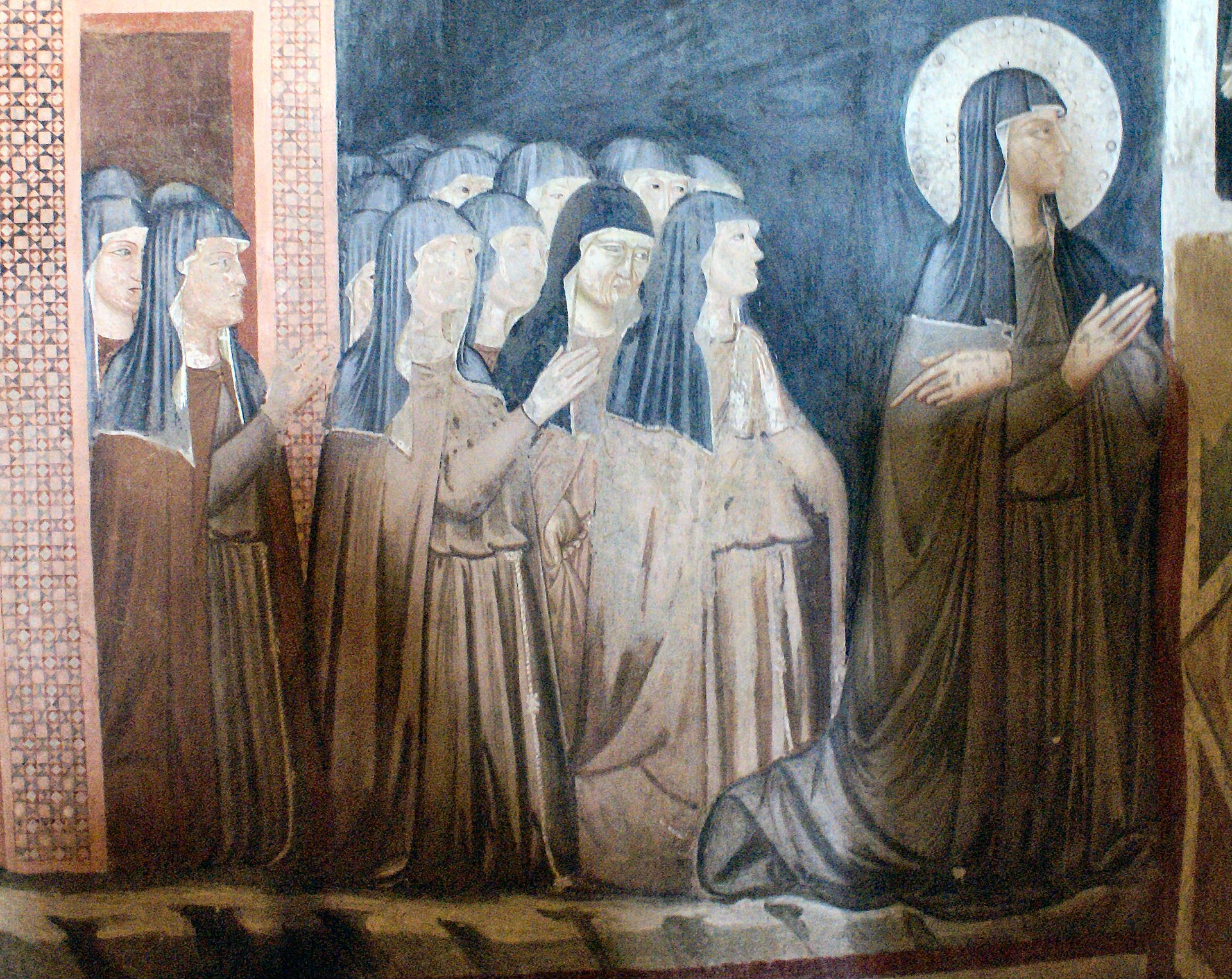




 novena.com