A Friar’s Notes, Precious Blood

Fr. David Convertino, OFM
Executive Director of Development

Every 4th of July, I reflect on the spirit of the Day and reflect on our freedoms, what it took to secure them, and what it takes to defend them. When I do this, I often think about the blood of innocent people who endure wars and conflicts, the friars who provide help in war-torn countries and never leave the people there, and our Nation’s military heroes, who time and again protect our freedom to gather in protest or in celebration, in worship, and in pursuing the great “American Dream” of freedom and prosperity that so many strive to have.

Many women and men have sacrificed on the battlefield, in factories, offices, schools, and in their homes, living difficult lives of sacrifice so that they can have this great dream for themselves or for their children.

As a friar, my faith defines much of who I am. Besides the 4th of this month, July is also a time when the Church dedicates the entire month to the Precious Blood of Jesus.

The Precious Blood of Jesus is the ultimate expression of God’s love and mercy.

Just as so many have shed their blood to secure liberty, Jesus shed His Precious Blood to free us from sin and death. One offers civic freedom—the other freedom from death.

My friends, as fireworks light up the sky this week, may they remind us of both the freedoms that belong to us in this democratic nation and the brilliance of Christ’s precious love.

We honor those who gave and still give their lives for our country, and we give thanks to the Savior who gave His life for ours.

But as we celebrate this July, we cannot forget those who still struggle for freedom from fear, poverty, a lack of healthcare, and other forms of suffering that many continue to fight for every day. Precious blood is still being shed every day.

Wishing you a blessed Feast of the Precious Blood and a joyful 4th of July.

Many Blessings,

Fr. David, OFM

The month of July is dedicated to the Most Precious Blood of the Redeemer. Supreme homage is given to the Sacred Blood.   As we adore the Sacred Heart, because it is the Heart of Jesus, who is God, so we adore the Most Precious Blood.

The Blood of Jesus is the fountain of salvation.   Each drop that flowed from the wounds of the Savior is a pledge of man’s eternal salvation.   All races of the earth have been ransomed, and all individuals, who will allow the saving power of the Sacred Blood to be applied to their soul, are heirs of heaven.   St. John Chrysostom calls the Precious Blood “the savior of souls”; St. Thomas Aquinas, “the key to heaven’s treasures”; St. Ambrose, “pure gold of ineffable worth”; St. Mary Magdalene de Pazzi, “a magnet of souls and pledge of eternal life”.   The sins of mankind, in their number, in their offense to the Supreme Being, in the effects on transgressors, are immense; yet, the Precious Blood of Jesus is not frightened by numbers, it has in Itself the power to appease an angered God and to heal wounded creatures.

The Precious Blood is a cleansing bath. Unlike all other blood, which stains, the Blood of Jesus washes clean and white.   According to the words of St. John, in the Apocalypse, the Angels wonder, and the question is asked: “These that are clothed in white robes, who are they?”  The Lord answers: “These are they that have washed their robes, and have made them white in the Blood of the Lamb.”  For no other reason did the Precious Blood flow but to regain for the souls of men the beautiful dress of innocence, and, once regained, to preserve it throughout life and into eternity.

The Blood of the Savior is a well of consolation for troubled hearts.  Can anyone, confidingly, look at the Sacred Blood trickling down from the Cross without taking courage to carry on, in spite of the difficulties which are the common lot of all?   One glance at the Cross must be able to drive away fear.    And, another, must be able to instill trust in Him who did not rest until the last drop, mingled with water, flowed out of an opened Heart.    He, who was willing to do so much for men, must be willing to overlook and forget the frailties which they deeply regret; He must be willing to come to their assistance when harassed, to defend them when tempted, to comfort them when afflicted.   The Blood of Jesus must be for Christians what the north-star is to sailors.

Would that men on earth honored the Precious Blood in the manner in which they who are in heaven give honor and praise and thanksgiving!   They proclaim that It purchased the glory which they enjoy.   Without It, they would have remained slaves of Satan and outcasts from the eternal mansions of God.   Let us profess that we owe to the Sacred Blood of Jesus all that we have in this life, and that to It we shall owe all that we shall enjoy in a better and eternal life!
PASSIONIST NUNS, 8564 CRISP ROAD, WHITESVILLE, KY 42378
O.C.S.O. Order of Cistercians of the Strict Observance

The Order of Cistercians of the Strict Observance (also known as “Trappists”) is a Roman Catholic contemplative religious order, consisting of monasteries of monks and monasteries of nuns. We are part of the larger Cistercian family which traces its origin to 1098. As Cistercians we follow the Rule of St Benedict, and so are part of the Benedictine family as well. Our lives are dedicated to seeking union with God, through Jesus Christ, in a community of sisters or brothers.

Early Monasticism

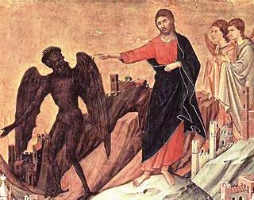
Jesus in the desert

Jesus in the desert

The concept of monasticism is ancient and is found in many religions and philosophies. In the centuries immediately before Christ, Hinduism, Buddhism, and Judaism all developed alternative styles of life which involved renouncing the world in some ways, in order to seek liberation or purification or union with God, sometimes as a solitary ascetic, sometimes in community.

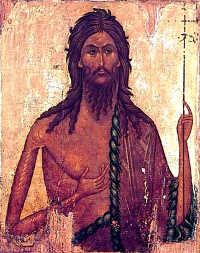
Early Christian monasticism drew its inspiration from the examples of the Prophet Elijah and John the Baptist, who both lived alone in the desert, and above all from the story of Jesus’ time in solitary struggle with Satan in the desert, before his public ministry. Beginning with the Exodus and all through the Old Testament times, the desert was regarded as a place of spiritual renewal and a return to God.  Although there were ascetics, especially women ascetics, among the first generations of Christians, they generally lived in the towns and cities.

St John the Baptist

St John the Baptist

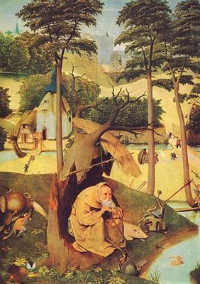
St. Anthony the Great (ca. 251-356) was the first well-known Christian to withdraw to the desert. According to the Life of Anthony written by St Athanasius in the mid fourth century, Anthony retreated to the wastelands of Egypt to lead an intensely ascetic life with the sole purpose of pursuing God in solitary prayer.  He remained alone until his holiness and evident wholesomeness attracted a growing circle of followers. So deep was his influence that he is considered the father, not only of the movement of Desert Fathers and Mothers of fourth – fifth century Egypt, but also the father of the entire Christian monastic family.

St Anthony

St Anthony
While the earliest Desert Fathers lived as hermits, they were rarely completely isolated, but often lived in proximity to one another, and soon loose-knit communities began to form in such places as the Desert of Nitria and the Desert of Skete.  The progression from hermit (“anchorite”) to monk (“cenobite”) living in community under one abbot, came quickly, when in 346 St Pachomius established in Egypt the first cenobitic Christian monastery.

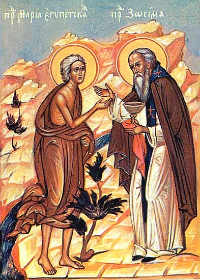
Mary of Egypt

Mary of Egypt

The Eastern monastic teachings were brought to the western church by Saint John Cassian (ca. 360 – ca. 435).  As a young adult, he and his friend Germanus entered a monastery in Palestine but then journeyed to Egypt to visit the eremitic groups in Nitria. Many years later, Cassian founded a monastery of monks and probably also one of nuns near Marseilles, and partly to counter what he felt were the abuses he found in Western monasticism, he wrote two long works, the Institutes and Conferences. In these books he not only transmitted his Egyptian experience (they are perhaps the oldest written record of the thought of the Desert Fathers), but he also gave Christian monasticism a profound evangelical and theological basis.

Cassian’s influence was enormous and lasted for centuries – even the smallest monastic library in Europe’s Dark Ages would have its copy of Cassian. Furthermore, St. Benedict incorporated Cassian’s thought into his monastic Rule, and recommended that his monks read Cassian’s works. Since the Rule of St Benedict is still used by Benedictine, Cistercian, and Trappist monastics, the thought of John Cassian, and the desert tradition behind him, still guides the spiritual lives of thousands of men and women in the Catholic Church.

The fear of the Lord is our cross. Just as someone who is crucified no longer has the power of moving or turning his limbs in any direction as he pleases, so we also ought to fasten our wishes and desires, not in accordance with what is pleasant and delightful to us now, but in accordance with the law of the Lord, where it hems us in. Being fastened to the wood of the cross means: no longer considering things present; not thinking about one’s preferences; not being disturbed by anxiety and care for the future; not being aroused by any desire to possess, nor inflamed by any pride or strife or rivalry; not grieving at present injuries, and not calling past injuries to mind; and while still breathing and in the present body, considering oneself dead to all earthly things, and sending the thoughts of one’s heart on ahead to that place where, one does not doubt, one will soon arrive… 

John Cassian, Institutes, Book IV ch.35
https://ocso.org

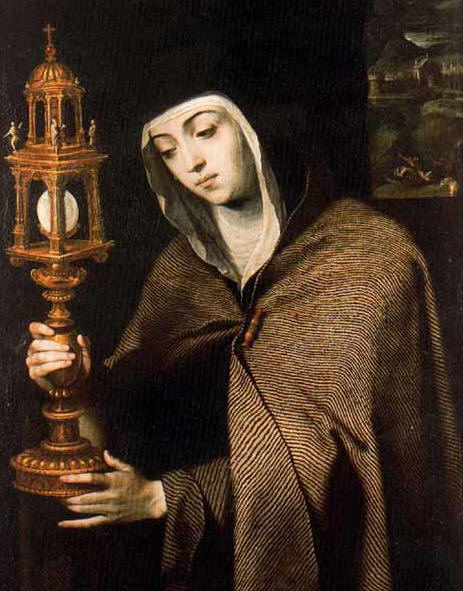
Poor Clare Sisters

The mysterious world of being a Poor Clare. Contemplative nuns who live a life of prayer, community and joy.

The first thing you need to know is that a Poor Clare is a nun – meaning that she lives in one monastery (usually) for her whole life. She takes solemn vows that can only be dispensed by Rome. BUT the second thing you have to know – is that a Poor Clare Nun is not a Benedictine, Dominican, Visitation or Carmelite nun. She is a Poor Clare nun.There is a world of difference between these other beautiful orders and Poor Clares. NO, not all nuns are alike.

Each Poor Clare community is autonomous. Not all Poor Clares dress alike, work alike or keep the same daily schedule. If you go from monastery to monastery you will feel the spirit of Joy and Communal gifting of each other – you will experience the warm bond of Joy, Simplicity and happiness of being a Franciscan. BUT you will always notice a difference and know you are in a different monastery. Poor Clares Monasteries are individual and unique as is each sister in them. So please… in your journey of exploring the joyful world of Poor Clares – there is no “template” for what a Poor Clare should look like, sound like and be like. Because there are no two alike.. and that is how the Holy Spirit works.

The Poor Clare Sisters number over 20,000 sisters throughout the world in 16 federations and in over 70 countries. Most monasteries have from four to thirteen members. Some have larger communities but the Poor Clare charism is one of family and St. Clare guided us that small communites were much better to keep this family spirit than larger ones. So when a community gets to a certain number we usually start new ones rather than just keep getting bigger. Just one of the differences you will see as you walk with us.

Blessings of Peace and All Good
http://poorclare.org/blog/?page_id=36


From Italy to the United States

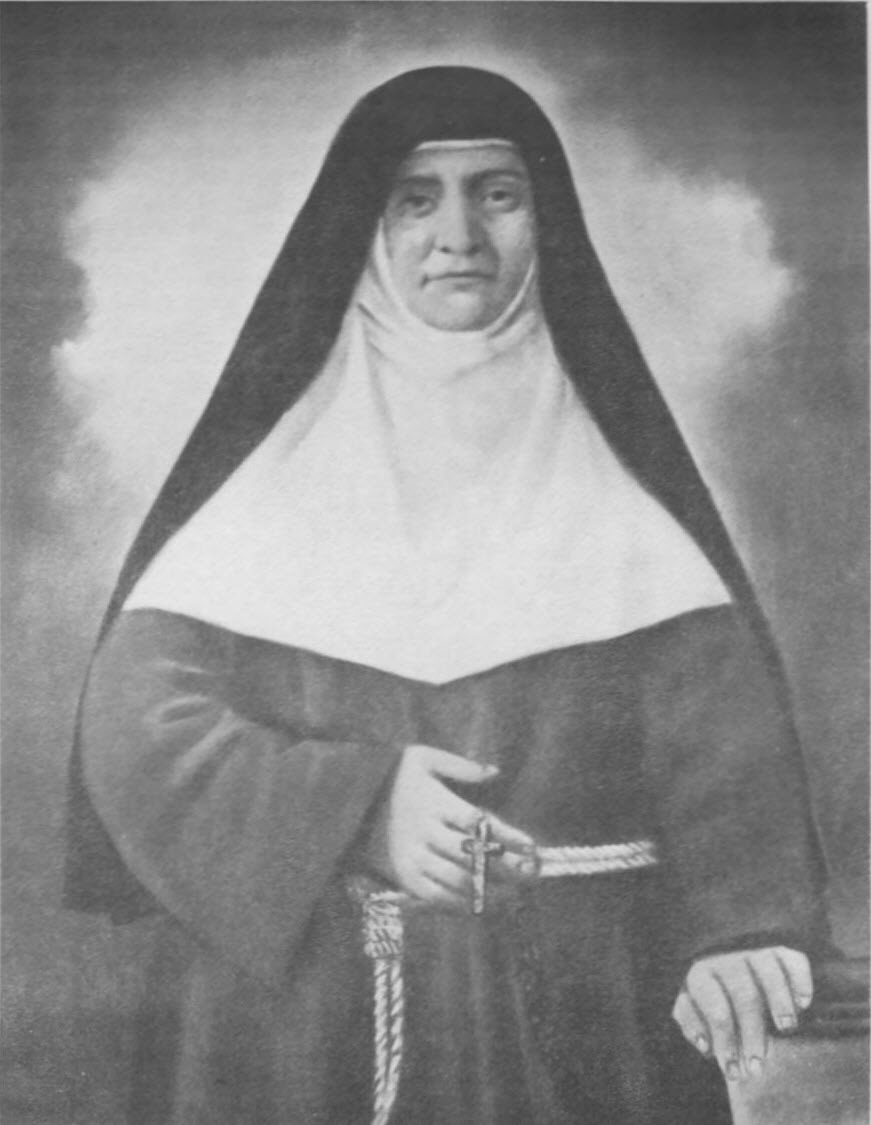
Mother Mary Maddelena Bentivoglio of the Sacred Heart of Jesus 1834-1905
Mother Mary Maddelena Bentivoglio
of the Sacred Heart of Jesus
1834-1905

Countess Anna Bentivoglio was a climber! From the age of five when she climbed onto a ledge in great St. Peter’s in Rome (to the horror of Count and Lady Bentivoglio!), to later life. This was the aim of her life – to climb – she would do so physically and spiritually.

Her yearning for religious life began when she followed her sister, Constance, into the Poor Clares. She longed for more austerity and asked for special penances. Then Pope Pius IX commissioned the two Bentivoglio sisters – Mother Magdalen and her sister Constance – to go to America. They first moved to Marseilles, France, were incorporated into the Poor Clares of the Primitive Rule, then on to the “New World”, arriving on Columbus Day, October 12, 1875. The first established monastery of the Order of Saint Clare was in Omaha, Nebraska, in 1878.

Following her example, today’s Poor Clares endeavor to follow this spiritual climber as they live out their daily life in simplicity and joy.

A Day in the Life

Our life is structured around an horarium, a rhythm of prayer throughout the day. The specific times of prayer are marked by the ringing of the bells, which symbolize the voice of God calling us to prayer. The Divine Office (also known as the Liturgy of the Hours), the Mass and the Eucharistic Adoration are the main framework around which our life of prayer revolves. It also includes manual labor, duties and community recreation which give balance to our times of prayer. In this rhythmic exchange of prayer, labor, and rest, we are liberated from the distractions of the world, free to dedicate our entire selves to living the Eucharistic Mystery.

We daily devote ourselves wholly to God alone:

  • by daily and personal conversion to the Gospel
  • by offering loving adoration, praise, and thanksgiving to God on behalf of all people
  • by our efforts to live and work contemplatively and to deepen our union with God in times of silence and solitude
  • by our intercessory prayer for the Church and all people,
  • by our efforts to love and serve our Sisters in true Community
  • by extending spiritual and material assistance to others in ways compatible with our contemplative life
  • by showing Sisterly hospitality and care to those who come to our monastery and in our relations with all persons

This is our cherished gift and call from our gracious God for which we are deeply grateful.

Horarium

5:15 AM
Wake up—Rise and Shine!

6:00 AM
Meditation

6:30 AM
Morning Prayer followed by Mid-Morning Prayer
Breakfast
Work

9:00 AM
The Holy Sacrifice of Mass—Prayer of Thanksgiving is made privately
Office of Readings—On Sundays we move this to 11:30 and combine it with Mid-Day Prayer

10:15 AM
Work for fully Professed Sisters
Class and/or Work for Formation Sisters

11:45 AM
Mid-Day Prayer

12:00 PM
Dinner in Silence followed by dishes
Recreation at table on Sundays and Thursdays
Free time or Work

3:00 PM
Mid-Afternoon Prayer followed by Divine Mercy Chaplet Work for fully Professed Sisters
Class and/or Work for Formation Sisters

4:30 PM
Evening Prayer followed by Communal Rosary—this becomes our Holy Hour for vocations for our Monastery on Fridays throughout the year and on Sundays in Lent and Advent

5:30-6:45 pm
Supper in Silence followed by Dishes with Community
Recreation on Mondays and Tuesdays
Ongoing Formation for the solemnly Professed Sisters on Thursdays; Otherwise directly to Night Prayer

6:45 pm
Night Prayer followed by personal time. On Sundays we have an optional movie recreation following this
On Tuesdays and Thursdays we have our nocturnal adoration

9:30 pm
Be in your rooms

10:00 pm
Grand Silence and lights out—Good night sleepyheads!

*Each Sister is privileged to have one hour of adoration a day, an hour of nocturnal adoration twice a week, and adoration during a meal time each week.

https://poorclares.org/horarium