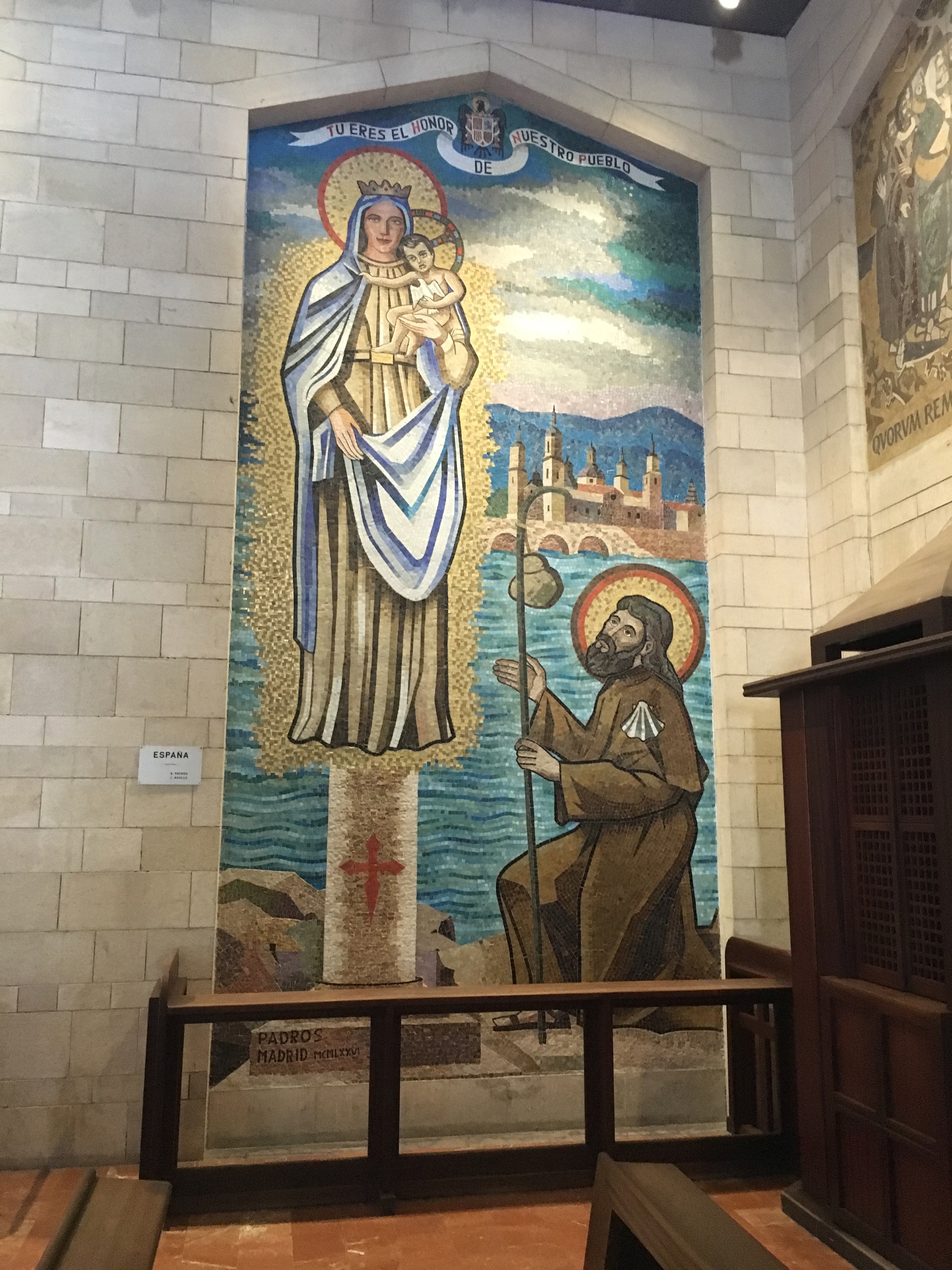
Solemnity of the Sacred Heart of Jesus

The call which comes from this important feast day is first of all a call to Eucharistic adoration, because in the Sacred Host the Lord Jesus is truly present and He offers each of us His Heart, His Merciful Love. To spend time in the Presence of the Eucharistic Lord, to adore Him, is the best expression of devotion to the Sacred Heart of Jesus which, as we know, spread all over the world thanks to Jesus’ revelations to Saint Margaret Mary Alacoque in the 17th century: “Behold the Heart which so loved mankind”!

As a prolongation and accomplishment of this message, the Lord appeared to another Sister in the 20th century revealing the abyss of His unfathomable mercy; she was Saint Faustina Kowalska who wrote in her Diary, now world famous, these words of Jesus: “I have opened my Heart as a living source of Mercy, from it all souls draw life, all approach with deep confidence this sea of Mercy. Sinners will obtain justification and the just will be strengthened in goodness. I will fill the souls of those who put their trust in My Mercy with My divine peace at the hour of their death. My daughter, continue to spread devotion to My Mercy, in doing so you will refresh My Heart which burns with the fire of compassion for sinners. Tell my priests that hardened sinners will be softened by their words if they speak of my boundless Mercy and of the compassion which My Heart feels for them. I will give priests who proclaim and exalt My Mercy wondrous power, unction to their words and I will move all the hearts to which they speak” (Book 5, 21 January 1938).

The deepest longing of Christ’s Heart is that we discover how much he loves us, the extent of his tender love for creatures who, cooled by their selfishness, look only inwards at themselves, as if they were afraid to let themselves be loved unconditionally by their Creator, who asks nothing and gives all!

Close to the Heart of the Son is the Heart of the Mother whom the Church celebrates the day after the solemnity of the Sacred Heart of Jesus. Let it again be the Holy Father who illuminates us with regard to this mystery: “The heart that resembles that of Christ more than any other is without a doubt the Heart of Mary, his Immaculate Mother, and for this very reason the liturgy holds them up together for our veneration. Responding to the Virgin’s invitation at Fatima, let us entrust the whole world to her Immaculate Heart, which we contemplated yesterday in a special way, so that it may experience the merciful love of God and know true peace” (Benedict XVI, Angelus 5 June 2005). 

Photograph by Lisa Silvestri

Visions of Mary

The Roman Catholic love and respect for the Virgin Mary divides it from other sects of Christianity. Mary is not only revered as the Mother of God but also as the Mother of all Humanity, and her image continually watches over every aspect in the daily life of Catholic countries. She is credited with working miracles through pictures, statues, and sacred earthly places. She is the inspiration of much of the world’s greatest music, art, and architectural works. Her spiritual gifts are recognized in the East and both Hindus and Buddhists refer to her as Mother Mary. Muslims revere her as the mother of a great prophet and she is the only woman with her own chapter in the Koran. As a human being Mary is able to relate directly to the major and minor sufferings of mankind. For this reason she is not prayed to as a goddess, but rather, called on by Catholics to aid them in their prayers. It is thought that she shares her constant flow of grace with those who ask, bringing them closer to God. Thomas Merton wrote, “Mary does not rule us from without, but from within. She does not change us by changing the world around us, but she changes the world around us by first changing our own inner lives.”

Saint Anthony of Padua

1195 – 1231

“Saint Anthony, please come around, there’s something lost that must be found.”

Doctor of the Church

Feast Day: June 13

Patron of: Lisbon, Portugal, Padua, amputees, barren women, domestic animals, draftees, oppressed people, orphans, paupers, the poor, pregnant women, prisoners, sailors

Invoked for: finding a husband, finding lost articles

Invoked against: debt, shipwreck, starvation

Symbols: baby Jesus, book of Gospels, lily

            Wonder and miracles are infused with every story of Saint Anthony. Though he has been dead for almost 800 years, he is still the most popular saint in the world and his statue is found in every Catholic Church.  Saint Anthony is best known as the patron saint of lost articles but he is invoked for help in all life situations. In his own day he was called the “Wonder Worker’ and credited with the ability to stop the rain, raise the dead and reattach severed limbs. He was such a charismatic preacher that when a crowd of heretics in Rimini refused to listen to his preaching, the fish raised themselves out of the water to hear him. 

            Born Fernando de Bulhes in Lisbon, Portugal, he disappointed his noble family by rejecting his luxurious life and joining the Augustinian religious order. A scholar by nature, he read every book in the monastery, devoting his time to contemplative prayer. Eventually, he befriended a group of itinerant Franciscan monks and became fascinated with this new religious order. Much impressed by their dedication to simplicity, poverty and their belief in returning to the original words of  Christ, he joined their ranks, changing his name to Anthony in honor of Saint Anthony of the Desert, the patron of their little church. Returning home from a failed missionary venture in Morocco, his ship was blown off course and he wound up in Messina, Sicily. A group of Franciscan friars insisted he go north with them for a great gathering of all Franciscans, with their founder Francis of Assisi. 

            Anthony remained in Italy and discovered his great gift of preaching when a superior ordered him to speak at an ordination, telling him to say whatever the holy spirit had infused into him. He astonished his audience, not only by his skills as an orator but by the depth of his knowledge. He was sent throughout northern Italy and southern France on evangelical preaching missions which gathered crowds in the tens of thousands. His popularity among the people increased as he used his position to get real changes enacted for their protection. While based in Padua, he observed the crushing power of debt upon the common people. At Anthony’s insistence, the local municipality enacted a law protecting those who could not pay their debts that is still enforced today. 

            Anthony exhausted himself preaching out in fields and in piazzas as there was not cathedral large enough to hold all who came to hear him. At the age of thirty six, his health began to fail him and a local Count donated a woodland retreat for his recovery. One morning the Count heard the sounds of a baby giggling and he looked out to see Anthony surrounded in light, playing with the baby Jesus. That Christ would choose to appear to one of his saints in such a vulnerable state is a testament to the loving and kind nature of Saint Anthony. Because he is depicted holding a baby, women having trouble conceiving invoke his aid. Being of Portuguese descent, Anthony’s feast day is very auspicious for marriages in Portugal and Brazil and in those cultures, he is known to assist women seeking a husband.

            According to legend, Saint Anthony earned the title patron saint of lost articles when a novice borrowed his psalter and failed to return it. Saint Anthony prayed to get  it back and the novice was visited by terrifying visions that sent him running back to Anthony with the book. In iconography, Anthony always holds the baby Jesus and a lily for purity. Many times the returned book of the gospels is included. 

Novena to Saint Anthony of Padua

Holy Saint Anthony, gentle and powerful in your help, Your love for God and charity for His creatures, made you worthy when on earth, to possess miraculous powers. Miracles waited on your word, which you were always ready to request for those in trouble or anxiety. Encouraged by this thought, I implore you to obtain for me (mention your request here). The answer to my prayer may require a miracle. Even so, you are the saint of miracles. Gentle and loving Saint Anthony, whose heart is ever full of human sympathy, take my petition to the Infant Savior for whom you have such a great love, and the gratitude of my heart will be ever yours.

Amen

It is customary to donate to Saint Anthony’s Bread, a charity started in Saint Anthony’s lifetime, in gratitude to answer novena prayers.

St. Anthony is one of 36 saints you can learn about and pray with on novena app.

Find on the Apple Store

O.C.S.O. Order of Cistercians of the Strict Observance

The Order of Cistercians of the Strict Observance (also known as “Trappists”) is a Roman Catholic contemplative religious order, consisting of monasteries of monks and monasteries of nuns. We are part of the larger Cistercian family which traces its origin to 1098. As Cistercians we follow the Rule of St Benedict, and so are part of the Benedictine family as well. Our lives are dedicated to seeking union with God, through Jesus Christ, in a community of sisters or brothers.

Early Monasticism

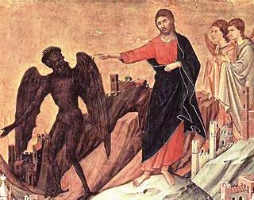
Jesus in the desert

Jesus in the desert

The concept of monasticism is ancient and is found in many religions and philosophies. In the centuries immediately before Christ, Hinduism, Buddhism, and Judaism all developed alternative styles of life which involved renouncing the world in some ways, in order to seek liberation or purification or union with God, sometimes as a solitary ascetic, sometimes in community.

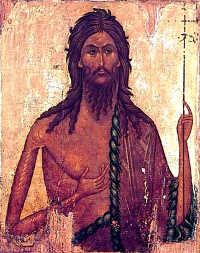
Early Christian monasticism drew its inspiration from the examples of the Prophet Elijah and John the Baptist, who both lived alone in the desert, and above all from the story of Jesus’ time in solitary struggle with Satan in the desert, before his public ministry. Beginning with the Exodus and all through the Old Testament times, the desert was regarded as a place of spiritual renewal and a return to God.  Although there were ascetics, especially women ascetics, among the first generations of Christians, they generally lived in the towns and cities.

St John the Baptist

St John the Baptist

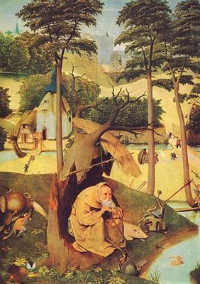
St. Anthony the Great (ca. 251-356) was the first well-known Christian to withdraw to the desert. According to the Life of Anthony written by St Athanasius in the mid fourth century, Anthony retreated to the wastelands of Egypt to lead an intensely ascetic life with the sole purpose of pursuing God in solitary prayer.  He remained alone until his holiness and evident wholesomeness attracted a growing circle of followers. So deep was his influence that he is considered the father, not only of the movement of Desert Fathers and Mothers of fourth – fifth century Egypt, but also the father of the entire Christian monastic family.

St Anthony

St Anthony
While the earliest Desert Fathers lived as hermits, they were rarely completely isolated, but often lived in proximity to one another, and soon loose-knit communities began to form in such places as the Desert of Nitria and the Desert of Skete.  The progression from hermit (“anchorite”) to monk (“cenobite”) living in community under one abbot, came quickly, when in 346 St Pachomius established in Egypt the first cenobitic Christian monastery.

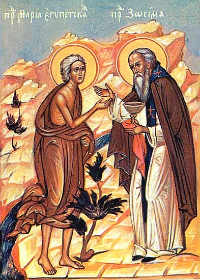
Mary of Egypt

Mary of Egypt

The Eastern monastic teachings were brought to the western church by Saint John Cassian (ca. 360 – ca. 435).  As a young adult, he and his friend Germanus entered a monastery in Palestine but then journeyed to Egypt to visit the eremitic groups in Nitria. Many years later, Cassian founded a monastery of monks and probably also one of nuns near Marseilles, and partly to counter what he felt were the abuses he found in Western monasticism, he wrote two long works, the Institutes and Conferences. In these books he not only transmitted his Egyptian experience (they are perhaps the oldest written record of the thought of the Desert Fathers), but he also gave Christian monasticism a profound evangelical and theological basis.

Cassian’s influence was enormous and lasted for centuries – even the smallest monastic library in Europe’s Dark Ages would have its copy of Cassian. Furthermore, St. Benedict incorporated Cassian’s thought into his monastic Rule, and recommended that his monks read Cassian’s works. Since the Rule of St Benedict is still used by Benedictine, Cistercian, and Trappist monastics, the thought of John Cassian, and the desert tradition behind him, still guides the spiritual lives of thousands of men and women in the Catholic Church.

The fear of the Lord is our cross. Just as someone who is crucified no longer has the power of moving or turning his limbs in any direction as he pleases, so we also ought to fasten our wishes and desires, not in accordance with what is pleasant and delightful to us now, but in accordance with the law of the Lord, where it hems us in. Being fastened to the wood of the cross means: no longer considering things present; not thinking about one’s preferences; not being disturbed by anxiety and care for the future; not being aroused by any desire to possess, nor inflamed by any pride or strife or rivalry; not grieving at present injuries, and not calling past injuries to mind; and while still breathing and in the present body, considering oneself dead to all earthly things, and sending the thoughts of one’s heart on ahead to that place where, one does not doubt, one will soon arrive… 

John Cassian, Institutes, Book IV ch.35
https://ocso.org

Forgotten Souls in Purgatory

One person on earth for one forgotten soul in purgatory!

Lets remember!

O merciful God, take pity on those souls who have no particular friends and intercessors to recommend them to Thee, who, either through the negligence of those that are alive, or through length of time are forgotten by their friends and by all. 

Spare them, O Lord, and remember Thine own mercy, when others forget to appeal to it. Let not the souls which Thou has created be parted from Thee, their Creator. They are Thy work, and though they  have sinned, they have been redeemed by Thee. 

Vouchsafe, therefore, to look upon them  and to deliver them from the intolerable pain of absence from Thee; the light and love of all Thy creatures. Oh! place them in the number of Thy blessed Saints and citizens through Jesus Christ their Savior. Amen.

Feast of The Immaculate Conception

“The most Blessed Virgin Mary was, from the first moment of her conception, by a singular grace and privilege of almighty God and by virtue of the merits of Jesus Christ, Savior of the human race, preserved immune from all stain of original sin.” 

In 1854, Pope Pius IX’s solemn declaration, “Ineffabilis Deus,” clarified with finality the long-held belief of the Church that Mary was conceived free from original sin. Mary was granted this extraordinary privilege because of Her unique role in history as the Mother of God. That is, she received the gift of salvation in Christ from the very moment of her conception. 

Even though Mary is unique in all humanity for being born without sin, she is held up by the Church as a model for all humanity in Her holiness and Her purity in her willingness to accept the Plan of God for her. 

Every person is called to recognize and respond to God’s call to their own vocation in order to carry out God’s plan for their life and fulfill the mission prepared for them since before the beginning of time. Mary’s “Let it be done to me according to Thy Word,” in response of the Angel Gabriel’s greeting, is the response required of all Christians to God’s Plan. 

The Solemnity of the Immaculate Conception is a time to celebrate the great joy of God’s gift to humanity in Mary, and to recognize with greater clarity, the truth that each and every human being has been created by God to fulfill a particular mission that he and only he can fulfill. 

“The word of the Lord came to me thus: “Before I formed you in the womb I knew you, before you were born I dedicated you, a prophet to the nations I appointed you.” (Jeremiah 1:5-6)

Novena, The Power of Prayer

Our book is now available as an ebook on amazon https://www.amazon.com/dp/B0D4WQLFRXyou can buy or read free if you subscribe to kindle reading.

This book celebrates the meaningful recitation of novenas, a traditional nine day prayer to a particular saint, angel or Madonna for help in solving a problem.

It was our objective to create a book that would be assessable to all, Catholic and non-Catholics alike.

You will learn about The Saints, Angels and The Madonna. The history of The Saints who lived with us on earth. The many visions of The Madonna as she appeared on earth. And more…

Barbara and Sandy

Solemnity of Mary, Mother of God.

IMG_1203In honor of the Solemnity of Mary I would like to share our ebook Visions of Mary. Highlight the link below and download.

VisonsofMary_ebook2016v1

The Women With Jesus

mary-m

Luke refers to a number of people accompanying Jesus and the twelve. From among them he names three women: “Mary, called Magdalene, … and Joanna the wife of Herod’s steward Chuza, and Susanna, and many others, who provided for them out of their resources” (Luke 8:2-3).

SAINT MARY MAGDALENE
Apostle to the Apostles
First Century
Feast Day: July 22
Patron of: Provence, contemplatives, converts, gardeners, glove makers, hairdressers, penitents, perfumers, pharmacists, prisoners, reformed prostitutes
Invoked against: sexual temptation
Symbols: alabaster jar, long hair, skull

“Touch me not; for I am not yet ascended to My Father; but go to my brethren, and say unto them, I ascend unto My Father, and your Father; and to My God, and your God.”
Christ to Mary Magdalene according to John 20:17

Though the subject of Mary Magdalene’s true identity may be fodder for a heated debate, there is one aspect of her life that all ecclesiastical writers agree upon: She never left Christ during His crucifixion, and she was the first person to see Him after His resurrection. Because Jesus chose her as His first witness and because He told her to go and tell the others what she saw, she is known as the “Apostle to the Apostles.” This title aside, it is the example she sets as a penitent and reformed sinner that she is most well known and honored.

According to ancient Jewish texts, the seaside town of Magdala was known as a place of loose morals. This town was Mary’s home, and she took its name as her own, signifying her unmarried state. It was said that Mary had wealth and took great pride in her appearance, enjoying luxuries and lapsing into promiscuity. Many shunned her because of her reputation for lewdness and it is as this sinner that we are first introduced to her.

After Jesus had raised the son of a widow from the dead, a man named Simon invited him to be guest of honor at a dinner. While they were seated, a certain notorious woman walked into the room carrying an alabaster box. Weeping, she threw herself down and wiped Jesus’ feet with her hair and then anointed them with the oil. Simon was outraged that Jesus would accept such tribute from someone so disgraceful. But instead of judging the woman Jesus rebuked Simon, “Does thou see this woman? I entered into thy house–thou gave me no water for my feet. But she with tears has washed my feet, and with her hair has wiped them. Thou gave me no kiss. But she, since she came in, has not ceased to kiss my feet. My head with oil thou did not anoint but she with ointment has anointed my feet. Wherefore I say to thee: Many sins are forgiven her, because she has loved much. But to whom less is forgiven, he loves less.” He then told the penitent woman to go in peace, all her sins were forgiven.

In the next chapter of Luke he mentions the travels of Christ and his followers in Galilee, among them is “Mary called Magdalene, out of whom went seven devils.” Luke also tells us that the day before Christ’s entry into Jerusalem he dined with Lazarus and his sisters Martha and Mary. When Judas objects to the use of such expensive oil he is rebuked by Christ, like Simon, for being so self-righteous. “. . . For the poor you have always with you . . . but me you have not always. . .” Because in this story, Mary too wipes Jesus’ feet with her hair and anoints them with oil in the same manner as the penitent woman, Catholics believe both women to be Mary Magdalene, whom after being exorcized by Christ became one of his greatest and most loyal followers.

Indeed, her loyalty to Jesus was unsurpassed even at His death. Unlike His other disciples, Mary never renounced Jesus or ran from Him. She stood with His mother until He was dead, helped take Him down from the cross and wept outside of His tomb. On Easter morning it was Mary Magdalene who returned at dawn to keep a vigil. When she found the great stone covering the tomb rolled away, she ran back to tell Peter and the others that someone had taken Jesus’ body. They ran ahead of her, saw the open tomb, and left.

But it was Mary Magdalene who stayed behind, searching the tomb and weeping. Two angels dressed in white appeared to her and asked why she was weeping. “They have taken my Lord, and I know not where they have laid him,” she responded. A gardener asked her the same question and she begged the man to tell her where Christ’s body might be found. “Mary,” said the man, and she suddenly knew this man was not a gardener. She was talking to the risen Christ. When she went to embrace him he told her, “Touch me not!” (The phrase Noli me tangere in the Latin bible). Mary spread the good news to the disciples–the last action the gospels recorded of Mary Magdalene.

The rest of her life story was written in the early Middle Ages. It is said that after the resurrection of Christ, political leaders in Israel tried to quash the cult that was rapidly growing around Him. These leaders placed Mary Magdalene, her sister Martha, their brother Lazarus, and other followers in a rudderless boat, in hopes that they would perish at sea. Divine Providence brought them to the coast of Marseilles, France. There they had much success converting the local people to Christianity. Mary took her apostolic mission to Provence and was greeted with equal enthusiasm. After converting the king and helping to install a bishop, she retired to a cave to live out the last thirty years of her life as a penitent. Her hair grew long enough to cover her naked body, and she repented for her previous deeds as a sinner. Once a day angels would carry her to heaven, where she received her “daily sustenance,” which took the place of earthly food. Eventually her death drew near, and she sent for Maximinus, the bishop she had installed years earlier. She received the eucharist and died in tears.

Early French ecclesiastical writers claimed Mary Magdalene and her family as their evangelists. Since they were favorites of Christ, this divine favoritism then extended to France and the French people. Miraculous discoveries of her relics abounded from Provence to Burgundy. The Cathedral at Vézelay was dedicated to her in the twelfth century and became the center of her cult and an important stop on the pilgrimage to Campostela. Her feast, falling in the heart of summer was happily celebrated throughout France.

To the people of the Middle Ages, Mary Magdalene was a wildly glamorous figure, a beautiful woman with long, red hair. She presented an alternative to the image of an ever pious saint. Here was a woman who had enjoyed luxuries, made mistakes, and tried to redeem herself. As towns grew into cities, they began to face an onslaught of urban problems such as prostitution. Though there is no mention in the Bible of Mary Magdalene ever being a prostitute, preachers invented lurid tales of her youthful sexual indiscretions. That God could extend forgiveness to such a willful, wayward creature gave hope to everyone for their own forgiveness. Homes for reformed prostitutes took her as their patron, and the word magdalene became a description for a fallen woman. It was not until the twentieth century that Mary Magdalene’s role as a penitent and devoted follower of Christ was stressed.

Always a popular subject for artists, Mary Magdalene is always depicted as a beautiful, sorrowful woman with long hair. In some images she carries the alabaster unguent jar and in others a skull is present, the symbol of the penitent to remind us of how we are all going to end up. The English word maudlin is a derivative of Magdalene. Oxford University has a famous college named for her. Because she loved luxury before her conversion, and bought expensive unguents after it, she is the patron of such trades as glove makers, hairdressers, and perfumers. Since devils were cast out of her, she is the patron of prisoners who cast off their chains. Because Christ appeared to her as a gardener she is the patron of the profession. Her knowledge and use of unguents also makes her the patron of pharmacists.

Prayer to Saint Mary Magdalene
Saint Mary Magdalene, woman of many sins,
Who by conversion became the beloved of Jesus,
Thank you for your witness that Jesus forgives
through the miracle of love.

You, who already possess eternal happiness
in His glorious presence,
please intercede for me, so that someday
I may share in the same everlasting joy.
Amen.
Learn more about Joanna at http://www.aletheiacollege.net/bl/19-1Joanna_Character_Study.htm.

Not much is known about Susanna.
 

Our Lady of Fatima

Pray to Our Lady of Fatima for Forgiveness and Reparations

The Feast Day of Our Lady of Fatima is the anniversary
of the first apparition, May 13.  

The twentieth century has been the bloodiest and most violent in the history of the world. During Mary’s visits to Fatima, Portugal, in 1917, she foretold not only the terrors of the Russian Revolution and World War II, but also made a third prediction, never released, as it was judged far too terrifying.  In her visits she stressed the recitation of the rosary and taking fifteen minutes to meditate on her Immaculate Heart each week. Expressing the feeling that humanity had drifted away from God, she wanted the world to offer up reparations for the disastrous state of the earth. Our Lady of Fatima is an angry and pained mother, demanding that the world come to its senses and honor its Creator.

Her rules are strict. This novena is said to honor Mary and to atone for the blasphemies and ingratitude that are heaped upon God and his creations. Coming in the midst of the first World War, her warnings were pointedly political. She predicted the suffering imposed by the Communist states as well as the incredible carnage of the next world war. She strongly commanded all of humanity to pray the rosary, insisting this is the only road to peace. On May 13, 1917, three young shepherd children, aged ten, nine, and seven – Lucia, Antonio, and Maria dos Santos – were out tending sheep at a place called Cova da Iria in Fatima. Mary appeared to them in a dazzling light, floating above the trees. She taught them how to pray the rosary and told them she would return on the thirteenth day of each month for the next five months. Though they were initially mocked for their story, a handful of people accompanied them when they returned to the location of Mary’s visit on the thirteenth of June. There they witnessed a burst of lightning and heard the buzzing of bees. The three children stood transfixed, almost fainting with fright. By Mary’s final visit, on October 13, there were several thousand people waiting for her to appear.

It had been pouring rain for two days, and a local priest, who’d believed the children were lying, tried to disperse the crowd. In the east a bolt of lightning rang out and the rain stopped instantly. As the clouds parted, the people looking at the sun fell to their knees. It had begun to tremble and dance, and the entire crowd was engulfed by the spectrum of colors streaming from it. Some saw the face of the Virgin in the sky; others saw a huge whirling wheel of fire spinning toward the earth. The heat emanating from the rays of lights was so intense that by the end of the vision, ten minutes later, those soaked by the rain were completely dry. As far as thirty miles away, people reported sighting strange light forms in the sky.

There were many journalists present who recorded this story, and it filled the newspapers. It was called, “the Miracle of the Sun,” and it is thought that Mary orchestrated it in order to force the world to believe the predictions she had communicated to the three children.

Novena Prayer to Our Lady of Fatima

Most holy Virgin, who came to Fatima to reveal to the three shepherd children the treasures of graces hidden in the recitation of the rosary, inspire our hearts with a sincere love of this devotion, so that by meditating on the mysteries of our redemption that are recalled in it, we may gather their fruits and obtain the conversion of sinners, the conversion of Russia, and (Mention your requests) Which we ask of you in this novena, for the greater glory of God, for your own honor, and for the good of people. Amen   Recite one Our Father, one Hail Mary, one Glory Be   Our Lady of the Rosary of Fatima, pray for us!   Recite this novena nine times in a row for nine days in a row.