The Visit of Mary to Elizabeth (Philippe de Champaigne, 1602-1674)
Mary went to visit her cousin Elizabeth, who was also pregnant. When Mary entered the house and called a greeting, Elizabeth felt her baby move within her. Elizabeth was filled with the Holy Spirit and said “You are the most blessed of all women, and blessed is the child you will bear!” She went on to say that her baby jumped with gladness at the sound of Mary’s voice.
Understanding the text
Elizabeth is Mary’s cousin. She is now elderly and she and her husband, Zechariah, have never been able to have children. Now Elizabeth is pregnant as God has worked a miracle so they can conceive.
Their child will grow up to be John the Baptist, the person whose role in life is to prepare people for Jesus.
Mary goes to visit her cousin Elizabeth when both of them are expecting their babies. Elizabeth’s baby “leaped in her womb” when Mary entered the house and called a greeting.
This incident shows that even though they are not yet born, John acknowledges the superiority of Jesus and recognises that Jesus is God’s son.
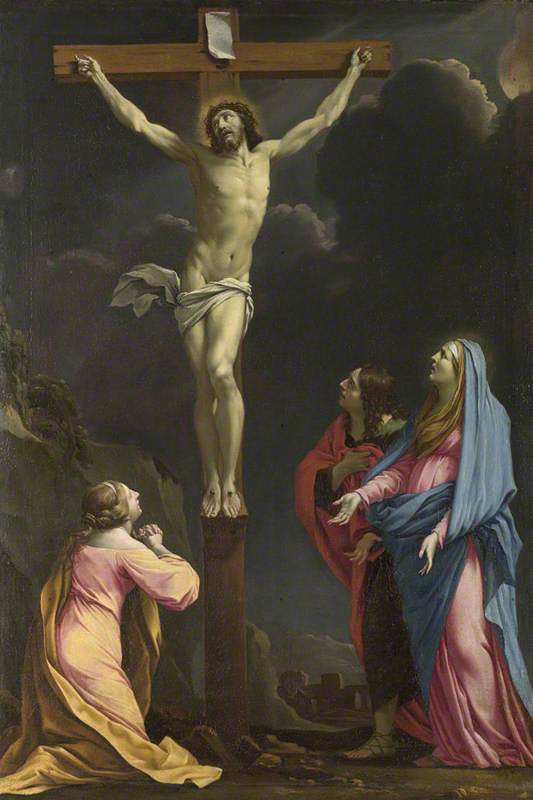
All four Gospels make note that Mary was present at the crucifixion and death of Jesus on Good Friday. Matthew, Mark, and Luke note that Mary and other women, in particular Mary Magdalene, “watched from a distance.” Only Luke writes that “some of Jesus’ disciples” were with Mary. Notably, the Twelve were not there, but hiding out of fear for their lives.
John, however, says very clearly that Mary—with Mary Magdalene and the disciple whom Jesus loved—witnessed Jesus’ death “from the foot of the cross,” not from a distance. At the same time, the distinction made between John and the other three evangelists may provide us with significant teaching moments.
On the one hand, Matthew, Mark, and Luke may be understood as historical descriptions since family and relatives, especially women, would not have been permitted up close to the actual place of execution. Executions were “men’s work.” Those executed were stripped of all clothing and died naked. Artists have added loincloths for the sake of Jesus’ dignity. And executioners would not have wanted hysterical family members getting in the way. If you’ve seen The Passion of the Christ, you will remember the shocking brutality of the crucifixion. But the point is that, even at a distance, the fact is that Mary and others saw Jesus crucified and die.
Universal Truths
John’s description has Mary, Magdalene, and “the disciple whom Jesus loved” close enough so that they could hear his words. John’s account is not for the purpose of describing the actual historical scene. Rather, it is to give the early Church a powerful instruction in the relationship of Mary not only to the disciple standing near her, but also to the whole Church. Jesus showed us that his mother was, indeed, the mother to all of God’s children.
In looking at this scene of Jesus’ crucifixion and noting the distinctions between Matthew, Mark, and Luke’s description—and that of John’s—we see an important point in reflecting on Scripture. Sometime people want to put great emphasis on those things that they see and understand as historical. It is essential to understand that God reveals his truth in various ways.
The writer, John, already knew of the other Gospels as they described Mary and the others watching the death of Jesus, showing their dedication and faithfulness to him even in death. The best conclusion to draw is that everything in the Gospels (and all of Scripture) is significant since it is the revealed word of God. Whether it is a fact of history or a manner of teaching that might not be historical, both contain the truth of God’s teaching for us.
Both the devotion of Mary and the women witnessing Jesus’ death—and the gift of Mary as mother to us—are truths we cannot be without.


 novena.com