Feast of Saints Michael, Gabriel, and Raphael

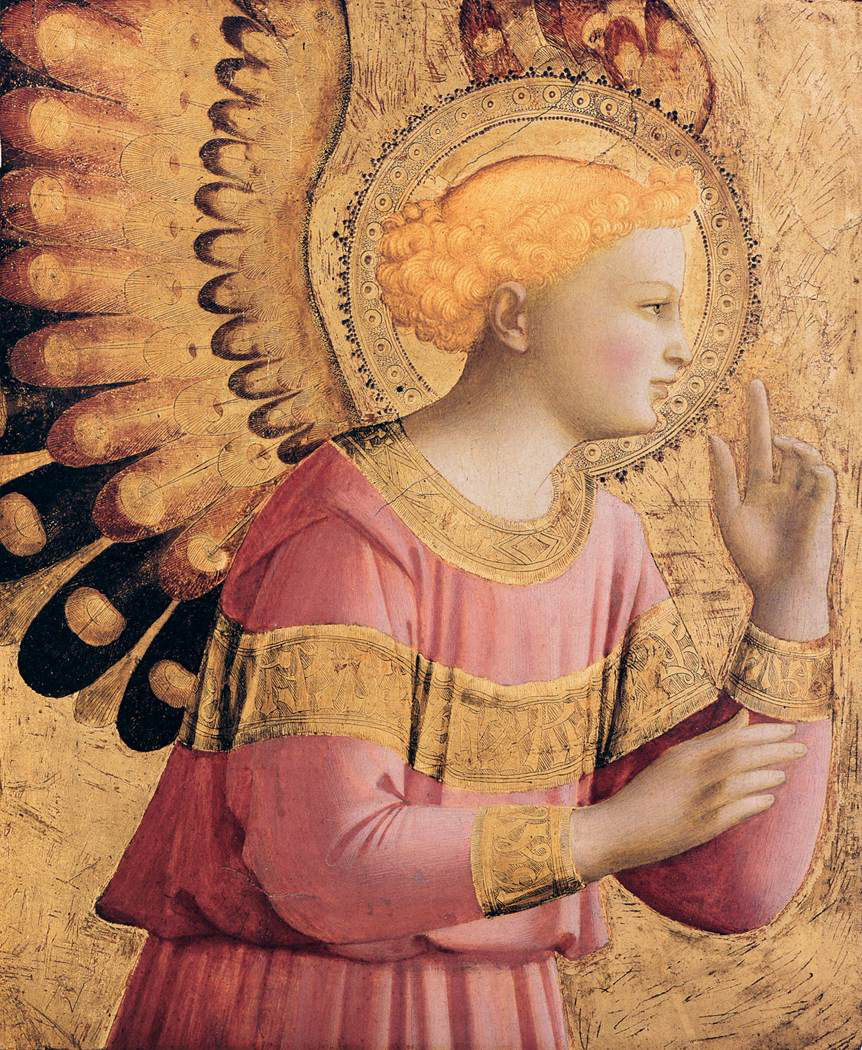
Angels—messengers from God—appear frequently in Scripture, but only Michael, Gabriel and Raphael are named.

Michael appears in Daniel’s vision as “the great prince” who defends Israel against its enemies; in the Book of Revelation, he leads God’s armies to final victory over the forces of evil. Devotion to Michael is the oldest angelic devotion, rising in the East in the fourth century. The Church in the West began to observe a feast honoring Michael and the angels in the fifth century.

Gabriel also makes an appearance in Daniel’s visions, announcing Michael’s role in God’s plan. His best-known appearance is an encounter with a young Jewish girl named Mary, who consents to bear the Messiah.

Raphael’s activity is confined to the Old Testament story of Tobit. There he appears to guide Tobit’s son Tobiah through a series of fantastic adventures which lead to a threefold happy ending: Tobiah’s marriage to Sarah, the healing of Tobit’s blindness, and the restoration of the family fortune.

The memorials of Gabriel and Raphael were added to the Roman calendar in 1921. The 1970 revision of the calendar joined their individual feasts to Michael’s.

Reflection

Each of the archangels performs a different mission in Scripture: Michael protects; Gabriel announces; Raphael guides. Earlier belief that inexplicable events were due to the actions of spiritual beings has given way to a scientific world-view and a different sense of cause and effect. Yet believers still experience God’s protection, communication, and guidance in ways which defy description. We cannot dismiss angels too lightly.

Saints Michael, Gabriel, and Raphael are the Patron Saints of:

Death
Germany
Grocers
Police Officers/First Responders
Radiologists

Saint Gabriel is the Patron Saint of:

Broadcasters/Communicators
Saint Raphael is the Patron Saint of:

The Blind
Travelers

From Franciscan Media

The Archangels in the Jesuit church in Venice

In the heart of Cannaregio in Venice, there is a beautiful 18th century church, built by the Jesuits in 1729 and dedicated to the Assumption. Inside there are many works of art (including a fantastic painting by Tiziano Vecellio), but it is also one of the few churches in the world where the six archangels are represented.


Usually the archangels are Gabriele, Michele and Raffaele, but here there are the statues another three. On either side of the high altar there are Uriel (the guardian of the gates of Heaven) and Barachiele (the archangel of divine goodness) to the four corners of the transept there are four other statues (like the previous work of Giuseppe Torretto): Michele (Prince of the heavenly hosts), Raffaele (the heavenly messenger), Gabriele (the patron of travellers) and Sealtiele (the archangel of temperance).

The other 4 archangels (missing here is Jehudiele, the praise of God) are not explicitly mentioned in the Bible but are found in the Apocalypse and in the book of Tobia. The Jesuits, the great scholars of the Holy Scriptures who were in close contact with the rabbis of the nearby Ghetto, wanted to put all the Archangels to guard and protect their Church.


Today “the other Archangels” are analysed by all those involved in the study of the Kabbalah and esoteric sciences.

Daily Word Of Godjesuit.org.sg

John 1:47-51

When Jesus saw Nathanael coming he said of him, ‘There is an Israelite in who deserves the name, incapable of deceit.’ ‘How do you know me?’ said Nathanael.   ‘Before Philip came to call you’, said Jesus, ‘I saw you under the fig tree.’ Nathanael answered, ‘Rabbi, you are the Son of God, you are the King of Israel.’

Jesus replied, ‘You believe that just because I said: I saw you under the fig tree. You will see greater things than that.’ And then he added, ‘I tell you most solemnly, you will see heaven laid open and, above the Son of Man, the angels of God ascending and descending.’

Today’s Pointers on God’s Word

As you read the passage what words, phases or meanings caught your attention?

  • Archangel Michael, Gabriel and Raphael were created by God to “protect, communicate and heal” us.  These are God’s ways of loving and caring for us at all times.
  • We should be grateful to God at all times for His constant and caring ways that continue to attend to our needs and desires of life.
  • As God is so caring toward us we, in turn, are called to care for the needs of others especially the aged, the weak, and the marginalized of our family, neighbours and the world.

Saint Michael: Luca Giordano, The Fall of the Rebel Angels ( c. 1666), Kunsthistorisches Museum, Vienna

The Assumption of Mary

MARY ASSUMED INTO HEAVEN: INTERCEDE FOR US!

“My soul proclaims the greatness of the Lord; my spirit rejoices in God my Savior for he has looked with favor on his lowly servant. From this day all generations will call me blessed: the Almighty has done great things for me and holy is his Name.”  Luke 1:46–49

Assumption of the Virgin Mary, fresco painting in San Petronio Basilica in Bologna, Italy. | Credit: Zvonimir Atletic/Shutterstock

Today we celebrate one of seventeen different memorials, feasts and solemnities in honor of the Blessed Virgin Mary that are found on the Roman Liturgical Calendar. Today’s celebration is one of the four great Solemnities by which our Blessed Mother is honored. Obviously, no other person other than our Lord is honored and celebrated with as much solemnity as the Mother of God.

The Solemnity of the Assumption honors the fact that when the Blessed Virgin Mary completed her life on earth, she was taken body and soul into Heaven to be with her resurrected Son so as to adore the Most Holy Trinity forever. It’s an amazing fact to consider that she retains her body and soul, united as one in Heaven, in anticipation of that glorious day when the new Heavens and Earth will be created and when all the faithful will rise so as to live in a new bodily form forever with God.

Though this dogma of our faith had been held and believed by the faithful from the earliest times of our Church, especially since it was witnessed by those closest to our Blessed Mother at the time of her glorious Assumption, it wasn’t until November 1, 1950, that Pope Pius XII solemnly proclaimed it to be so, raising this teaching of our faith to the level of a dogma, meaning, it must be held and believed by all. In part, the Holy Father declared, “…we pronounce, declare, and define it to be a divinely revealed dogma: that the Immaculate Mother of God, the ever Virgin Mary, having completed the course of her earthly life, was assumed body and soul into heavenly glory.”

The Gospel passage quoted above comes from the beginning of Mary’s song of praise, her Magnificat, by which she not only gives the greatest glory to God but also reveals who she is. She is the one whom “all generations” will call “blessed.” She is the one for whom “the Almighty has done great things.” She is the one who will eternally proclaim “the greatness of the Lord” and whose spirit will forever rejoice in God her Savior. And she is that lowliest of servants whom God has raised up to the greatest glory.

Reflect, today, with the whole Church, upon the Most Glorious Ever-Virgin Mary who was conceived without sin, remained sinless throughout her life, and was taken body and soul into Heaven where she now adores the Most Holy Trinity and intercedes for you and for the whole Church. This is a Solemnity of great rejoicing! Share in this joy with the whole Church and with all the saints in Heaven!

Most glorious and Ever-Virgin Mary, I rejoice today with you and with the whole Church for the most glorious things that God has done for you. You are beauty beyond beauty, Immaculate in every way, and worthy of our deepest love. As you now share body and soul in the glories of Heaven, please pray for me and for all your dear children on earth. Cover us with your mantle of love and pour forth the mercy of God upon us always. Mother Mary, assumed into Heaven, pray for us who have recourse to thee. Jesus, I trust in You.

Prayer to Mary, Assumed into Heaven

O Immaculate Mary, Assumed into heaven,
you who are most blessed in the vision of God:
of God the Father who exalted you among all creatures,
of God the Son who willed that you bear Him as your Son and that you should be His Mother,
of God the Holy Spirit who accomplished the human conception of the Saviour in you.
O Mary, most pure
O Mary, most sweet and beautiful
O Mary, strong and thoughtful woman
O Mary, poor and sorrowful
O Mary, virgin and mother
woman very human like Eve, more than Eve.
You are near to God by your grace and by your privileges
in your mysteries
in your mission, in your glory.
O Mary, assumed into the glory of Christ
in the complete and transfigured perfection of our human nature.
O Mary, gate of heaven
mirror of divine light
ark of the Covenant between God and mankind,
let our souls fly after you
let them fly long your radiant path,
transported by a hope that the world does not contain eternal beatitude.
Comfort us from heaven, O merciful Mother,
and guide us along your ways of purity and hope
till the day of that blessed meeting with you
and with your divine Son
our Saviour, Jesus. Amen!

(Saint Paul VI)

A Friar’s Notes, Precious Blood

Fr. David Convertino, OFM
Executive Director of Development

Every 4th of July, I reflect on the spirit of the Day and reflect on our freedoms, what it took to secure them, and what it takes to defend them. When I do this, I often think about the blood of innocent people who endure wars and conflicts, the friars who provide help in war-torn countries and never leave the people there, and our Nation’s military heroes, who time and again protect our freedom to gather in protest or in celebration, in worship, and in pursuing the great “American Dream” of freedom and prosperity that so many strive to have.

Many women and men have sacrificed on the battlefield, in factories, offices, schools, and in their homes, living difficult lives of sacrifice so that they can have this great dream for themselves or for their children.

As a friar, my faith defines much of who I am. Besides the 4th of this month, July is also a time when the Church dedicates the entire month to the Precious Blood of Jesus.

The Precious Blood of Jesus is the ultimate expression of God’s love and mercy.

Just as so many have shed their blood to secure liberty, Jesus shed His Precious Blood to free us from sin and death. One offers civic freedom—the other freedom from death.

My friends, as fireworks light up the sky this week, may they remind us of both the freedoms that belong to us in this democratic nation and the brilliance of Christ’s precious love.

We honor those who gave and still give their lives for our country, and we give thanks to the Savior who gave His life for ours.

But as we celebrate this July, we cannot forget those who still struggle for freedom from fear, poverty, a lack of healthcare, and other forms of suffering that many continue to fight for every day. Precious blood is still being shed every day.

Wishing you a blessed Feast of the Precious Blood and a joyful 4th of July.

Many Blessings,

Fr. David, OFM

The month of July is dedicated to the Most Precious Blood of the Redeemer. Supreme homage is given to the Sacred Blood.   As we adore the Sacred Heart, because it is the Heart of Jesus, who is God, so we adore the Most Precious Blood.

The Blood of Jesus is the fountain of salvation.   Each drop that flowed from the wounds of the Savior is a pledge of man’s eternal salvation.   All races of the earth have been ransomed, and all individuals, who will allow the saving power of the Sacred Blood to be applied to their soul, are heirs of heaven.   St. John Chrysostom calls the Precious Blood “the savior of souls”; St. Thomas Aquinas, “the key to heaven’s treasures”; St. Ambrose, “pure gold of ineffable worth”; St. Mary Magdalene de Pazzi, “a magnet of souls and pledge of eternal life”.   The sins of mankind, in their number, in their offense to the Supreme Being, in the effects on transgressors, are immense; yet, the Precious Blood of Jesus is not frightened by numbers, it has in Itself the power to appease an angered God and to heal wounded creatures.

The Precious Blood is a cleansing bath. Unlike all other blood, which stains, the Blood of Jesus washes clean and white.   According to the words of St. John, in the Apocalypse, the Angels wonder, and the question is asked: “These that are clothed in white robes, who are they?”  The Lord answers: “These are they that have washed their robes, and have made them white in the Blood of the Lamb.”  For no other reason did the Precious Blood flow but to regain for the souls of men the beautiful dress of innocence, and, once regained, to preserve it throughout life and into eternity.

The Blood of the Savior is a well of consolation for troubled hearts.  Can anyone, confidingly, look at the Sacred Blood trickling down from the Cross without taking courage to carry on, in spite of the difficulties which are the common lot of all?   One glance at the Cross must be able to drive away fear.    And, another, must be able to instill trust in Him who did not rest until the last drop, mingled with water, flowed out of an opened Heart.    He, who was willing to do so much for men, must be willing to overlook and forget the frailties which they deeply regret; He must be willing to come to their assistance when harassed, to defend them when tempted, to comfort them when afflicted.   The Blood of Jesus must be for Christians what the north-star is to sailors.

Would that men on earth honored the Precious Blood in the manner in which they who are in heaven give honor and praise and thanksgiving!   They proclaim that It purchased the glory which they enjoy.   Without It, they would have remained slaves of Satan and outcasts from the eternal mansions of God.   Let us profess that we owe to the Sacred Blood of Jesus all that we have in this life, and that to It we shall owe all that we shall enjoy in a better and eternal life!
PASSIONIST NUNS, 8564 CRISP ROAD, WHITESVILLE, KY 42378

Solemnity of the Sacred Heart of Jesus

The call which comes from this important feast day is first of all a call to Eucharistic adoration, because in the Sacred Host the Lord Jesus is truly present and He offers each of us His Heart, His Merciful Love. To spend time in the Presence of the Eucharistic Lord, to adore Him, is the best expression of devotion to the Sacred Heart of Jesus which, as we know, spread all over the world thanks to Jesus’ revelations to Saint Margaret Mary Alacoque in the 17th century: “Behold the Heart which so loved mankind”!

As a prolongation and accomplishment of this message, the Lord appeared to another Sister in the 20th century revealing the abyss of His unfathomable mercy; she was Saint Faustina Kowalska who wrote in her Diary, now world famous, these words of Jesus: “I have opened my Heart as a living source of Mercy, from it all souls draw life, all approach with deep confidence this sea of Mercy. Sinners will obtain justification and the just will be strengthened in goodness. I will fill the souls of those who put their trust in My Mercy with My divine peace at the hour of their death. My daughter, continue to spread devotion to My Mercy, in doing so you will refresh My Heart which burns with the fire of compassion for sinners. Tell my priests that hardened sinners will be softened by their words if they speak of my boundless Mercy and of the compassion which My Heart feels for them. I will give priests who proclaim and exalt My Mercy wondrous power, unction to their words and I will move all the hearts to which they speak” (Book 5, 21 January 1938).

The deepest longing of Christ’s Heart is that we discover how much he loves us, the extent of his tender love for creatures who, cooled by their selfishness, look only inwards at themselves, as if they were afraid to let themselves be loved unconditionally by their Creator, who asks nothing and gives all!

Close to the Heart of the Son is the Heart of the Mother whom the Church celebrates the day after the solemnity of the Sacred Heart of Jesus. Let it again be the Holy Father who illuminates us with regard to this mystery: “The heart that resembles that of Christ more than any other is without a doubt the Heart of Mary, his Immaculate Mother, and for this very reason the liturgy holds them up together for our veneration. Responding to the Virgin’s invitation at Fatima, let us entrust the whole world to her Immaculate Heart, which we contemplated yesterday in a special way, so that it may experience the merciful love of God and know true peace” (Benedict XVI, Angelus 5 June 2005). 

Photograph by Lisa Silvestri

O.C.S.O. Order of Cistercians of the Strict Observance

The Order of Cistercians of the Strict Observance (also known as “Trappists”) is a Roman Catholic contemplative religious order, consisting of monasteries of monks and monasteries of nuns. We are part of the larger Cistercian family which traces its origin to 1098. As Cistercians we follow the Rule of St Benedict, and so are part of the Benedictine family as well. Our lives are dedicated to seeking union with God, through Jesus Christ, in a community of sisters or brothers.

Early Monasticism

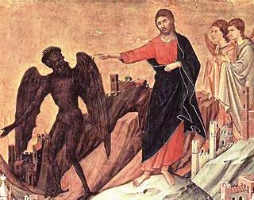
Jesus in the desert

Jesus in the desert

The concept of monasticism is ancient and is found in many religions and philosophies. In the centuries immediately before Christ, Hinduism, Buddhism, and Judaism all developed alternative styles of life which involved renouncing the world in some ways, in order to seek liberation or purification or union with God, sometimes as a solitary ascetic, sometimes in community.

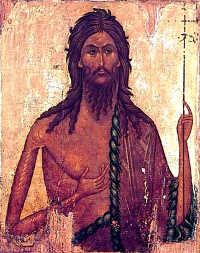
Early Christian monasticism drew its inspiration from the examples of the Prophet Elijah and John the Baptist, who both lived alone in the desert, and above all from the story of Jesus’ time in solitary struggle with Satan in the desert, before his public ministry. Beginning with the Exodus and all through the Old Testament times, the desert was regarded as a place of spiritual renewal and a return to God.  Although there were ascetics, especially women ascetics, among the first generations of Christians, they generally lived in the towns and cities.

St John the Baptist

St John the Baptist

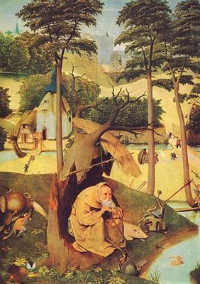
St. Anthony the Great (ca. 251-356) was the first well-known Christian to withdraw to the desert. According to the Life of Anthony written by St Athanasius in the mid fourth century, Anthony retreated to the wastelands of Egypt to lead an intensely ascetic life with the sole purpose of pursuing God in solitary prayer.  He remained alone until his holiness and evident wholesomeness attracted a growing circle of followers. So deep was his influence that he is considered the father, not only of the movement of Desert Fathers and Mothers of fourth – fifth century Egypt, but also the father of the entire Christian monastic family.

St Anthony

St Anthony
While the earliest Desert Fathers lived as hermits, they were rarely completely isolated, but often lived in proximity to one another, and soon loose-knit communities began to form in such places as the Desert of Nitria and the Desert of Skete.  The progression from hermit (“anchorite”) to monk (“cenobite”) living in community under one abbot, came quickly, when in 346 St Pachomius established in Egypt the first cenobitic Christian monastery.

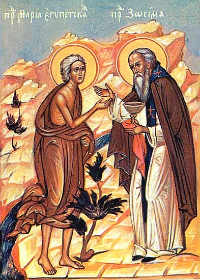
Mary of Egypt

Mary of Egypt

The Eastern monastic teachings were brought to the western church by Saint John Cassian (ca. 360 – ca. 435).  As a young adult, he and his friend Germanus entered a monastery in Palestine but then journeyed to Egypt to visit the eremitic groups in Nitria. Many years later, Cassian founded a monastery of monks and probably also one of nuns near Marseilles, and partly to counter what he felt were the abuses he found in Western monasticism, he wrote two long works, the Institutes and Conferences. In these books he not only transmitted his Egyptian experience (they are perhaps the oldest written record of the thought of the Desert Fathers), but he also gave Christian monasticism a profound evangelical and theological basis.

Cassian’s influence was enormous and lasted for centuries – even the smallest monastic library in Europe’s Dark Ages would have its copy of Cassian. Furthermore, St. Benedict incorporated Cassian’s thought into his monastic Rule, and recommended that his monks read Cassian’s works. Since the Rule of St Benedict is still used by Benedictine, Cistercian, and Trappist monastics, the thought of John Cassian, and the desert tradition behind him, still guides the spiritual lives of thousands of men and women in the Catholic Church.

The fear of the Lord is our cross. Just as someone who is crucified no longer has the power of moving or turning his limbs in any direction as he pleases, so we also ought to fasten our wishes and desires, not in accordance with what is pleasant and delightful to us now, but in accordance with the law of the Lord, where it hems us in. Being fastened to the wood of the cross means: no longer considering things present; not thinking about one’s preferences; not being disturbed by anxiety and care for the future; not being aroused by any desire to possess, nor inflamed by any pride or strife or rivalry; not grieving at present injuries, and not calling past injuries to mind; and while still breathing and in the present body, considering oneself dead to all earthly things, and sending the thoughts of one’s heart on ahead to that place where, one does not doubt, one will soon arrive… 

John Cassian, Institutes, Book IV ch.35
https://ocso.org

Forgotten Souls in Purgatory/All Souls in Purgatory

“Nicholas, man of God, look at me,” cried a soul to Nicholas of Tolentino. The young Augustinian priest had just begun to fall asleep when the voice surprised and alarmed him. The soul identified himself as Friar Pellegrino of Osimo, who Nicholas knew when that friar was alive.

“I am tormented in these flames,” Pelligrino lamented. “God did not reject my contrition and instead did not destine me to eternal punishment, which I deserved due to my weakness, but to purgatorial punishment, in virtue of His mercy.”

Then he begged Nicholas to “celebrate a Mass of the Dead for me, so that I may be freed from my torments.” But Nicholas could not because he was assigned to say the monastery’s community Mass.

“Then at least come with me … see our suffering … pity these unfortunates who await your help…If you celebrate Mass for us, most of these people will be liberated,” Pelligrino again pleaded.  Nicholas was then shown a great sea of souls of all ages, sexes and conditions, stretching across the land.

Nicholas prayed all night. In the morning once the monastery’s prior heard his story, he gave Nicholas permission to immediately say the Masses for the Dead. Seven days later, Pelligrino appeared again — this time, accompanied by a victorious multitude also freed.

After that occurrence in the late 13th century, Nicholas spent his years praying and offering Masses for the souls in purgatory. He freed countless numbers. During one Mass, Jesus appeared, thanked him and showed him the souls his Masses had released.

In 1884 Pope Leo XIII declared St. Nicholas of Tolentino universal patron of the Holy Souls in Purgatory.

Nicholas’s experience wasn’t a one-time event. Nor was it for other saints along the centuries as they, too, heard or saw souls in purgatory pleading for their help.

We may never see or hear a holy soul from purgatory, but we learn what to do from the encounters saints experienced.

Have Masses said for the Holy Souls there. Our family. Friends. Those abandoned. In relation to what Jesus told Faustina, offer up an annoyance without complaining, like standing in a long line in traffic or the supermarket. Pray a Rosary for them. Say short prayers like, “Jesus have mercy on the souls in purgatory.”  Remember what we heard as we grew up — “Offer it up for the holy souls in purgatory.”

Take a minute to pray for a forgotten soul in purgatory!

Pietro Perugino, “Saint Nicholas of Tolentino,” 1507

Our Lady’s Rosary Makers/Become a Rosary Maker

info@olrm.org

The 15 promises of the rosary

  1. “Whoever shall faithfully serve me by the recitation of the Rosary, shall receive powerful graces.”
  2. “I promise my special protection and the greatest graces to all those who shall recite the Rosary.”
  3. “The Rosary shall be a powerful armor against hell, it will destroy vice, decrease sin, and defeat heresies.”
  4. “It will cause virtue and good works to flourish; it will obtain for souls the abundant mercy of God; it will withdraw the hearts of people from the love of the world and its vanities, and will lift them to the desire of eternal things. Oh, that souls would sanctify themselves by this means.”
  5. “The soul which recommends itself to me by the recitation of the Rosary, shall not perish.”
  6. “Whoever shall recite the Rosary devoutly, applying himself to the consideration of its Sacred Mysteries shall never be conquered by misfortune. God will not chastise him in His justice, he shall not perish by an unprovided death; if he be just, he shall remain in the grace of God, and become worthy of eternal life.”
  7. “Whoever shall have a true devotion for the Rosary shall not die without the Sacraments of the Church.”
  8. “Those who are faithful to recite the Rosary shall have during their life and at their death the light of God and the plenitude of His graces; at the moment of death they shall participate in the merits of the Saints in Paradise.”
  9. “I shall deliver from purgatory those who have been devoted to the Rosary.”
  10. “The faithful children of the Rosary shall merit a high degree of glory in Heaven.”
  11. “You shall obtain all you ask of me by the recitation of the Rosary.”
  12. “All those who propagate the Holy Rosary shall be aided by me in their necessities.”
  13. “I have obtained from my Divine Son that all the advocates of the Rosary shall have for intercessors the entire celestial court during their life and at the hour of death.”
  14. “All who recite the Rosary are my children, and brothers and sisters of my only Son, Jesus Christ.”
  15. “Devotion of my Rosary is a great sign of predestination.”

Our Lady’s Rosary Makers was founded in 1949 by Brother Sylvan Mattingly, C.F.X. This Xaverian Brother taught people to make rosaries on the premise that they would make rosaries and distribute them freely to missionaries. Our Mission, set forth by our founder, Brother Sylvan, who envisioned a world in which all God’s children, possessing an instrument of peace and comfort, would work to fulfill Our Lady’s requests at Fatima, to pray the Rosary daily, is to provide those in need of a Rosary with one.

OLRM provides low cost materials, resources, and support in the spirit of Br. Sylvan’s mission and vision. We are a member driven, non-profit, Catholic lay apostolate within the Archdiocese of Louisville. Our diverse and active members spread devotion through the Immaculate Heart of Mary by making and sharing the Rosary with the world’s spiritually needy.

OLRM publishes FREE instructions for making rosaries. How to make a rosary instructions are available for cord and wire rosaries. In addition to these two there are some instructions for variations on these methods.   Printable, online, and video instructions of making rosaries are offered directly on this site below.You may also order FREE copies in bulk, or a DVD for $8.50, through our Online Rosary Parts Catalog.

OUR HISTORY 

Long haunted by the urgency of Mary’s words at Fatima, Brother Sylvan, C.F.X., decided in May 1949 to do something extra for Our Lady. He began to teach children how to make rosaries for the missions.

Inspired by Our Lady’s words, and having seen letters from missionaries around the world, he knew of the great need for rosaries in the mission fields.

He thought: The missionary can teach his people Christianity, he can offer the Mass for his people, but what happens when he’s off caring for others? With a few rosaries arriving he could now leave a symbol of the Faith to his people. Even though they could neither read nor write, they could pray the rosary.

Letters began pouring in from missions all over the world. The need was really greater than anyone had imagined.

Brother made a trip to Denver to teach ten people there. This group grew and spread the word to others as far away as a small town in Minnesota. Inspired people of Detroit started a group which today sends over 100,000 rosaries a year to the missions.

He set up a small office in a basement room at St. Xavier High School in Louisville, Kentucky and named his slow-forming club “Our Lady of Fatima Rosary Making Club.”. An elderly couple donated $25 for a typewriter to communicate with missionaries and club members.

In 1951 Brother asked Father Bertrand Rapp, newly ordained parish priest, to take over the duties as Chaplain to the Club. On a cold winter night in December, after working all day to build a fieldstone “Grotto for Mary”, Brother Sylvan died.

Father Rapp worked tirelessly to continue Brother’s work. Teaching here, arranging for volunteers somewhere else. He spent his vacations in Rosary Club endeavors, unselfishly working for Mary. By 1954 membership had grown to 2,500 adults and many children in schools across the nation.

With growth came the need for more capacity to serve our members. Brother Sylvan had a difficult time raising that first $25 for a typewriter, and with growth, there were more expenses. Thirty-four thousand dollars for a bead mold; twenty thousand for a die to mold the needed crucifixes and centers. Wire had to be bought in half ton lots for maximum economy. Where does all the money come from?

Our Blessed Mother inspires, but she doesn’t make it easy; yet the answer came simply enough. The deficit is made up by the Club making catalog sales to those rosary-makers who wish to make a nice gift rosary for a friend or relative. The profit from these catalog parts help make up the mission loss.

Annual members dues of $2 help pay for our newsletter, Our Lady’s Messenger, with the remainder going into the deficit fund. Invariably when there is need, someone helps with a small donation; sometimes a large one.

Today the club has grown from its humble origins to be the world’s leading mission Rosary apostolate. A new International Rosary Center was built in 1968.  Today the center is more than double its original size. OLRM staff work diligently five days a week processing and filling orders for rosary supplies, as well as, connecting members with missionaries and missions in need of rosaries.

The International Rosary Center houses our operations, showroom, and Our Lady’s Chapel – in which we pray our morning rosary. The Blessed Sacrament is present and we have a monthly Mass on the First Saturday in honor of Brother Sylvan and all Club members