Hospital Workers / Elizabeth of Hungary, 1207–1231,
Feast Day: November 17

Daughter of the king of Hungary, Elizabeth had a happy marriage to the prince of Thuringia. Her
in-laws were at odds with her interest in caring for the poor and sick. When her husband died on his way to the Crusades, she and her children were turned out by his family. She became a Franciscan tertiary, donating whatever money she had left to building a hospital for the abandoned sick.

Other patronages: Germany; charitable associations, Franciscans, hospitals, Knights of the Teutonic Order, Sisters of Charity; bakers; beggars, orphans, unjustly persecuted people, widows

Invoked: against in-law problems, plague, ringworm, toothache

West Indies / Gertrude the Great, 1256–1302,
Feast Day: November 16

Placed in the Cistercian abbey at Helfta in Saxony at the age of five, Gertrude never left the convent. She had a phenomenal intellect and was a student of Saint Mechtild. At the age of twenty-five, she had a vision of Christ that changed the course of her life. She lost all interest in secular studies, concentrating instead on religious literature. Her own mystical writings influenced many future saints, and she was the first to meditate on the sacred heart of Jesus. Her name was entered into the canon of the mass in 1677, and the king of Spain had her named as patron of the West Indies.

Other patronages: nuns, travelers

Stepparents / Leopold III, 1073–1136,
Feast Day: November 15

The military governor of Austria, Leopold married Agnes, daughter of the emperor. She was a widow with two children, whom he raised. He and Agnes had an additional eighteen children, eleven of whom survived childhood. Refusing the crown of the Holy Roman Empire, Leopold founded Benedictine, Cistercian, and Augustinian monasteries, developing new towns and cities in Austria.

Other patronages: Austria; death of children, large families

Ukraine / Josaphat, 1580–1623, Feast Day: November 12

The first Eastern Orthodox saint recognized by the Vatican, Josaphat was intent on repairing the Great Schism, which divided the Eastern and Western churches. His virtuous example as a bishop in Belarus inspired many to reunite with the Roman Church. This became a political problem, and when rioting ensued, he traveled to Vitebsk to quell the violence. He was martyred by an angry mob who split his head open with an axe. When his uncorrupt body was recovered from the river, his enemies, ashamed of what they had done, had a complete change of heart on uniting the churches.

Alcoholism / Martin of Tours, 316–397,
Feast Day: November 11

Born into a Hungarian military family, Martin was named for Mars, the Roman god of war. As a soldier, he converted to Christianity and was elevated to the office of bishop by the people of Tours. It is said he could turn water into wine, and he died on the day when the new wine is traditionally tasted. Immensely popular for his charity, he is known as the “Thirteenth Apostle.”

Other patronages: geese, horses; cavalrymen, cloth merchants, innkeepers, potters, tanners, vine growers, vintners; beggars, oppressed people

Invoked: against poverty

Stroke / Andrew Avellino, 1521–1608,
Feast Day: November 10

An ecclesiastical lawyer, Andrew left the law and devoted himself to the priesthood when he caught himself lying during a trial. He was assigned to close a convent in Naples that had become a brothel. When he succeeded, the local men threatened his life. He traveled through Italy reforming other religious houses. He had an attack of apoplexy and died while saying mass.

Other patronages: Naples, Sicily

Invoked: against sudden death

Convulsions / Willibrord, 658–739, Feast Day: November 7

Born in England, Willibrord was a missionary in Denmark and Holland. He died founding a Benedictine monastery in Luxembourg. At his shrine there, a dance procession lasting several hours is performed in honor of his role in ending an epidemic of St. Vitus’ dance. The dance consists of three steps forward and five steps back, circling the saint’s tomb, and then leaving the church. This dance is also supposed to have curative powers for those with nervous disorders.

Other patronages: Luxembourg, the Netherlands

Invoked: against chorea, epilepsy, herpes, lumbago


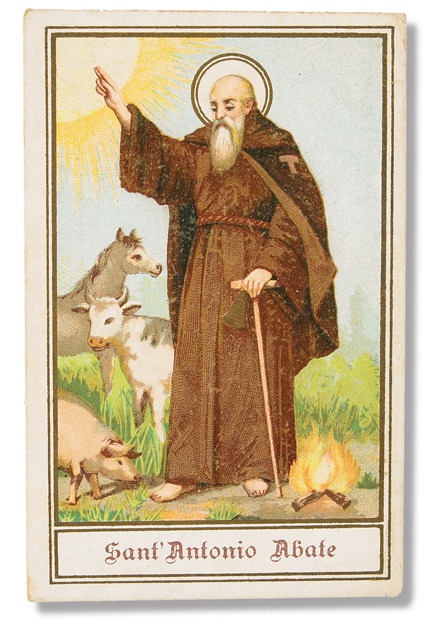
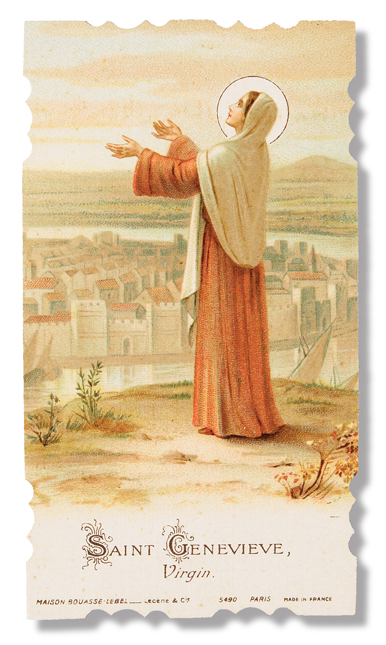
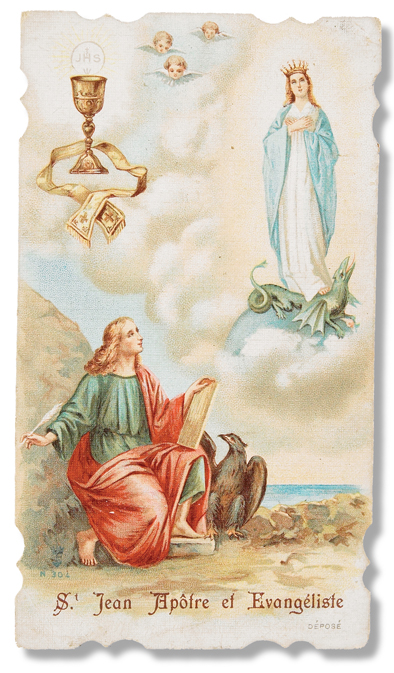
The above Patron Saints are excerpted from the book: “Patron Saints: A Feast of Holy Cards” by Barbara Calamari and Sandra DiPasqua. All images are from the holy card collection of Father Eugene Carrella.

Novena for November

Saint Martin de Porres

1579-1639

 Universal healing and harmony are the themes of Saint Martin de Porres’s life. He was so in tune with the rhythms of nature and the universe that he was able to heal any sickness, read minds, and converse with animals. To Saint Martin, physical health was essential for spiritual growth; thus, he should be called on whenever wholeness in health or personal relationships are required. Multi-racial himself, he is the patron of racial harmony and invoked whenever racial tensions arise.

 Saint Martin was born in Lima, Peru, just thirty-five years after the conquest of Pizarro. His father was a Spanish nobleman and his mother was a free black woman. Since people of mixed race were reviled, Saint Martin might have been just another social outcast in that country’s history. Instead, he became one of Peru’s national idols.  When Martin was twelve he was apprenticed to a barber. In those times, besides being a haircutter, a barber was also a surgeon, doctor and pharmacist. By the time he was eighteen years old, Martin’s reputation as a healer was well established. Rather than pursue his profession, martin kept giving all of his money to the poor. His was a desire to serve God in a state of total childlike humility. He entered the local Dominican monastery as tertiary, the lowest possible level; there he swept the floors and dreamed of being martyred in some foreign mission.  Instead, his undeniable talent as a healer became obvious, and he was put in charge of the infirmary. Tirelessly working, he tended to African slaves, the native population, and the Spanish nobility with the same all-consuming intensity.  His power to heal any sickness was legendary, and he was so intuitive that his patients swore tha the could read their minds. Stories of his wondrous abilities spread and became more and more elaborate: he was seen walking through a locked door; he was seen in two places at one time; and some said that the could fly from one place to another.

 Because of Saint Martin’s attunement to nature and its elements, animals flocked to him. He even set up a makeshift hospital to tend sick dogs and cats. Another story has it that he made a pact with the local rats and mice that he would feed them every day if they promised to stay out of the monastery. Each noon he opened the doors of the monastery and fed the poor. No matter how many hungry people were waiting, he never ran out of food.

 Saint Martin’s holiness and miraculous cures made him famous in his own lifetime. Bishops and learned men routinely consulted him to resolve theological problems. This fame undoubtedly, was the most difficult aspect of his life, since humility and prayer were the most important things to him. Because of his earlier profession, Saint Martin de Porres is also the patron of hairdressers and barbers. In art he is often shown holding a lily for purity and a broom for humility, while standing with small animals at his feet to reflect his closeness to nature. Saint Martin de Porres died of quartan fever in 1639 when he was sixty years old. Immediately upon his burial, miraculous healings were reported all around his tomb site.

Feast Day: November 3, 2010

Patron Saint of: Racial Harmony, the Poor, Barbers, Hairdressers

Novena to Saint Martin de Porres

Saint Martin de Porres, your concern and charity embraced not only your needy brethren, but also the animals of the field. You are a splendid example of charity; we thank and praise you. From above, hear the requests of your needy brethren.

(Mention your request).

By modeling our lives after yours, and imitating your virtues, may we live content knowing that God has looked favorably upon us. Because this is so, we can accept our burdens with strength and courage in order to follow in the footsteps of our Lord and the Blessed Mother. May we reach the Kingdom of Heaven through the intercession of our Lord Jesus Christ. Amen.


Say this novena nine times in a row for nine days in a row.

(Excerpted from the book: “Novena: The Power of Prayer” by Barbara Calamari and Sandra DiPasqua.)


All Saints Day November 1

Novena for All Saints Day

Image: Tapestry, “Communion of the Saints”  by John Nava

Saint Jude Thaddeus

Apostle

 First Century

Feast Day: October 28

Patron of: impossible causes

Invoked: in times of desperation

Symbol: Flame over head, club, cloth with image of Jesus

“…in accordance with his surname Thaddeus (meaning generous or loving), he will show himself most willing to give help.”

               Bridget of Sweden, 15th century

              Saint Jude was one of the original 12 apostles of Jesus. During his lifetime, his compassion and love for others was profoundly evident. Now, thousands of years after his death, his relief aid in seemingly hopeless situations ensures his place as one of the most popular and invoked saints in the world.

                      Jude Thaddeus was said to be a cousin of Jesus and the brother of James the Less. As an apostle of Christ, Jude learned first-hand the power of God to bring about healing and protection for what some might call “lost causes”. The most intriguing example can be found in the legends of Edessa (a city in Mesopotamia).  As the story goes, King Abgar suffered greatly from leprosy and, desperate for relief, wrote a letter to Christ saying,  “I have heard about you and the cures you effect, that you do this without medicaments or herbs, and that with a word you cause the blind to see, the lame to walk, lepers to be cleansed and the dead to live again. Having heard all this, I have decided in my mind that you are either a god and have come down from heaven to do what you do, or you are the Son of God and so do these things…” 

        Jesus was happy that King Abgar believed in Him without even seeing Him; however,  He did not have time to visit the king. When the king realized he would never see Christ Himself, he sent an artist to draw a portrait. The artist was so overcome with the radiance emanating from Christ’s eyes, his hands shook and he could not accomplish his task. Jesus took a cloth and wiped and His face in it, leaving His image imprinted in the cloth. Jude was sent back to Edessa to present this portrait to the king who rubbed in on his own body and was instantly cured of his disease.

            In a different version of the story, Jude presented the burial cloth of Christ to King Agbar by carrying the precious material  seared with Christ’s image, folded up as a portrait. The king was cured when he touched the shroud. His subsequent baptism by Jude established Christianity in Edessa. Jude’s role as a helper to the despondent was sealed, as was his influence in this region of the world. The shroud, of course, has become  known as the Holy Shroud of Turin.

             After the death, resurrection, and ascension of Christ, Jude and the apostle Simon were sent back to Mesopotamia (present day Iraq), Persia, Armenia and Southern Russia to preach. They became popular with the local population for their keen intellect, clever dialogue and the amusing ways in which they outwitted sorcerers and magicians in public discourses and arguments. When invited to choose, as was the custom of the day, how their losing antagonists were to be executed, Jude and Simon would reply, “We are not here to kill the living but to bring the dead back to life.” They would then joyfully preach the message of Christ, converting thousands at a time.

            Jude and Simon were not without detractors, however, and in the Epistle of Jude, his only writings to survive him, Jude exhorts recent converts in the East in 60 AD, to stay strong in the face of persecution and to persevere through harsh and difficult circumstances. These persecutions caught up with both Simon and Jude just five years later when they were martyred together for their evangelizing. Today, their relics are buried under the main altar of Saint Peter’s Basilica.

             Over the centuries Saint Jude became confused with Judas Iscariot, the apostle who sold Christ for 30 pieces of silver. ( In many instances, to avoid this confusion, he is referred to as “Thaddeus” in the writings of the evangelists.) Because he shared a name with such a notorious character few Christians invoked Saint Jude for help. The mystical saints Bernard of Clairvaux in the 12th Century and Bridget of Sweden in the 15th were exceptions. According to a vision, Jesus told Saint Bridget of Sweden to dedicate an altar to Saint Jude, because “in accordance with his surname, Thaddeus (meaning generous or loving) he will show himself most willing to give help.”        

            Few Catholics took these words seriously until the 19th Century when a tradition began that when Saint Jude would answer the most impossible of prayers, the petitioner in tuen, must thank the saint in a public way. The advent of inexpensive newspapers made this obligation possible and to this day,  weekly and daily periodicals all have their share of “Thank you Saint Jude” personal ads. Perhaps the grandest gesture of public thanks to this saint is the world- famous Saint Jude’s Children Hospital in Memphis, Tennessee. It was built by the entertainer Danny Thomas as a tribute to Jude for answering his prayers when he was struggling to support his family. This hospital serves children with “hopelessly incurable diseases” and has become a groundbreaking research institution, saving the innumerable young lives on its premises and even more internationally through its discoveries. From its great success, the name Saint Jude has become a common name for research hospitals all over the world.

                Since he was present at the Pentecost Saint Jude is always depicted with the flame of the Holy Spirit over his head. His principal attribute is the cloth with Christ’s image, sometimes displayed on his body in a medallion form. He carries the club or axe he was beaten to death with and also displays the palms of  the   martyr.                                                                          

                                                                Prayer to Saint Jude


                                    Saint Jude, glorious Apostle, faithful servant and

                                    friend of Jesus,

                                    The name of the traitor has caused you to be forgotten

                                    by many,

                                    But the true Church in invokes you universally as the patron

                                    Of things despaired of; pray for me,

                                    that I may receive the consolations and the help of

                                    heaven in all my necessities, tribulations and sufferings,

                                    particularly (here make your request) and that I

                                    may bless God with the elect throughout eternity.

                                    St. Jude, Apostle, martyr and cousin of our Lord Jesus Christ,

                                    intercede for us. Amen.

Excerpted from the book: “Saints:Ancient and Modern”  by Barbara Calamari and Sandra DiPasqua.

Image: Saint Jude by El Greco