St. Ignatius Loyola included in his Spiritual Exercises a prayer called “the Examen,” which derives from the Latin word for examination. It is a meditation with roots not only in Ignatian spirituality, but also in the spiritual practices of the ancient Stoics. There are many versions of the Examen today, but all have five steps. Here is a simple rendering of some key elements:
Place yourself in God’s presence. Give thanks for God’s great love for you.
Pray for the grace to understand how God is acting in your life.
Review your day — recall specific moments and your feelings at the time.
Reflect on what you did, said, or thought in those instances. Were you drawing closer to God, or further away?
Look toward tomorrow — think of how you might collaborate more effectively with God’s plan. Be specific, and conclude with the “Our Father.”
Some versions of the Examen place a special emphasis on gratitude and feelings. A detailed example of such a meditation is offered by IgnatianSprituality.com.
“God is in it”
The heart of the Examen is the third part: reviewing your day.
“Think of it as a movie playing in your head,” writes James Martin, S.J., in The Jesuit Guide to (Almost) Everything. “Push the play button and run through your day, from start to finish, from your rising in the morning to preparing to go to bed at night. Notice what made you happy, what made you stressed, what confused you, what helped you be more loving. Recall everything: sights, sounds, feelings, tastes, textures, conversations. Thoughts, words, and deeds, as Ignatius says. Each moment offers a window to where God has been in your day.”
And remember that no experience is too trivial for spiritual investigation.
“Nothing in our lives is so insignificant that it doesn’t deserve God’s attention,” notes Jim Manney in A Simple Life-Changing Prayer, a book about the Examen. “In fact, the mundane and the humdrum parts of our lives give depth and texture to our relationships with God. Washing the windows and cooking dinner are as much a part of the relationship as graduation day. If it’s part of our human experience, God is in it.”
Ignatius was emphatic about the Examen. He told the early Jesuits that if they for some reason did no other spiritual exercises, they should do this one. Then as now, the Examen is a spiritual tool for sizing up your days — and planting the seeds for a more purposeful life.
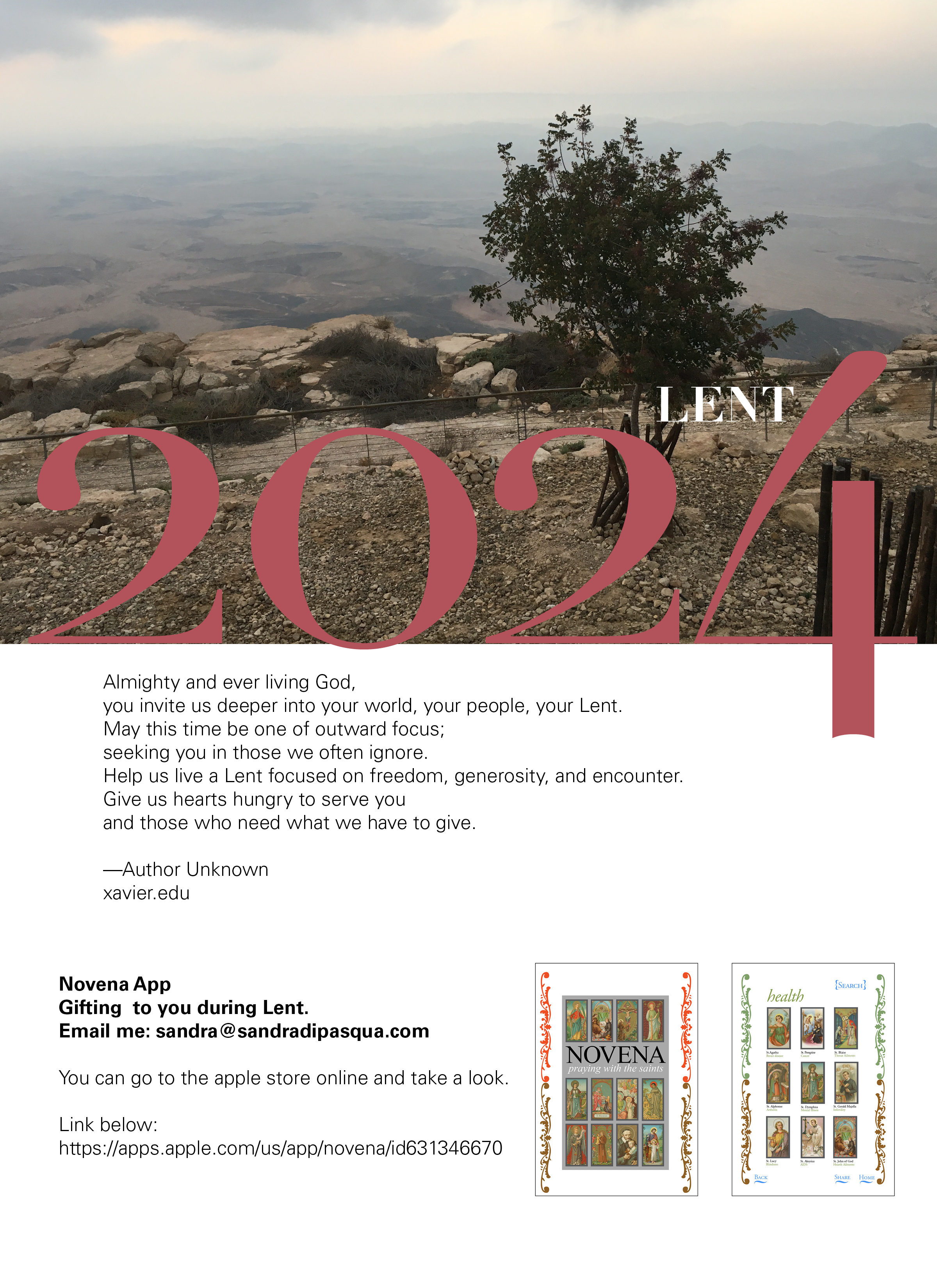
Our book is now available as an ebook on amazon https://www.amazon.com/dp/B0D4WQLFRXyou can buy or read free if you subscribe to kindle reading.
This book celebrates the meaningful recitation of novenas, a traditional nine day prayer to a particular saint, angel or Madonna for help in solving a problem.
It was our objective to create a book that would be assessable to all, Catholic and non-Catholics alike.
You will learn about The Saints, Angels and The Madonna. The history of The Saints who lived with us on earth. The many visions of The Madonna as she appeared on earth. And more…
“I know by experience that the glorious Saint Joseph assists us generally in all necessities. I never asked him for anything which he did not obtain for me.” —Saint Teresa of Avila
Patron of: Fathers
A righteous man who never shirked his responsibilities as protector of his family, Saint Joseph offers a perfect example for fathers everywhere. He is invoked by families for all matters of support needed to sustain a household, both material and spiritual.
A descendant of the House of David, there is very little written about Joseph in the gospels. He was said to be betrothed to Mary when she became pregnant with Jesus. Instead of leaving her in scandal, he accepted the word of the angel Gabriel who told him that the child was divinely given and Joseph and Mary were chosen by God to be his earthly parents. It was Joseph who protected Mary on the journey to Bethlehem when Jesus was born. He also suffered the frustrations of a man who could not find proper shelter for his family as his wife was about to give birth. Upon returning to their native city of Nazareth, Joseph was once again visited by an angel warning him of the impending slaughter of the innocents. On faith alone, he dispensed with his business and personal effects, taking Jesus and Mary to Egypt where they stayed for seven years until Herod’s death. It fell upon Saint Joseph to support his young family in this foreign country.
The last mention of Joseph comes when Jesus is twelve years old and strayed from his family while on a pilgrimage to Jerusalem. It is thought that he died well before Jesus began his mission with Jesus and Mary at his deathbed. For this reason, more than any other saint, he is invoked for a happy death, one where a person is older and has their family at their side.
Though of noble lineage, Joseph was a carpenter and it was from him whom Jesus learned his trade. Because he worked with his hands and frequently put his family ahead of any personal ambitions, workers everywhere who live similar lives call on him as a patron. It is no mystery that the cult of Saint Joseph became more popular in modern times with the advent of the Industrial Revolution. Many saints throughout the ages have declared him to be a powerful advocate as well, since it is thought that Jesus obeyed him in his earthly life, he is inclined to listen to Joseph in his heavenly life. Teresa of Avila always buried medals with his image when she needed land for a new convent. This tradition has extended itself to realtors of all faiths who bury statues of Saint Joseph on properties they wish to sell.
It is assumed that since Joseph respected his wife’s virginity that he was an older man when he married. He is depicted in art with a staff, which he led his family ( precursor to the bishop’s staff) a lily for purity, and with carpenter tools or holding the baby Jesus.
Hail, Guardian of the Redeemer, Spouse of the Blessed Virgin Mary. To you God entrusted his only Son; in you Mary placed her trust with you Christ became man. Blessed Joseph, to us too, show yourself a father and guide us in the path of life. Obtain for us grace, mercy and courage, and defend us from every evil. Amen.
During the Lenten season, Psalm 23 reminds us of God’s intent that we find times of refreshing: Beside restful waters he leads me; he refreshes my soul.
St. Ignatius of Loyola refers to these times of refreshing as consolations: a deep-seated sense of God’s presence leading to spiritual growth.
How are we being refreshed and consoled in our lives, in our Church, and in our work for justice?