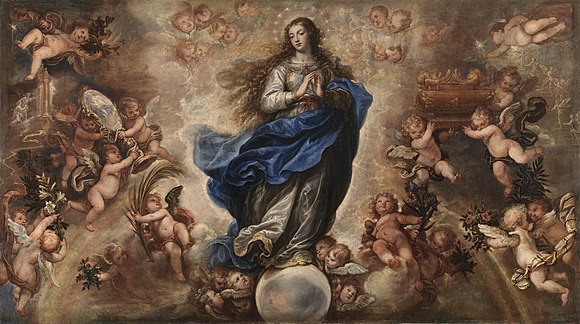
“The most Blessed Virgin Mary was, from the first moment of her conception, by a singular grace and privilege of almighty God and by virtue of the merits of Jesus Christ, Savior of the human race, preserved immune from all stain of original sin.”
In 1854, Pope Pius IX’s solemn declaration, “Ineffabilis Deus,” clarified with finality the long-held belief of the Church that Mary was conceived free from original sin. Mary was granted this extraordinary privilege because of Her unique role in history as the Mother of God. That is, she received the gift of salvation in Christ from the very moment of her conception.
Even though Mary is unique in all humanity for being born without sin, she is held up by the Church as a model for all humanity in Her holiness and Her purity in her willingness to accept the Plan of God for her.
Every person is called to recognize and respond to God’s call to their own vocation in order to carry out God’s plan for their life and fulfill the mission prepared for them since before the beginning of time. Mary’s “Let it be done to me according to Thy Word,” in response of the Angel Gabriel’s greeting, is the response required of all Christians to God’s Plan.
The Solemnity of the Immaculate Conception is a time to celebrate the great joy of God’s gift to humanity in Mary, and to recognize with greater clarity, the truth that each and every human being has been created by God to fulfill a particular mission that he and only he can fulfill.
“The word of the Lord came to me thus: “Before I formed you in the womb I knew you, before you were born I dedicated you, a prophet to the nations I appointed you.” (Jeremiah 1:5-6)
Designed and revealed by Mary, the Medal is unique among all medals.
It was almost midnight when St. Catherine Labouré was awakened by a soft voice, whispering, “Sister, sister, sister.” Mysterious events led her to the chapel where the Blessed Mother appeared and sat down near the altar. St. Catherine knelt at her feet, rested her hands in Mary’s lap, looked into her eyes, and had a heart-to-heart conversation with her. Later, St. Catherine would refer to that night as “the sweetest moment of my life.”
Four months later, in November of 1830, Mary again appeared to St. Catherine at the Rue de Bac Chapel. This time, our Blessed Mother was standing on a globe, with dazzling rays of light streaming from her outstretched hands. Framing the apparition was an inscription: “O Mary, conceived without sin, pray for us who have recourse to thee.” When Mary spoke to St. Catherine, she said “Have a medal struck upon this model. Those who wear it will receive great graces, especially if they wear it around the neck. Those who repeat this prayer with devotion will be, in a special manner, under the protection of the Mother of God. Graces will be abundantly bestowed upon those who have confidence.”
With approval of the Catholic Church, the first medals were made in 1832 and distributed in Paris. Only ten of the original medals are known to exist, and one of them is housed at the Miraculous Medal Shrine.
Almost immediately, the blessings that Mary promised showered down on those who wore her medal, and soon all of France was clamoring for what the people referred to as the “Miraculous Medal.” Use of the Medal spread from country to country, and, at the time of St. Catherine’s death in 1876, more than a billion medals had been made. Today, the Medal is still drawing down from God blessings for body and soul.
Wearing The Miraculous Medal
Here are some rules for wearing a Miraculous Medal:
Wear it around the neck: According to Our Lady, the medal should be worn around the neck.
Have it blessed: It’s best to wear a medal that has been blessed by a priest. A priest or delegated lay person can invest the wearer in the medal using the approved rite.
Wear it with confidence: According to Our Lady, those who wear the medal with confidence will receive great graces.
Wear it as a sign of devotion: The medal is a visible sign of devotion to Mary and Jesus.
Wear it as a reminder of faith: The medal can be a daily reminder of faith.
The Miraculous Medal is a popular piece of jewelry for Catholics, but anyone can wear it. The medal originated from apparitions to French nun Saint Catherine Laboure.The medal’s front and back are full of symbolism.
THE MEANING OF THE MIRACULOUS MEDAL.pdfDuring Our Lady’s visit to Catherine on November 27, 1830, rays of light flowed from rings on her fingers that were made of precio…St Joseph Church | Chehalis, WA
The Hidden Symbolism in the Miraculous Medal – EWTNNov 27, 2023 — The History of the Miraculous Medal During one of many apparitions to French nun Saint Catherine Laboure, Our Lady gav…EWTN
Investiture of the Miraculous Medal – SS. Cyril and Methodius ParishNov 13, 2024 — A person becomes a member by wearing a Miraculous Medal that has been blessed by a priest. It is fitting that the pers…saintcyrils.church
The day of the Poor Clare nun begins at 12:30 a.m. when the Sister designated as “Caller” knocks on each cell door to summon her sisters to prayer. The nuns, clothed in the religious habit adapted for the night, rise in silence like the wise Virgins always ready and waiting for the call: “The Bridegroom is here, come out to meet Him!” At 12:45 a.m. the Sisters assemble in Office Choir (the Sister’s chapel) for the Hour of Matins (Office of Readings). It is an unbroken tradition for the Poor Clare Nuns to rise in the middle of the night after a few hours of sleep in order to pray for a needy world at a time when, under cover of darkness, so many sins are committed. At 1:45 a.m. the Divine Office and a period of meditation come to a close and the Sisters retire to their cells for about three more hours of sleep.
Five O’Clock Duty
At 5:00 a.m. the silence of the early hours of the morning is broken when the bell sounds for rising. The nuns rise promptly, wash in a simple basin in their cells and make their way to their five o’clock duty. These duties vary from dust-mopping the corridors or sweeping the refectory and stairs, to opening windows to air the house, dusting Choir or making preparations for breakfast. Then at 5:30 a.m. the Sisters gather promptly in Choir for the morning Angelus follows by Lauds (Morning Prayer). “With praise I will awake the dawn,” sings the Psalmist and the nuns likewise, by their wholehearted praise of the Creator, anticipate all of creation, which is just awakening from sleep. An hour of meditation in preparation for the Holy Sacrifice of the Mass follows and, at 7:00 a.m., the Rosary is recited communally during which the Sisters ponder the mysteries of Redemption and the role of the most Blessed Mother, making them a part of their own lives. “Nuns relive and perpetuate in the Church the presence and the work of Mary. Welcoming the Word in faith and adoring in silence, they put themselves at the service of the Mystery of the Incarnation, and united to Christ Jesus in His offering of Himself to the Father they become co-workers in the Mystery of Redemption” (Verbi Sponsa, no. 4).
The Mass — the Day’s Climax
The Holy Sacrifice of the Mass at 7:30 a.m. is the center and summit of the Poor Clare day around which everything else revolves. It is precisely from the Mass that the nuns draw their strength and the grace for the new day of prayer, sacrifice, and work for the love of God. The Sisters participate in this august mystery from their Mass Choir, which is separated from the main Chapel by an enclosure grille because of their hidden life of seclusion. “What return shall I make to the Lord for His goodness to me?” sings the Poor Clare in her heart as she spends the next quarter of an hour in thanksgiving for the greatest gift on earth: the Holy Eucharist to which she is united in a most intimate way. By now it is 8:30 a.m. and the Sisters go to the refectory to partake of a simple breakfast while standing, in keeping with the traditional fast. Although Great Silence has ended, a peaceful stillness continues to pervade the monastery as the nuns begin some work until 9:30 a.m. Answering benefactors’ letters and filling orders for spiritual bouquet cards to go out in the morning’s mail or beginning the day’s work in the kitchen are just a few examples. When Reverend Mother Abbess rings the bell, the Sisters assemble in the refectory for the Office announcements and a spiritual thought for the day, which are read aloud. Mother Abbess gives her blessing and the nuns process to the Choir for Exposition of the Blessed Sacrament and the first of the Daytime Hours: Terce(Midmorning Prayer). The Poor Clare nun’s entire day is punctuated by the different hours of the Divine Office in order constantly to return praise to the Blessed Trinity and to sanctify each passing moment. The Holy Sacrifice of the Mass is thus perpetuated throughout the whole of her day by the Liturgy of the Hours. It is in this way that the nun’s whole life becomes one great “Thanksgiving.” Pope John Paul II write of our Holy Mother Saint Clare: “her whole life was a Eucharist because … from her cloister she raised up a continual ‘thanksgiving’ to God in her prayer, praise, supplication, intercession, weeping, offering and sacrifice. She accepted everything from the Father in union with the infinite ‘thanks’ of the only begotten Son.”
A Virtuous Life and the Common Good
The remaining hours of the morning until 11:40 a.m. are spent in some manual work. “Let the Sisters to whom the Lord has given the grace of working work faithfully and devotedly after the hour of Terce at work that pertains to a virtuous life and the common good” (Holy Rule). It may vary greatly according to the day or the season. In the monastic tradition of the Poor Clares there has never been a distinction between Choir Nuns and Lay Sisters; rather, all help with the humble tasks and give themselves with generosity wherever help is needed. Our Extern Sisters, however, are the special guardians of the enclosure. They care for the external services of the monastery but observe the same form of life as the cloistered nuns in all things except the vow of enclosure. Whether hanging the laundry on wash day, answering the phone or the door bells, cooking, sweeping, sewing, gardening or painting, the Poor Clare Nun is motivated by love and therefore no task is too burdensome nor any sacrifice too great. “All for Love,” “All for Jesus” are the frequent aspirations that fill her mind while at work. Although she cannot spend the entire day with Our Lord in Choir, she finds He is present and at her side at every moment and in all the designs of Divine Providence as the day unfolds. Our Holy Mother Saint Clare urges her daughters to always work “in such a way that, while banishing all idleness, the enemy of the soul, they do not extinguish the spirit of holy prayer and devotion to which all other earthly things must contribute.”
Bell Calls to Midday Prayer
At 11:40 the bell calls the Sisters to the hour of Sext (Midday Prayer). “Let the Sisters, immediately ceasing their labors, come without delay” (Saint Colette). The monastic bell summoning the Sisters to work and prayer is understood as the voice of the Beloved calling to them and each Sister makes haste in order not to keep Him waiting. Midday Prayer is followed by the particular examen and the Angelus is said at noon. The community then processes to the refectory while reciting the Veni Creator. A full meal referred to as “dinner” is served at noon. The Poor Clare Colettine nuns observe a perpetual abstinence from meat, but fish is served twice a week and on special feast days. The meal typically consists of a carbohydrate (rice, noodles, or potatoes), a vegetable, salad and a simple dessert. As the Sisters take nourishment for their bodies to renew their physical strength, they are constantly reminded that “man does not live on bread alone but on every word that comes from the mouth of God.” The meals at Corpus Christi Monastery are taken in silence as the Sisters listen to some spiritual reading to nourish their souls. One of the nuns is appointed as “reader” and reads aloud from the biography of some saint, a reflection on the day’s Gospel or perhaps some other text of a religious or edifying nature.
Fruit and Potatoes
After dinner there is a half-hour period of general work. The Sisters help with dishes or prepare the vegetables, fruit or potatoes, which need peeling and slicing for the next day’s meal. At 1:30 p.m. “quiet time” begins. This is a special time of silence during which the Sisters may rest, do some quiet hobby or spend time in private devotions. Daily meditation on the Stations of the Cross is a Franciscan tradition and some may choose to take their quiet time in Choir for this purpose. As Pope John Paul II reminds us: “It is in the contemplation of the Crucified Christ that all vocations find their inspiration” (Vita Consecrata, no. 23). Other nuns may choose to spend time alone with God in their cells. “The solitary cell, the closed cloister, are the place where the nun, bride of the Incarnate Word, lives wholly concentrated with Christ in God” (Verbi Sponsa, no. 3). At 2:00 p.m. the nuns again repair to the Choir where they make ready to chant the hour of None (Midafternoon Prayer). The Blessed Sacrament is again exposed and “the Divine Service is carried out with the greatest possible devotion and the very greatest reverence… they should maintain there a humble and respectful attitude, and observe a profound silence…. Their bearing should be modest and such that it fulfills what is required in the presence of the God of Majesty,” counsels our Holy Mother Saint Colette. The cloistered nun stands before the Throne of Mercy representing the entire Body of Christ. She is entrusted with the divine service and carries it out in the name of the whole Church. This is the Poor Clare’s “greatest privilege and joy” and she remains fully aware of her awesome responsibility.
Weeding and Harvesting
The rest of the afternoon, until 4:30 p.m., is occupied with work. Again the Sisters spend themselves for the common good, each one seeing to her assigned duties or participating in some community task, such as loading a truck with brush to be hauled away, cleaning the monastery from top to bottom, printing holy cards, weeding the shrine, or harvesting rhubarb, apples, or squash and preparing them for freezing. “There is no time to get bored” as one postulant told her family when asked if she ever found the monastic life monotonous. Even if on some days the round of chores are similar to the preceding day, the Divine Bridegroom speaks to each soul in a new way with every passing day. Therefore the Sisters work in silence, communing with God alone, listening to Him and responding to His voice by the love with which they carry out their work, prayers and sacrifices. “In the monastery everything is directed to the search of the face of God, everything is reduced to the essential, because the only thing that matters is what leads to Him” (Pope John Paul II). The enclosure of Corpus Christi Monastery “is intended to create a space of separation, solitude and silence where God can be sought more freely in a life not only for Him and with Him but also in Him alone” (Verbi Sponsa, no. 5).
Interceding for a Troubled World
Vespers (Evening Prayer) is chanted at 4:30 p.m. The Poor Clare Nun leaves the concerns of her daily duties and stands before God interceding for a troubled world. Men, women and children of every land and nation are the subjects of her most sincere prayers. To this end she has renounced the world, only to be more united to it in a supernatural way. She has come apart, making of her life a continual sacrifice of praise for the needs of all. And she understands clearly that “those who become the property of God become God’s gift to all” (Verbi Sponsa, no. 7). This canonical hour is followed by fifteen minutes of Scripture meditation during which the Poor Clare ponders the Word of God in the presence of the Most Blessed Sacrament. In addition to this, at some point during the day, depending on her work, each Sister takes one hour of time reserved for private prayer and adoration of the Blessed Sacrament. This is an essential part of the Poor Clare’s day, for she knows well that “the call to holiness is accepted and can be cultivated only in the silence of adoration before the infinite transcendence of God” (Vita Consecrata, no. 38). At 5:30 p.m. the Sisters gather in Choir for the evening recitation of the Angelus and process to the refectory for collation. “The Sisters shall fast at all times.” This fast which our Holy Rule prescribes consists of refraining from taking any food between meals and “Lenten fare” which traditionally means that breakfast and the evening refection together do not equal the main meal at noon. Two slices of bread, cheese, a fruit and a cup of barley tea constitute a typical collation. Sometimes an egg or cereal, for example, is served in place of the cheese. The Sisters keep their eyes modestly cast down at all times, but especially in Choir and in the refectory. Our Holy Mother Saint Colette exhorts her daughters “that they may have a soul uplifted to God and attentive to what is said there, let them have their eyes cast downward.”
Recreation and a Family Spirit
At 6:30 p.m. the bell summons the nuns to an hour of recreation. This is a special time of joyful fellowship and relaxation for the Sisters. As silence is observed outside of this one hour per day, the recreation period is all the more enjoyable. The nuns speak on a variety of different topics ranging from the work of the day to the edifying examples of the lives of the saints. The Sisters occupy their hands with some needlepoint, artwork, cutting out stamps for the missions, making rosaries, or sewing copes for the Infant of Prague statues while good humor and a family spirit reign. According to the season this time of recreation may be spent outdoors pruning the trees, picking Job’s tears to be used as rosary beads, or planting flowers in the Lourdes grotto to honor the Blessed Mother. The Hour of Compline (Night Prayer) is said at 7:30 p.m. followed by the General Examen during a few moments of silent reflection and then Great Silence descends upon Corpus Christi Monastery. “Let the Sisters keep silence from the hour of Compline until Terce, let them also continually keep silence in the Church, the dormitory and the refectory while they are eating,” says our Holy Rule. The nuns then retire to their cells and are to be in bed by 9:00 p.m. They may read or do some quiet work before they lie down on their straw mattresses or thin rug mats for a few hours of peaceful slumber only to rise again at 12:30 a.m. for a new day of Poor Clare life in Corpus Christi Monastery.
Some form of cloister is present in all types of religious life, even the convents of sisters who engage in active apostolates. In such communities, one area of the convent is “cloistered,” reserved for the sisters alone. This type of cloister is called common cloister.
In the contemplative life, the concept of a cloister, a place reserved for the nuns alone, is expanded and deepened. Often the entire monastery is cloistered, and may even be surrounded by a cloister wall. The choir where the nuns sit in the chapel is sometimes hidden from the public who come to pray. And, depending on what form of cloister each monastery professes, some institutes of nuns even make enclosure the object of a fourth vow.
Papal cloister is the strictest form of enclosure, in which a nun does not leave the boundaries of the monastery except for serious reasons. The norms defining papal enclosure are given by Rome. The most recent instruction on papal cloister is the 2018 document Cor Orans, which implements what Pope Francis outlined in his 2016 Apostolic Constitution Vultum Dei Quaerere.Cor Orans states: “The law of papal cloister extends to the dwelling and to all the interior and exterior spaces of the monastery reserved exclusively for the nuns in which the presence of strangers can be admitted only in case of necessity. It must be a space of silence and recollection, facilitated by the absence of external works, where the permanent search for the face of God can develop more easily, according to the Institute’s charism.”
Constitutional cloister is a form of cloister defined by the norms in the Rule and Constitutions of the individual order. It is generally less strict than papal cloister. This type of cloister is practiced if the community’s charism joins to their life of contemplation some kind of apostolic or charitable work. They are still cloistered nuns, but they may have an apostolate attached to the monastery–such as a retreat house–which would be impossible to carry out if they practiced papal enclosure. Cor Orans says of constitutional cloister: “It must be a space of silence and recollection, where the permanent search for the face of God can develop, according to the charism of the Institute, in consideration of the works of apostolate or charity exercised by the nuns” (n. 205).
St. Ignatius Loyola included in his Spiritual Exercises a prayer called “the Examen,” which derives from the Latin word for examination. It is a meditation with roots not only in Ignatian spirituality, but also in the spiritual practices of the ancient Stoics. There are many versions of the Examen today, but all have five steps. Here is a simple rendering of some key elements:
Place yourself in God’s presence. Give thanks for God’s great love for you.
Pray for the grace to understand how God is acting in your life.
Review your day — recall specific moments and your feelings at the time.
Reflect on what you did, said, or thought in those instances. Were you drawing closer to God, or further away?
Look toward tomorrow — think of how you might collaborate more effectively with God’s plan. Be specific, and conclude with the “Our Father.”
Some versions of the Examen place a special emphasis on gratitude and feelings. A detailed example of such a meditation is offered by IgnatianSprituality.com.
“God is in it”
The heart of the Examen is the third part: reviewing your day.
“Think of it as a movie playing in your head,” writes James Martin, S.J., in The Jesuit Guide to (Almost) Everything. “Push the play button and run through your day, from start to finish, from your rising in the morning to preparing to go to bed at night. Notice what made you happy, what made you stressed, what confused you, what helped you be more loving. Recall everything: sights, sounds, feelings, tastes, textures, conversations. Thoughts, words, and deeds, as Ignatius says. Each moment offers a window to where God has been in your day.”
And remember that no experience is too trivial for spiritual investigation.
“Nothing in our lives is so insignificant that it doesn’t deserve God’s attention,” notes Jim Manney in A Simple Life-Changing Prayer, a book about the Examen. “In fact, the mundane and the humdrum parts of our lives give depth and texture to our relationships with God. Washing the windows and cooking dinner are as much a part of the relationship as graduation day. If it’s part of our human experience, God is in it.”
Ignatius was emphatic about the Examen. He told the early Jesuits that if they for some reason did no other spiritual exercises, they should do this one. Then as now, the Examen is a spiritual tool for sizing up your days — and planting the seeds for a more purposeful life.
“I know by experience that the glorious Saint Joseph assists us generally in all necessities. I never asked him for anything which he did not obtain for me.” —Saint Teresa of Avila
Patron of: Fathers
A righteous man who never shirked his responsibilities as protector of his family, Saint Joseph offers a perfect example for fathers everywhere. He is invoked by families for all matters of support needed to sustain a household, both material and spiritual.
A descendant of the House of David, there is very little written about Joseph in the gospels. He was said to be betrothed to Mary when she became pregnant with Jesus. Instead of leaving her in scandal, he accepted the word of the angel Gabriel who told him that the child was divinely given and Joseph and Mary were chosen by God to be his earthly parents. It was Joseph who protected Mary on the journey to Bethlehem when Jesus was born. He also suffered the frustrations of a man who could not find proper shelter for his family as his wife was about to give birth. Upon returning to their native city of Nazareth, Joseph was once again visited by an angel warning him of the impending slaughter of the innocents. On faith alone, he dispensed with his business and personal effects, taking Jesus and Mary to Egypt where they stayed for seven years until Herod’s death. It fell upon Saint Joseph to support his young family in this foreign country.
The last mention of Joseph comes when Jesus is twelve years old and strayed from his family while on a pilgrimage to Jerusalem. It is thought that he died well before Jesus began his mission with Jesus and Mary at his deathbed. For this reason, more than any other saint, he is invoked for a happy death, one where a person is older and has their family at their side.
Though of noble lineage, Joseph was a carpenter and it was from him whom Jesus learned his trade. Because he worked with his hands and frequently put his family ahead of any personal ambitions, workers everywhere who live similar lives call on him as a patron. It is no mystery that the cult of Saint Joseph became more popular in modern times with the advent of the Industrial Revolution. Many saints throughout the ages have declared him to be a powerful advocate as well, since it is thought that Jesus obeyed him in his earthly life, he is inclined to listen to Joseph in his heavenly life. Teresa of Avila always buried medals with his image when she needed land for a new convent. This tradition has extended itself to realtors of all faiths who bury statues of Saint Joseph on properties they wish to sell.
It is assumed that since Joseph respected his wife’s virginity that he was an older man when he married. He is depicted in art with a staff, which he led his family ( precursor to the bishop’s staff) a lily for purity, and with carpenter tools or holding the baby Jesus.
Hail, Guardian of the Redeemer, Spouse of the Blessed Virgin Mary. To you God entrusted his only Son; in you Mary placed her trust with you Christ became man. Blessed Joseph, to us too, show yourself a father and guide us in the path of life. Obtain for us grace, mercy and courage, and defend us from every evil. Amen.
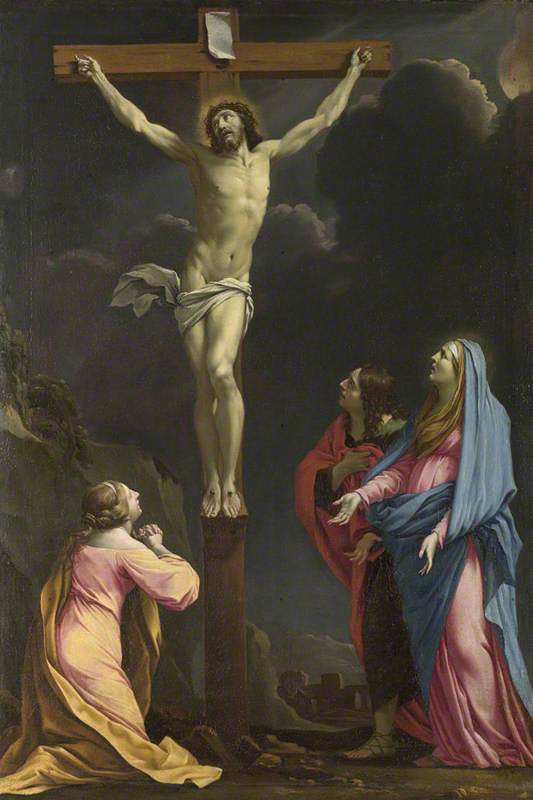
All four Gospels make note that Mary was present at the crucifixion and death of Jesus on Good Friday. Matthew, Mark, and Luke note that Mary and other women, in particular Mary Magdalene, “watched from a distance.” Only Luke writes that “some of Jesus’ disciples” were with Mary. Notably, the Twelve were not there, but hiding out of fear for their lives.
John, however, says very clearly that Mary—with Mary Magdalene and the disciple whom Jesus loved—witnessed Jesus’ death “from the foot of the cross,” not from a distance. At the same time, the distinction made between John and the other three evangelists may provide us with significant teaching moments.
On the one hand, Matthew, Mark, and Luke may be understood as historical descriptions since family and relatives, especially women, would not have been permitted up close to the actual place of execution. Executions were “men’s work.” Those executed were stripped of all clothing and died naked. Artists have added loincloths for the sake of Jesus’ dignity. And executioners would not have wanted hysterical family members getting in the way. If you’ve seen The Passion of the Christ, you will remember the shocking brutality of the crucifixion. But the point is that, even at a distance, the fact is that Mary and others saw Jesus crucified and die.
Universal Truths
John’s description has Mary, Magdalene, and “the disciple whom Jesus loved” close enough so that they could hear his words. John’s account is not for the purpose of describing the actual historical scene. Rather, it is to give the early Church a powerful instruction in the relationship of Mary not only to the disciple standing near her, but also to the whole Church. Jesus showed us that his mother was, indeed, the mother to all of God’s children.
In looking at this scene of Jesus’ crucifixion and noting the distinctions between Matthew, Mark, and Luke’s description—and that of John’s—we see an important point in reflecting on Scripture. Sometime people want to put great emphasis on those things that they see and understand as historical. It is essential to understand that God reveals his truth in various ways.
The writer, John, already knew of the other Gospels as they described Mary and the others watching the death of Jesus, showing their dedication and faithfulness to him even in death. The best conclusion to draw is that everything in the Gospels (and all of Scripture) is significant since it is the revealed word of God. Whether it is a fact of history or a manner of teaching that might not be historical, both contain the truth of God’s teaching for us.
Both the devotion of Mary and the women witnessing Jesus’ death—and the gift of Mary as mother to us—are truths we cannot be without.
“Whoever shall faithfully serve me by the recitation of the Rosary, shall receive powerful graces.”
“I promise my special protection and the greatest graces to all those who shall recite the Rosary.”
“The Rosary shall be a powerful armor against hell, it will destroy vice, decrease sin, and defeat heresies.”
“It will cause virtue and good works to flourish; it will obtain for souls the abundant mercy of God; it will withdraw the hearts of people from the love of the world and its vanities, and will lift them to the desire of eternal things. Oh, that souls would sanctify themselves by this means.”
“The soul which recommends itself to me by the recitation of the Rosary, shall not perish.”
“Whoever shall recite the Rosary devoutly, applying himself to the consideration of its Sacred Mysteries shall never be conquered by misfortune. God will not chastise him in His justice, he shall not perish by an unprovided death; if he be just, he shall remain in the grace of God, and become worthy of eternal life.”
“Whoever shall have a true devotion for the Rosary shall not die without the Sacraments of the Church.”
“Those who are faithful to recite the Rosary shall have during their life and at their death the light of God and the plenitude of His graces; at the moment of death they shall participate in the merits of the Saints in Paradise.”
“I shall deliver from purgatory those who have been devoted to the Rosary.”
“The faithful children of the Rosary shall merit a high degree of glory in Heaven.”
“You shall obtain all you ask of me by the recitation of the Rosary.”
“All those who propagate the Holy Rosary shall be aided by me in their necessities.”
“I have obtained from my Divine Son that all the advocates of the Rosary shall have for intercessors the entire celestial court during their life and at the hour of death.”
“All who recite the Rosary are my children, and brothers and sisters of my only Son, Jesus Christ.”
“Devotion of my Rosary is a great sign of predestination.”
Our Lady’s Rosary Makers was founded in 1949 by Brother Sylvan Mattingly, C.F.X. This Xaverian Brother taught people to make rosaries on the premise that they would make rosaries and distribute them freely to missionaries. Our Mission, set forth by our founder, Brother Sylvan, who envisioned a world in which all God’s children, possessing an instrument of peace and comfort, would work to fulfill Our Lady’s requests at Fatima, to pray the Rosary daily, is to provide those in need of a Rosary with one.
OLRM provides low cost materials, resources, and support in the spirit of Br. Sylvan’s mission and vision. We are a member driven, non-profit, Catholic lay apostolate within the Archdiocese of Louisville. Our diverse and active members spread devotion through the Immaculate Heart of Mary by making and sharing the Rosary with the world’s spiritually needy.
OLRM publishes FREE instructions for making rosaries. How to make a rosary instructions are available for cord and wire rosaries. In addition to these two there are some instructions for variations on these methods. Printable, online, and video instructions of making rosaries are offered directly on this site below.You may also order FREE copies in bulk, or a DVD for $8.50, through our Online Rosary Parts Catalog.
OUR HISTORY
Long haunted by the urgency of Mary’s words at Fatima, Brother Sylvan, C.F.X., decided in May 1949 to do something extra for Our Lady. He began to teach children how to make rosaries for the missions.
Inspired by Our Lady’s words, and having seen letters from missionaries around the world, he knew of the great need for rosaries in the mission fields.
He thought: The missionary can teach his people Christianity, he can offer the Mass for his people, but what happens when he’s off caring for others? With a few rosaries arriving he could now leave a symbol of the Faith to his people. Even though they could neither read nor write, they could pray the rosary.
Letters began pouring in from missions all over the world. The need was really greater than anyone had imagined.
Brother made a trip to Denver to teach ten people there. This group grew and spread the word to others as far away as a small town in Minnesota. Inspired people of Detroit started a group which today sends over 100,000 rosaries a year to the missions.
He set up a small office in a basement room at St. Xavier High School in Louisville, Kentucky and named his slow-forming club “Our Lady of Fatima Rosary Making Club.”. An elderly couple donated $25 for a typewriter to communicate with missionaries and club members.
In 1951 Brother asked Father Bertrand Rapp, newly ordained parish priest, to take over the duties as Chaplain to the Club. On a cold winter night in December, after working all day to build a fieldstone “Grotto for Mary”, Brother Sylvan died.
Father Rapp worked tirelessly to continue Brother’s work. Teaching here, arranging for volunteers somewhere else. He spent his vacations in Rosary Club endeavors, unselfishly working for Mary. By 1954 membership had grown to 2,500 adults and many children in schools across the nation.
With growth came the need for more capacity to serve our members. Brother Sylvan had a difficult time raising that first $25 for a typewriter, and with growth, there were more expenses. Thirty-four thousand dollars for a bead mold; twenty thousand for a die to mold the needed crucifixes and centers. Wire had to be bought in half ton lots for maximum economy. Where does all the money come from?
Our Blessed Mother inspires, but she doesn’t make it easy; yet the answer came simply enough. The deficit is made up by the Club making catalog sales to those rosary-makers who wish to make a nice gift rosary for a friend or relative. The profit from these catalog parts help make up the mission loss.
Annual members dues of $2 help pay for our newsletter, Our Lady’s Messenger, with the remainder going into the deficit fund. Invariably when there is need, someone helps with a small donation; sometimes a large one.
Today the club has grown from its humble origins to be the world’s leading mission Rosary apostolate. A new International Rosary Center was built in 1968. Today the center is more than double its original size. OLRM staff work diligently five days a week processing and filling orders for rosary supplies, as well as, connecting members with missionaries and missions in need of rosaries.
The International Rosary Center houses our operations, showroom, and Our Lady’s Chapel – in which we pray our morning rosary. The Blessed Sacrament is present and we have a monthly Mass on the First Saturday in honor of Brother Sylvan and all Club members

 St Joseph Church | Chehalis, WA
 EWTN
EWTN saintcyrils.church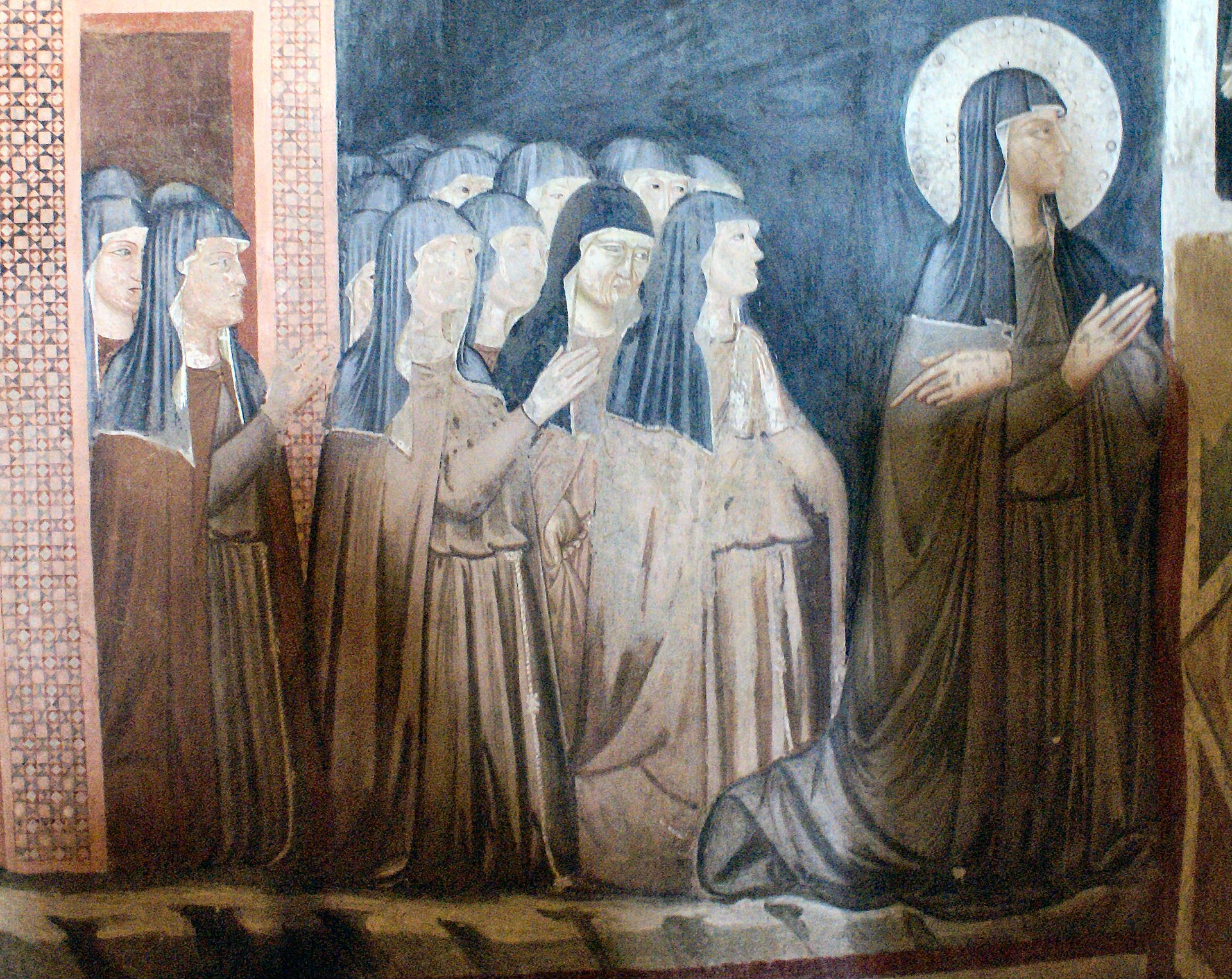




 novena.com