Unknown's avatar

About sandra dipasqua

graphic designer

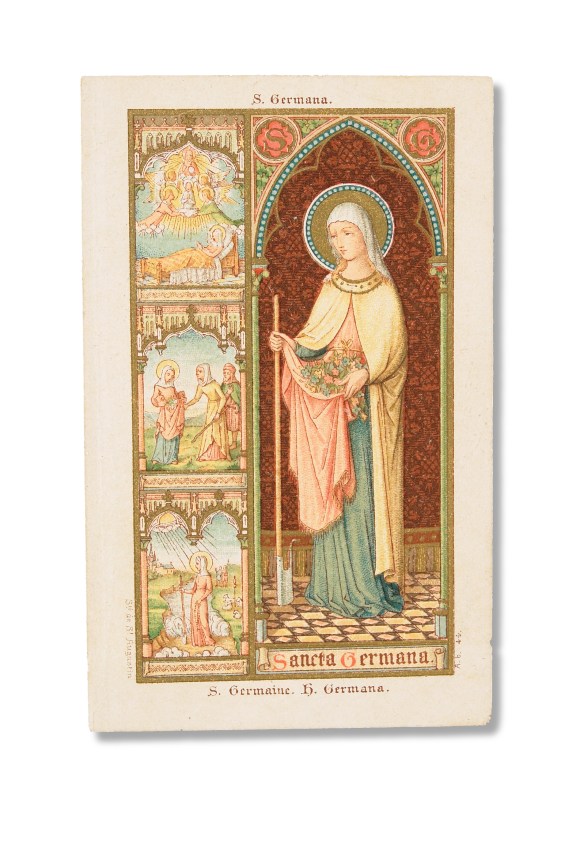
Abandoned People / Germaine Cousin, 1579–1601,
Feast Day: June 15

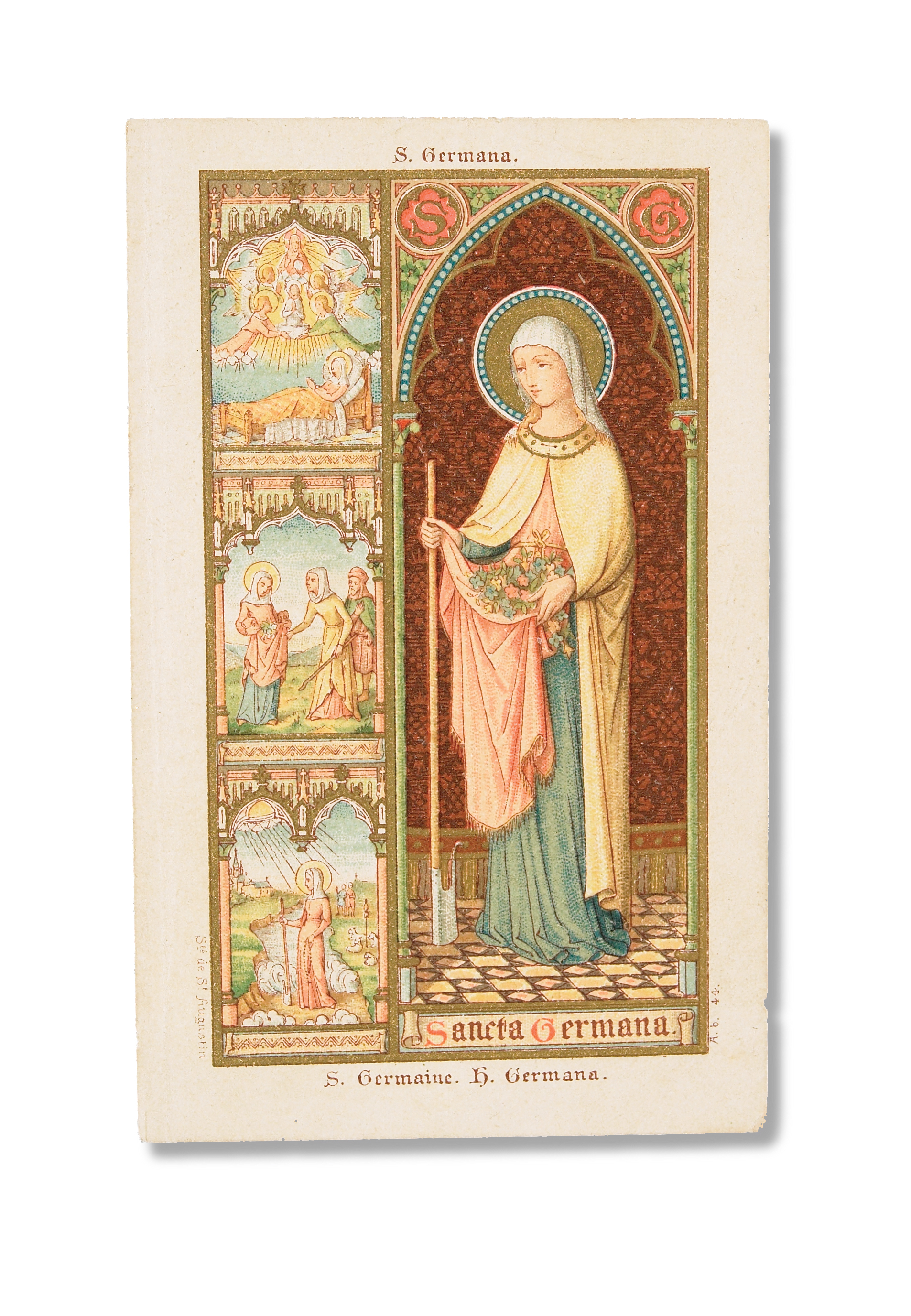
Born to a poor farm family near Toulouse, France, Germaine was a sickly, ugly child with a withered arm. After her mother died, her father married a woman who was especially cruel to Germaine, forcing her to live in a stable and tend sheep. She made a rosary out of string, and when she left her sheep to attend mass, no harm from wolves ever came to them. She died on her pallet, and forty years after her death, when her body was accidentally exhumed, it was found to be incorrupt. Hundreds of miracles have been reported due to her intercession.

Other patronages: shepherdesses; abuse victims, handicapped people, unattractive people

Invoked: against poverty

Amputees / Anthony of Padua, 1195–1231,
Feast Day: June 13

A Franciscan preacher known as “the Wonder Worker,” Anthony is one of the most popular saints in the world. In one of the many miracle stories about him, when a boy kicked his mother in front of the saint, his foot came off. Anthony reattached it after the boy apologized.

Other patronages: Portugal; draftees, potters, seamen, sellers of strawberries; barren women, orphans, prisoners, shipwrecked people

Invoked: to find lost articles, a husband; against infertility

Hail / Barnabas the Apostle, d. 61, Feast Day: June 11

Originally from Cyprus, Barnabas was said to have been present at the Pentecost when the Holy Spirit descended on the original followers of Christ. He introduced Saint Paul to the other apostles and became his disciple. He was stoned in Cyprus when he attempted to preach there, and this is why he is invoked against hail. He was burned alive, and when his remains were discovered in 458, the Gospel of Matthew was with them.

Other patronages: Antioch, Cyprus

Invoked: for peace

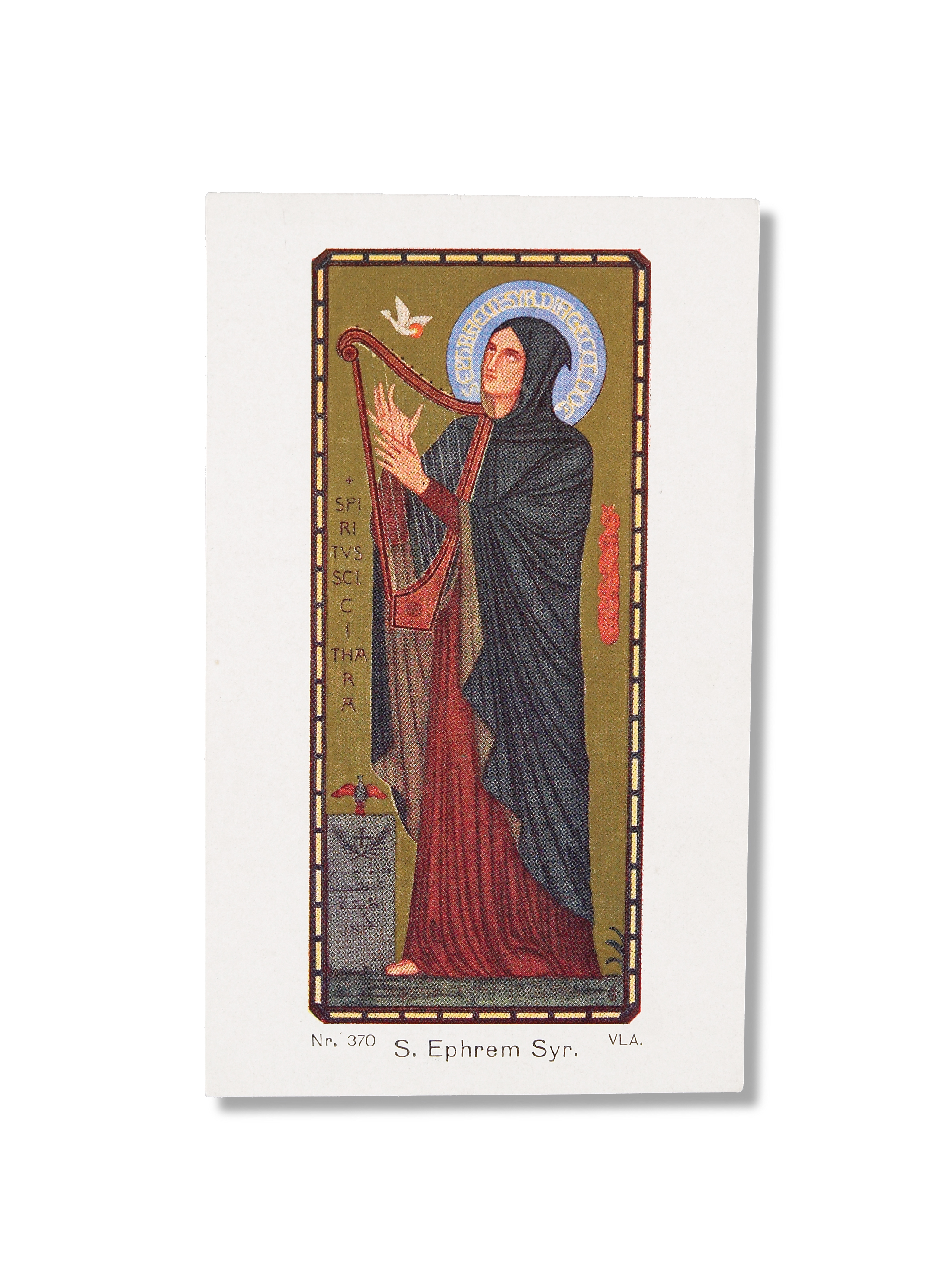
Syria / Ephrem of Syria, 306–373, Feast Day: June 9

Born into an early Christian community, Ephrem’s great body of writing—his homilies, poems, hymns, and dissertations on Christian philosophy—make him a pillar of both the Syrian and Roman Catholic churches. Driven out of his home in Syria, he found refuge in Edessa, where he lived in a cave and did much of his writing. His work, written in his native language, represents the Church before the influence of Europe.

Other patronages: spiritual directors, spiritual leaders

Peace / Norbert, 1080–1134, Feast Day: June 6

A German noble devoted to pleasure, Norbert took holy orders as a career move. When the horse he was riding was hit by lightning, Norbert awoke in a ditch a changed man. He became a traveling preacher, donated his wealth to the poor, and founded a movement of laypeople dedicated to reforming monasteries throughout Europe. He tried to settle a schism in the Church between Pope Innocent II and the antipope Anacletus.

Other patronages: Bohemia, Magdeburg (Germany)

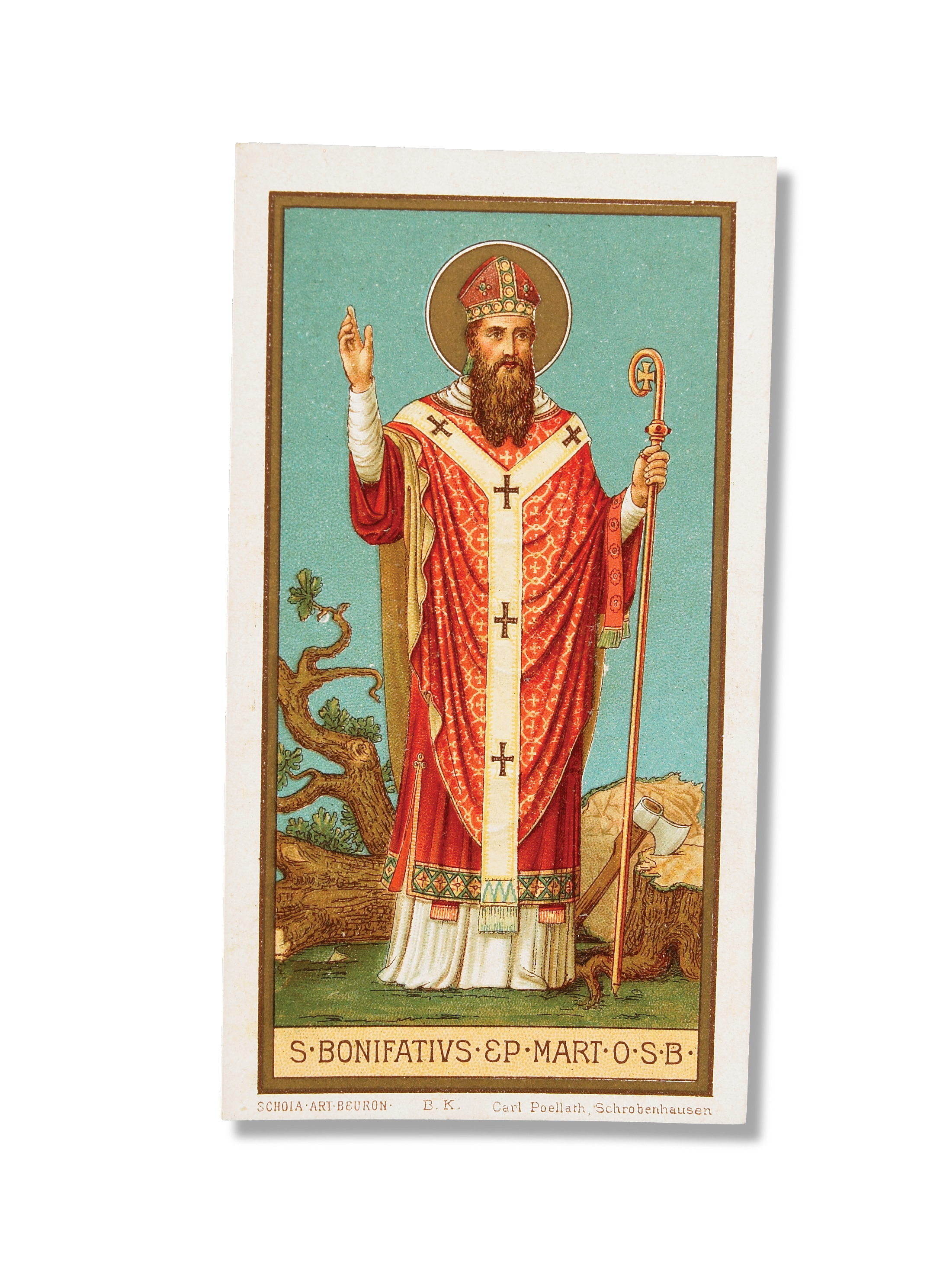
Germany / Boniface 680–754 Feast Day: June 5

An English monk, his interest in his Saxon roots took him to Germany, where he changed his name to Boniface and successfully evangelized the tribes that lived there. He chopped down the oak tree sacred to Thor, and when the crowds saw there was no retribution paid for this act, they began to follow him. A happy and popular man, he attracted many English priests and nuns to join him. He was murdered in the Netherlands while reading in his tent.

Other patronages: World Youth Day; brewers, file cutters, tailors

Adopted Children / Clotilde 475–545 Feast Day: June 3

A Christian princess from Burgundy, Clotilde married the king of the Franks and converted him to Christianity. After his death, her three sons fought amongst themselves and her daughter was forced into a terrible marriage. She adopted her three grandsons after the murder of their father. Two of these children were murdered by their uncles; the third, she safely hid in a monastery. She retired to Toulouse to escape these events and worked among the poor for the rest of her life.

Other patronages: queens; brides, death of children, disappointing children, the exiled, widows


Falsely Accused / Blandina d. 177 Feast Day: June 2

A slave girl converted by the Christian family she worked for, Blandina was imprisoned during a persecution in Lyons, France. Under torture, she refused to agree with charges accusing Christians of committing incest and cannibalism. Condemned to die in the arena, the lions and bears did not touch her as she comforted her dying compatriots. She was then tied in a net and gored to death by a wild bull, her body burned and her ashes thrown in the river.

Other patronages: girls, torture victims

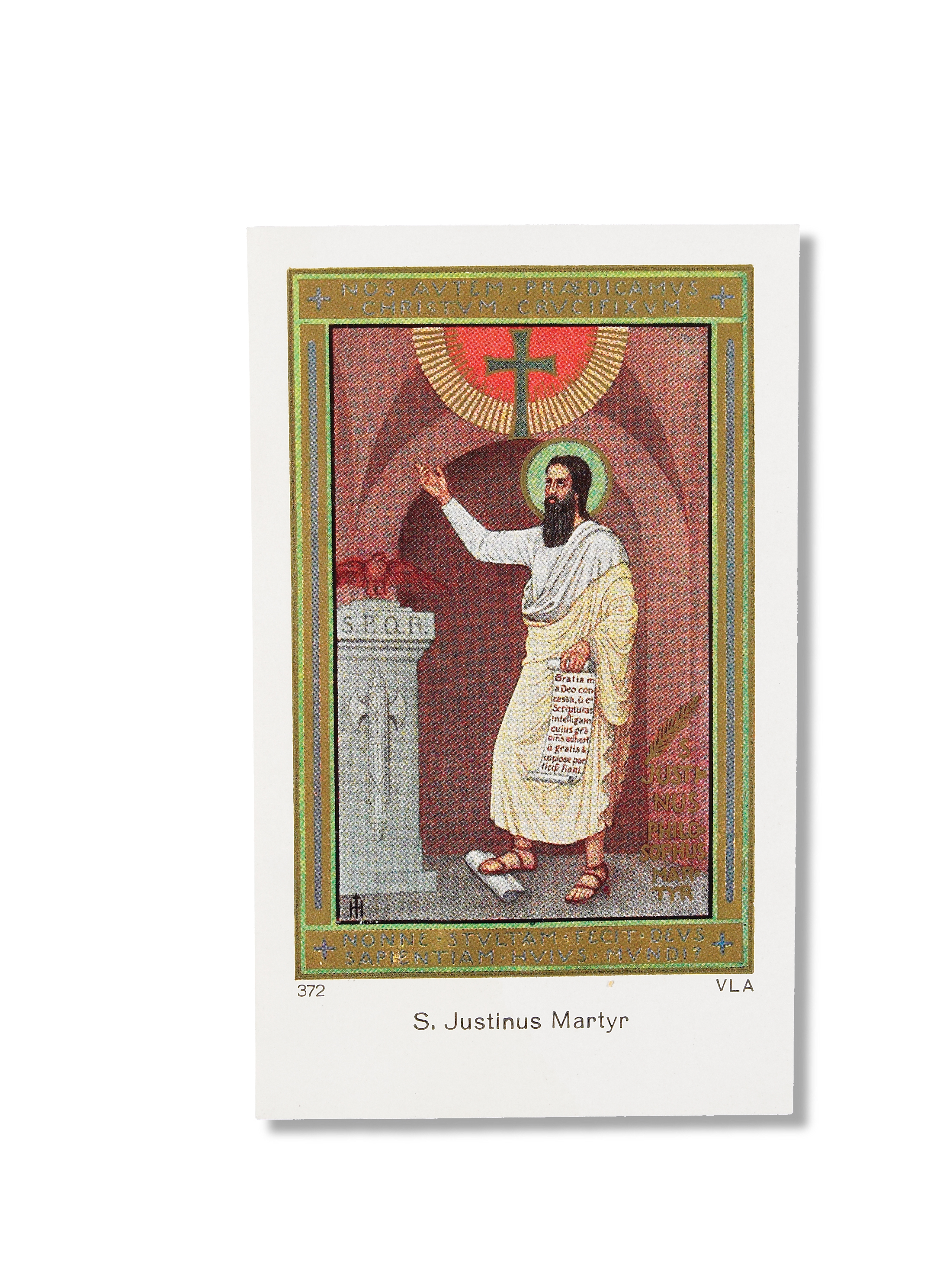
Philosophers / Justin Martyr 100–165 Feast Day: June 1

Born in Palestine to Greek parents, Justin was the first Christian philosopher. As a young man, he studied the Stoics, the Pythagoreans, and the Platonists, and he was introduced to Christianity at the age of thirty-three. Seeing no conflict between Faith and Reason, he traveled widely, debating those of different faiths and philosophies. When he won and argument against a Cynic in Rome, he was arrested and beheaded.

Other patronages: apologists, lecturers, orators

The above patron saints have been excerpted from the book: “Patron Saints: A Feast of Holy Cards” by Barbara Calamari and Sandra DiPasqua.

All images are from the collection of Father Eugene Carrella.

Novenas for June

Saint Anthony of Padua

1195-1231

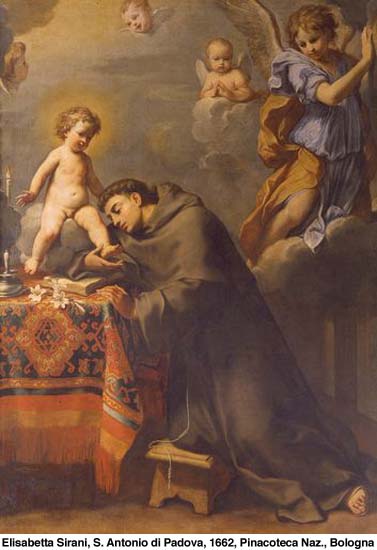
Always depicted with the baby Jesus, Saint Anthony of Padua is the most popular saint in the world. The unconditional love and kindness that are the essence of Saint Anthony’s nature are best represented by this story. While walking through his garden, an older relative heard the giggling and laughing of a baby. He looked up to see Anthony with the baby Jesus in his arms, happily carrying him and talking to him. The baby kissed Anthony and disappeared. In his novena, we beg Saint Anthony to whisper our request to the infant. Since babies are not judgmental, this incarnation of Christ will surely grant our petitions. Because of this special relationship, Saint Anthony is approachable by all, for large and small favors alike.

Born in Lisbon, Portugal, to noble parents, he was baptized Fernando. He took the name Anthony upon entering the Franciscan order. He intended to preach in Morocco and, if necessary die a martyr for his faith. Instead, after arriving there, he became very ill and was sent home. His ship was blown off course and he ended up in Messina, Sicily. He then attended the great meeting of all Franciscans, where he was very moved to be seated next to the order’s founder, Saint Francis of Assisi.

Saint Anthony was magnetic and charismatic. Sent by the Franciscans to be a traveling preacher around Lombardy and southern France, and with only prayer as preparation, he gave powerful speeches, overwhelming his audiences with his love for a more spiritual life. Saint Anthony was based in Padua, Italy, but he attracted huge crowds wherever he went. Many swore he radiated a holy aura.

Saint Anthony spent the last few years of his life working to help relieve the burden of debt from the poor of Padua. Saint Anthony’s Bread, devoted to feeding the hungry, is a charity that he started that is still in existence. After their novena prayers are answered, many people make donations to this organization in thanks.

Worn out by his travels, Saint Anthony died at the age of thirty-six. His reputation for compassion was so legendary, that even a few weeks after his death, when a child drowned in the river and his mother cried out to Saint Anthony in anguish, the child miraculously came back to life. Due to the many other miracles and answered prayers that followed his death, his consecration as a saint is the quickest on record, taking only one year.

Saint Anthony, credited with an extraordinary range of intercessionary powers and known as “The Wonder Worker”, is most famous as the saint of lost articles. After a novice borrowed his psalter and failed to return it, Saint Anthony prayed to get the book back. The novice then had a terrifying heavenly vision that forced him to return it. In 1263, when Saint Anthony’s tomb was reopened, it was found that his tongue had never decomposed. His tongue, jawbones, and vocal chords are on display in the cathedral at Padua. He is the patron saint of lost articles, the patron saint of the poor, and the patron saint of Portugal. Saint Anthony is usually depicted with the Infant Jesus, his returned psalter, and lilies to represent his purity.

Feast Day: June 13

Patron Saint of: Lost Articles, the Poor, Portugal

Invoked: against debt, to find what is lost

Novena to Saint Anthony of Padua

O holy Saint Anthony, gentlest of saints, your love for God and charity for his creatures made you worthy, when on earth, to possess miraculous powers. Miracles waited on your word, which were ever ready to speak for those in trouble or anxiety. Encouraged by this thought, I implore of you to obtain for me (mention your request here). The answer to my prayer may require a miracle; even so, you are the saint of miracles. O gentle and loving Saint Anthony, whose heart was ever filled with human sympathy. whisper my petition into the ears of the sweet infant Jesus, who loved to be folded in your arms, and the gratitude of my heart will be ever yours.

(Recite one Our Father, one Hail Mary and one Glory Be).

This novena can be said nine times in a row for nine days in a row.

It can also be said every Tuesday in church. Say this novena nine times in a row in front of a lit votive candle to Saint Anthony, for nine weeks in a row.

Excerpted from the book: “Novena: The Power of Prayer” by Barbara Calamari and Sandra DiPasqua.