The Last Supper and Jesus’ Final Teachings

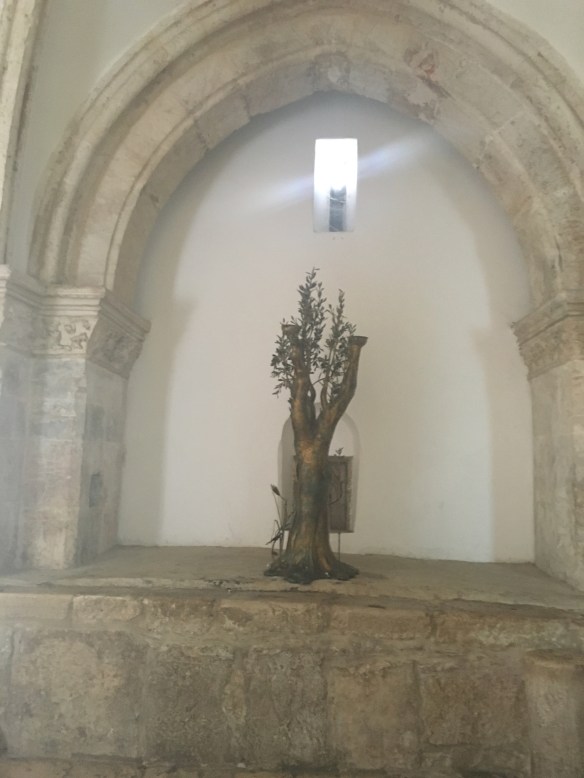
IMG_1149
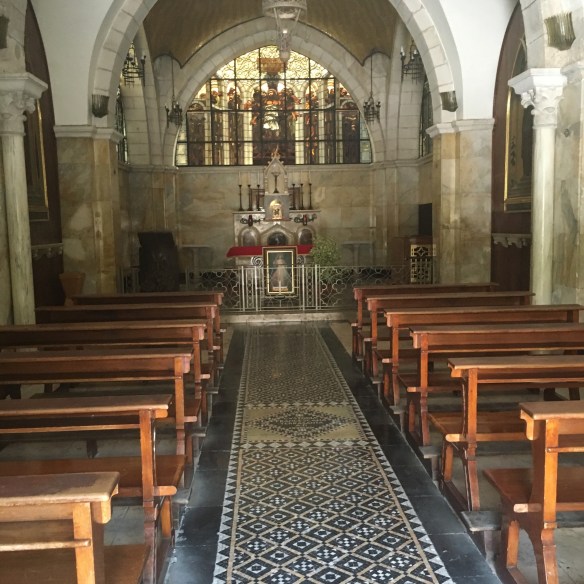
The room where the Last Supper took place. Jerusalem, Israel.
The Last Supper and Jesus’ Final Teaching (22:7-38)

Luke loves meals. This is his seventh meal scene; it is also one of his most dramatic (see 5:29-32; 7:36-50; 9:12-17; 10:38-42; 11:37-54; 14:1-24; two more remain, 24:28-32, 36-43). At the dinner table friends can enjoy fellowship and reflect on events. Such an intimate occasion is the setting for Jesus’ final words to his disciples. Added to the intimacy of the scene is its timing. A Passover meal is being celebrated (vv. 7-9). During the celebration of God’s saving of Israel, Jesus will discuss his sacrifice on behalf of his disciples. It will be a meal to remember, not only because this event forms the basis of the Lord’s Supper but also because Jesus predicts a betrayal, defines true leadership, promises authority to the eleven, predicts Peter’s failure and warns of coming rejection. Even as he faces death, Jesus serves by preparing others for their task.

The passion did not catch Jesus by surprise. In fact, many of the Passion events reveal that Jesus is in control; and the Passover meal preparation is no exception. The Passover meal launched the celebration of both Passover and the Feast of Unleavened Bread, which ran in the week following Passover. So Luke’s introduction makes a combined reference to the two. Jesus directs Peter and John to prepare the meal and tells them where to find the room for it. It was a legal requirement that the meal be celebrated within Jerusalem, which meant that a suitable location was necessary (2 Chron 35:18; Jubilees 49:15-16 even held the temple was the desirable locale). The preparation would involve organizing the sacrifice of lambs in the temple, cooking them, preparing the place, assembling the side dishes and utensils, and serving the wine.

Jesus tells Peter and John that “a man carrying a jar of water” will show them “a large upper room, all furnished.” Peter and John find things just as Jesus had told them. So they prepare the meal. The room would have been filled with cushions on which to recline. So Jesus directs the disciples, and they are faithful in following him. They see that he is aware of the events that are unfolding. They can trust him.

The meal itself is fraught with emotion. Jesus expresses how much he has longed to eat this meal with the disciples. He uses a Hebrew idiom, “I have desired with desire,” to make the point emphatically (NIV: I have eagerly desired; compare Gen 31:30; Num 11:4). Before Jesus suffers, he has this last meal with them. The meal serves literarily for Luke as a “last testament,” Jesus’ parting words to his own. Like an ill person on his deathbed, Jesus leaves his last impressions on those who have ministered with him. We can only imagine how he felt knowing what was ahead and realizing, “I will not eat [this meal] again until it finds fulfillment in the kingdom of God.” Jesus knows that his earthly ministry is drawing to a close and only the future great messianic banquet table will permanently and physically unite these special men to him again. He knows that the Passover will not touch his lips again until the promise is fulfilled with the consummation of the kingdom of God, just as he had discussed in 21:25-28.

Some see the fulfillment of these words in Acts and in the Lord’s Supper, but Jesus does not eat that meal himself, he only is present. Also, the Lord’s Supper is not a Passover meal, which is what he alludes to here. Jesus has in mind the great consummation of promise, when he returns to earth and directly and visibly rules with his saints. (I prefer a premillennial approach to the end times. Amillennialists will see this return as involving the setting up of the new heavens and new earth.) With Jesus’ return, redemption will draw near and the kingdom will come in its decisive, most fulfilling form.

Like the meal, the cup is a final sharing of fellowship with his disciples. Only Luke mentions this first cup. The moment clearly is bittersweet for Jesus. His destiny requires separation from those he loves. When the kingdom comes, they will resume celebration.

The sequence of bread and cup follows. They form the basis of our Lord’s Table. It is likely that Jesus is lifting the third cup of the Passover here. This cup followed the eating of the Passover lamb, the unleavened bread and the bitter herbs. It have followed the explanation of why the meal was being celebrated, a review of the exodus. Thus Jesus’ words mirror earlier salvation events and resonate with all the imagery of that linkage. As he reinterprets the symbols, he fills them with fresh meaning.

So the bread is “my body given for you; do this in remembrance of me.” Jesus is not arguing that the bread becomes his body, the view called transubstantiation. Nor is he arguing that he surrounds and enters the bread with his presence, a view known as consubstantiation. Like the Passover, the bread pictures his death and represents his self-sacrifice as his body is broken for the disciples on the cross. The Lord is present, but the elements serve to remind and proclaim; the elements are not transformed (1 Cor 10:15-18).

The call to remember shows the symbolic nature of the meal. “Keep in mind my sacrifice” recalls the Hebrew concept of zikron, where something is to grip the memory (Ex 2:24; Lev 24:7; Num 5:15; 10:9-10; Ps 20:3; Ezek 21:23). When the church takes this meal looking back to this event, it becomes a statement of solidarity with Jesus, a public covenant renewal—which is why taking the meal is such serious business for Paul in 1 Corinthians 11:17-34.

In the same way, after the supper he took the cup, saying, “This cup is the new covenant in my blood, which is poured out for you.” The new covenant is a major theme of the New Testament (see Jer 31:31; Mt 26:28; Lk 24:49, the Father’s promise; Acts 2:14-39; 2 Cor 3—4; Heb 8—10). Jesus’ blood is shed for his followers. By it he purchases the church (Acts 20:28). The foundation for a new era is laid. A new sacrifice brings an era of fresh fulfillment. That new era starts with Jesus’ death and the distribution of the Spirit.

Two features are key to this understanding of the sacrifice of Jesus as pictured by the cup. First, his death takes our place in paying for sin. Paul says this most explicitly in Romans 3:20-26. Luke’s language only leaves it implied, though he is aware of the teaching, as Acts 20:28 shows. Second, Jesus notes that his death is inseparably connected to the establishment of the new covenant. A covenant is always inaugurated with the shedding of blood. By far the most eloquent explanation of this new covenant idea is found in Hebrews 8—10.

Jesus sits at the table and reveals why he is going away: to provide a new sacrifice for forgiveness that will open the way for the coming of God’s Spirit (24:44-49). In order to give the Spirit, he must give himself. John 14—16 discusses this point in detail in a text unique to that Gospel. Jesus will sit again at the table one day. But then he will do so having offered himself so that others might sit with him. That is the story of God’s grace.

There is great pathos here. Even as Jesus gives himself for those he loves, one of them is giving Jesus over in betrayal. The table fellowship is not pure. One sits at the table who longs for Jesus to be removed. So “the Son of Man will go as it has been decreed, but woe to that man who betrays him.” Jesus reveals that his death is no surprise. His passing away is not a sign of a plan disappointed or of salvation gone awry. Still, the betrayer is responsible to God for his betrayal. Judas may have met the leadership in private, but God was not fooled. As with all secretly plotted sin, God was there. Luke has placed this remark in a different order from the parallels, where Jesus reveals his knowledge before the meal. The effect is to magnify the note of irony. As Jesus dies to secure forgiveness for others, he himself meets with betrayal. Even one of his own betrays him (Ps 41:9). Woe will befall Jesus’ rejecter. It is a fearful thing to reject the One who gives his life to secure our forgiveness.

The disciples do not know who the betrayer might be. So they speculate with one another: “Who would do this?” Sometimes those allied to Jesus are near him for a time before they reveal that their heart truly lies elsewhere. As John 6:70 puts it, Judas was “a devil” even though for more than three years he looked like Jesus’ devoted follower. Those who know the Son cling to him; those who do not know him depart from him through denial (Col 1:21-23).

So what makes for greatness? Faithfulness, yes, but even more the service that reveals faithfulness. Amazing as it seems, in the midst of Jesus’ revelation about his coming suffering the disciples are fighting over who is number one among them. The text speaks of a “rivalry” (NIV: dispute) breaking out among them. Using the comparative “greater” with a superlative force, the disciples want to know who God puts at the top of the Best Disciple list.

In response, Jesus contrasts leadership in the world with leadership in the kingdom. In the world leadership involves the bald exercise of authority—people lord it over others. In the ancient world when men exercised such power, people publicly recognized their authority and called them benefactors. A benefactor in the ancient world had clients who were to appreciate their lower position (Josephus Jewish Wars 3.9.8 459; 4.2.5 113). Glory and honor came to the leader.

In contrast stands greatness in the kingdom. The disciple-leader should serve with youthful deference. The greatest among the disciples will be the one who is like the youngest and like the one who serves. Jesus points to his own example, not that of the culture. In the ancient world the greater person sits at table while the lesser person serves the meal (see 17:7-10). The Greek interrogative particle ouchi expects a positive reply to the question whether the one at the table is considered greater than the servant. But Jesus notes that he is among the disciples as one who serves. The offering of his life for them is service. He has taught them in service. John 13 tells us that before this meal, Jesus washed the disciples’ feet in humble service. Greatness is defined not by position nor resume, but by one’s attitude and service.

As Jesus calls them to service, he also gives them a promise. He notes their constancy; unlike the betrayer, they have continued with Jesus in his trials. In the face of pressure, like exemplary disciples, they have stood firm with God’s chosen one. So they will share in something he already possesses. The Father has assigned to Jesus a kingdom. Authority has become his (Mt 28:18-20). So he will assign them a role with him. They are to share in his rule. The rule in the future involves table fellowship with Jesus and authority over God’s people, Israel. They will celebrate with him at the messianic banquet table, and they will administer justice over Israel. Their union with Jesus means that they share in the benefits of his rule.

Jesus’ words about greatness and rule are especially important, since they come in the shadow of his death. He wants to remind his followers that no matter how bad the suffering, rejection and persecution get, a day will come when vindication and authority will reign. We can suffer now if we remember not only what Jesus did but also what he will do. Though the authority given to the eleven is unique, all disciples share the promise of reward and a place at the table of messianic fellowship.

Not all of Jesus’ news is good. The cosmic battle is not just between Jesus and Satan. Anyone associated with Jesus is subject to satanic attack. Nothing makes this clearer than the section where Peter is warned about his coming denials. Jesus’ awareness of events continues as he predicts Peter’s temporary unfaithfulness. Verses 31-32 are unique to Luke and follow his stress on prayer. Satan has put in a request to sift all the disciples like wheat. Though Peter is discussed individually in verse 32, the use of hymas, the plural “you all,” in verse 31 shows that he is only part of the coming battle. “Sifted like wheat” is an idiom that in our culture would parallel “take someone apart” (Amos 9:9 has the image). Perhaps Satan believes that if Peter is shamed, others will be disheartened.

Jesus’ prayer has dealt with the threat through a request not that the failure be prevented but that any permanent damage be averted. His request is that Peter’s faith may not fail. Here is our advocate stepping to our defense through a ministry of prayer. Peter will make no total renunciation of Jesus. The disciple’s failure of nerve will not come because of a failure of heart, nor will it be permanent. There will be restoration. In fact, Peter will turn from his denial. His call then will be to strengthen his fellow disciples. What he will be able to teach them may well be revealed by his response. Having learned that failure is possible and the flesh is weak, Peter will be able to strengthen the saints. Though failure is regrettable, sometimes our best lessons come in reflection on failure.

Peter is sure that he is ready to serve in prison, even to die, for Jesus. He is perceptive in that he understands that Jesus’ suffering will envelop his followers. Yet he is confident that he can face whatever comes. Though such self-assurance might seem commendable, one’s own strength is not sufficient to resist severe temptation (1 Cor 10:12-13). Peter is brave in the privacy of a quiet meal, and when the soldiers show up, he will initially take up arms to defend Jesus. But what will he do when those hostile to Jesus ask him where his allegiance lies? Jesus’ prediction of a triple denial before the rooster crows shows that he knows Peter better than Peter does. When we try to stand up to pressure in our own strength, we may wilt. Self-confidence when we are not relying on Jesus is deceptive.

Peter will be able to strengthen fellow believers after his fall because he will understand how easy it is to fall. He can call on them to embrace God’s mercy, be prepared to suffer and be ready to give a defense because he will have experienced all of these opportunities himself—some with failure and others with success.

Jesus teaches God’s grace in this warning to Peter: Do not trust in your own strength, but realize that after failure there will be opportunity for restoration. Jesus intercedes for his own even when he knows they will fail him. Intercession evidences the Savior’s love (1 Jn 2:2). Even disciples who fail in a moment of weakness can experience the success of God’s work. The lesson is an important one not only for Peter but also for all the disciples he represents. Though Satan will come after all of them, Jesus will be praying for them all.

Jesus’ final words make it clear that circumstances are changing. Opposition to the disciples is rising. Where before Jesus had sent them out empty-handed yet they were provided for (9:1-6; 10:3-4), now they will have to take provisions and protection for their travel. They will have to procure a sword. Scripture such as Isaiah 53:12 is finding its fulfillment in Jesus. Jesus is rejected; he is numbered with the transgressors.

The disciples take Jesus’ remarks literally and incorrectly. They note that they have two swords, but Jesus cuts off the discussion. Something is not right, but it is too late to discuss it. As the arrest will show, they have misunderstood. They draw swords then, but Jesus stops their defense in its tracks. He is not telling them to buy swords to wield in physical battle. They will have to provide for themselves and fend for themselves, but not through the shedding of blood. They are being drawn into a great cosmic struggle, and they must fight with spiritual swords and resources. The purchase of swords serves only to picture this coming battle. This fight requires special weapons (Eph 6:10-18).

Humility, dependence, promise of authority and reward, warnings about opposition and the pursuit of faithfulness are the topics of Jesus’ final testament meal. Luke assumes that disciples will engage the larger world and face a great cosmic battle. But they are not to withdraw or be afraid. Rather, with humility and looking to God, they can face suffering and the world bravely and effectively. Jesus is about to exemplify the walk of the innocent before a hostile world. His success is not indicated by his withdrawal or even his survival; it is indicated by his faithfulness (1 Pet 2:21-25).


Holy Week Saints: Saint Jude

Nola st. jude '02Shine of Saint Jude in New Orleans
Saint Jude, 
Apostle

Feast Day: October 28
Patron of: impossible causes Invoked for: help in times of desperation
Symbols: Club, cloth with image of Jesus, flame over head,

“…in accordance with his surname Thaddeus [meaning generous or loving], he will show himself most willing to give help.” Saint Bridget of Sweden, fifteenth century

Saint Jude was one of the original twelve apostles of Jesus. During his lifetime, his compassion and love for others was profoundly evident. Now, thousands of years after his death, his relief aid in seemingly hopeless situations ensures his place as one of the most popular and invoked saints in the world.

Jude Thaddeus was said to be a cousin of Jesus and the brother of James the Lesser. As an apostle of Christ, Jude learned firsthand the power of God to bring about healing and protection for what some might call “lost causes.” The most intriguing example can be found in the legends of Edessa (a city in Mesopotamia). As the story goes, King Abgar suffered greatly from leprosy and, desperate for relief, wrote a letter to Christ, which read, “I have heard about you and the cures you effect, that you do this without medicaments or herbs, and that with a word you cause the blind to see, the lame to walk, lepers to be cleansed, and the dead to live again. Having heard all this, I have decided in my mind that you are either a god and have come down from heaven to do what you do, or you are the Son of God and so do these things . . .”

Jesus was happy that King Abgar believed in Him without even seeing Him; however, He did not have time to visit the king. When the king realized he would never see Christ Himself, he sent an artist to draw a portrait. The artist was so overcome with the radiance emanating from Christ’s eyes, his hands shook and he could not accomplish his task. Jesus took a cloth and wiped His face with it, leaving His image imprinted in the cloth. Jude was sent back to Edessa to present this portrait to the king who rubbed it on his own body and was instantly cured of his disease.

In a different version of the story, Jude presented the burial cloth of Christ to King Agbar by carrying the precious material seared with Christ’s image folded up as a portrait. The king was cured when he touched the shroud. His subsequent baptism by Jude established Christianity in Edessa. Jude’s role as a helper to the despondent was sealed, as was his influence in the Mideast region of the world. The shroud, of course, has become known as the Holy Shroud of Turin.

After the death, resurrection, and ascension of Christ, Jude and the apostle Simon were sent back to Mesopotamia (present-day Iraq), Persia, Armenia, and southern Russia to preach. The men became popular with the local population for their keen intellect, clever dialogue, and the amusing ways in which they outwitted sorcerers and magicians in public discourses and arguments. When invited to choose, as was the custom of the day, how their losing antagonists were to be executed, Jude and Simon would reply, “We are not here to kill the living but to bring the dead back to life.” They would then joyfully preach the message of Christ, converting thousands at a time.

Jude and Simon were not without detractors, however, and in the Epistle of Jude, his only writings to survive him, Jude exhorts recent converts in the East in a.d. 60, to stay strong in the face of persecution and to persevere through harsh and difficult circumstances. These persecutions caught up with both Simon and Jude just five years later when they were martyred together for their evangelizing. Today, their relics are buried under the main altar of Saint Peter’s Basilica.

Over the centuries, Saint Jude became confused with Judas Iscariot, the apostle who betrayed Christ for thirty pieces of silver. In many instances, to avoid this confusion, he is referred to as “Thaddeus” in the writings of the evangelists. Because he shared a name with such a notorious character, few Christians invoked Saint Jude for help. The mystical saints Bernard of Clairvaux in the twelfth century and Bridget of Sweden in the fifteenth century were exceptions. According to a vision, Jesus told Saint Bridget of Sweden to dedicate an altar to Saint Jude, because “in accordance with his surname, Thaddeus [meaning generous or loving] he will show himself most willing to give help.”

Few Catholics took these words seriously until the nineteenth century when a tradition began that when Saint Jude would answer the most impossible of prayers, the petitioner in turn, must thank the saint in a public way. The advent of inexpensive newspapers made this obligation possible and to this day, weekly and daily periodicals all have their share of “Thank you Saint Jude” personal ads. Perhaps the grandest gesture of public thanks to this saint is the world famous Saint Jude’s Children Hospital in Memphis, Tennessee. It was built by the entertainer Danny Thomas as a tribute to Jude for answering his prayers when he was struggling to support his family. This hospital serves children with “hopelessly incurable diseases” and has become a groundbreaking research institution, saving innumerable young lives on its premises and even more internationally through its discoveries. From its great success, the name Saint Jude has become a common name for research hospitals all over the world.

Since he was present at the Pentecost, Saint Jude is usually depicted with the flame of the Holy Spirit over his head. His principal attribute is the cloth with Christ’s image, sometimes displayed on his body in a medallion form. He carries the club or axe he was beaten to death with and also displays the palms of the martyr.
Prayer to Saint Jude
Saint Jude, glorious Apostle, faithful servant and friend of Jesus, The name of the traitor has caused you to be forgotten by many, But the true Church invokes you universally as the patron Of things despaired of; pray for me, that I may receive the consolations and the help of heaven in all my necessities, tribulations, and sufferings, particularly
(here make your request)
and that I may bless God with the elect throughout eternity. St. Jude, Apostle, martyr, and cousin of our Lord Jesus Christ, intercede for us.
Amen.

Feast of Mary Magdalene

Le Brun,Charles (1619-1690)

Sainte Madeleine repentante renonce a toutes les vanites de la vie – Saint mary Magdalen renounces all pleasures of life.Painted after 1650 for the church of the monastery of the Carmelite nuns in Paris. Canvas.252 x 171 cm Inv.2890

Saint Mary Magdalene
Apostle to the Apostles

Feast Day: July 22
Patron of: Provence, contemplatives, converts, gardeners,
glove makers, hairdressers, penitents, perfumers, pharmacists,
prisoners, reformed prostitutes Invoked against: sexual temptation
Symbols: alabaster jar, long hair, skull

“Touch me not; for I am not yet ascended to My Father; but go to
my brethren, and say unto them, I ascend unto My Father, and your Father; and to My God, and your God.” — Christ to Mary Magdalene according to John 20:179

Though the subject of Mary Magdalene’s true identity may be fodder for a heated debate, there is one aspect of her life that all ecclesiastical writers agree upon: She never left Christ during His crucifixion, and she was the first person to see Him after His resurrection. Because Jesus chose her as His first witness and because He told her to go and tell the others what she saw, she is known as the “Apostle to the Apostles.” This title aside, it is the example she sets as a penitent and reformed sinner that she is most well known and honored.

According to ancient Jewish texts, the seaside town of Magdala was known as a place of loose morals. This town was Mary’s home, and she took its name as her own, signifying her unmarried state. It was said that Mary had wealth and took great pride in her appearance, enjoying luxuries and lapsing into promiscuity. Many shunned her because of her reputation for lewdness, and it is as this sinner that we are first introduced to her.

After Jesus had raised the son of a widow from the dead, a man named Simon invited him to be guest of honor at a dinner. While they were seated, a certain notorious woman walked into the room carrying an alabaster box. Weeping, she threw herself down and wiped Jesus’ feet with her hair and then anointed them with the oil. Simon was outraged that Jesus would accept such tribute from someone so disgraceful. But instead of judging the woman, Jesus rebuked Simon, “Does thou see this woman? I entered into thy house–thou gave me no water for my feet. But she with tears has washed my feet, and with her hair has wiped them. Thou gave me no kiss. But she, since she came in, has not ceased to kiss my feet. My head with oil thou did not anoint but she with ointment has anointed my feet. Wherefore I say to thee: Many sins are forgiven her, because she has loved much. But to whom less is forgiven, he loves less.” He then told the penitent woman to go in peace, all her sins were forgiven.

In the next chapter of Luke 8:2 he mentions the travels of Christ and his followers in Galilee, among them is “Mary called Magdalene, out of whom went seven devils.” Luke also tells us that the day before Christ’s entry into Jerusalem he dined with Lazarus and his sisters Martha and Mary. When Judas objects to the use of such expensive oil, he is rebuked by Christ, like Simon, for being so self-righteous. “. . . For the poor you have always with you . . . but me you have not always. . .” Because in this story, Mary too wipes Jesus’ feet with her hair and anoints them with oil in the same manner as the penitent woman, Catholics believe both women to be Mary Magdalene, whom after being exorcized by Christ became one of his greatest and most loyal followers.

Indeed, her loyalty to Jesus was unsurpassed even at His death. Unlike His other disciples, Mary never renounced Jesus or ran from Him. She stood with His mother until He was dead, helped take Him down from the cross and wept outside of His tomb. On Easter morning it was Mary Magdalene who returned at dawn to keep a vigil. When she found the great stone covering the tomb rolled away, she ran back to tell Peter and the others that someone had taken Jesus’ body. They ran ahead of her, saw the open tomb, and left.

But it was Mary Magdalene who stayed behind, searching the tomb and weeping. Two angels dressed in white appeared to her and asked why she was weeping. “They have taken my Lord, and I know not where they have laid him,” she responded. A gardener asked her the same question and she begged the man to tell her where Christ’s body might be found. “Mary,” said the man, and she suddenly knew this man was not a gardener. She was talking to the risen Christ. When she went to embrace him, he told her, “Touch me not!” (The phrase Noli me tangere in the Latin bible). Mary spread the good news to the disciples–the last action the gospels recorded of Mary Magdalene.

The rest of her life story was written in the early Middle Ages. It is said that after the resurrection of Christ, political leaders in Israel tried to quash the cult that was rapidly growing around Him. These leaders placed Mary Magdalene, her sister, Martha, their brother, Lazarus, and other followers in a rudderless boat, in hopes that they would perish at sea. Divine Providence brought them to the coast of Marseilles, France. There they had much success converting the local people to Christianity. Mary took her apostolic mission to Provence and was greeted with equal enthusiasm. After converting the king and helping to install a bishop, she retired to a cave to live out the last thirty years of her life as a penitent. Her hair grew long enough to cover her naked body, and she repented for her previous deeds as a sinner. Once a day, angels would carry her to heaven, where she received her “daily sustenance,” which took the place of earthly food. Eventually her death drew near, and she sent for Maximinus, the bishop she had installed years earlier. She received the eucharist and died in tears.

Early French ecclesiastical writers claimed Mary Magdalene and her family as their evangelists. Since they were favorites of Christ, this divine favoritism then extended to France and the French people. Miraculous discoveries of her relics abounded from Provence to Burgundy. The Cathedral at Vézelay was dedicated to her in the twelfth century and became the center of her cult and an important stop on the pilgrimage to Campostela. Her feast, falling in the heart of summer, was happily celebrated throughout France.

To the people of the Middle Ages, Mary Magdalene was a wildly glamorous figure, a beautiful woman with long, red hair. She presented an alternative to the image of an ever pious saint. Here was a woman who had enjoyed luxuries, made mistakes, and tried to redeem herself. As towns grew into cities, they began to face an onslaught of urban problems such as prostitution. Though there is no mention in the Bible of Mary Magdalene ever being a prostitute, preachers invented lurid tales of her youthful sexual indiscretions. That God could extend forgiveness to such a willful, wayward creature gave hope to everyone for their own forgiveness. Homes for reformed prostitutes took her as their patron, and the word magdalene became a description for a fallen woman. It was not until the twentieth century that Mary Magdalene’s role as a penitent and devoted follower of Christ was stressed.

Always a popular subject for artists, Mary Magdalene is always depicted as a beautiful, sorrowful woman with long hair. In some images she carries the alabaster unguent jar and in others a skull is present, the symbol of the penitent to remind us of how we are all going to end up. The English word maudlin is a derivative of Magdalene. Oxford University has a famous college named for her. Because she loved luxury before her conversion, and bought expensive unguents after it, she is the patron of such trades as glove makers, hairdressers, and perfumers. Since devils were cast out of her, she is the patron of prisoners who cast off their chains. Because Christ appeared to her as a gardener she is the patron of the profession. Her knowledge and use of unguents also makes her the patron of pharmacists.

Prayer to Saint Mary Magdalene

Saint Mary Magdalene, woman of many sins, Who by conversion became the beloved of Jesus, Thank you for your witness that Jesus forgives through the miracle of love. You, who already possess eternal happiness in His glorious presence, please intercede for me, so that someday I may share in the same everlasting joy.

Amen.
Feast of Saint Patrick, March 17


Wednesday, Fourth week of Lent

IMG_0992Scripture Reading: Dan 4:24b     
With almsgiving, with mercy to the poor, for your faults and wrong-doing make amends.

V/ My sacrifice is a contrite spirit.
R/ A humbled, contrite heart you will not spurn, O God.

Glory Be  

Lord God, you crown the merits of the saints and pardon sinners when they repent.

Forgive us our sins, now that we come before you, humbly.

(We make our prayer) through our Lord.

Our Father

St. John of God 1495 – 1550

St. John of God“I give myself to God. What I have is yours.”
Patron of: alcoholism, heart attack

A Portuguese mercenary who fought in several wars, sold slaves, and lived hard, John was known to “think with his heart” by acting impulsively. At the age of 40, retired from the army and a book dealer in Granada, he heard a sermon that changed his life. He became as extreme in his dedication to his religious life as he had once been to his life as a soldier. He tested the physical limits of his own heart by serving the sick and poor with an intense fervor. He is invoked by those plagued with heart conditions for protection against heart attacks.

Brought up by pious and simple people, John had left home for a life of adventure when he was still a young boy. He worked as a shepherd and as soon as he was able, he enlisted in an army regiment. By the time his regiment disbanded, John was weary of the immoral life he led as a soldier. When he went to find his parents, he was told by an uncle that they had both died grief stricken over his disappearance. John vowed to live a better life and began selling pious pictures from town to town. On the road to Granada he met a barefoot child on the road who he offered to carry. To his surprise the child became heavier and heavier. When John put the child down at a fountain, the child gave him the title he would always be known as, saying, “John of God, Granada shall be your cross,” before disappearing. It was in Granada that he opened his book store and heard the sermon of John of Avila which shattered his existence.

The thought of all the wrongs he committed in his life drove him to madness. Incarcerated in a filthy hospital, he suffered the mistreatment of the insane first hand.

As he recovered his sanity, he began helping the nursing staff. Upon his release, he devoted the rest of his life to the sick and destitute, never forgetting how terribly they were treated in the local institutions. He founded the Order of the Brother Hospitallers and opened a hospital, funding it by begging in the streets. When his hospital was burning down, he ran in and carried each patient out one by one. He is frequently depicted carrying a hospital patient. Because of this he is also considered a patron of firefighters. While recovering from an illness, John of God leapt into a river in an unsuccessful attempt at rescuing a drowning boy. He died on his 55th birthday from an over-exhausted heart.

The symbol of Granada is the pomegranate, it is also a fruit with many seeds, which John’s Order took as a symbol of their founder’s spiritual influence.

Novena Prayer to St. John of God for a Cure:

Saint John of God, heavenly Patron of the Sick, I come to you in prayer to seek your help in my present sickness. Through the love which Jesus had for you in choosing you for the sublime vocation of serving the sick, and through the tender affection with which the Blessed Virgin Mary placed upon your head a crown of thorns as a symbol of the sufferings you would undergo in the service of the sick to attain to your crown of glory, I beg you to intercede for me to Jesus and Mary that They may grant me a cure, if this should be according to the Will of God. How patiently you bore the sufferings of your own disease! Teach me to carry with cheerful resignation the cross that God has given me. Let me never complain or lose courage. Help me to understand that suffering is a very important means of sanctifying my soul, of atoning for my many sins, and of reaping a plentiful harvest of merit for Heaven. I trust in your great love for the sick and in the power of your intercession to help them. Help me, good St. John, and beg the God whose name you bear to touch me as He touched the sick while on earth, that through His almighty power health may return to my body. And as you derived strength in your own sufferings from the crucifix, so may I be able to say what you did to Jesus Crucified: “Lord, Thy thorns are my roses and Thy sufferings my paradise.”

Good Saint John, lover of those who suffer and special Patron of the Sick, I confidently place before you my earnest petition. (Mention your request.) I beg you to recommend my request to Mary, the Mother of Sorrows and Health of the Sick, that both Mary and you may present it to Jesus, the Divine Physician. Saint John of God, patron of the Sick and beloved of Jesus and Mary, pray to Them for me and obtain my request. (Three times.)
In honor of Saint John of God: Our Father, Hail Mary, Glory Be.
Saint John of God, Patron of the Sick, pray for us.

Thoughts for Thursday, first week of Lent

IMG_1203Let us pray to Christ the Lord, who gave us the new commandment to love one another. R/ Lord may your people grow in love.

In your bounty, Lord, give us the Spirit

who alone can teach us to think and do what is right,

so that we who without you cannot exist,

may live in loving obedience to your will.

(We make our prayer) through our Lord.

Lord,be the beginning and end of all that we do and say.

Prompt our actions with your grace, and complete them with your all-powerful help.

(We make our prayer) through our Lord.


Saint Peter Damian, 1007

peter damiano ravenna
Andrea Barbiani 1708 -1779
St Peter Damian
1776
Oil on canvas
Biblioteca Classense, Ravenna

“As a monk, a bishop, and a saint, Peter Damian lived one of the Benedictine Rules completely: “Do not prefer anything to the love of Christ.” He died in 1072 and is considered to be a Doctor of the Church. St. Peter Damian helps us to remember that if we put Jesus first in our lives, the Lord will always guide us in living as his faithful disciples.”

“Pope Stephen X recognized Peter’s gifts and asked him to represent the Church in settling disputes and helping to stop practices that were preventing the Church from doing Christ’s work in the world. Peter was so skilled as a peacemaker and reformer that he advised seven popes and traveled to many places representing the Holy Father. He worked with priests, bishops, kings, and emperors—all to serve Jesus.” —RCL Benziger

Especially devoted to Our Blessed Mother, Saint Peter Damian wrote about the Blessed Virgin, as well as composed many prayers to her grace.

And thus Saint Peter Damian, reflecting on the great power of Mary, and begging her to take compassion on us, addresses her, saying:
“O, let thy nature move thee, let thy power move thee; for the more thou art powerful, the greater should thy mercy be.”
O Mary, our own beloved advocate, since thou hast so compassionate a heart, that thou canst not even see the wretehed without being moved to pity; and since, at the same time, thou hast so great power with God that thou canst save all whom thou dost protect; disdain not to undertake the cause of us poor miserable creatures who place all our hope
in thee.
If our prayers cannot move thee, at least let thine own benign heart do so; or, at least,
let thy power do so, since God has enriched thee with such great power, in order that the richer thou art in power to help us, the more merciful thou mayest be in the will to
assist us.

Prayer of Saint Peter Damian to the Blessed Virgin Mary 

O holy Virgin, 
Mother of God, 
help those who implore your assistance.
Turn toward us.
Have you perhaps forgotten us
because you have been elevated
to a position close to God?
No, certainly not. 


You know well in what danger you left us.
You know the miserable condition of your servants.
No, it would not benefit such great mercy
as yours to forget such great misery as ours.

Turn toward us, then,
with your power,
for He who is powerful
has made you omnipotent in heaven and on earth.
For you, nothing is impossible.
You can raise even those who are in despair
to a hope of salvation.
There more powerful you are,
the greater should be your mercy. 


Turn also to us in your love.
I know.
O Mary, that you are all kindness
and that you love us with a love
that no other love can surpass.
How often you appease the wrath of our Divine Judge,
when He is on the point of punishing us! 

All the treasures of the mercy of God
are in your hands.
You will never cease to benefit us, I know,
for you are only seeking an opportunity
to save all sinners
and to shower your mercies upon them.
Your glory is increased when,
through you,
penitents are forgiven and reach heaven. 


Turn, then, toward us,
so that we may also be able to go
and see you in heaven.
For the greatest glory that we can have,
after seeing God,
will be to see you,
to love you,
and to be under your protection.
So be pleased to grant our prayer;
for your beloved Son wishes to honour you

by refusing nothing that you ask. 
Amen.

40 Days of Lent, 40 Novena apps

Image

lent_novena appclick here to receive a free novena app

Our Lady of Lourdes

de lourdesOur Lady of Lourdes is the patroness of France.
The feast day of Our Lady of Lourdes is February 11.

Bernadette Soubirous was an unlikely visionary. Her family had lost their business and were all but homeless. They were reduced to living in a dank former dungeon that had been evacuated by the authorities because it was considered too inhumane to house prisoners. At the age of fourteen Bernadette had not yet received her First Communion as she was considered slow witted and behind in her catechism studies. On February 11, 1858, the impoverished girl’s mother sent her, a sister, and a friend out to look for firewood. So that they would not be accused of stealing, the girls went to the outskirts of town, to an area near the Gave River known as Massabielle. Respectable citizens of the town of Lourdes avoided this place, considering it disgusting because pigs grazed there. According to local legend, it had been a place of pagan worship where ancient evils still lurked; many crossed themselves if they had to pass by it. Bernadette was congenitally ill with asthma, so the two younger girls waded across a mill stream to collect wood on the other side while she stayed behind. Not finding any wood on her side, she began to take off her stockings to join the others. She heard the sound of a storm starting to blow up; as she stood up straight she was puzzled why the trees remained totally still.

Bewildered, Bernadette looked around, and in her own words, “I looked across the mill stream to a niche above a cave in the rock of Massabielle. A rosebush on the edge of the niche was swaying in the wind. It was all that moved. All else was still. A golden cloud came out of the cave and flooded the niche with radiance. Then a lady, young and beautiful, exceedingly beautiful, the like of whom I had never seen, stood on the edge of the niche. She smiled and smiled at me, beckoning me to come closer as though she were my mother, and she gave me to understand in my soul that I was not mistaken. The lady was dressed in white, with a white veil on her head, and a blue sash at her waist. A rosary of white beads on a gold chain was on her right arm. On that cold winter’s day, her feet were bare, but on each foot was a golden rose radiant with the warmth of summer.”

Instinctively, Bernadette reached for her rosary for spiritual protection. But she found she could not lift her arm for the sign of the cross until the lady herself started to cross herself. After they made the sign of the cross together, Bernadette began to pray the rosary. The lady passed the beads through her fingers and silently followed her. When Bernadette had finished, the smiling lady bowed to her and disappeared.

That Sunday, Bernadette returned to the site with a group of friends after mass. The lady appeared, and Bernadette was the only one who could see or communicate with her. She sprinkled the lady with holy water, saying, “If you come from God, stay. If you don’t, go away.” The lady laughed and inclined her head to receive more water. Her friends were shocked at the physical transformation of Bernadette. She had fallen into a beautiful rapture without a trace of her asthma. When they threw a stone at her, she did not flinch. Frightened, that she might be in danger of losing her mind, they ran to get help. Those who came to their aid were amazed at the incredible change in Bernadette’s demeanor. They hardly recognized the rapturously happy, graceful young girl in front of them. A neighbor carried her to her mother’s house. Bernadette later said that the lady kept in front of her, slightly above her, only disappearing when Bernadette went inside the house. Her parents were angry with Bernadette for causing such a commotion, but those in the crowd who had witnessed her at the grotto advised them to believe her.
She made her third visit to the grotto on February 18, accompanied by two important women from town who insisted she try and write down everything the lady said. Bernadette began the rosary and the lady appeared, surrounded by light. Bernadette entered the grotto and the lady came down from the niche and stood beside her. When Bernadette asked her to please write down her name and what she wanted, the lady laughed.

For the first time she spoke to Bernadette, “Boulet aoue ra gracia de bie aci penden quinze dias?” She asked in the patois dialect of that region. (“Would you have the grace to come here for fifteen days?”) When Bernadette replied that she would have to ask her parents’ permission, the lady said, “I do not promise you happiness in this life, but in the next.” Then she added, “Go and tell the priests that a chapel must be built here.” Smiling, she disappeared.

As news spread through Lourdes about the apparitions, Bernadette’s visits to the grotto were accompanied by larger and larger crowds. The civil authorities felt compelled to take action and Bernadette was detained at the local police station for questioning. When she refused to admit that it was all a hoax or a ploy for attention, they began to threaten her family. The Church was also embarrassed and skeptical of the claims of what they considered to be a superstitious girl. They had no intention of giving these apparitions any credence. Bernadette never speculated on the lady’s identity, she always referred to her as Aquero, the patois word for indescribable being.

It was on February 25, during the ninth apparition, that Bernadette was told to go drink at the spring and wash in it. Thinking that the lady meant the river, Bernadette went toward the Gave but the lady called her back. She pointed at a spot beneath the rock. Bernadette later wrote, “I found some moisture there but it was mud. Three times I threw it away even though the lady said to drink it. Then I washed in it only to have my face besmeared with mud.” The large crowd that had gathered started jeering at the girl. Bernadette’s aunt, who was among them, was utterly humiliated. She smacked Bernadette in the face saying, “Stop your nonsense!” and sent her home. By the afternoon the muddy area was flowing with pure water. No one in Lourdes had ever seen a spring there before. Many who had been scoffing at Bernadette in the morning were drinking at the spring in the afternoon.

In subsequent apparitions, the lady gave Bernadette a secret prayer to say, which she never revealed to anyone. She asked for penitence and the conversion of sinners. As the crowds grew, the authorities again took Bernadette in for questioning, but she never wavered from her story, always referring to the lady as Aquero. In one apparition the lady was alighted on a rosebush, Bernadette feared that the sheer crush of the ever-growing crowd would harm Aquero. “I was afraid she might fall, but she kept on smiling at the people. She loved them, and she always seemed sorry to leave them.” At the thirteenth visit she repeated her request that Bernadette ask the priest for a procession to the grotto and for a chapel to be built.

Reluctantly, Bernadette returned to Father Peyramale the village priest. Frustrated and skeptical, he told her that if the lady in white wanted a chapel she should say who she was and she should make the wild rosebush in the niche blossom. It was after this visit that claims of miraculous healing were made by those who drank or washed in the spring. One was a dying two- year-old child who was immersed for fifteen minutes in the water. His family had his coffin prepared on one day and the next he was running around as if he had never been sick. On market day the crowd reached to over eight thousand people. It was Thursday, March 4, the date of the last of the promised fifteen day visits. All expected something extraordinary to happen. Her visit with the lady lasted forty-five minutes. When it was over, Bernadette merely extinguished her candle and went home. Nothing dramatic occurred: the rosebush did not bloom, the lady did not announce any message. Bernadette was content, unconcerned about the anticipation and unfulfilled emotions she had aroused in the crowd. For the next three weeks, she later wrote, “The people pestered me, the police watched me, and the public prosecutor almost crushed me.” Her family was continually harassed by the town authorities, and Bernadette was threatened with jail if she ever returned to the grotto. (“They forgot I was living in an unused police lockup with the entire family in one room.”)

On the night of March 24, she awoke with the familiar urge to return. At five in the morning of March 25, the Feast of the Annunciation, Bernadette returned to the grotto where the lady in white was waiting for her. Bernadette asked her identity several times. The lady only smiled. Finally, the fourth time she asked, “Aquero extended her hands toward the ground, swept them upwards to join them on her heart, raised her eyes, but not her head to heaven, leaned tenderly towards me and said, ‘Que soy era Immaculada Conceptiou.’ (I am the Immaculate Conception.) She smiled at me. She disappeared. I was alone.”

According to Bernadette, she had no idea what the lady meant when she said those words. She had to repeat them to herself over and over in order to remember them for the priest. Father Peyramale was astounded at this announcement. The Catholic tradition that Mary had been conceived without original sin so that she might be worthy to be the Mother of God had only been defined as church doctrine in 1854. It was scarcely an expression common to the average person of Lourdes, much less a girl of Bernadette’s social stature. Father Peyramale became Bernadette’s greatest defender as she had to face the onslaught of examinations by government officials, medical personnel, and church hierarchy. Regardless of threats, ridicule, and coersion, she never once altered her account of her story to any of them. “I do not ask you to believe, I only told you what I had seen.” Three eminent Parisian doctors declared that she was mentally and emotionally sound but that she suffered from asthma. (“My mother could have told them that and saved them the trouble.”)

The authorities closed down the grotto and threatened anyone visiting it with arrest. Attempts were made to have Bernadette committed to an insane asylum. Father Peyramale put an end to them by saying, “I know my duty as pastor of my parish and protector of my flock. Your own doctors find no abnormality in Bernadette. You will have to fell me to the ground, pass over my dead body and trample it underfoot, before you touch a hair of the child’s head.”

On July 16, Bernadette saw the lady in white for the last time. Since the grotto was off limits, she knelt in the meadow on the far side of the river. “I began my rosary and my lady stood in the grotto smiling at me. It was the Feast of Our Lady of Mount Carmel. She looked more beautiful than I had ever seen her. This would be the last time I would see her on this earth. . . . She left heaven in my heart and it has been there ever since.”

A church commission was set up to investigate the claims of miraculous healing by the spring water. Public opinion forced the reopening of the grotto, and it was approved as a shrine in 1862. Instead of a little chapel, a major basilica , Our Lady of Lourdes, was built on the site. Millions of pilgrims come every year, and it is the world’s most visited site dedicated to the Virgin Mary. Bernadette eventually joined the Sisters of Nevers to avoid the attention her presence created. Her Mother Superior disliked her and forbade her from ever mentioning the apparitions. Although her health steadily declined, she never took any interest in the healing powers of the water at the grotto. Bernadette’s written account of the apparitions, show Mary in a very light and loving manner. Like many visionaries, Bernadette enjoyed no special favors in this world. She remained sick all her life and died in 1879 at the age of thirty-five. When her body was exhumed in 1908, it was found to be uncorrupted. She was recognized as a saint by the Catholic Church in 1933.

Our Lady of Lourdes is depicted in white with a blue sash, holding a rosary. Bernadette always felt that Church-sanctioned artistic images of Mary in this apparition were totally wrong, insisting that the lady she saw was a young one, between the ages of twelve and fourteen.

There are four traditional gifts imparted by a pilgrimage to Lourdes: (1) The gift of the miraculous water, (2) the gift of healing, (3) the gift of reconciliation, and (4) the gift of friendship.

Novena to Our Lady of Lourdes