Unknown's avatar

About sandra dipasqua

graphic designer

Novenas for July

SAINT ANNE

 First Century

Feast Day: July 26

Patron of: Canada, Brittany, Broommakers, Cabinetmakers, Childless people, Grandparents, Miners, Lacemakers, Pregnancy, Housewives, Seafarers, Rain

Invoked for: protection in pregnancy and childbirth, help in raising children, for a good death, finding a husband, protection in thunder storms, protection in sea storms

Symbols: Book, throne, golden gate

             Saint Anne is beloved for being the mother of the Virgin Mary, and grandmother to Jesus and many of his Apostles.  Her story was first told in the second century as part of The Protevangelium of James, a gospel written about the early life of Jesus Christ. Though widely read by early Christians, it was never accepted as part of the New Testament canon. According to that text, Anne and her husband Joachim had a childless marriage for nearly 20 years. During Joachim’s presentation of an offering for the dedication of a new temple, he was shunned by the priest who declared his childlessness a curse from God.  In humiliation, Joachim fled to the wilderness for forty days of prayer. When Anne heard the disturbing news, she begged the Lord to allow her to conceive, promising to dedicate any child she might have to the service of the Lord. An angel appeared to Joachim in the hinterland and said, “Delayed conceptions and infertile childbearing are all the more wonderful! Your wife will bear you a daughter and you will call her Mary. As you have vowed, she will be consecrated to the Lord at infancy and filled with the Holy Spirit from her mother’s womb.  Return to the city and meet your wife at the golden gate of Jerusalem.”  A distraught Anne, with no knowledge of where her husband had gone, was visited by the same angel.  “You will meet your husband at the city gate, and this will be a sign that your prayers are answered.”

            Anne and Joachim were overjoyed to see each other. Mary was conceived. When their precious only child reached the age of three, they honored their pledge to dedicate her to God. Not without tears, they left Mary at the temple to be raised in religious service.

            According to an early account of her life, when Joachim died, Anne married his brother Cleophas with whom she had another daughter named Mary. When he died, she married for a third time and had a third daughter named Mary. The first Mary gave birth to Jesus Christ, the second Mary gave birth to James the Lesser, Joseph the Just, Simon and Jude. The third gave birth to James the Greater and John the Evangelist.

            Saint Anne did not live to see the torment and execution of Christ. Because she was spared this sorrow she is invoked for an easy death. Sometime after the resurrection of Christ, Mary Magdalene, her brother Lazarus, and other apostles, were driven from Jerusalem because of their faith. They journeyed by boat carrying the remains of Saint Anne, setting ashore in Marseille, France. Her remains were taken deeper inland to what is now Apt, France, where they were subsequently concealed in a crypt. These events were transcribed in the Martyrology of Apt, dating from the Second Century, which Charlemagne consulted in a vain attempt to locate her remains nearly 700 years later. During a ceremony to re-consecrate the Cathedral of Apt, a 14 year old deaf mute began striking the main altar with his staff, greatly disturbing those in attendance which included the Emperor. Charlemagne was so impressed with the determination of the boy to draw attention to the altar that he gave orders to open its stairs after the mass. An underground door sealed with stones was uncovered. When these were removed an ancient catacomb was revealed. The boy led the group through the underground of the church to a wall which he also struck with his staff. The company eagerly broke through the wall to find a crypt containing a casket of cypress wood. Inscribed on it were the words “Here lies the body of Blessed Anne, mother of the Virgin Mary.” Charlemagne had the recollection of these events recorded, notarized and sent to the pope in Rome. The original papers of this correspondence are still in existence today.

            The Cathedral of Apt became an important pilgrimage site. The cult of Saint Anne spread throughout France becoming particularly strong in Brittany. There are many Breton legends claiming Saint Anne as a Breton queen who had to escape a brutal husband, was led by Angels to a ship which landed in Jerusalem where she gave birth to the Virgin Mary. In the East, her feast was celebrated from the beginning of Christianity. As it spread through Western Europe, her patronage of fertility was extended to farm land. In Italy, agricultural workers referred to rain as “Saint Anne’s gift” and in Germany rain was referred to as “Saint Anne’s dowry”. Martin Luther wrote that he became a monk because of a promise he made to Saint Anne while he was caught in a terrifying thunder storm.  In 1650 a group of sailors were caught in a storm on the Saint Lawrence River. Soon to perish they invoked Saint Anne for help, promising to build a shrine to her wherever they first landed. They washed ashore on the north bank of the river at Beaupre. Today, the Cathedral of Saint Anne de Beaupre, which now stands on that site, attracts millions of pilgrims from around the world. The chapel is filled with ex-votos donated to the church by people who have received miraculous healings.

             Though not a biblical figure, Saint Anne was considered second only to Saint Joseph in importance by the early Eastern Church. Her role as a powerful matriarch and grandmother to Jesus Christ served as a strong example in Western Europe where many communities depended on the wisdom and advice of the aged. Because of her three marriages, young women ask her aid in finding a husband with the prayer, “Saint Anne, find me a man.”  Her patronage of the sea and storms stem from the ocean voyage her remains made with Lazarus and Mary Magdalene. Because her womb held Mary she is the patron of miners who unearth secret treasures. Her womb was also revered as a sort of human tabernacle, normally made only of wood, so she is also the patron of carpenters and cabinet makers.

            The Hebrew name for Anne is Hannah, which means “grace”. A common saying is, “All Anne’s are beautiful” and because of this the name “Anne” became the most popular girl’s name in Central Europe during the 19th Century. Adding “Anne” after a girl’s name is still common practice, particularly the combination of Mary Anne. Canada and Brittany hold major celebrations in Saint Anne’s honor on her feast day and Canada is still known as the “Land of Saint Anne”.

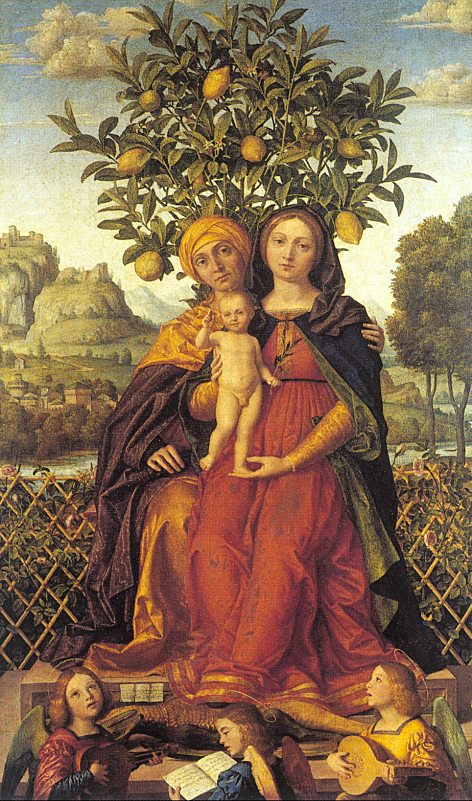
           As the grandmother of Jesus and many of his Apostles, Saint Anne was a crucial branch on the family tree of Christ and is often depicted as the largest figure seated on a throne holding a miniature Mary who holds an even smaller young Jesus. As the mother of the Virgin Mary, Saint Anne is frequently depicted with her husband Joachim who shares her feast day, or with an open book, instructing her daughter. 

                                                             Prayer to Saint Anne


                        O glorious Saint Anne, you are filled with compassion for

                        those who invoke you and with love for those who suffer!

                        Heavily burdened with the weight of my troubles,

                        I cast myself at your feet and humbly beg of you to take

                        the present intention which I recommend to you in your

                        special care (state intention).


                        Please recommend it to your daughter, the Blessed Virgin Mary,

                        and place it before the throne of Jesus, so that He may bring it

                        to a happy issue.

                        Continue to intercede for me until my request is granted.

                        But, above all, obtain for me the grace one-day to see my

                        God face to face, and with you and Mary and all the saints

                        to praise and bless Him for all eternity. Amen.


                        O Jesus, Holy Mary, Saint Anne, help me now and at the hour

                        of my death.

                         Good Saint Anne, intercede for me.

Excerpted from the book “Saints: Ancient and Modern” by Barbara Calamari and Saandra DiPasqua.
 

SAINT BENEDICT OF NORCIA


Abbot and Founder of the Benedictine Order

 480 – 547

Feast Day: July 11

Patronage: Europe, Chemists, Farmers, Engineers, Architects, Monks, People in Religious Orders, Schoolchildren, Speliologists, Coppersmiths, the Dying

Invoked Against: Poisoning, Gall Stones, Kidney Diseases, Inflammatory Diseases, Gossip, Temptation

Symbols: Pastoral Staff, Miter, Book of the Rule, Raven with bread in its beak, Cup with two serpents, Broken sieve

“Pray and Work.”  A summation of the Rule of Saint Benedict

             Though his sole intention was the moral and spiritual training of individuals seeking a holy life, the followers of Saint Benedict are credited with saving Western Civilization during the dark ages. Benedictine builders and architects created cathedrals, abbeys, castles and churches in every country of Europe. Regions scattered throughout the continent owe their agricultural prosperity to the skills of Benedictine monks in reviving lost farming practices. Because of this Order, ancient literature was preserved, pioneering strides in medicine were made and schools and universities were created that still exist today. After 1500 years, the Benedictine Rule is the basis of all Western Monastic Rules and for this reason Benedict is considered the patriarch of Western religious orders.

            Most of what is known about the life of Saint Benedict comes from the Dialogues of Gregory the Great. Written within a generation of Benedict’s death, among those consulted for these writings were Benedict’s first followers and eyewitnesses to his life. Benedict and his twin sister Scholastica were born in Nursia ( today’s Norcia), a prosperous town in Umbria. His family sent him to Rome along with his servant to complete his higher education. Equipped with enough money to fully enjoy himself, he was instead, appalled at the loose morals of his fellow students. The study of rhetoric had replaced the search for truth and they seemed to squander every one of their advantages in the pursuit of pleasure. Disgusted by the corruption in the government and the schisms in the church, he gave up his inheritance and went off to live 40 miles away in the city of Affile. There he began studying the bible with a small group of like minded young men. When his servant accidentally broke a wheat-sifter, Benedict picked up the pieces to examine them and it was miraculously made whole. The notoriety of his first miracle forced him to go into hiding, this time he moved into a cave on the ridge of Mount Subiaco. Another hermit living nearby, advised him and brought him food. Benedict spent three years there, praying and studying. The devil appeared to him as a blackbird that constantly circled his face. When Benedict made the sign of the cross it disappeared but he was instantly sieged with an attack of lust for a woman he had previously known. He threw off his tunic and rolled himself in the sharp nettles and brambles to stop his thoughts, healing himself of further temptation.

            Benedict’s reputation for holiness spread and the monks of Viscovo asked him to be their leader. He warned them that he would be too strict for them. When this proved true, they tried to put poison in his wine to get rid of him. When he made the sign of the cross over the cup, it shattered and forgiving the monks, he returned to his cave. As his fame spread, many came to Subiaco asking for guidance in living a monastic life. At that time, the first monastic communities had been formed in the East and they included harsh ascetic deprivations that Benedict felt served to hinder a true study of scripture. He set up 12 religious houses of 12 men each, with their own patriarch. He lived in a 13th house, with several other monks in training. When he realized that it was a major problem for his monks to bring fresh water up the mountains on a daily basis, he spent the night in prayer. When dawn came a natural spring appeared which from then on supplied water to all 13 communities. Because of their reputation for higher learning, local people entreated the monks to start a school. While Benedict was meeting with a monk named Maurus he had a vision of one of the students drowning in a lake. He ordered Maurus to save the child. Only after he had safely gotten the boy ashore, did Maurus realize that he had actually ran across the surface of the lake to do so. Benedict’s ability to see multiple things happening at one time would continue over his lifetime. Because of the success of his religious community of laymen, the local priest was overcome with jealousy. As a legitimate member of the clergy it infuriated him that he did not warrant half the respect of Benedict and his followers. When he tried to poison Benedict with a loaf of bread, a raven snatched it out of Benedict’s hands and flew off with it. This raven frequently appears in Benedict’s iconography, along with the cup of poisoned wine wrapped in serpents which symbolize the devil.

            Placidus, the child that Maurus saved came from a wealthy family. In gratitude to Benedict, his father gave the saint the citadel of Monte Cassino. An area high up on a mountain ridge which in earlier times had stood as a shrine to the gods Apollo and Jove, in recent times it had been destroyed by an invasion of the Goths. When the little group of monks moved there in 525, these ancient cults had been revived. After spending 40 days in prayer, Benedict cut down the grove of trees sacred to the gods. On the place of the temple to Jupiter he built a church named for Saint Martin and another named for Saint John the Baptiste, considered the ideal hermit. Instead of having many small houses of monks, Benedict decided to have one large one and in 530 the building of the most famous monastery in the world began.

            The monastery at Monte Cassino was built as a city of God. In order to properly run it Benedict wrote out a Rule which every Western monastery since has based its founding principles on.  It is important to note that Benedict was not a priest and his followers were not educated clergymen but laymen who wanted to live good lives as proscribed in the Gospel. In his belief that idleness was ruin, Benedict defied the prejudices against manual labor. All monks had to work, either in the fields or in the construction of buildings. All monks were equal regardless of what social level they were born into. All monks would spend hours a day reading. Prayer was to consist of the Psalms and Canticles, with the entire Psalter being recited within a week. He did not legislate private prayer, but advised it be short and heartfelt. He did not approve of excessive self deprivation, thinking it to be a form of vanity. His order of monks were encouraged to have enough food and wine as they needed as well as warm blankets and clothing. They ate no meat from four legged creatures and remained celebate. Hospitality was to be granted to all travelers who needed it and as long as any visitor was willing to follow the laws of the monastery, they were welcome to stay as long as they wanted. Included in his Rule is the responsibility of the monastery to help the surrounding community in any way possible. This included sharing food, crops and helping in debt repayment. As his original order of monks transformed the swampy area of Monte Cassino into fertile farms, a community sprang up around them. By having a Rule to follow it became possible for other religious orders to model their communities after the great monastery at Monte Cassino.  Though the Rule is written for men, it proved to be an equally effective model for women’s convents.

            Near the end of his life, Benedict was outdoors in the middle of the night when a single ray of the sun appeared, illuminating the entire universe. He believed he had actually seen God. When his sister Scholastica met him in the little house she kept outside the gates of the monastery for their yearly visit, she asked him to stay the night. He told her it was impossible to leave his duties. She bowed her head in prayer as he was leaving and a fierce thunderstorm erupted forcing Benedict to stay. She later told him that she asked God for that which Benedict refused and God granted her prayer. They spent the night talking and reminiscing and three days later Benedict saw a dove fly into the sky. He realized it was the soul of Scholastica on its way to heaven and knew his own death would soon follow. Having the gift of prophecy, he had his  tomb opened and spent six days in prayer. He fell into a high fever and died surrounded by his followers.

            Though Benedict never traveled out of Monte Cassino, at one time there were over 40,000 monasteries following his rule. His system of constant work and study created great prosperity in the areas surrounding monasteries that employed it. While chaos and instability plunged Europe into the dark ages, the Benedictine monasteries were enlightened places where knowledge was preserved and shared. The immense monastery of Monte Cassino was completely destroyed in one of the fiercest battles of the second world war and the only parts of it not obliterated were the underground cell of Benedict and the tomb of he and his sister.

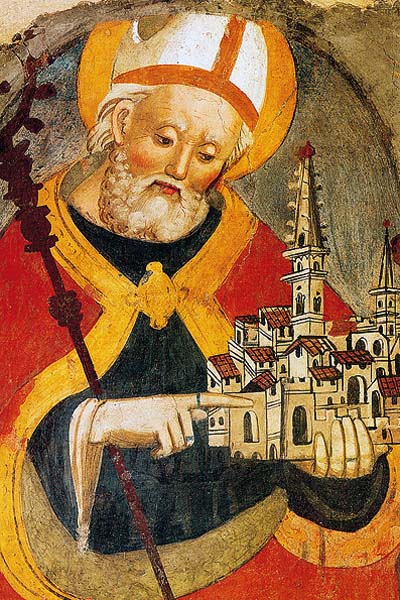
             In art Benedict is traditionally depicted with an open book of his Rule, usually inscrbed with “Pray and Work”.  At times a cup is near him wrapped in two serpents, symbolizing the attempts to poison him. In many instances the raven who saved him is also with him. The raven is also a symbol of the hermit, since they were credited with dropping food to the original desert fathers. His patronage extends to engineers, architects and farmers because of the advances made in those fields by the early Benedictines. His early schools make him the patron of schoolchildren. He is invoked against kidney ailments and stones because of his powers to heal them and because he was a victim of diabolic temptations, gossip mongers and poisoners he is also called on for protection against these situations. Because he could predict the time of his own and other’s deaths, he is invoked by the dying for a good death.

                                                             Prayer to Saint Benedict

                O glorious Saint Benedict, sublime model of all virtues, pure vessel of God’s grace!

                                                Behold me, humbly kneeling at they feet.

                            I implore they loving heart to pray for me before the throne of God.

                               To thee I have recourse in all dangers which daily surround me.

                           Shield me against my enemies, inspire me to imitate thee in all things.

                   May thy blessing be with thee always, so that I may shun whatever God forbids

                                               and avo  id the occasions of sin.


        Graciously obtain for me from God those favors and graces of which I stand so much in need,

                                               in the trials, miseries and afflictions of life.

                                 Thy heart was always so full of love. compassion and mercy

                                                                      towards those who were afflicted or troubled in any way.

       Thou didst never dismiss without consolation and assistance anyone who had recourse to thee.

                                            I therefore invoke they powerful intercession,

                                      in the confident hope that thou will hear my prayers

                   and obtain for me the special grace and favor I so earnestly implore (mention),

                            and if it be for the greater glory of God and the welfare of my soul.   

                       Help me, O great Saint Benedict, to live and die as a faithful child of God,

                to be ever submissive to His holy will, and to attain the eternal happiness of heaven.

                                                                       Amen.

Excerpted from the book: “Saints: Ancient and Modern” by Barbara Calamari and Sandra DiPasqua.

.

Dining With the Saints

In Honor of St. Anthony of Padua

St. Anthony of Padua is the Saint people pray to to find lost objects, and where would a person who has lost a sentimental piece of jewelry in a meadow or woods in June look for it? A likely spot would be under the leaves of wild strawberry plants, which cover the ground in many parts of the world on his Saint’s day, June 13th, and throughout the month of June. Because of this connection, over the years, Saint Anthony has become associated with wild strawberries. I’ve created this fresh strawberry salad in his honor.
If you’re luck enough to know a beautiful meadow where you can forage for your own wild strawberries, those would be the best choice for this salad. In Italy these tiny, incredibly sweet strawberries are called fregola di bosca (strawberries of the woods). Everyone celebrates when the first ones arrive and they’re usually eaten just drizzled with a thread of aged balsamic vinegar. I can sometimes find a hybrid strawberry, partly cultivated from a wild strain, at my greenmarket starting around now. Tri-Star is one of these varieties. Ask at your local market to see if any of your area farmers are growing them. They’re small, sweet, and deep red, like little ruby earrings.

Frisee Salad with Strawberries, Basil, and Warm Goat Cheese

(Serves 2)
1 medium head of frisée lettuce, torn into pieces
¼ cup pine nuts, lightly toasted
20 wild strawberries, hulled, or about 10 regular sized ones, hulled and cut in half
1 small shallot, very thinly sliced
A handful of small basil leaves
½ teaspoon balsamic vinegar
½ teaspoon lemon juice
2 tablespoons extra-virgin olive oil, plus a little extra to drizzle
Salt
Freshly ground black pepper
A pinch of allspice
4 ½-inch-thick rounds fresh goat cheese
4 ½-inch-thick slices from a baguette, cut on an angle so they’re longer
Place the frisée in a salad bowl. Add the pine nuts, strawberries, the shallot, and the basil leaves.
Set out two salad plates.
In a small bowl, whisk together the balsamic vinegar, lemon juice, and olive oil, seasoning it well with salt, black pepper, and the pinch of allspice.
Place the baguette slices on a small cookie sheet, and set it under a broiler. When the slices are golden, flip them over, and then place a slice of goat cheese on each one, seasoning them with salt and a few grindings of black pepper. Broil until the cheese is just starting to melt and the edges of the bread are toasted.
Pour the dressing over the salad, and toss gently. Divide the salad onto the plates, and place two goat cheese toasts around each one. Drizzle a thread of olive oil over each toast. Serve right away.
Dining with the Saints is a month feature on Novena.com. It is written by Erica De Mane. Check out her food blog at http://www.ericademane.com

Patron Saints For June

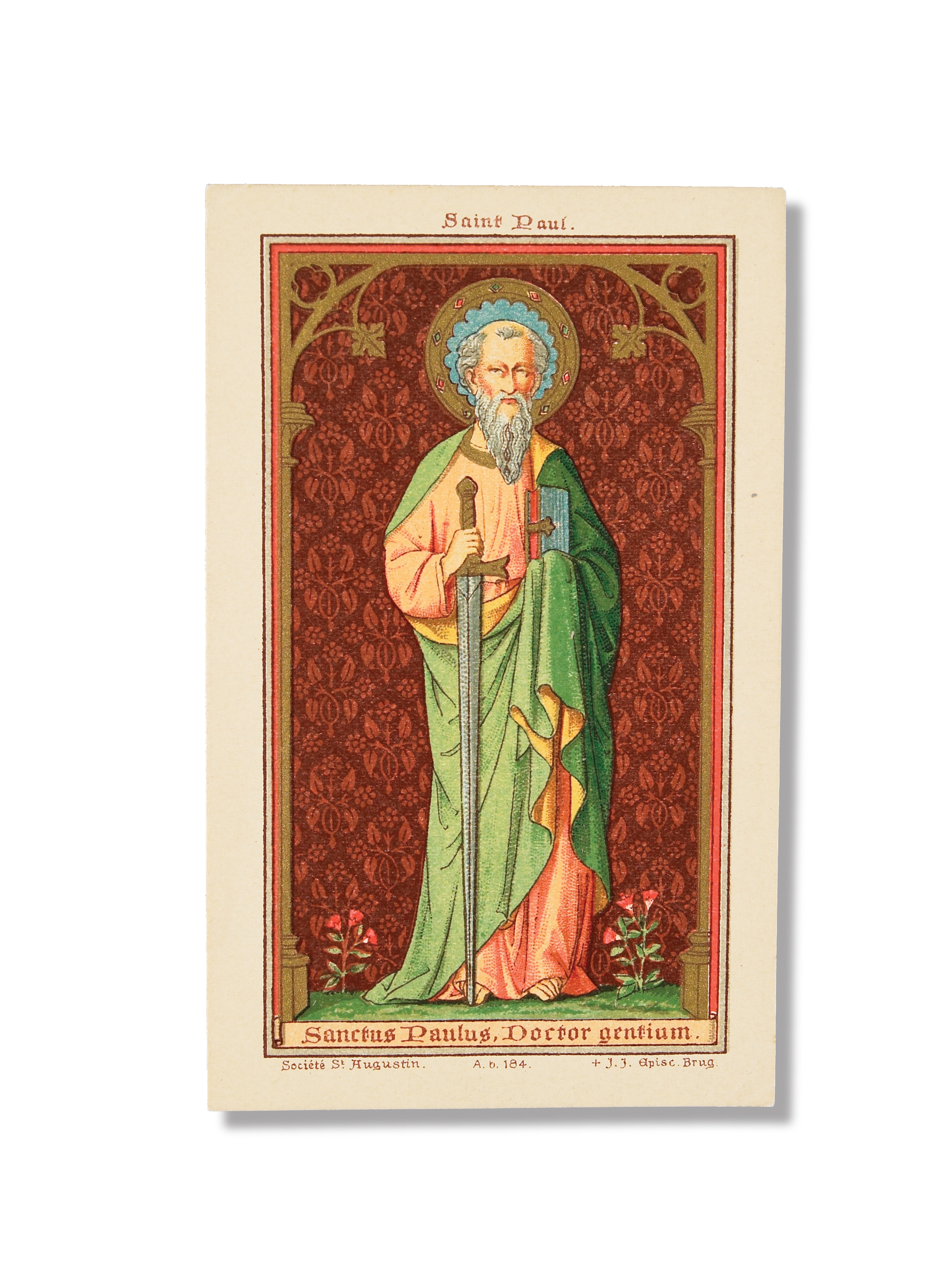
Malta / Paul the Apostle, 3–65, Feast Day: June 29

Born a Roman citizen in Turkey, Paul was an avid persecutor of the Christians in Jerusalem. Traveling on the road to Damascus, he was thrown from his horse when he had a vision of Christ. After his sudden conversion, he traveled extensively, preaching, writing, and organizing churches, to the dismay of local authorities. He was sent to Rome to be tried for sedition and his ship ran aground at Malta, where he was bitten by a snake and survived. He was later beheaded in Rome.

Other patronages: Greece; basket weavers, journalists, polishers, rope makers, swordmakers, tent makers, upholsterers

Invoked: against blindness, shipwreck, snakebite

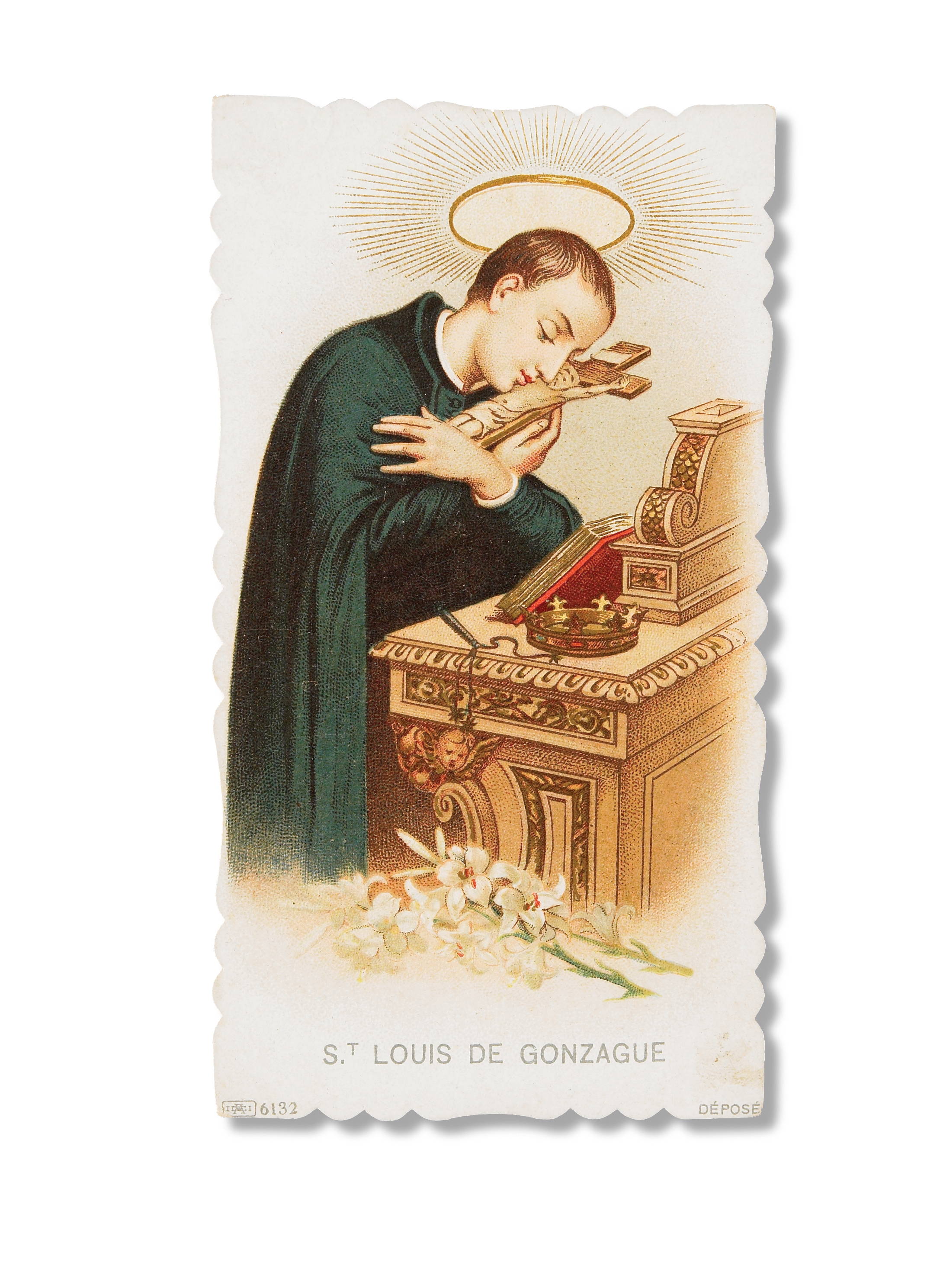
AIDS Sufferers & Caregivers / Aloysius Gonzaga, 1568–1591, Feast Day: June 21

A courtier and a soldier devoted to the Virgin Mary. Against his family’s wishes, he became a Jesuit novice at the age of eighteen. Despite the fact that he himself suffered from a kidney disease, he insisted on tending the sick when the plague struck Rome. He died of the plague at the age of twenty-two.

Other patronages: pulmonary diseases; teenagers

Invoked: for help in choosing a state of life; against lust

Death of Children / Julitta and Cyriacus of Iconium, d. 304, Feast Day: June 16

A Turkish widow, Julitta and her young son, Cyriacus, moved to Tarsus to escape persecution. She was denounced to a ruling magistrate there, who questioned her while he played with Cyriacus. When she refused to give up her faith, she was given the death sentence. Her son told the magistrate he was a Christian as well, so enraging the man that he threw the boy down the stairs, killing him before his mother. Centuries later, Cyriacus appeared to the Emperor Charlemagne, who was in danger of being gored by a boar while hunting. He offered to save the emperor in exchange for clothing for himself. He is known as Saint Cyr in France.

Other patronages: torture victims

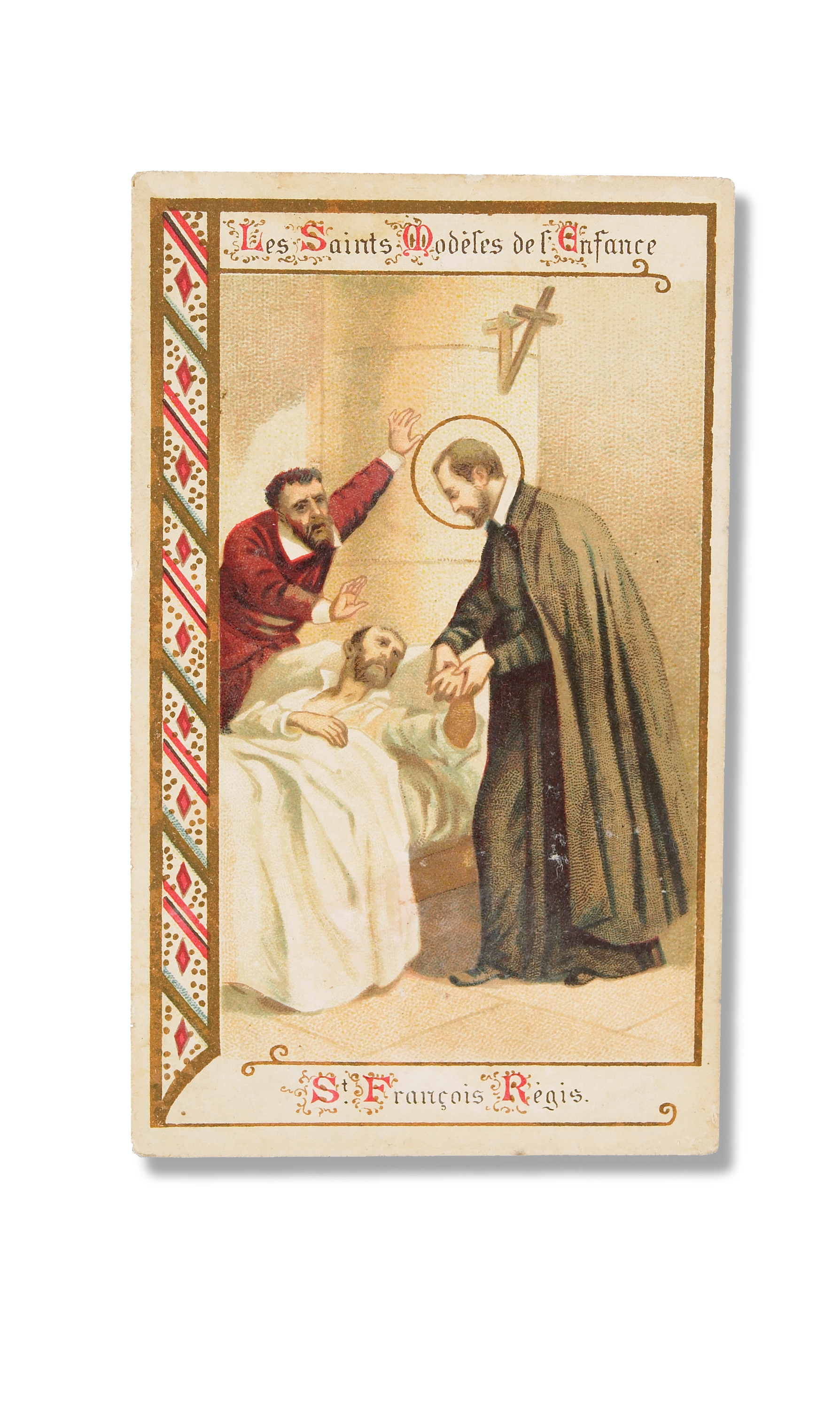
Social Workers / John Regis, 1597–1640, Feast Day: June 16

A Jesuit missionary in the Languedoc region of France, John Regis was known for his ability to reach common people. In each district he visited, he would send letters to the rich listing six poor individuals in need, with a monetary amount they should donate. By appealing to rich and poor alike, he got real results. He opened lace and embroidery factories as an alternative trade for prostitutes. Always working in primitive conditions, he died of pneumonia in the Pyrenees.

Other patronages: lace makers; illegitimate children

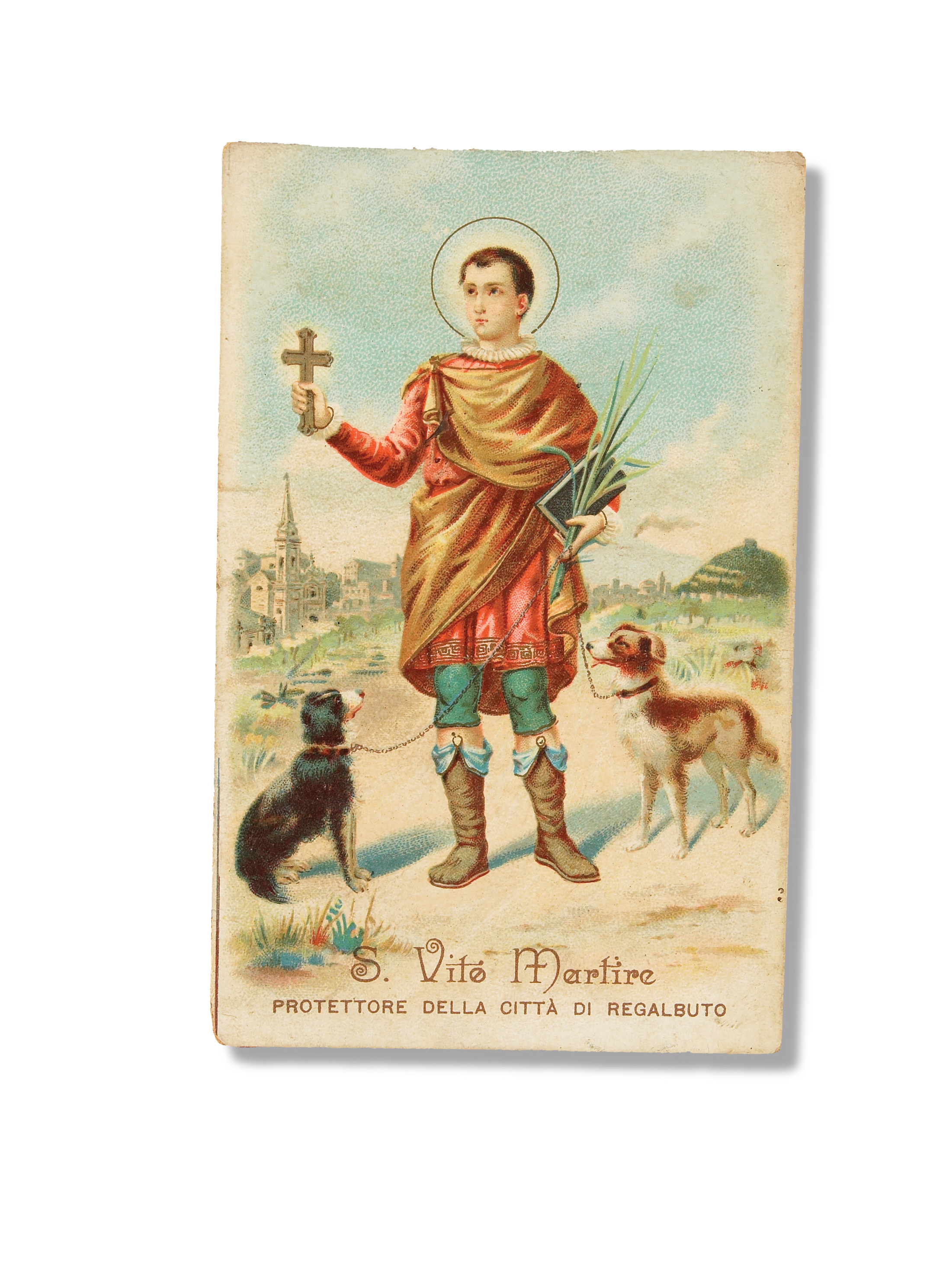
Neurological Disorders / Vitus, d. 303, Feast Day: June 15

A Sicilian boy who converted to Christianity at a young age, Vitus exorcized a demon from the son of Emperor Diocletian. While he was imprisoned because of his faith, a band of dancing angels would entertain him. He was martyred by being thrown in a cauldron of boiling pitch. In Germany, his shrine was visited by many people with nerve disorders, and it became customary to dance all night on his feast day.

Other patronages: Bohemia, Sicily; hens, roosters; actors, brewers, comedians, coppersmiths, coopers, dancers, pharmacists, tinkers, vintners; epileptics, insane people

Invoked: against bedwetting, snakebite, wild-animal attacks


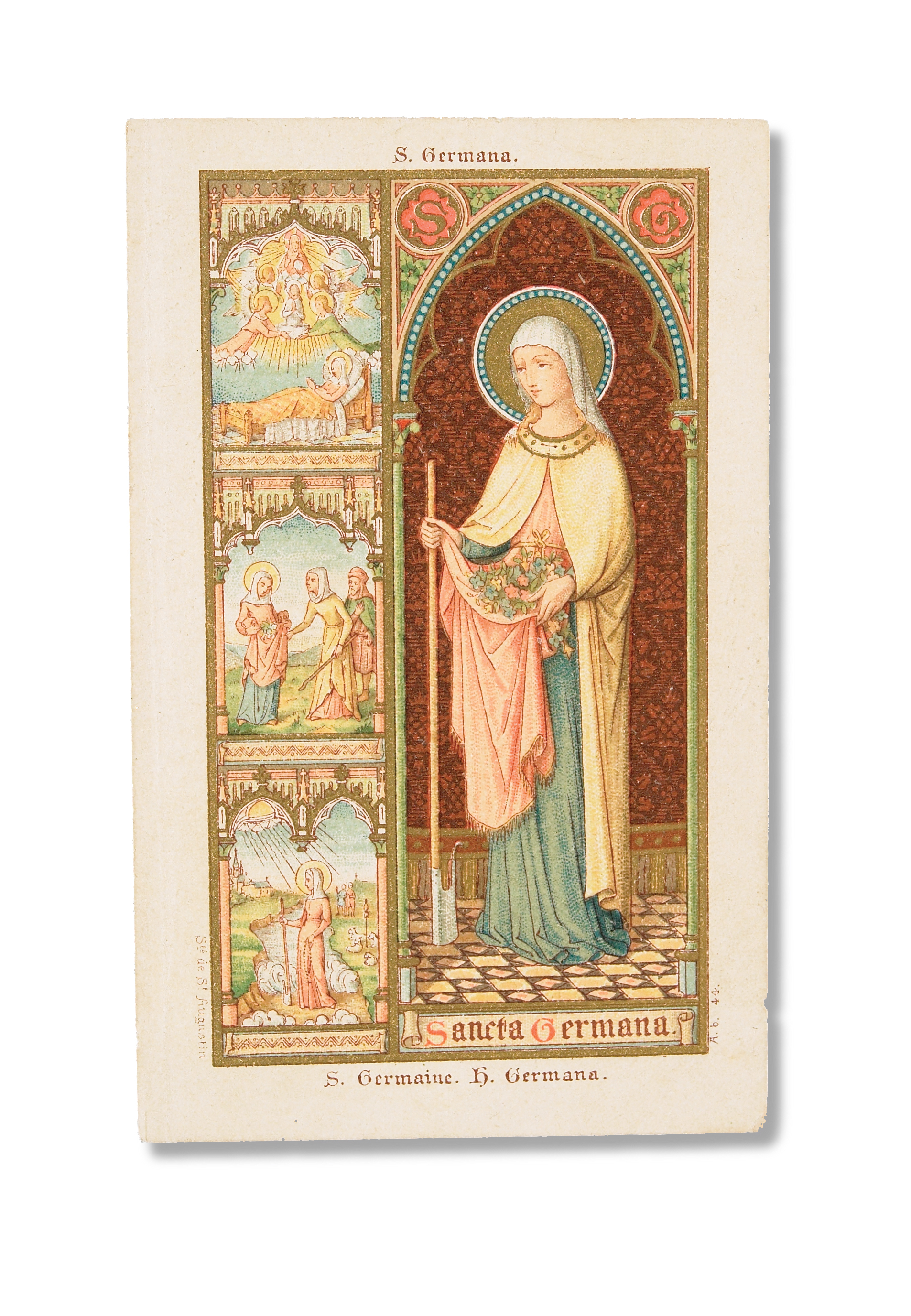
Abandoned People / Germaine Cousin, 1579–1601,
Feast Day: June 15

Born to a poor farm family near Toulouse, France, Germaine was a sickly, ugly child with a withered arm. After her mother died, her father married a woman who was especially cruel to Germaine, forcing her to live in a stable and tend sheep. She made a rosary out of string, and when she left her sheep to attend mass, no harm from wolves ever came to them. She died on her pallet, and forty years after her death, when her body was accidentally exhumed, it was found to be incorrupt. Hundreds of miracles have been reported due to her intercession.

Other patronages: shepherdesses; abuse victims, handicapped people, unattractive people

Invoked: against poverty

Amputees / Anthony of Padua, 1195–1231,
Feast Day: June 13

A Franciscan preacher known as “the Wonder Worker,” Anthony is one of the most popular saints in the world. In one of the many miracle stories about him, when a boy kicked his mother in front of the saint, his foot came off. Anthony reattached it after the boy apologized.

Other patronages: Portugal; draftees, potters, seamen, sellers of strawberries; barren women, orphans, prisoners, shipwrecked people

Invoked: to find lost articles, a husband; against infertility