Unknown's avatar

About sandra dipasqua

graphic designer

Floods / Margaret of Hungary, 1242–1271,
Feast Day: January 18

A princess whose parents promised her to God in thanks for stopping an enemy invasion, Margaret refused to leave the convent where she was placed. As an act of penance, she refused to wash and tended the hopelessly ill. Her father built her a convent of her own on an isle in the middle of the Danube River. Whenever it was threatened by flooding, she protected it with prayer.

Skin Diseases / Anthony the Abbot, 251–356,
Feast Day: January 17

Known as the father of Christian monasticism, Anthony lived a solitary existence in the desert under the motto “pray and work.” Constantly tempted by the Devil, he is frequently depicted with his pet pig. In the Middle Ages, pig products were used to calm skin inflammations, and praying to Anthony was said to relieve the pain of shingles and a contagious skin disease known as “St. Anthony’s Fire.”

Other patronages: domestic animals, pigs; bell makers, bell ringers, butchers, brush makers, firefighters, gravediggers, grocers, hermits, swineherds

Invoked: against the fires of hell, infections

Dining With the Saints in Honor of Saint Antonio Abate

Chills / Placid, 515–541, Feast Day: January 15

Sent to study with Saint Benedict at the age of seven, Placid was saved from drowning in a freezing river when his plight appeared to Benedict in a vision. His father was so grateful at Benedict’s intercession that he donated the land for the great Monte Cassino monastery to the Benedictine Order.

Invoked: against drowning

Colds / Maurus, 510–584, Feast Day: January 15

A disciple of Saint Benedict, Maurus was praying with his mentor when Benedict had a vision of a fellow monk, Placid, falling into the freezing river and being carried away by the current. He ordered Maurus to rescue him. Maurus ran across the surface of the water and brought Placid to safety. He later crossed the Alps on foot and founded his own monastery.

Other patronages: charcoal burners, coppersmiths

Invoked: against chills

Animals / Gerlac of Valkenburg, 1100–1172, Feast Day: January 5

A Dutch mercenary who led a wild life as a soldier and highwayman, Gerlac was devastated by news of his wife’s death. He converted to Christianity and spent the rest of his life doing penance. After caring for the sick in Jerusalem for seven years, he went back to his native Netherlands and returned to nature, living in a hollowed-out tree and communing with the denizens of the forest.

Fever / Genevieve, 422–500, Feast Day: January 3

This young mystic saved the city of Paris from starvation after an invasion by the Franks. She was so respected by the conquering forces that she converted the king. She later repelled an invasion by Attila the Hun with the power of her prayer. When an unstoppable plague of fever killed many in the city in 1129, a parade of her relics through the streets was credited with ending it.

Other patronages: Paris; the Women’s Army Corps; chandlers, shepherds, shepherdesses

Invoked: against plague, leprosy; for an end to excessive rain, the healing of kings


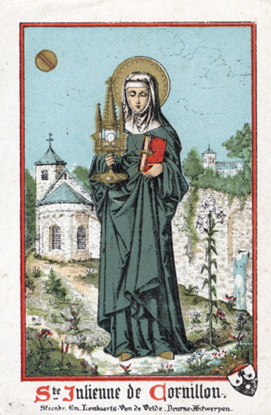
The above Patron Saints are excerpted from the book: “Patron Saints: A Feast of Holy Cards” by Barbara Calamari and Sandra DiPasqua.  All images are from the collection of Father Eugene Carrella.

Saints for December

Burns / John the Apostle, d. 101, Feast Day: December 27

A witness to the Transfiguration as well as the author of one of the Gospels and the Apocalypse, John is considered to have had great mystical powers. In a.d. 95, the Romans attempted to martyr him by throwing him into a vat of boiling oil. He survived this and was exiled to the island of Patmos for practicing magic.

Other patronages: Asia Minor, Turkey; alchemists, artists, bookbinders, booksellers, chandlers, copyists, engravers, fullers, gunsmiths, millers, oil producers, papermakers, printers, theologians, typographers, writers; virgins, widows

Invoked: against food poisoning

Bricklayers / Stephen the Martyr, first century a.d.,
Feast Day: December 26

One of the seventy-two disciples present at the Pentecost, Stephen was said to be a strong speaker trusted by the original apostles. He was convicted of blasphemy and stoned to death, becoming the first martyr for the faith. He is the patron of anyone who works with stones or who has illnesses relating to stones.

Other patronages: casket makers, coachmen, grooms, stonemasons; horses

Invoked: against headaches, kidney stones, ringworm

Merry Christmas from Dining With the Saints

Christmas Eve in Provence

Gros souper is the traditional Provencal family meal held before midnight mass on Christmas Eve. The seven meatless courses are meant to symbolize Mary’s labor pains. The dishes are all simply prepared and most are made ahead of time so the family can relax and enjoy the evening together. Marinated olives, dishes of white beans dressed in Provencal olive oil, Swiss chard gratin, fish broths with croutons, whole fish roasted with dried fennel, and various salt cod preparations typically show up on the table throughout the evening.

Brandade de Morue, salt cod whipped with garlic and the excellent, golden Provencal olive oil is one of my favorite Gros souper dishes. It has a creamy texture and is surprisingly gently flavored since the cod is long soaked to remove most of the salt. It’s often served gratin style, baked in the oven with a breadcrumb topping, then scattered with the tiny, sweet black olives that are famous in the region.

Brandade de Morue

(Serves 5 or 6 as an antipasto)

1 ½ pounds salt cod (try to find the thicker middle section, which has less bones to deal with)

1 fresh bay leaf

½ cup dry white wine

1 baking potato, cooked soft, peeled and roughly mashed

1 large garlic clove, minced

Extra virgin olive oil

The grated zest from 1 small lemon

A few big gratings of nutmeg

5 or 6 thyme sprigs, leaves lightly chopped

Freshly ground black pepper

A few tablespoons of milk

¾ cup home-made, not too finely ground breadcrumbs

A handful of black olives

Toasted bread made from slices of baguette, brushed with a little olive oil


You’ll need to soak the salt cod in a big pot of cold water for about a day and a half, changing the water a bunch of times (and putting the pot in the refrigerator overnight). After this, taste a bit to see if a sufficient amount of salt has leeched out of it. If not, soak it a little longer. Now drain it.

In a large skillet, place the salt cod (cut into pieces if necessary). Add the bay leaf and pour on the white wine. Add enough cool water to just cover the cod. Bring to a boil and then turn the heat down to very low. Cover the skillet and gently simmer the cod until it just begins to flake. This should only take about 15 minutes, maybe even less if you’ve got thin cuts. If it cooks any longer, it might become dry. Take the cod from the skillet and when it’s cool enough to handle, pull off the bones and the skin.

Put the cod in a food processor and give it a couple of pulses. Add the potato, the garlic, about ¼ cup of your best olive oil, the lemon zest, thyme, nutmeg, and some black pepper. Give it a few more pulses. You want a texture that’s creamy but not completely smooth. Add about 2 tablespoons of milk and pulse again. You shouldn’t need any salt.

Scrape the brandade from the food processor and spoon it into a shallow baking dish. Top with the breadcrumbs and drizzle the top with olive oil.

When you’re ready to serve it, preheat the oven to 425 degrees and heat it through, about 10 minutes. If the breadcrumbs don’t turn golden, run it under a broiler for a minute. Scatter on the olives and serve it with the toasts.

Dining With the Saints is written by Chef and Food Writer Erica DeMane.  Visit her at her website : http://www.ericademane.com

Painting: “Nativity” by Robert Campin  1420-1425

La Vigilia –  Another Christmas Eve Dinner

Photographer-In Residence for 2011

We at Novena.com are proud to introduce to our readers photographer, Larry Racioppo. He has been photographing New York, inside and out for 30 years. Larry has a very special interest in the practice of religion in all its many forms. Below please find his first column for us.

Larry Racioppo

Xmas or Christmas?

Once upon a time, Christmas was a Holy Day not just a holiday. To Italian families the Christmas creche was as important as the Christmas tree. Boy did that ever change. To me, my brother and my cousins, first and foremost were the PRESENTS under the tree, then the decorated tree itself. Even window and house decorative lights meant more.

The two b x w photos (above) here are of creches, or as we called them, Nativity sets, that belonged to my nuclear family, and to my Aunt Kitty and Uncle Lucky.

Fortunately, some families still honor and preserve the presepio. Although he no longer lives there, each Christmas Frank De Bernardo assembles a large creche (below) – presepio in Italian – in the basement of his family’s Brooklyn home. It is beautiful and personal. Among the many interesting figurines is a small fading color photo of Franks’ sisters when they were children.

larryracioppo@earthlink.net / cell 917-523-3918

Novena is interested in receiving a photo and short note about your Christmas experience/tradition. We will try to post as many as we can before the end of the year.