Novena to the Holy Spirit
To be said between Ascension Thursday and Pentecost
(For 2012 Ascension Thursday falls on May 17th)
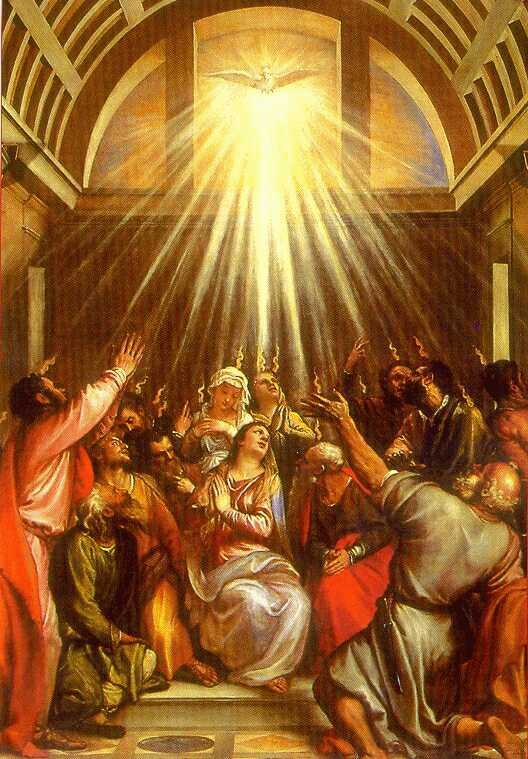
This is the oldest novena, dating back to the very birth of the church and its importance cannot be underestimated. When Christ first appeared to the apostles forty days after the crucifixion, he sent them to Jerusalem to await the Holy Spirit and instructed them to pray for nine days. This novena, written in the Middle Ages, is said for nine days prior to Pentecost, the fiftieth day after Easter, and is still the only novena officially prescribed by the Church. Addressed to the Third Person of the Blessed Trinity, it is a powerful plea for the light, strength, love, and wisdom needed by all. In art, the Holy Spirit is always depicted as a white dove.
Each of the nine days was given a different prayer with a different subject to contemplate. After each daily prayer, the Our Father and Hail Mary are to be recited once each and the Glory Be is to be recited seven times.
The following two prayers are said every day with your novena:
Act of Consecration to the Holy Spirit
On my knees before the great multitude of heavenly witnesses I offer myself, soul and body, to you, Eternal Spirit of God. I adore the brightness of your purity, the unerring keenness of your justice, and the might of your love. You are the strength and light of my soul. In you I live and move and am. I desire never to grieve you by unfaithfulness to grace, and I pray with all my heart to be kept from the smallest sin against you. Mercifully guard my every thought, and grant that I may always watch for your light and listen to your voice and follow your gracious inspirations. I cling to you and give myself to you and ask you, by your compassion, to watch over me in my weakness. Holding the pierced feet of Jesus and looking at his five wounds, and trusting in his precious blood and adoring his opened side and stricken heart, I implore you, adorable Spirit, helper of my infirmity, to keep me in your grace so that I may never sin against you. Give me grace, O Holy Spirit, Spirit of the Father and the Son, to say to you always and everywhere, “Speak, Lord, for your servant is listening.” Amen.
Prayer for the Seven Gifts of the Holy Spirit
O Lord Jesus Christ, who before ascending into heaven promised to send the Holy Spirit to finish your work in the souls of your apostles and disciples, to gran the same Holy Spirit to me that he may perfect in my soul the work of your grace and your love. Grant me the Spirit of Wisdom, that I may despise the perishable things of this world and aspire only after the things that are eternal: the Spirit of Understanding, to enlighten my mind with the light of your divine truth; the Spirit of Counsel, that I may ever choose the surest way of choosing God and gaining heaven; the Spirit of Fortitude, that I may bear my cross with you and that I may overcome with courage all the obstacles that oppose my salvation; the Spirit of Knowledge, that I may know God and know myself and grow perfect in the science of the saints; the Spirit of Piety, that I may find the service of God sweet and amiable; the Spirit of Fear, that I amy be filled with a loving reverence toward God and may dread in any way to displease him. Mark me, dear Lord, with the sign of your true disciples and animate me in all things with your Spirit. Amen.
FIRST DAY: The Holy Spirit
Holy Spirit! Lord of Light!
From thy clear celestial height,
Thy pure beaming radiance give!
Almighty and eternal God, who have vouchsafed to regenerate us by water and the Holy Spirit, and have given us forgiveness of all our sins, vouchsafe to send forth from heaven upon us your sevenfold, Spirit, the Spirit of Wisdom and Understanding, the Spirit of Counsel and Fortitude, the Spirit of Knowledge and Piety, and fill us with the Spirit of Holy Fear. Amen.
SECOND DAY: The Gift of Fear
Come, thou Father of the poor!
Come, with treasures which endure!
Come, thou light of all that live!
Come, O blessed Spirit of Holy Fear, penetrate my inmost heart that I may set you, my Lord and God, before my face forever; help me to shun all things that can offend you, and make me worthy to appear before the pure eyes of your Divine Majesty in heaven, where you llive and reign in the unity of the Blessed Trinity, God without end. Amen.
THIRD DAY: The Gift of Piety
Thou, of all consolers best,
Visiting the troubled breast
Dost refreshing peace bestow.
Come, O Blessed Spirit of Piety, possess my heart; enkindle therein such a love for God that I may find satisfaction only in his service, and for his sake lovingly submit to all legitimate authority. Amen
FOURTH DAY: The Gift of Fortitude
Thou in toil are comfort sweet,
Pleasant coolness in the heat;
Solace in the midst of woe.
Come, O Blessed Spirit of Fortitude, uphold my soul in times of trouble and adversity, sustain my efforts after holiness, strengthen my weaknesses, give me courage against all the assaults of my enemies, that I may never be overcome and separated from you, my God and greatest Good. Amen.
FIFTH DAY: The Gift of Knowledge
Light immortal! Light divine!
Visit thou these hearts of thine,
And our inmost being fill.
Come, O Blessed Spirit of Knowledge, and grant that I may perceive the will of the Father; show me the nothingness of earthly things, that I may realize their vanity and use them only for your glory and my own salvation, looking ever beyond them to you, and your eternal rewards. Amen.
SIXTH DAY: The Gift of Understanding
If thou take thy grace away,
Nothing pure in man will stay,
All his good is turned to ill.
Come, O Spirit of Understanding, and enlighten our minds, that we may know and believe all the mysteries of salvation, and may merit at last to see the eternal light in your light, and in the light of glory to have a clear vision of you and the Father and the Son. Amen.
SEVENTH DAY: The Gift of Counsel
Heal our wounds – our strength renew;
On our dryness pour thy dew;
Wash the stains of guilt away!
Come, O Spirit of Counsel, help and guide me in all my ways, that I may always do your holy will. Incline my heart to that which is good, turn it away from all that is evil, and direct me by the straight path of your commandments to that goal of eternal life for which I long. Amen.
EIGHTH DAY: The Gift of Wisdom
Bend the stubborn heart and will;
Melt the frozen, warm the chill;
Guide the steps that go astray!
Come, O Spirit of Wisdom, and reveal to my soul the mysteries of heavenly things, their exceeding greatness, power, and beauty. Teach me to love them above and beyond all passing joys and satisfactions of the earth. Help me to attain them and possess them forever. Amen.
NINTH DAY: The Fruits of the Holy Spirit
Thou, on those who evermore
Thee confess and thee adore,
In thy sevenfold gifts, descend;
Give them comfort when they die;
Give them life with thee on high;
Give them joy which never ends. Amen.
Come, O Divine Spirit, fill my heart with your heavenly fruits, your charity, joy, peace, patience, benignity, goodness, faith, mildness, and temperance, that I may never weary in the service of God, but by continued faithful submission to your inspiration, may merit to be united eternally with you in the love of the Father and the Son. Amen.
(From the book, “Novena: The Power of Prayer” by Barbara Calamari and Sandra DiPasqua)