chrsitopher3

SAINT CHRISTOPHER

 One of the Fourteen Holy Helpers

 Third Century

Feast Day: July 25

Patron of: athletes, couriers, gardeners, ferrymen, fruit growers, fruit venders, motorists, pilgrims, porters, postal workers, railway workers, taxi drivers, travelers,

Invoked against: sudden death, plague, floods, hurricanes, hail

Symbols: carrying the Child Jesus, flowering staff


You were not only carrying the whole world, you had Him who created the world on your shoulders!”

            The Christ Child to Christopher


             A standard image in automobiles and taxi cabs, Saint Christopher is an unavoidable presence in modern society. He is the first saint that many nonCatholics come in contact with and his cult has faded and been resurrected over a span of 2,000 years. The stories of Saint Christopher are unique and fantastic. In the West, the story begins with a fearsome giant named Rebrobus.

            Born to a tribe in North Africa, Reprobus  was so proud of his great physical prowess that he vowed to serve only the greatest king in the world. He put himself in service to a ruler whom he believed to be supreme, but soon noticed that this king trembled and crossed himself at the mention of the devil. Witnessing the king’s fear  he realized that a more powerful leader yet reigned. He left the king’s court, found the devil and put himself in his service. One day, while traveling with the devil and his army they saw a cross on the road. The devil abruptly left this path and led them through the desert. When Reprobus saw that the devil was frightened, he demanded to know the reason. “There was a man named Christ who was nailed to a cross,” he was told. “And when I see the sign of his cross, I am filled with terror and I run away!”             Reprobus left  in disgust and set out to find this Jesus Christ who could make the devil quake in fear. In his travels he came across a hermit who lived besides a dangerous river. This hermit was a known Christian who spent his days guiding travelers over the rushing water. When Reprobus asked the hermit how he could join Christ’s service, the hermit  suggested that the mighty giant take on the task of carrying travelers across the dangerous river currents.  Reprobus gladly accepted this simple solution. He set up camp near the river and found a long pole to act as his steadying staff in the raging water.

          For a few days he carried travelers on his back through the currents. It came to pass that one day he heard the voice of a small child requesting to be carried across the river. He left his shelter but found no one there. He heard the voice a second time and still saw no one. The third time the child called, Reprobus again stepped outside and to his surprise saw a child standing on the riverbank. When the boy again requested to be carried over, the giant easily picked the child up, put him on his shoulders and began walking across the river. To his astonishment, as he neared the heavy current, the child’s weight seemed to increase. As the water grew rougher, the child grew heavy as lead. Engulfed in rapids and struggling to remain upright, Reprobus was sure they would both drown. When he finally reached the other shore, Reprobus put the boy down and admonished him, “My boy, you put me in great danger, and you weighed so much that if I had the whole world on my back I could not have felt it a heavier burden!” To his amazement, the child replied, “You were not only carrying the whole world, you had him who created the world upon your shoulders! I am Christ your king, to whom you render service by doing the work you do here.” The child then baptized him with the water from the river and told him that when Reprobus returned home, he was to plant his staff in the earth. “The next day you will find it bearing fruit as a form of proof of my identity.”  The child then vanished. Reprobus returned home and did what he was told. As promised, the next day he found his staff bearing the leaves and fruit of a palm tree. From that day on he took the name Christopher, which means “Christ bearer”.  

            The story continues, and the powerful message that Christopher’s flowering staff represented converted many to Christianity. The king, threatened by Christopher’s powers to relate to the common people had the humble servant brought before him. The king said that Christopher was a fool to take the name of a crucified man as his leader. If he would denounce Christ, Christopher would be granted entrance into the king’s service, and his life would be spared.. When Christopher refused, the king ordered him tortured and shot with arrows. As four hundred archers aimed at the giant, one stray arrows turned in midair and went through the king’s eye. Christopher told him not to worry. He said that upon his death, the king should rub some of the shed blood into his eye. Vision would be restored. Upon these words, Christopher was beheaded and the tyrant took some of the blood, rubbing it into the injured eye, saying, “In the name of God and Saint Christopher.” When his vision was restored, the king immediately converted to Christinaity, along with those who had witnessed these events.

            In the West the story of Saint Christopher is taken as a fable for Christians to teach them to figuratively  “bear Christ” in every aspect of their lives.  In the East, however, the story differs. There, Christopher was known as a member of a warrior tribe of dog- headed cannibals and traditional Orthodox iconography depicts him as a man with a dog’s head. This is thought to be a literal interpretation of the Greco/Roman tradition of describing all foreigners from outside f the empire as “cannibals” or “dog-headed.”  In truth, the historic Christopher was most likely from Berber tribes that resided in Libya. Many speculate he is the same person as the Saint known as Menas who always carried a picture of Christ near his heart. This holy man was martyred in Antioch and then taken to Alexandria to be honored by the Coptic Christians.

            Despite the different tales of his origin, Saint Christopher is best-known for his Western roots. His act of healing toward the king, his murderer, and his protection of travelers, led to his adoption both as an intercessor for the sick and for those who are responsible for the safety of others.

            Saint Christoper is often grouped with other saints thought to offer intercession of healing Collectively known as the Fourteen Holy Helpers, each of these saints specializes in curing different parts of the body. He was added to this group during the Middle Ages when the Black Plague raged through Europe. At this time paintings of Saint Christopher appeared on the outside of many churches and village public walls because it was thought that anyone who saw his image would be safe from death that day. After the plague had run its course these images became welcome sights to religious pilgrims who found assurance in his protection of them along the road.

            In the twentieth century, the cult of Saint Christopher saw great resurgence. As the patron saint of travelers and those who transport people, medallions bearing his image became prevalen, especially with the advent of the automobile.. In the United States this tradition was introduced by European immigrants and became so popular that even manynonCatholics have a Saint Christopher medallion in their vehicle for protection.

             Because of his flowering staff Saint Christopher is also the patron saint of gardeners and those who buy and sell fruit. Since he carried and delivered many to safety he is the patron of ferrymen and postal workers. Because he worked in such violent currents, he is invoked against the violence of water such as floods and hail. Being endowed with great strength and physical perfection he is also the patron of athletes. In art, Saint Christopher is always depicted carrying the Christ Child, his staff at his side.


                                                  Traveler’s Prayer to Saint Christopher

                         O Saint Christopher, hear our prayer,

                        Keep me in your loving care.

                        Whatever the perils of the way,

                        Let me not add to them this day.

                        So to our caution and attention,

                        We add a prayer for your protection,

                        And beg God’s blessing on this journey,

                        That we may travel safely near and far.


 From the book “Saints: Ancient and Modern”, Viking Studio, by Barbara Calamari and Sandra DiPasqua


Novenas for June

paul               SAINT PAUL THE APOSTLE          

 First Century

             Saint Paul offers the greatest example of a life totally transformed in an instant by the intercession of divine grace. Once a zealous prosecutor devoted to hunting down and imprisoning Christians, his conversion was so extreme that it is commemorated by its own feast day, January 25.  Bitten by snakes, stoned by mobs, tortured and shipwrecked, Saint Paul was left for dead many times. He is known as the Great Apostle because of his unstoppable energy and the success of his missionary journeys. Told to preach to the heathen nations and the non-Jews, he is known as the doctor of the gentiles because he traveled throughout Greece and Asia Minor converting thousands. He is invoked for strength, patience and faith. His numerous writings and long sojourns make him the patron saint of journalists and public relations.

             Born a Roman citizen at Tarsus in Cilica, his given name was Saul. His father, a devout man, sent him to study under the famous rabbi Gamaliel in Jerusalem. As a young man Paul was a model Pharisee, the most extreme of all the Jewish sects, and zealous in his pursuit and persecution of Christians. He firmly believed that the only way to preserve Jewish law was to wipe the Christians off the face of the earth. He was present at the stoning death of Saint Stephen, the first martyr. Ten months after Christ was crucified, Paul was on his way to Damascus to arrest Christians when he was blinded by light and fell from his horse. While on the ground a voice asked him, “Saul, Saul, why dost thou persecute me?” When Paul replied, “Who art thou Lord?”  The voice answered, “Jesus of Nazareth.” Paul was then told to continue to Damascus to await instructions. Paul spent the next three days unable to see or eat. It was during this time that he says he learned the Gospel. The entire teachings were infused in him. When he regained his vision on the fourth day,  he was baptized and changed his name from Saul, the name of a great king, to Paul, which means small as a sign of humility.

             Because of his reputation as a persecutor, Paul was at first mistrusted by the original apostles. After three years in Damascus,  his former allies in the synagogue were so incensed with his new preachings that he had to be lowered over the city walls in a basket in the dark of night to escape death.  When he returned to Jerusalem 12 years later he was arrested for creating chronic havoc and, because of his Roman citizenship, he was deported to Rome for a trial.  He survived shipwreck off Malta and was released in Rome. He then traveled to Spain and Ephesus and was arrested once again for his revolutionary preachings. He was brought back to Rome and beheaded in AD 67 in a place called Tre Fontane, Three Fountains, so named because it was said that Saint Paul’s head bounced three times when it was cut off and in each place it bounced, a fountain sprang from the earth. His body is buried in the basilica of Saint Paul Outside the Walls in Rome.

 Feast Day: June 29, shared with Saint Peter

 Patronage: Evangelists,  Malta, Journalists, Public Relations

Invoked against: Snakebite

     Novena to Saint Paul

   O holy apostle who, with your teachings and with your charity, taught the entire world, look kindly upon us, your children and disciples.

 We expect everything from your prayers to the divine master and to Mary, queen of the apostles. Grant, O doctor of the gentiles, that we may live by faith, save ourselves by hope, and that charity alone reign in us. Obtain for us, O vessel of election, will correspondence to divine grace, so that it may always remain fruitful in us. Grant that we may ever better know you, love you and imitate you, that we may be living members of the Church, the mystical body of Jesus Christ. Raise up many and holy apostles. May the warm breath of true charity permeate the entire world. Grant that all may know and glorify God and the divine master, way and truth and life. Obtain for me the special favors I am asking during this novena. (Your request here).

Lord Jesus, you know we have no faith in our own powers; in your mercy grant that we may be defended against all adversity, through the powerful intercession of Saint Paul, our teacher and father.

Say this novena nine times in a row for nine days in a row.

                   perpetual help2

                 OUR LADY OF PERPETUAL HELP

     Refuge is the offering made to us by Our Lady of Perpetual Help.  This icon, paineted by a thirteenth-century Greek artist, is one of the most beloved images of Mary and her Son. In it, the child Jesus has just run to his mother in such a fright that one of his sandals is dangling off his feet.  Mary calmly shields him, confident in her power to protect him. On either side of them are the objects of the Child’s fear.  The archangels Gabriel and Michael have revealed to him the cross, the spear and the sponge, foreshadowing his future torment and execution.  Since the birth of her Son, Mary knew he was destined to suffer and die for mankind, yet she firmly believed in his redemption.  Therefore, she was able to calm the child Jesus in this moment of anxiety.  Ig God himself can reach out to Mary for refuge, then anyone is able to approach her, no matter what we fear, our future or past actions.  Regardless of how we may judge ourselves, she has total belief and faith in us.

     It is said that Our Lady of Perpetual Help never, ever refuses a request, no matter how small or frivilous it may seem.  Many who have felt unworthy to call on her in their direst need report hearing a calm voice saying, “Why don’ you just ask?” 


NOVENA TO OUR LADY OF PERPETUAL HELP

See at your feet, O Mother of Perpetual Help, a poor sinner who has recourse to you and confides in you.

O Mother of Mercy have pity on me! You are called the refuge and the hope of sinners; be my refuge and my hope. Help me, for the love of Jesus Christ; stretch forth your hand to a poor, fallen creature. I recommend myself to you, and I want to devote myself to your service forever.  I bless and thank almighty God, who in his mercy has given me this confidence in you, which I hold to be a pledge of my eternal salvation.

(mention your request)

Mary, help me.  Mother of Perpetual Help, never allow me to lose my God.

(Recite the Our Father, Hail Mary, and Glory Be three times each).

Say this novena nine times in a row for nine days in a row.

Feast Day: June 27

Pray to Our Lady of Perpetual Help for absolutely anything.

Above two novenas excerpted from “Novena: The Power of Prayer” by Barbara Calamari and Sandra DiPasqua
stanthony2


SAINT ANTHONY OF PADUA

Doctor of the Church

1195 – 1231

Feast Day: June 13

Patronage: Portugal, Padua, Lisbon, amputees, barren women, domestic animals, draftees, oppressed people, orphans, paupers, the poor, pregnant women, prisoners, sailors, strawberry sellers

Invoked: to find lost articles, to find a husband, against shipwreck, against debt, against starvation

 “But the apostles “spoke as the Spirit gave them the gift of speech.” Happy the man whose words issue from the Holy Spirit and not from himself.”

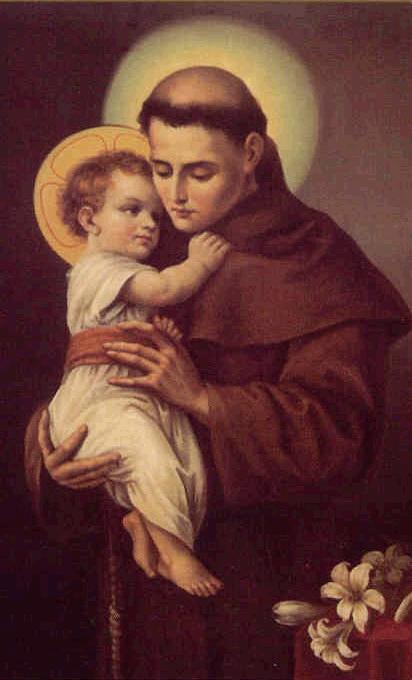
            It is hard to find a Catholic Church that does not have a statue of Saint Anthony of Padua.   Also known as “The Wonder Worker”, he is the most popular saint in the world.  It was said that Saint Anthony was so infused with the holy spirit that he could stop the rain, raise the dead, reattach severed limbs and have fish lift themselves from the water to listen to him By repeating the words, “Tony, Tony, look around, something’s lost that must be found,” any lost article will resurface. Like other saints known for their ability to control nature, he would be seen preaching in two different places at the same time. Greatly beloved in his own lifetime, he was canonized within a year of his death, the second quickest canonization in Church history. Though he has been dead for over 750 years, his cathedral in Padua attracts millions of pilgrims every year who feel such an affinity for him that they invoke him for help in both ordinary and extraordinary matters.

            A contemporary of Saint Francis of Assisi, Anthony was born Ferdinando de Bulhes in Lisbon, Portugal to a noble family. Raised in the heart of Lisbon, he was educated at the Cathedral school. Against his family’s wishes he joined the Augustinian religious order where he immersed himself in intensive study. Finding life at the Abbey in Lisbon too social and luxurious, he requested a transfer to the city of Coimbra, then the capitol of the newly found country of Portugal. For the next eight years he read every book in the monastery’s library and devoted himself to contemplative prayer.


            While serving as the doorkeeper in his monastery he befriended a group of monks who used to beg at his door. Fascinated with their dedication to simplicity and poverty, he learned that they were from the newly formed Order of Franciscans.  When the remains of five Franciscan martyrs were brought back from Morocco and installed in his monastery to great public acclaim, he was inspired to become a missionary and possible martyr himself. He got permission to join the little band of Franciscans and changed his name from Ferdinando to Anthony in honor of the great fourth century monastic, Saint Anthony of the Desert, the patron of the little church where the friars lived.  Intent on preaching the gospel in Morocco, Anthony arrived there with one other friar. His plans were dashed when he was stricken with malaria.           

            After spending the winter in bed, he attempted to return home to Portugal but his ship was blown off course and he found himself in Messina, Sicily. While there, Anthony met a group of Franciscan friars who were heading north for a gathering of all Franciscans with their founder, Francis. Anthony accompanied them to Assisi where he attended the famous 1221 gathering of over 2,000 Franciscans to celebrate Pentecost. This brand new religious order was fast sweeping Europe by inspiring Catholics to return to the original words of Christ. When the meeting ended and the friars were disbursing, Anthony was assigned to the hermitage of Montepaolo in Forli, Italy. Many Franciscans came from the ranks of the uneducated and Anthony never mentioned his noble background or his years of learning, he only requested to study more.

            While at Forli, Anthony attended an ordination along with other Franciscans and several Dominican friars. It was discovered that no one had been appointed to preach. As his Superior’s

polite request for a speaker were repeatedly turned down, he turned to Anthony and ordered him to say whatever the Holy Spirit infused into him. At first shaky and shy, Anthony’s speech became strong and intense. In simple words he was able to explain the most complicated scriptural matters. His audience was astonished not only at his incredible speaking ability but also at the depth of his knowledge. This began his public career as one of the most charismatic preachers of all time.

            He was sent throughout northern Italy and southern France on spiritual preaching missions. Vast crowds soon gathered to hear him. He was known as “The Hammer of the Heretics” for his success in winning over converts. In 1224 he received a letter from Saint Francis himself requesting that he teach theology to his fellow friars. His tenure in the college of Bologna in 1225 was followed by a move to Padua. Anthony is credited with realizing the Franciscan school of theology.

            At Padua, he did much to work on alleviating the debt that the common people were getting into due to the change in the social economy from an agrarian one to a cash based one. At Anthony’s insistence, the Municipality of Padua passed a law which still stand today, in favor of debtors who could not pay their debts. Debt relief and the plight of the poor in the face of increasing wealth were major topics of Anthony’s speeches. It was difficult for the city of Padua to control the crowds of over 30,000 who would come to hear him and he would frequently preach out in the piazzas and open fields. Luxury, avarice and tyranny were the three vices that most troubled him. When he was asked to speak at the funeral of a moneylender he quoted the words of the Gospel, “Where thy treasure is, there is also thy heart.” He then told the mourners, “That rich man is dead and buried in hell; but go to his treasures and you will find his heart.”  When his friends and relatives did as they were told, they found the man’s still warm heart among his coins.

            Though only 36 years old,  Anthony’s health was faltering. An asthmatic, he found great relief in rural settings among nature and he made frequent trips to meditate at Francis’s hermitage at La Verna. A local count donated a woodland retreat for his use. One morning the count heard a child giggling and looked out to find Anthony surrounded in light playing with the baby Jesus. That Christ would choose this most vulnerable state to visit one of His saints is considered further proof of the goodness and kindness of Saint Anthony.

            His death was the cause of intense public mourning and his swift canonization is a testament to the fact he reached the very top church hierarchy as well as the common people with his great gifts. He was declared a Doctor of the Church because of his deep knowledge and ability to share it with others. The construction of his cathedral began immediately after death, the people of Padua insisting that it be in the combined styles of Romanesque, Byzantine and Arabic because Anthony is “everybody’s saint.” When his relics were translated 32 years later, his tongue was found in perfect condition, not decomposed at all. It is currently on display in a reliquery at his cathedral in Padua.


            Though there are many older paintings depicting the many miracles of Saint Anthony, since the 17th Century he has traditionally been depicted holding a lily and the baby Jesus. Usually there is a psalter, or book of psalms in the picture that the baby’s foot rests on. This is to show that Christ comes directly out of these writings. It is also the root of Anthony’s patronage of finding lost things. While at Bologna, when a departing novice borrowed this psalter and attempted to leave the monastery with it, he was confronted by a terrifying devil brandishing an axe who chased him back to the saint. Draftees invoke him for a good number on the list and since he did so much for the poor and those in debt he is their patron. Because he holds the baby Jesus, women having trouble conceiving request his aid. In Portugal and Brazil, his feast day is auspicious for marriages and women seeking husbands will bury a statue of Saint Anthony until he finds one for them. They later free the saint when this is accomplished.


                                                      Novena Prayer to Saint Anthony of Padua

                                       Holy Saint Anthony, gentle and powerful in your help,

                                          Your love for God and charity for His creatures,

                             Made you worthy, when on earth, to possess miraculous powers.

                                                       Miracles waited on your word,

                        Which you were always ready to request for those in trouble or anxiety.

                          Encouraged by this thought, I implore you to obtain for me (request).

                                          The answer to my prayer may require a miracle.

                                                  Even so, you are the saint of miracles.

                    Gentle and loving Saint Anthony, whose heart is ever full of human sympathy,

                      Take my petition to the Infant Savior for whom you have such a great love,

                                          and the gratitude of my heart will be ever yours.

                                                                          Amen


To be said nine times in a row for nine days in a row.

(Excerpted from the book “Saints:Ancient and Modern” by Barbara Calamari and Sandra DiPasqua
DINING WITH THE SAINTS

13_n_StJohnTheBaptist

The Feast of John the Baptist, June 24th


Lumache di Vigna di San Giovanni

 Snails Braised in Tomatoes, Anchovies, Herbs, and Chilies


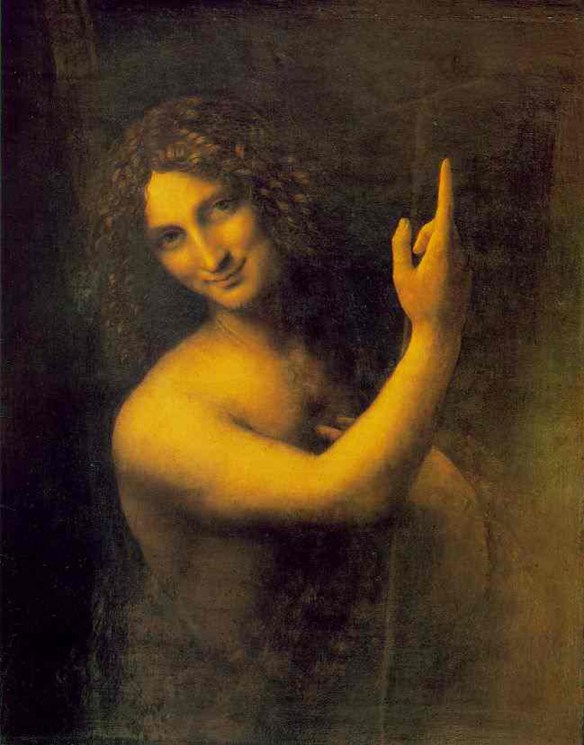
In many parts of Italy snails are gathered—usually from the vineyards—and eaten on St. John’s Day,  probably because snails’ horns make them resemble the devil, and eating them will ward away the witches, devils, and vampires that are believed to congregate on the night of the Summer solstice. This recipe is how they’re prepared in Rome.

 I find imported French snails in 7-ounce cans in my market. They are medium-size and perfect for this dish. If you can find only the really large ones, the kind served in ramekins with butter and garlic, cut them in half. Canned snails are already cooked, so they need only a short simmering over low heat to warm through and soak up all the flavorings from the sauce.

 A white from the Castelli Romani region outside of Rome is the classic wine to serve with this dish. The region encompasses Castel Gandolfo, where the Pope has his summer residence.

 Extra-virgin olive oil

2 summer garlic cloves, thinly sliced

1 fresh red peperoncino, seeded and thinly sliced

3 anchovy fillets, minced

A generous pinch of sugar

A pinch of salt

2 7-ounce cans of snails, drained. See note

A splash of brandy

1/4 cup dry white wine

1 35-ounce can of Italian plum tomatoes, well chopped, with juice

1 large sprig rosemary, the leaves well chopped

4 thyme sprigs, the leaves chopped

A handful of flat-leaf parsley, the leaves lightly chopped


In a skillet large enough to hold all the snails, heat 2 tablespoons of olive oil over medium-low heat. Add the garlic, peperoncino, and anchovies. Sauté until the garlic is very lightly colored and everything is fragrant, about 2 minutes. Add the snails, and season them with the sugar and a little salt (not too much, since the anchovies are salty). Sauté a minute to coat the snails with all the flavors. Add the brandy, and let it boil away. Pour on the white wine, and let it bubble for about a minute. Add the tomatoes with all their juice, the rosemary, and thyme, and turn the heat to low. Let everything cook, uncovered, at a gentle simmer for 20 minutes. By this time the sauce will be very lightly thickened and the snails will be tender. Serve hot in soup bowls, with plenty of good Italian bread to soak up all the sauce.


Fregola di Bosca

 Wild Strawberries with Honey and Mascarpone


The Virgin Mary is said to accompany children who pick strawberries on St. John’s Day, so I had to include a recipe for the little wild variety in this menu. I’ve dressed them with honey, a nod to St. John’s diet, which is said to have consisted of honey and locusts. (I thought the honey part sounded more appealing.)

 If you can gather your own wild strawberries, that will be ideal, but it may be impractical. In June and July I find small, sweet strawberries called Tri Star at my city farmers’ market. They’re cultivated from a wild variety and taste much like the little fregole di bosca (wood strawberries) found in Italy in early summer, but any fragrant summer strawberry will be delicious for this. If you can only find large ones, cut them in half.

 2 pints summer strawberries, hulled

1/4 cup wildflower honey (acacia honey is nice with this)

3/4 cup mascarpone, at room temperature

Basil sprigs for garnish

 Spoon the strawberries into four bowls.

 Pour the honey into a small saucepan, and warm it very gently over a low heat. Spoon the mascarpone into a small bowl, and drizzle in the honey, whisking until it’s well blended. Spoon a large dollop on each serving of strawberries, and garnish with a basil sprig.


Dining With the Saints’ is written by chef Erica Demane visit her website at EricaDemane.com

Some Novenas for May

StRita

SAINT RITA OF CASCIA

1377 – 1447

Abused wife, mother, widow, and nun, Saint Rita experienced her earthly life on many different levels. Because of this, she is invoked more frequently than the Virgin Mary in many regions of the world. Her novena is said to work miracles in impossible situations. Because of her own terrible marriage, it is particularly effective in the case of marital difficulties.


Novena Prayer to Saint Rita


O holy protectress of those who art in greatest need,

O you who shine as a star of hope in the midst of darkness,

blessed Saint Rita, bright mirror of God’s grace,

in patience and in fortitude you are a model of all the states in life.

I unite my will with the will of God through the merits of my

Savior, Jesus Christ, and in particular through his patient

wearing of the crown of thorns, which with tender devotion

you daily contemplated. Through the merits of the holy

Virgin Mary and your own graces and virtues,

I ask you to obtain my earnest petition,

provided it be for the greater glory of God

and my own sanctification. Guide and purify my intention,

O holy protectress and advocate, so that I may obtain

The pardon of all my sins and the grace to preserve daily,

as you did in walking with courage,

generosity, and fidelity down the path of life.

(Mention your request).


Saint Rita, advocate of the impossible, pray for us.

Saint Rita, advocate of the helpless, pray for us.


Recite Our Father, Hail Mary and Glory Be three times each


Say this novena nine times in a row for nine days in a row.


 Saint Rita is the Patron Saint of Impossible Causes.

She is invoked to heal Marital Problems.

 Feast Day: May 22

OUR LADY OF FATIMA

           fatima2                       

The twentieth century has been the bloodiest and most violent in the history . During Mary’s visits to Fatima, Portugal, in 1917, she foretold not only the terrors of the Russian Revolution and World War II, but also made a third prediction, never released, as it was judged far too terrifying.  In her visits she stressed the recitation of the rosary and taking fifteen minutes to meditate on her Immaculate Heart each week. Expressing the feeling that humanity had drifted away from God, she wanted the world to offer up reparations for the disastrous state of the earth. Our Lady of Fatima is an angry and pained mother, demanding that the world come to its senses and honor its Creator. Her rules are strict. This novena is said to honor Mary and to atone for the blasphemies and ingratitude that are heaped upon God and his creations. Coming in the midst of the first World War, her warnings were pointedly political. She predicted the suffering imposed by the Communist states as well as the incredible carnage of the next world war. She strongly commanded all of humanity to pray the rosary, insisting this is the only road to peace.


Novena Prayer to Our Lady of Fatima


Most holy Virgin, who came to Fatima to reveal to the

Three shepherd children the treasures of graces hidden

in the recitation of the rosary, inspire our hearts with

a sincere love of this devotion, so that by meditating

on the mysteries of our redemption that are recalled in it,

we may gather their fruits and obtain the conversion

of sinners, the conversion of Russia, and

(Mention your requests)

Which we ask of you in this novena,

for the greater glory of God, for your own honor,

and for the good of people. Amen


(Recite one Our Father, one Hail Mary, one Glory Be).


Our Lady of the Rosary of Fatima, pray for us!


Recite this novena nine times in a row for nine days in a row.


Pray to Our Lady of Fatima for Forgiveness and Reparations

 Feast Day: May 13

dymphna2

SAINT DYMPHNA

605-620


Because of her personal knowledge of the terror and misery caused by madness, Saint Dymphna offers great comfort and consolation to those afflicted with mental disorders and also to their families. Her burial site continues to be a place of miraculous healing, and Gheel, in Belgium, the town where it is located, leads the world as a center for the treatment of the mentally ill. Saint Dymphna lived for such a short time, so long ago, there is little to prove that she ever really existed.  Born the daughter of an Irish pagan King and Christian mother, Dymphna fled her home after her mother died to avoid the sexual advances of her grief mad father.


Novena Prayer to Saint Dymphna


O God, we humbly beseech you through your servant Saint Dymphna,

Who sealed with her blood the love she bore you, to grant relief to those who suffer from mental afflictions and nervous disorders, especially

(Name the afflicted person)


Saint Dymphna, helper of the mentally afflicted, pray for us.

Saint Dymphna, comforter of the despondent, pray for us.

Saint Dymphna, renowned for many miracles, please hear my plea. Amen.


(Recite one Glory Be).


Say this novena nine times in a row for nine days in a row.


Saint Dymphna is the Patron Saint of Victims of Mental Illness, Victims of Epilepsy,

Victims of Incest and because she had to flee her insane and abusive father, she is the Patron of Runaways


Feast Day: May 15

Dining with the Saints

The Feast of San Domenico


st domenico

First Thursday in May, Cocullo, Abruzzo, Italy

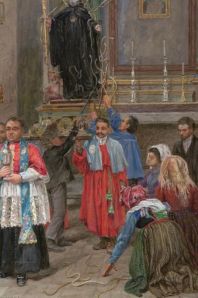
The town of Cocullo, in Abruzzo, Italy, is noted for a religious feast in honor of Saint Dominic who drove snakes out of their village. Sweet, wreath-like breads shaped like snakes biting their own tails are made in his honor on his feast day. There is also an actual snake festival where residents of Cocullo search the woods for snakes, which are then wrapped around the necks of specially trained men called serpari (snakemen) who stroll around the festival grounds holding out the snakes for people to pet. The snakes are later let loose to return back to the woods.

This lemony spring lamb stew is one of the dishes often cooked up as part of the San Domenico Feast day offerings.

Agnello Brodettato

This dish is adapted from a recipe by Anne Bianchi, from her book Italian Festival Food.

Extra virgin olive oil
½ cup pancetta, cut into small cubes
2 pounds boneless lamb shoulder, cut into 1 ½ inch cubes
½ cup of all-purpose flour
A generous pinch of ground nutmeg
A smaller pinch of ground cinnamon
Salt
Freshly ground black pepper
1 spring onion, cut into small dice, using some of the tender green stalk
2 young spring garlic cloves, thinly sliced
1 cup dry Marsala
1 cup light meat broth or chicken broth
1 egg yolk
The grated zest and juice from 1 lemon
A handful of flat leaf parsley leaves, stemmed

In a large casserole fitted with a lid, heat 2 tablespoons of olive oil over medium heat. Add the pancetta and sauté until it’s crisp. Coat the lamb pieces in flour, shaking off excess. Add them to the casserole and brown them all over, seasoning with the nutmeg, cinnamon, salt, and black pepper.

Add the onion and the garlic to the casserole and sauté until softened, about 2 minutes. Add the Marsala and let it boil for about 2 minutes. Add the broth. The liquid should almost cover the meat (if not, add more broth or a little water). Bring the liquid to a boil. Turn the heat to low, cover the casserole, and simmer, until the lamb is tender, about 2 hours.

Remove the lamb from the casserole and place it in a large, shallow serving bowl. Cover it with aluminum foil to keep it warm. Skim all the fat from the surface of the sauce. Whisk the egg yolk and lemon juice together in a small bowl and pour it into the casserole, whisking well over a very low heat just until the sauce gets creamy. Pull the casserole off the heat. Taste for seasoning, adding more salt or black pepper if needed. Strain the sauce over the lamb. Garnish with the parsley and the lemon zest. Serve right away. Rice is a good accompaniment for this light stew.

Dining with the Saints is written by Erica De Mane (www.ericademane.com)

peregrineSAINT PEREGRINE

1265 – 1345

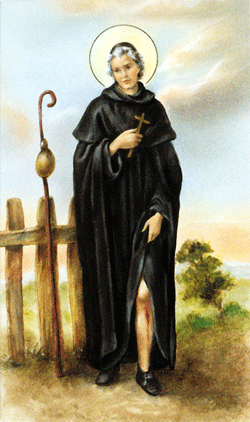
 Saint Peregrine experienced firsthand the despair of the incurably ill. Stricken with a gangrenous cancer, he came to accept not only the severity of his illness, but also the miracle of his healing at the hands of Christ. As a result of Saint Peregrine’s example of acceptance and faith, he has many followers the world over, particularly among those who are seriously ill. He is invoked for medical breakthroughs, for those stricken with serious ailments, and for protection against diseases. He is the patron of those suffering from cancer, running sores, or any incurable disease.


Saint Peregrine Novena

 O great Saint Peregrine, you who have been called “the Mighty” and

“the Wonder Worker” because of the numerous miracles you have had

recourse to, for so many years you bore in your own flesh this cancerous

disease that destroys the very fiber of our being, and you had recourse

to the source of all grace when the power of man could do no more.

You were favored with the vision of Jesus coming down from his cross

To heal your afflictions. Ask of God and our Lady the cure of these

sick persons whom we entrust to you. Aided in this way by your

Powerful intercession, we shall sing to God, now and for all

eternity, a song of gratitude for his great goodness and mercy.

(Mention your request).


Saint Peregrine, pray for me and for all who invoke your aid. Amen


Say this novena nine times in a row for nine days in a row.


Saint Peregrine is invoked against Cancer, Incurable Illnesses, Running Sores


Feast Day: May 2


Saint Peregrine is particularly popular in Spain and Austria 

Above novenas excerpted from the book “Novena:The Power of Prayer” by Barbara Calamari and Sandra DiPasqua