Unknown's avatar

About sandra dipasqua

graphic designer

Feast of St. Philomena, August 11

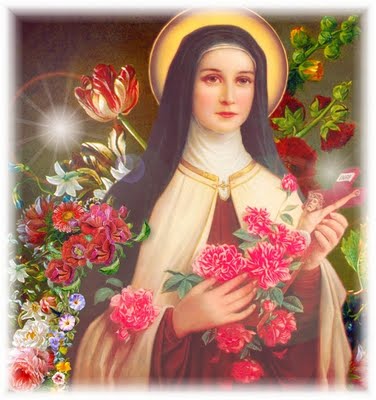
St.Philomena St. Philomena 291-304 Patron of: The Poor, Children, Babies, Priests, Lost Causes, Youth. Never official canonized, and listed in the local Calendar of Saints for only 130 years before being removed, Saint Philomena enjoys a unique and fervid following among common people, popes and saints. Her remains discovered seventeen centuries after her death, Saint Philomena is known as one of the great Wonder Workers of the nineteenth century and is the only person declared a saint based solely on their intercessionary powers. Recognized for her miraculous influence by six popes and ten different saints who have claimed personal experiences through her intervention, she is called upon when things look most hopeless. Discovered by a priest who hailed from a poverty-stricken parish near Naples, she is said to be particularly in tune with the needs of the poor. In 1802, the bones of a girl between the ages of 13 and 15 were discovered in the Catacombs of Priscilia in Rome, Italy. Three tiles closing off her space hollowed into the rock read, “Peace be with thee, Philomena”. Entombed with the girl was a vial thought to contain blood as well as drawings of a palm, two anchors and three arrows. Because these images were well known symbols used by early Christians to convey martyrdom, it was established that the girl was one of the many virgin martyrs in the early, underground church.

In 1805 a young priest from the diocese of Nola (a district near Naples) requested the Vatican to allow him to obtain a relic for the new altar in the Church of Our Lady of Grace in Mugnano. Because he felt a spiritual affinity when he was near her remains, he was allowed to take the relics of the recently discovered virgin martyr back with him. Before her remains were translated to the church, they were put on display in Naples. Almost immediately, there were reports of miraculous healing. When her relics arrived in Mugnano on August 11, 1805, a cult rapidly grew, attributing many miracles to the intercession of the little martyr. In 1833 a Neapolitan nun, Sister Maria Luisa de Gesu, claimed to have a vision of Philomena who relayed her life story. According to her vision, Philomena was the daughter of the king of Corfu in Greece. When the Emperor Diocletian of Rome threatened her father’s kingdom with war, he traveled to Rome with his family in order to obtain peace.

There Philomena discovered Christianity and vowed her virginity to Christ. When the Emperor saw how beautiful she was, he asked to marry her. When the young girl refused him, she was tortured and then drowned with an anchor tied around her neck. When two angels raised her up out of the sea, she was shot with arrows. After this failed to kill her, she was decapitated. According to the nun’s vision, Philomena declared that August 11th, the day her relics were installed in Mugnano, was also the anniversary of her death. In 1835, when Pauline Jaricot, the well-known and respected French reformer was gravely ill with heart disease, she made a pilgrimage to Mugnano and was completely cured by Philomena. News of this event spread throughout France and Spain and Philomena attracted such notable devotees as Saint Anthony Mary Claret from Spain and Saint John Vianney of France who built his own shrine to the little martyr. Several popes, while still cardinals paid visits to Philomena’s shrine. Pope Pius IX credits her with curing him of epilepsy. Saints such as Francis Xavier Cabrini, Padre Pio and Father Damian are numbered among her devotees. When the Calendar of Saints was reassessed to only list saints who had historical proof of their existence, Philomena lost her place. Her cult is still very strong and pilgrims from around the world visit her shrine in Mugnano.

Novena:

O Faithful Virgin and glorious martyr, St. Philomena, who works so many miracles on behalf of the poor and sorrowing, have pity on me. Thou knowest the multitude and diversity of my needs. Behold me at thy feet, full of misery, but full of hope. I entreat thy charity, O great Saint! Graciously hear me and obtain from God a favorable answer to the request which I now humbly lay before thee.

(mention your intention).

I am firmly convinced that through thy merits, through the scorn, the sufferings and the death thou didst endure, united to the merits of the Passion and death of Jesus, thy Spouse, I shall obtain what I ask of thee, and in the joy of my heart I will bless God, who is admirable in His Saints. Amen. Saint Philomena, powerful with God, pray for us! Saint Philomena, powerful with God, hear our prayers!

You can find St. Philomela and 35 other saints on novena app.

Saint Alphonsus Liguori 

Sanctus Alphonsus de Ligorio1696 – 1787

Patron Saint of Arthritis, the Pains of Old Age, Charity

 Feast Day is August 1

Crippled by arthritis and ready to die at age seventy—two, Saint Alphonsus Liguori went on to live another nineteen years, publishing over sixty books and writing poetry and music. His disease made him so conscious of his own mortality that he assumed each day was his last and lived accordingly. He is the patron of those suffering from arthritis and the pains of old age. He sets the example of turning suffering to an advantage. In his case, his ill health made him use his earthly time in the most efficient manner. Saint Alphonsus Liguori is most frequently invoked for a cure to illness, and if that is not possible, for a way to bear illness productively. It is also thought that those who suffer physical torments on earth and offer those pains as reparations for the sins of mankind have more intercessionary power after death than others. Because he spent so many years of his life in chronic pain, unable even to lift his chin off his chest, Saint Alphonsus is thought to be an extremely effective intercessionary force.

Born near Naples, Italy, in 1696, Alphonsus Liguori started out in life as a brilliant lawyer. A doctor of law by the age of sixteen, he practiced for eight years before losing his first case. He always attributed his success at law to his daily attendance of mass. His first loss in court – the result of an oversight on his part – came as a devastating blow to him. Humiliated, he fasted and prayed for three days. While doing charitable works in the Hospital for Incurables, he found himself surrounded by mysterious light. The building seemed to rock and an interior voice said, “Leave the world and give yourself to me.” This occurred twice. A few years later, in 1726, he was ordained a priest. He devoted himself to working in the poorest areas of Naples and developed a reputation as a popular preacher. Though a highly educated professional, able to argue the smallest nuance in law and theology, Saint Alphonsus said, “I have never preached a sermon that the poorest old woman in the congregation could not understand.”  His confessional was always crowded, and he is credited with healing a great number of hardened sinners.

Saint Alphonsus founded the order of Redemptorist fathers, dedicated to going out among the poorest neighborhoods. He wanted his priests to preach practical sermons and act as missionaries, bringing the word of God to the forgotten. At the age of sixty—six, Saint Alphonsus was made the bishop of Saint Agata, a diocese of thirty thousand people. When ill health forced him to be bedridden, the pope refused to accept his resignation because he felt that the power of Alphonsus’s prayers would help his constituents more than the actual good works of anyone else. Saint Alphonsus died in 1787 at the age of 91. In art he is always depicted with his chin on his chest due to his arthritic condition.

Novena to Saint Alphonsus

Glorious Saint Alphonsus, loving father of the poor and sick, all your life you devoted yourself with a charity really heroic to lightening their spiritual and bodily miseries. Full of confidence in your tender pity for the sick, since you yourself have patiently borne the cross of illness, I come to you for help in my present need.

Mention your request

Loving father of the suffering, Saint Alphonsus, whom I invoke as the Arthritis Saint, since you suffered from this disease in your lifetime, look with compassion upon me in my suffering. Beg god to give me good health. If it is not God’s will to cure me, then give me strength to bear my cross patiently and to offer my sufferings in union with my crucified Savior and his Mother of Sorrows, for the glory of God and the salvation of souls, in reparation for my sins and those of others, for the needs of this troubled world, and for the souls
in purgatory.

Recite one Our Father, one Hail Mary and one Glory Be

Saint Alphonsus, patron of the sick, pray for me. Amen.

Say this novena nine times in a row for nine days in a row.

Our Lady of Mount Carmel feast July 16

Our Lady of Mt Carmel
“Receive my beloved son, this habit of thy order: this shall be to thee and to all Carmelites a privilege, that whosoever dies clothed in this shall never suffer eternal fire. . . . It shall be a sign of salvation, a protection in danger, and a pledge of peace.”

Mount Carmel, in what is today northern Israel, has always been a place rich in mystical tradition. The word hakkarmel means “the garden” in Hebrew, and true to its title, there is a remarkable profusion of plants and wildflowers on this mountain. It is considered a natural paradise and a sacred place, and in biblical times it was forbidden to disturb any of the natural life on it. Those who wanted to ascend the mountain for meditation lived in caves so as not to intrude on the landscape with unnatural structures.

In about 860 b.c., the prophet Elijah (also known as Elias) arrived on this holy mountain to begin a life of contemplation and prayer. The First Book of Kings is filled with tales of wonders he performed and prophesies he gave. In his prophetic visions on Mount Carmel, Elijah became aware of the coming of the mother of the Messiah. He and his followers mystically dedicated themselves to her, setting an example as the first monks. The descendants of these ancient contemplatives were among the first to accept the teachings of Christ and to be baptized by His apostles. Upon meeting Mary after Christ’s Ascension, they were so overcome by her sanctity that they returned to the mountain to build a chapel in her honor. For the next thousand years Mount Carmel continued to be a place where hermits devoted themselves to prayer. By the twelfth century, pilgrims from Europe who had followed the Crusades to the Holy Land settled with the ascetics on Carmel and started a religious holy order known as Brothers of the Blessed Virgin Mary of Mount Carmel. Their rule, which was given in 1209 by the Patriarch of Jerusalem, says that all converges toward the contemplation of God. The Rule of Mysticism exhorts those who follow it to live a life of continual prayer, obedience to a superior, perpetual abstinence and fasting, manual work, and total silence. Simon Stock, an English pilgrim, had joined the group on a visit to Jerusalem. At this time, Saracen invaders forced the monks out of their spiritual home on Mount Carmel. All those who would not leave were murdered.

Simon Stock was instrumental in getting the order to move to Aylesford, England, where the Baron de Grey gave them a manor house. The Carmelite lifestyle of contemplation, poverty, and silent prayer was noteasily accepted in Europe, particularly among the clergy who enjoyed almost the same status and privilege as royalty. Reading into the life of Mary, Simon Stock was inspired by her unquestioning acceptance of all that befell her: her virgin pregnancy; her raising and loving a child doomed to be executed; and her staying at the foot of the Cross while others ran away. It was through his insistence that the Carmelites evolved from a band of hermit ascetics who regretted the loss of their home on Mount Carmel into a traveling society of mendicant friars, opening schools and mission houses in the major capitals of Europe. Still, it was difficult for many monks to accept the alteration of the rule of the order to adapt to European conditions. Their presence was also shunned and not easily tolerated by other religious orders. The people thought these hermits strange and did not accept that they chose to live in such absolute poverty and isolation. In order to preserve what was left of their order, the Carmelites invoked their patroness, the Virgin Mary, for help in establishing their new life.

The answer came in a vision to Saint Simon Stock on July 16, 1251, when he was alone in his cell. Mary appeared to him holding the scapular of his order. She told him, “Receive my beloved son, this habit of thy order: this shall be to thee and to all Carmelites a privilege, that whosoever dies clothed in this shall never suffer eternal fire. . . .It shall be a sign of salvation, a protection in danger, and a pledge of peace.”

The scapular, two pieces of brown wool joined at the shoulders and hanging down the back and breast, was not new to the Carmelite order. For hundreds of years before Saint Simon Stock’s vision, monks in Europe had worn scapulars. But it is thought that the brown scapular that Mary delivered was referencing Elijah’s camel-hair garment on Mount Carmel. Eventually, the brown scapular became reduced in size for laypeople to wear under their clothing. This is a special devotion to Mary worn as a sign to commemorate her faith in both God and humankind.

This gift from Mary helped the Carmelites explain the historical significance of their order to the laypeople; it served as a reminder that belief in Mary as the Mother of God extended back to the Old Testament with the prophet Elijah. After Pope John XXII (r. 1316–1334) had a vision of Mary where she promised those wearing the brown scapular, “I, the Mother of Grace, shall descend on the Saturday after their death and whomsoever I find in Purgatory, I shall free, so that I may lead them to the holy mountain of everlasting life,” the scapular became extremely popular among the common people. By the end of the sixteenth century it had become smaller in size and very similar to the one that is worn today. Admiration for the Carmelite Order spread as their adherence to the rules of solitude and prayer produced some of the greatest mystical saints in Catholicism, all of whom had visions of or openhearted communications with Mary. Among them are Saint Simon Stock, Saint Teresa, Saint John of the Cross, and Saint Thérèse of Lisieux.

Though the original scapular handed to Saint Simon Stock was brown wool cloth without a picture, the Carmelite scapular that is now worn and the one that is most favored now has an image of Our Lady of Mount Carmel holding the Baby Jesus while she offers the scapular. The other piece of cloth often has a picture of Jesus as a man. Neither image is prescribed. Wearing the scapular is a form of prayer and is considered a visible sign of consecrating oneself to Mary and to accepting her maternal protection.

Devotion to Our Lady of Carmel can be found wherever the Carmelites founded a monastery or convent. Many small towns in Italy have churches named after this aspect of Mary. As the townspeople emigrated to other countries, they brought the devotion with them. In many cities in the United States these churches have great celebrations in honor of Our Lady of Mount Carmel. Artistic representations of Our Lady of Mount Carmel depict her either appearing in the sky over Mount Carmel itself or holding Jesus as a toddler. In both versions the figure of Mary is often depicted offering the scapular to the viewer. Tradition has it that the prophet Elijah saw Mary appear in the clouds over Mount Carmel eight hundred years before her birth. Sometimes this representation includes her handing the scapular to Saint Simon Stock. The other version of this aspect of Mary illustrates the Sabbatine privilege where Mary vows to take the souls of those who died wearing the brown scapular out of purgatory on the Saturday after their death. Purgatory is depicted in flames because it is a place where the soul goes to have its sins burned away.

Novena

Say this prayer for 3 consecutive days:
Oh, most beautiful flower of Mount Carmel, fruitful vine, splendor of Heaven.
Oh, Blessed Mother of the Son of God; Immaculate Virgin, assist me in my necessity.
Oh, Star of the Sea, help me and show me you are my Mother.
Oh, Holy Mary, Mother of God, Queen of Heaven and Earth, I humbly beseech you from the bottom of my heart to succor me in my necessity.
(Mention your request here)
There are none that can withstand your power.
Oh, Mary, conceived without sin, pray for us who have recourse to thee. (say three times).
Holy Mary, I place this prayer in your hands. (say three times).
Amen.

Veil of Mary at Chartres Cathedral in Paris

IMG_3159

This Novena honours the nine months during which Our Lady carried Our Blessed Lord in her womb.

“Hail, Holy Queen,
Mother of Mercy,
our life, our sweetness and our hope!
To thee do we cry,
poor banished children of Eve;
to thee do we send up our sighs,
mourning and weeping in this valley of tears.
Turn then, most gracious advocate,
thine eyes of mercy towards us;
and after this our exile,
show unto us the blessed fruit of thy womb Jesus.
O clement, O loving,
O sweet Virgin Mary. Amen.”

V – Pray for us, most holy mother of God.
R – That we may be made worthy of the promises of Christ.

“Virgin of the Incarnation,
a thousand times we greet thee,
a thousand times we praise thee
for thy joy when God was incarnated in thee.
Because thou art so powerful
a Virgin and Mother of God,
grant what we ask of thee for the love of God.”
Here state your first intention.
Repeat all of above and then state your second intention.
Repeat all of above and then state your third intention.


Excerpt from the book Saints: Saint Clare of Assisi Abbess and founder of the Poor Clares

S0034645 Saint Clare. Image licenced to Sandy DiPasqua NEW YORK TIMES by Sandy DiPasqua Usage :  - 3000 X 3000 pixels (Letter Size, A4)  © Alinari / Art Resource

Feast Day: August 11

Without ever leaving her convent on the outskirts of Assisi, Saint Clare founded orders of nuns throughout Italy, France, and Germany. Though she maintained a vow of silence, popes, cardinals, and royalty came to her for spiritual advice. Only twelve years younger than her mentor, Saint Francis of Assisi, she quietly helped him lead a movement of young people that confronted the church hierarchy for their material excesses, and revolutionized religious expression by embracing simplicity and poverty.

Chiara Offreduccio was the daughter of a wealthy count and countess in Assisi, Italy, and displayed little interest in the worldly advantages offered by her highborn state. She was eighteen and destined for an arranged, profitable marriage when she heard Saint Francis deliver the Lenten sermon at her church. Inspired by his simple message of living with complete trust in God, she conspired to run away and live like this new order of mendicant friars, dependent solely on alms received from begging. The turning point for her occurred on Palm Sunday, 1212. On that day, Clare went to the Cathedral of Assisi in her finest clothes for the blessing of the palms. While others went to the altar rail to receive their palms, she sat in her seat, too shy to move. With the entire congregation as witness, the bishop stepped down from the altar and delivered the palms to her. She took this as a sign to act on her plan. Homes in Assisi were built with two doors, one for regular use and one called the Door of the Dead, opened only to remove a coffin from the house. That night, Clare secretly cleared the debris from the Door of the Dead and stepped through it, renouncing her former life and the material world forever. She slipped through the woods to the chapel of the Porziuncola, where Francis and his small community of men were at prayer. Clare exchanged her finery for a penitential tunic of coarse cloth tied with a rope, and Francis cut off her luxurious hair in front of the Blessed Virgin’s altar. Having no separate living facility for women, he then took her to the local Benedictine convent.

Clare’s family embarked on a rescue mission, sparing no expense. During a violent struggle to drag Clare from the convent, her clothing was torn off, and her shorn hair revealed. She declared to her shocked father, “The only spouse I will have is Christ, and further attempts to remove me from my chosen life will make me more steadfast!” Her powerful father had to submit to her will and leave her behind. To his great anguish his younger daughter Agnes joined Clare just two weeks later. Thus began a fashionable tradition of wealthy young women turning their backs on privilege and society in order to follow a higher spiritual path. Francis of Assisi had offered his peers a way of living that shook the foundations of society in the Middle Ages. Instead of becoming dependent behind the walls of staid, established religious orders, he encouraged his followers to exist in a day-to-day manner, experiencing nature and depending on the goodwill of others. The joy he and his band of friars exuded was infectious and he developed a following wherever he went.

Clare was the first young woman with the courage to join him. In 1215, when Clare was twenty-two years old, Saint Francis installed her as the Abbess of the Order of Poor Ladies in a small house across from the Church of San Damiano. These women followed the Franciscan rule, forbidden to own property or material goods and entirely dependent on the alms the Friars Minor could beg for them.

Upon the death of her father, Clare did not veer from Saint Francis’s teachings. She gave her vast inheritance to the poor rather than to her own religious community. This act of devotion caused much controversy–Church authorities expected women to give their dowries to the religious orders they joined. This was to ensure that the nuns would be supported throughout their lives and would not serve as a burden to their parish communities. Because she was the founder of this order of women, Clare set a precedent for future Franciscan convents. Despite this disagreement with church hierarchy, convents of Poor Clares, as the order became known, were started in cities all over Italy, gradually spreading to France and Germany. These first convents attracted many educated and wealthy women who not only walked away from titles and estates but also lived in a state of self-imposed austerity that was considered extreme for men and unheard of for women. They went barefoot, wore sackcloth, slept on the ground, ate no meat, and maintained a vow of silence, speaking only out of necessity. Agnes, daughter of the King of Bohemia, broke her engagement to become Empress of the Holy Roman Empire to start an order of Poor Clares. The correspondence between Agnes and Clare leaves a lasting portrayal of the intellectual brilliance and good nature of the order’s founder.

Because of her great mind, Saint Clare was an invaluable adviser to Saint Francis. When he was wrestling with the choice of becoming a religious hermit or going out in the world to evangelize his movement, she encouraged him to go out to the people. It was Clare who nursed Francis through the last days of his life, and it was under her care that he composed his greatest work, “Canticle of the Sun.” After Francis’s death, Clare could never be convinced to relax his strict rules of poverty, remaining the most loyal adherent of his teachings. Though she was abbess of her own order of nuns, Clare lived as humbly as possible. She served at the table, tended the sick, and washed the feet of the lay sisters when they returned from begging. Because of the austere manner in which she lived, Clare’s health suffered, and like Francis, she had the reputation for mystical powers. When she prayed, she exuded a rainbow aura and enjoyed a silent rapport with animals.

While bedridden, she would embroider altar cloths for neighboring churches and her cat would bring her whatever she needed. Even when ill, Clare remained a powerful spiritual force. In 1234, the army of Frederick II was at war with the Papal States, and the convent of Poor Clares in Assisi came under attack by a band of Saracen mercenaries. Clare rose from her sickbed and took a monstrance containing a host from the chapel. While ladders were being set up for the invaders to scale the walls, Clare calmly prayed, “Does it please Thee, O God, to deliver into the hands of these beasts the defenseless children whom I have nourished with Thy love? I beseech Thee good Lord, protect these whom now I am not able to protect.” She then heard the voice of a child saying, “I will have them always in my care.” In response, she turned to the terrified nuns and told them to have no fear but to trust in Jesus. In that instant, the attackers were seized with an incredible wave of dread and they fled the convent.

The citizens of Assisi credit Clare with saving them from a later assault by the same army. Telling her nuns that they needed to support the city that had given them so much charity, she had them pray day and night until the attacking army inexplicably gave up and retreated. Two days before her death at the age of fifty-nine, Pope Innocent IV approved the rule for her order, which she had formally written herself. As she lay on her deathbed, her sister Agnes and the early followers of Saint Francis were at Clare’s bedside, reciting the same prayers for her as they had said for him. In art, Saint Clare is usually depicted holding the monstrance that she held in driving out the Saracens. Those working in embroidery as Clare did, frequently suffer from eye problems, and so she is their patron as well as patron to those who treat the eyes. Because gold work requires intense use of the eyes, gilders are also under her patronage. Because her name, Chiara, means clear, she is called upon for clarity of vision. Since laundresses work at dawn and her name reminds one of the effects of the rising sun, they are also under her protection.

Vision and clarity accompanied Clare throughout her life. When she was too ill to attend Christmas midnight mass, she was able to visualize it on her wall, amazing those who did attend by relaying exact information of the events. Because of this miracle, she was named the patron of television, telegraph operators, and the telephone in 1958.

Prayer of Saint Clare of Assisi

Go forth in peace, for you have followed the good road. Go forth without fear, for he who created you has made you holy, Has always protected you, and loves you as a mother. Blessed be you, my God, for having created me. Amen.

Saint Anthony of Padua, Doctor of the Church, 1195–1231

St. Antonius a PaduasmallFeast Day: June 13

Patron of: Lisbon, Portugal, Padua, amputees, barren women,
domestic animals, draftees, oppressed people, orphans, paupers,
the poor, pregnant women, prisoners, sailors

Invoked for: finding a husband, finding lost articles

Invoked against: debt, shipwreck, starvation

Symbols: baby Jesus, book of Gospels, lily

It is hard to find a Catholic church that does not have a statue of Saint Anthony of Padua. Also known as “The Wonder Worker,” he may be the most popular saint in the world. It was said that Saint Anthony was so infused with the Holy Spirit that he could stop the rain, raise the dead, reattach severed limbs, and have fish lift themselves from the water to listen to him. When something is lost, “Say a prayer to Saint Anthony,” is a common refrain. Like other saints known for their ability to control nature, he would be seen preaching in two different places at the same time. Greatly beloved in his own lifetime, he was canonized within a year of his death, the second quickest canonization in Church history. Though he has been dead for over 750 years, his cathedral in Padua attracts millions of pilgrims every year who feel such an affinity for him that they invoke him for help in both ordinary and extraordinary matters.

A contemporary of Saint Francis of Assisi, Anthony was born Ferdinando de Bulhes in Lisbon, Portugal, to a noble family. Raised in the heart of Lisbon, he was educated at the Cathedral school. Against his family’s wishes he joined the Augustinian religious order, where he immersed himself in intensive study. Finding life at the abbey in Lisbon too social and luxurious, he requested a transfer to the city of Coimbra, then the capital of the newly founded country of Portugal. For the next eight years, he read every book in the monastery’s library and devoted himself to contemplative prayer. While serving as the doorkeeper in his monastery, he befriended a group of monks who used to beg at his door. Fascinated with their dedication to simplicity and poverty, he learned that they were from the newly formed Order of Franciscans. When the remains of five Franciscan martyrs were brought back from Morocco and installed in his monastery to great public acclaim, he was inspired to become a missionary and possible martyr himself. He got permission to join the little band of Franciscans and changed his name from Ferdinando to Anthony in honor of the great fourth-century monastic, Saint Anthony of the Desert, the patron of the little church where the friars lived. Intent on preaching the gospel in Morocco, Anthony arrived there with one other friar. His plans were dashed when he was stricken with malaria. After spending the winter in bed, he attempted to return home to Portugal but his ship was blown off course and he found himself in Messina, Sicily. While there, Anthony met a group of Franciscan friars who were heading north for a gathering of all Franciscans with their founder, Francis. Anthony accompanied them to Assisi, where he attended the famous 1221 gathering of more than two thousand Franciscans to celebrate Pentecost. This brand-new religious order was fast sweeping Europe by inspiring Catholics to return to the original words of Christ. When the meeting ended and the friars were disbursing, Anthony was assigned to the hermitage of Montepaolo in Forli, Italy. Many Franciscans came from the ranks of the uneducated and Anthony never mentioned his noble background or his years of learning; he only requested to study more. While at Forli, Anthony attended an ordination along with other Franciscans and several Dominican friars.

It was discovered that no one had been appointed to preach. As his Superior’s polite request, for a speaker were repeatedly turned down, he turned to Anthony and ordered him to say whatever the Holy Spirit infused into him. At first shaky and shy, Anthony’s speech became strong and intense. In simple words, he was able to explain the most complicated scriptural matters. His audience was astonished not only at his incredible speaking ability but also at the depth of his knowledge. This began his public career as one of the most charismatic preachers of all time. He was sent throughout northern Italy and southern France on spiritual preaching missions. Vast crowds soon gathered to hear him. He was known as The Hammer of the Heretics for his success in winning over converts. In 1224 he received a letter from Saint Francis himself requesting that he teach theology to his fellow friars. His tenure at the college of Bologna in 1225 was followed by a move to Padua. Anthony is credited with realizing the Franciscan school of theology. At Padua, he did much to alleviate the debt into which the common people were falling. The social economy was changing from an agrarian to a cash-based society. At Anthony’s insistence, the municipality of Padua passed a law that still stands today, in favor of debtors who could not pay their debts. Debt relief and the plight of the poor in the face of increasing wealth were major topics of Anthony’s speeches. It was difficult for the city of Padua to control the crowds of more than thirty thousand that would come to hear him, and he would frequently preach out in the piazzas and open fields. Luxury, avarice, and tyranny were the three vices that most troubled him. When he was asked to speak at the funeral of a moneylender he quoted the words of the Gospel, “Where thy treasure is, there is also thy heart.” He then told the mourners, “That rich man is dead and buried in hell; but go to his treasures and you will find his heart.” When his friends and relatives did as they were told, they found the man’s still warm heart among his coins–a powerful illustration of a central tenet in his teachings. Anthony’s speaking career was cut short, however, when at only thirty-six years old, his health began to falter. An asthmatic, Anthony found great relief in rural settings among nature and he made frequent trips to meditate at Francis’s hermitage at La Verna.

A local count donated a woodland retreat for his use. One morning the count heard a child giggling and looked out to see Anthony surrounded in light playing with the baby Jesus. That Christ would choose to appear in this most vulnerable state to visit one of His saints is considered further proof of the goodness and kindness of Saint Anthony. Anthony’s death was the cause of intense public mourning and his swift canonization is a testament to the impact his great gifts had upon the very top of the Church hierarchy as well as the common people. He was declared a doctor of the Church because of his deep knowledge and ability to share it with others. The construction of his cathedral began immediately after his death, the people of Padua insisting that it be in the combined styles of Romanesque, Byzantine, and Arabic because Anthony is “everybody’s saint.” When his relics were translated thirty-two years later, his tongue was found to be perfectly preserved. It is currently on display in a reliquary at his cathedral in Padua. Though there are many older paintings depicting the many miracles of Saint Anthony, since the seventeenth century he has traditionally been depicted holding a lily and the baby Jesus. Usually there is a Psalter, or Book of Psalms, in the picture that the baby’s foot rests on.

This is to show that Christ comes directly out of these writings. It is also the root of Anthony’s patronage of finding lost things. While at Bologna, when a departing novice borrowed this Psalter and attempted to leave the monastery with it, he was confronted by a terrifying devil, brandishing an ax who chased him back to the saint. Draftees invoke Anthony for a good number on the list, and since he did so much for the poor and those in debt, he is their patron. Because he holds the baby Jesus, women having trouble conceiving request his aid. In Portugal and Brazil, his feast day is auspicious for marriages, and women seeking husbands will bury a statue of Saint Anthony until he finds one for them. They later free the saint when this is accomplished.

Prayer to Saint Anthony of Padua

Holy Saint Anthony, gentle and powerful in your help, Your love for God and charity for His creatures, Made you worthy, when on earth, to possess miraculous powers. Miracles waited on your word, Which you were always ready to request for those in trouble or anxiety.

Encouraged by this thought, I implore you to obtain for me [request here].

The answer to my prayer may require a miracle. Even so, you are the saint of miracles. Gentle and loving Saint Anthony, whose heart is ever full of human sympathy, Take my petition to the Infant Savior for whom you have such a great love, and the gratitude of my heart will be ever yours.

Amen.

Excerpt from Saints: Ancient & Modern, see ebook on amazon. Or pray with Saint Anthony on Novena app available at iTunes.


Excerpt from Novena: The Power of Prayer—Novena to The Infant of Prague

Infant
The Feast of the Infant of Prague is the same day as The Holy Name of Jesus, January 14.

Appeal to the Infant of Prague in times of desperation, to stop an epidemic or for abundance

Few novenas promise the instantaneous results of those to the Infant of Prague. It necessitates a suspension of all doubt as it is completed in one day over a nine—hour time span. Perhaps the most invoked aspect of Christ in the world, this novena promises that anything is possible for those who believe. Christ is presented as both a kindly child and a king. The Infant of Prague is a statue of the child Jesus dressed in actual clothing. Instead of the modest garments of a poor child, he is wearing the sumptuous gown of royalty. Because the Infant of Prague looks like a little doll, we are welcome to approach him with the open faith of a child. Reflecting the faith of Jesus, the novena requires an intensity of devotion.

Many people have a version of this statue in their homes, as it is said to guarantee abundance. This novena, frequently utilized by those in financial difficulties, can be said during any desperate situation. The Divine Child, a nineteen—inch wax sculpture, was brought to Prague, Czechoslovakia, by a Spanish princess who received it from her mother as a wedding gift. She in turn, bequeathed it to her daughter, Princess Polyxena. On becoming a widow in 1623, Polyxena decided to devote the rest of her life to doing charitable works. The extremely poor order of Carmelite monks of Prague were her favorite beneficiaries. Bringing the statue, she promised, “As long as you will venerate this image, you will not lack anything.” The statue of the Divine Child was installed in the chapel, and the monks became aware of an immediate change in their material and spiritual fortunes. In 1631 the monks had to flee their monastery because of an invasion by Sweden. In the ensuing confusion the statue was left behind, only to be thrown on a trash heap by the invading army. Miraculously, it was found seven years later by a priest named Father Cyril, who had been particularly devoted to the Divine Infant. Though it was made of wax, the only damage sustained by the statue was its missing hands.

Devotions to the Divine Infant, returned to its altar in the chapel as the once again poverty—stricken Carmelites began to rebuild their monastery, were revived with great fervor. While Father Cyril was praying before the statue, he heard the words: “Have pity on me and I will have pity on you. Give me my hands and I will give you peace.” Though money came to the order, it was felt that it should be put to use for more important causes than the repair of a statue. Again Father Cyril heard a voice while in prayer: “Place me near the entrance of the sacristy and you will receive aid.” A passing stranger, seeing the broken statue, offered to have it repaired. When the Divine Infant seemed to be responsible for several cures during an epidemic, the priests moved the statue to the main church so that the public could also benefit from its graces. In 1642 Baroness Benigna von Lopkowitz had a beautiful chapel built for the Divine Infant, where it remains to this day. Many make pilgrimages to Prague to see the original little statue that has inspired so many copies around the world.

Powerful Novena in Times of Distress to the Infant of Prague

Divine Infant of Prague, dearest Jesus, you who so lovingly said, “Ask and it shall be given you; seek and you shall find; knock and it shall be opened to you,” have mercy on me now, and through the intercession of our most holy Mother, I humbly ask you to grant me the grace I need. Mention your request Divine Infant of Prague, dearest Jesus, you who so compassionately taught, “If you can believe, all things are possible to him who believes,” have pity on me now. I do believe; help me. Increase my weak faith through the Blessed Mother’s intercession.

I humbly ask you to answer my request. Mention your request Divine Infant of Prague, dearest Jesus, you who once said to the Apostles: “If you have faith like a mustard seed, you will say to the mulberry tree, ‘Be uprooted and be planted in the sea,’ and it will obey you.” Hear my prayer, I humbly ask.

Through the intercession of Mary most holy, I feel certain that my prayer will be answered. Mention your request.

Because this novena is said for those in great distress or emergency situations, it is completed in one day.

Say this novena nine times in a row at the same time every hour for nine consecutive hours.

Excerpt from Saints: Ancient & Modern—Mary Magdalene

Sainte Madeleine repentante renonce a toutes les vanites de la vie - Saint mary Magdalen renounces all pleasures of life.Painted after 1650 for the church of the monastery of the Carmelite nuns in Paris. Canvas.252 x 171 cm                 Inv.2890

Sainte Madeleine repentante renonce a toutes les vanites de la vie – Saint mary Magdalen renounces all pleasures of life.Painted after 1650 for the church of the monastery of the Carmelite nuns in Paris. Canvas.252 x 171 cm Inv.2890

Though the subject of Mary Magdalene’s true identity may be fodder for a heated debate, there is one aspect of her life that all ecclesiastical writers agree upon: She never left Christ during His crucifixion, and she was the first person to see Him after His resurrection. Because Jesus chose her as His first witness and because He told her to go and tell the others what she saw, she is known as the “Apostle to the Apostles.”

This title aside, it is the example she sets as a penitent and reformed sinner that she is most well known and honored. According to ancient Jewish texts, the seaside town of Magdala was known as a place of loose morals. This town was Mary’s home, and she took its name as her own, signifying her unmarried state. It was said that Mary had wealth and took great pride in her appearance, enjoying luxuries and lapsing into promiscuity. Many shunned her because of her reputation for lewdness, and it is as this sinner that we are first introduced to her. After Jesus had raised the son of a widow from the dead, a man named Simon invited him to be guest of honor at a dinner. While they were seated, a certain notorious woman walked into the room carrying an alabaster box. Weeping, she threw herself down and wiped Jesus’ feet with her hair and then anointed them with the oil. Simon was outraged that Jesus would accept such tribute from someone so disgraceful. But instead of judging the woman, Jesus rebuked Simon, “Does thou see this woman? I entered into thy house–thou gave me no water for my feet. But she with tears has washed my feet, and with her hair has wiped them. Thou gave me no kiss. But she, since she came in, has not ceased to kiss my feet. My head with oil thou did not anoint but she with ointment has anointed my feet. Wherefore I say to thee: Many sins are forgiven her, because she has loved much. But to whom less is forgiven, he loves less.” He then told the penitent woman to go in peace, all her sins were forgiven.

In the next chapter of Luke 8:2 he mentions the travels of Christ and his followers in Galilee, among them is “Mary called Magdalene, out of whom went seven devils.” Luke also tells us that the day before Christ’s entry into Jerusalem he dined with Lazarus and his sisters Martha and Mary. When Judas objects to the use of such expensive oil, he is rebuked by Christ, like Simon, for being so self-righteous. “. . . For the poor you have always with you . . . but me you have not always. . .” Because in this story, Mary too wipes Jesus’ feet with her hair and anoints them with oil in the same manner as the penitent woman, Catholics believe both women to be Mary Magdalene, whom after being exorcized by Christ became one of his greatest and most loyal followers. Indeed, her loyalty to Jesus was unsurpassed even at His death. Unlike His other disciples, Mary never renounced Jesus or ran from Him.

She stood with His mother until He was dead, helped take Him down from the cross and wept outside of His tomb. On Easter morning it was Mary Magdalene who returned at dawn to keep a vigil. When she found the great stone covering the tomb rolled away, she ran back to tell Peter and the others that someone had taken Jesus’ body. They ran ahead of her, saw the open tomb, and left. But it was Mary Magdalene who stayed behind, searching the tomb and weeping. Two angels dressed in white appeared to her and asked why she was weeping. “They have taken my Lord, and I know not where they have laid him,” she responded. A gardener asked her the same question and she begged the man to tell her where Christ’s body might be found. “Mary,” said the man, and she suddenly knew this man was not a gardener. She was talking to the risen Christ. When she went to embrace him, he told her, “Touch me not!” (The phrase Noli me tangere in the Latin bible). Mary spread the good news to the disciples–the last action the gospels recorded of Mary Magdalene. The rest of her life story was written in the early Middle Ages. It is said that after the resurrection of Christ, political leaders in Israel tried to quash the cult that was rapidly growing around Him. These leaders placed Mary Magdalene, her sister, Martha, their brother, Lazarus, and other followers in a rudderless boat, in hopes that they would perish at sea. Divine Providence brought them to the coast of Marseilles, France. There they had much success converting the local people to Christianity. Mary took her apostolic mission to Provence and was greeted with equal enthusiasm. After converting the king and helping to install a bishop, she retired to a cave to live out the last thirty years of her life as a penitent.

Her hair grew long enough to cover her naked body, and she repented for her previous deeds as a sinner. Once a day, angels would carry her to heaven, where she received her “daily sustenance,” which took the place of earthly food. Eventually her death drew near, and she sent for Maximinus, the bishop she had installed years earlier. She received the eucharist and died in tears. Early French ecclesiastical writers claimed Mary Magdalene and her family as their evangelists. Since they were favorites of Christ, this divine favoritism then extended to France and the French people. Miraculous discoveries of her relics abounded from Provence to Burgundy. The Cathedral at Vézelay was dedicated to her in the twelfth century and became the center of her cult and an important stop on the pilgrimage to Campostela. Her feast, falling in the heart of summer, was happily celebrated throughout France. To the people of the Middle Ages, Mary Magdalene was a wildly glamorous figure, a beautiful woman with long, red hair. She presented an alternative to the image of an ever pious saint. Here was a woman who had enjoyed luxuries, made mistakes, and tried to redeem herself. As towns grew into cities, they began to face an onslaught of urban problems such as prostitution. Though there is no mention in the Bible of Mary Magdalene ever being a prostitute, preachers invented lurid tales of her youthful sexual indiscretions.

That God could extend forgiveness to such a willful, wayward creature gave hope to everyone for their own forgiveness. Homes for reformed prostitutes took her as their patron, and the word magdalene became a description for a fallen woman. It was not until the twentieth century that Mary Magdalene’s role as a penitent and devoted follower of Christ was stressed. Always a popular subject for artists, Mary Magdalene is always depicted as a beautiful, sorrowful woman with long hair. In some images she carries the alabaster unguent jar and in others a skull is present, the symbol of the penitent to remind us of how we are all going to end up. The English word maudlin is a derivative of Magdalene. Oxford University has a famous college named for her. Because she loved luxury before her conversion, and bought expensive unguents after it, she is the patron of such trades as glove makers, hairdressers, and perfumers. Since devils were cast out of her, she is the patron of prisoners who cast off their chains. Because Christ appeared to her as a gardener she is the patron of the profession. Her knowledge and use of unguents also makes her the patron of pharmacists.

Prayer

Saint Mary Magdalene, woman of many sins, Who by conversion became the beloved of Jesus, Thank you for your witness that Jesus forgives through the miracle of love. You, who already possess eternal happiness in His glorious presence, please intercede for me, so that someday I may share in the same everlasting joy. Amen.

Book is available at Amazon at http://www.amazon.com/Saints-Ancient-Modern-Barbara-Calamari-ebook/dp/B00S6PS1FC/ref=sr_1_3_twi_1_kin?s=books&ie=UTF8&qid=1433273932&sr=1-3&keywords=barbara+calamari

Saint: Ancient & Modern

SaintsJacketSans_R4small

Saints is now an ebook on Amazon, please take a look at http://www.amazon.com/Saints-Ancient-Modern-Barbara-Calamari-ebook/dp/B00S6PS1FC/ref=sr_1_3_twi_1_kin?s=books&ie=UTF8&qid=1433273932&sr=1-3&keywords=barbara+calamari

Visions of Mary: Our Lady of Fatima

fatima12c-seers

Our Lady of Fatima is the patroness of Portugal.
Feast day: May 13.

The twentieth century was the first time in history where we ourselves had the ability to destroy not only the entire human race but all other forms of life on this planet. During World War I, the violence of which people had never seen before, Mary came to Fatima with a very serious warning. Expressing the belief that humankind had drifted away from God, she wanted the world to offer up reparations for the disastrous state of the earth. Fatima is the most prophetic of Mary’s apparitions. She correctly foretold the suffering imposed by the Communist states and the carnage of World War II. The third secret of Fatima was deemed too terrifying to release. It was finally revealed by the Vatican on May 13, 2000, in the hopes of what it had predicted had passed. Others strongly disagree with the Vatican’s interpretation and insist it is a portent of the end of the world. Our Lady of Fatima is an angry, pained mother, demanding that her children take action before it is too late.
It is said that Mary usually appears to the simplest and least complicated of people because they do not try to judge or interpret what she says, they merely report it. For this reason, many times her visionaries are children. In 1916, a nine-year-old girl from Fatima, Portugal, named Lucia dos Santos was out tending sheep with her two younger cousins, Francisco and Jacinta. They were happily playing a little game with stones when they saw an immense light come from the sky in their direction. At the center of the light was a translucent angelic form.

“Do not be afraid!” he said. “I am the Angel of Peace. Pray with me.” Kneeling, he bowed down until his forehead touched the ground. He taught them a prayer that he made them repeat three times. “My God, I believe, I adore, I trust and I love You! I ask pardon of You for those who do not believe, do not adore, do not trust and do not love You.” Rising, he told them, “Pray thus. The hearts of Jesus and Mary are attentive to the words of your prayers.”
This was not the first time Lucia had seen this angel. When she had previously tended sheep with other companions she had witnessed the light of the angel overhead. When her friends had told their parents what they had seen, they were all accused of fabricating a story out of boredom. Because of this, Jacinta convinced her younger cousins to keep the angelic visit a secret. All three children began praying in the manner taught to them by the angel. Toward the end of summer they received another visit from the angel admonishing them for frittering so much time away in play. He told them he was Guardian Angel of Portugal and that God was offended by the sins of others. He advised the children to pray more and “Above all, accept and bear with submission, all the suffering which the Lord allows in your lives. In this way you will draw down peace upon your country.” Before winter came they received one more visit from this angel telling them that Jesus Christ was outraged by ungrateful and indifferent men. He implored them to keep praying and gave them Communion.
The children continued to work, play, and pray together throughout the winter months. On Sunday. May 13, 1917, they were leading their flocks to a grazing field called the Cova da Iria. They were frightened by flashes of lightning and were shocked to see a beautiful lady who glowed brighter than the sun. When she spoke to them, Lucia was the only one who could hear her, “Fear not, I will not harm you. I am from heaven.”

When Lucia asked her what it was she wanted, the lady answered, “I ask you to come here for six consecutive months, on the thirteenth day at this same hour. I will tell you later who I am and why I have come to you. I shall return here again a seventh time.”

Lucia asked if they could go to heaven with the lady, and she was told that they would all come to heaven with her but that “Francisco must pray many rosaries.” She added, “Let him pray the rosary. In that way he too will be able to see me.” Francisco had only seen Lucia talking to a bright light. He said one decade of the rosary, and he, too, was able to see the lady. Streams of light radiated onto the children from the lady’s hands. As she left them, she told the children, “Say the rosary every day to earn peace for the world and the end of the war.”
Lucia’s family and friends greeted her story about the lady with scorn and mockery. Her cousins had a different experience. Their father believing that they truly had some sort of celestial vision, protected and respected them. On June 13 about fifty people accompanied the children to the Cova da Iria. Lucia called Jacinta out of a group of playing children, the lightning had started to flash even though it was a beautiful day. Lucia, Jacinta, and Francisco ran toward the oak tree where they had seen the lady a month before. Though others in the crowd could not see her, some reported hearing a “buzzing noise” or a “tiny little voice.” The lady, enveloped in a mystical light, taught the children a prayer, and made the following promise to the world, “I promise salvation to those who embrace devotion to my Immaculate Heart. Their souls will be loved by God as flowers placed by me to adorn His throne. These souls will suffer a great deal but I will never leave them. My Immaculate Heart will be their refuge, the way that will lead them to God.” She again showered the children with light from her hands. People in the crowd heard a “rushing sound” and the three children shouted, “There she goes, there she goes!” as they pointed to the sky in the east. To everyone’s amazement, the branches of the tree, which had been standing straight up a few minutes before, were also pointing to the east.

The third visit, which took place on July 13 was attended by thousands of believers, cynics, and those searching for miracles. Lucia has written that between the past month and this day she was continually tormented by self-doubt. No one in her immediate family seemed to believe her, perhaps this was all a trick of her mind. The large crowd quieted down as they heard a buzzing sound. A cloud moved in over the oak tree. They watched as Lucia, enraptured, appeared to be having a conversation with the cloud. At one point, the girl cried out in horror. After a few minutes, there was the sound of thunder and the cloud lifted. The children waved good-bye to it. When asked what made her cry out, Lucia said, “It was a secret.” In her own memoirs, she wrote that as the lady started to appear all her doubts about whether this was really happening or not left her forever. In this visit, the famous Three Secrets of Fatima were imparted to the children.

The local government looked upon the growing interest in the alleged apparitions in Fatima as a dangerous threat to its sovereignty. The royalists had recently been driven out of government and religion was looked upon as equaling royalism. Many monasteries and parochial schools had been closed down. The prime minister had promised that within twenty years all trace of religion would be gone from Portugal. The fourth apparition of the lady took place on August 13. Almost fifteen thousand people were gathered in the Cova da Iria, but Lucia, Jacinta and Francisco were locked in the town jail. Even without the seers the crowd witnessed the cloud hovering over the oak tree, there were sounds of explosions, and the ground shook A mystical light showered the crowd, reflecting all the colors of the rainbow. While this was happening, each of the children were separately questioned for hours. They refused to give up the secrets they were told by the lady. Though each was told that the other had completely recanted their story of the lady, not one of them would change their personal account. As a last resort the mayor told them that obviously there were no secrets, and he was going to boil them in oil if they did not admit the apparitions were all a lie. Instead of collapsing in hysteria, the three remained silent, and the children were released on August 15.

The lady came to them in the area near their village and told them she wanted them to continue their pilgrimages to the Cova da Iria on the thirteenth of the month. She also told them to pray the rosary every day. “Pray. Pray very much, and make sacrifices for sinners. So many souls go to hell because there is no one to pray and make sacrifices for them.” The seriousness with which the children took her words greatly altered their personalities. Neighbors who once mocked them became their biggest defenders.
By the September 13 apparition, there were over thirty thousand people in the Cova da Iria. In the middle of a cloudless sky, many witnessed a luminous globe moving from east to west. According to Lucia, the lady asked the people to pray the rosary to obtain the end of the war. She also promised that she would perform a miracle on her next and last visit so that everyone would believe.

The apparition of October 13 is widely documented and was reported by newspapers all over the world. Even the most anticlerical Portuguese news agencies reported that there were “strange natural phenomenon” that had occurred in front of a crowd of at least fifty thousand people. Despite heavy rains, pilgrims arrived to the little town, most of them on foot. A few minutes before 1:30 in the afternoon it stopped raining. What happened next has been detailed by news reporters (most of whom were extremely skeptical of the children), eyewitnesses in the crowd, professors from the university, government officials, and even those who lived miles away. The sun appeared through the clouds, shone very brightly, and began to tremble and dance, whirling through the sky in a dizzying speed it cast all the colors of the rainbow on the crowd. The crowd began shouting for the Virgin Mary. The strange movements and light from the sun lasted a few minutes before returning to its natural place in the sky. The crowd, who had been soaked to the skin were now completely dry. As for the children, they were unaware of any “dance of the sun,” they had been communing with Mary.

According to Lucia, “When Our Lady disappeared in the immense distance of the sky, next to the sun we saw Saint Joseph holding the Child Jesus and Our Lady dressed in white with a blue mantle. Saint Joseph seemed to be blessing the world, making the sign of the cross. Shortly after this vision had vanished, I saw Our Lord and Our Lady who reminded me of Our Lady of Sorrows. Our Lord was blessing the world as was Saint Joseph. This vision vanished too, and it seemed to me I again saw Our Lady in a form resembling that of Our Lady of Mount Carmel.”

The story of Our Lady of Fatima had worldwide repercussions, and Fatima became a major pilgrimage site. It is visited by 5 million Marian devotees a year. The three seers were hounded by the sick, the desperate, and the curious. Jacinta and Francisco died during the flu epidemic of 1918. Lucia joined a convent in May 1921. She is still alive at this writing.
In 1941, Lucia allowed the first two secrets of Fatima to be released. According to her memoir,

The first part is the vision of hell. Our Lady showed us a great sea of fire which seemed to be under the earth. Plunged in this fire were demons and souls in human form, like transparent burning embers, all blackened or burnished bronze, floating about in the conflagration, now raised into the air by flames that issued from within themselves together with great clouds of smoke, now falling back on every side like sparks in a huge fire, without weight or equilibrium, and amid shrieks and groans fo pain and despair, which horrified us and made us tremble with fear. The demons could be distinguished by their terrifying and repulsive likeness to frightful and unknown animals, all black and transparent. This vision lasted but an instant. How can we ever be grateful enough to our kind heavenly mother, who had already prepared us by promising, in the first apparition, to take us to heaven. Otherwise, I think we would have died of fear and terror. We then looked up at Our Lady, who said to us so kindly and sadly, “You have seen hell where the souls of poor sinners go. To save them, God wishes to establish in the world devotion to my Immaculate Heart. If what I say to you is done, many souls will be saved and there will be peace. The war is going to end: but if people do not cease offending God, a worse one will break out during the Pontificate of Pius XI. When you see a night illumined by an unknown light, know that this is the great sign given you by God that he is about to punish the world for its crimes, by means of war, famine and persecutions of the Church. The good will be martyred; the Holy Father will have much to suffer; various nations will be annihilated. In the end, my Immaculate Heart will triumph. The Holy Father will consecrate Russia to me, and she shall be converted, and a period of peace will be granted the world.

Lucia was so confused by the content of the third secret, that she placed it in an envelope and sent it to the Vatican with the instructions that it was not to be opened until the year 1960. Pope John XXIII chose not to release it upon reading it, Paul VI also kept it a secret. On May 13, 1981, the Feast of Our Lady of Fatima, an assassin fired a bullet at Pope John Paul II as he was out greeting the pilgrims in Saint Peter’s Square. He impulsively bent down to hug a little girl wearing an Our Lady of Fatima medal and the bullet only wounded him instead of killing him. He has always credited Our Lady of Fatima with saving his life. It was he who decided to release the third secret on May 13, 2000, to mark the beatification of Francisco and Jacinta. Lucia met with him beforehand and approved of the action.
This is the third secret as released by the Vatican:

After the two parts which I have already explained, at the left of Our Lady and a little above, we saw an Angel with a flaming sword in his left hand; flashing, it gave out flames that looked as though they would set the world on fire; but they died out in contact with the splendor that Our Lady radiated towards him from her right hand: pointing to the earth with his right hand, the angel cried out: “Penance, Penance, Penance.” And we saw in an immense light that is God: something similar to how people appear in a mirror when they pass in front of it, a bishop dressed in white, we had the impression it was the Holy Father. Other bishops, priests, men and women religious going up a steep mountain, at the top of which there was a big cross of rough-hewn trunks of a cork-tree with the bark; before reaching there the Holy Father passed through a big city half in ruins and trembling with halting step, afflicted with pain and sorrow, he prayed for the souls of the corpses he met on his way. Having reached the top of the mountain, on his knees at the foot of the big cross he was killed by a group of soldiers who fired bullets and arrows at him, and in the same way there died one after another the other bishops, priests, men and women religious, and various lay people of different ranks and positions. Beneath the two arms of the cross there were two angels each with a crystal aspersorium in his hand, in which they gathered up the blood of the martyrs and with it sprinkled the souls that were making their way to God.

Pope John Paul II felt that this last secret was a symbol of the attempt on his life. The Russian Revolution brought into the world a society that outlawed spirituality and religious practices. By the last half of the twentieth century, communism had engulfed many nations under this umbrella. Coming from Poland, Pope John Paul II was a force to be reckoned with. He inspired many in those countries to rebel against the totalitarian system. He felt the prayers Our Lady of Fatima asked for helped to change the course of history and the visions given to the three children.