Saints, are looked upon as protectors, family members, and living examples of how an ordinary life can experience an extraordinary transformation. Since no one is born a saint, these holy people have made terrible mistakes with which we can all identify. There are murderers, gamblers, and alcoholics among their numbers. They have suffered unimaginable cruelties and conquered every problem in the human condition, from bad marriages to fatal illnesses. Many who lived dissolutely and scandalously before their conversion were rewarded with ridicule and persecution for turning their backs on conventional society. In emulation of Christ, they refused to compromise their spiritual beliefs to preserve their worldly comforts. Through it all they emerge triumphant, willing to help those on earth find God by praying for us and with us.
For more than two thousand years, the legends and stories of the Christian saints have greatly affected the course of Western civilization. The saints have influenced our holidays, our school systems, the boundaries of nations, our poetry, music, and visual arts. They have been great philosophers, uneducated savants, mystics, administrators, farmers, housewives, and soldiers, hailing from every social strata of society.
The stories of the ancient saints seem more like legends to us today and, indeed, these tales once served as the only form of popular entertainment. As a result, the exploits of these holy people became more grandiose and exaggerated upon each telling. Thousands of years ago there were few written accounts of saints’ lives. Most of their stories were told visually by painters, sculptors, and stained-glass artists who concentrated on the most imaginative and fantastic aspects of their biographies. For this reason a majority of saints are depicted with the power to overturn all natural laws. Saint Lucy calmly holds her eyeballs on a dish, Saint Nicholas raises three boys from the dead, and Saint Ursula is shot with arrows as she shields young girls under her cloak.
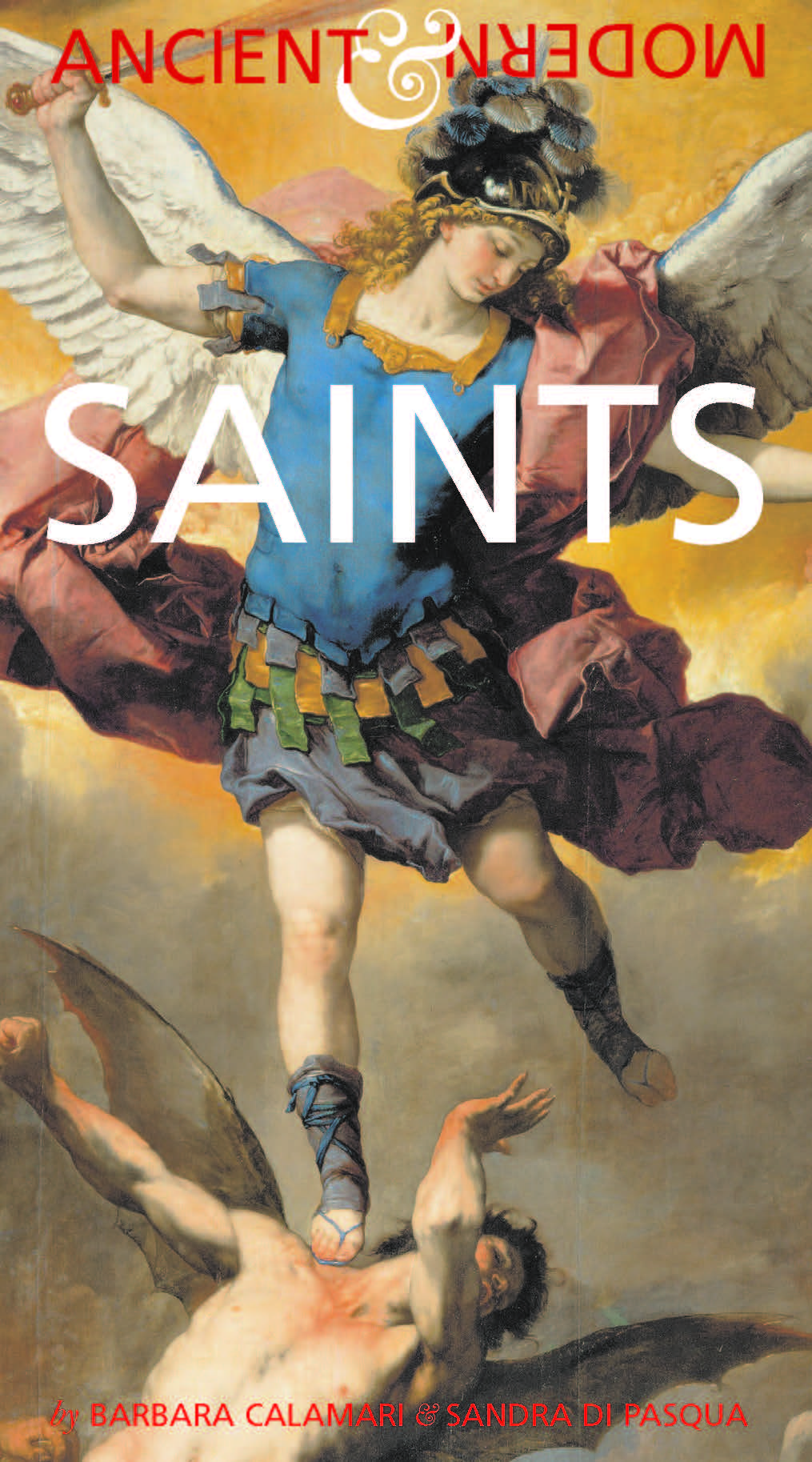
This haunting and dreamy iconography carried over in the depiction of modern saints as well. Visual portraits of the saints attempted to relay their stories with attributes or symbols contained in a single image. Saint Francis is often shown talking to animals or receiving the stigmata, Thérèse of Lisieux showers the viewer with roses, and Saint Anthony’s kindness is symbolized by the image of the Christ child, who sits in his arms. These visual portrayals of the saints are vital reminders of their earthly existence. One sees them everywhere, in private homes, in churches, on clothing and jewelry, and even on the exterior walls of buildings.
Every town and country has saints that are familiar to the local residents and obscure to the rest of us. Since it is estimated that there are more than ten thousand formally recognized saints, it was possible to profile only a very few for this book. Instead of brief biographies and images of many significant saints, we opted to go into detail about a varied handful that have an ongoing influence in modern life. The saints we have chosen are in no way the most important or exalted; many are extremely popular, some less well known. They bring with them a mix of personalities and ethnic cultures that reflect the makeup of today’s diverse society.
For this book, we have divided the first two thousand years of Christianity into ancient and modern time periods. The ancient saints span from prehistory to the year A.D. 1000. These saints tend to have more legendary aspects to their stories, resulting from the strong oral tradition in which they thrived. However, the modern saints are well documented by contemporary historical texts. These comprise the second thousand years. Some of these saints have influenced whole nations while others, through their particular state of life, encourage us to have a more personal relationship with them.
Barbara Calamari and Sandra DiPasqua

