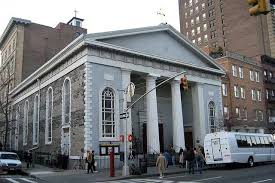
We’re happy to announce the opening of Manhattan’s first-ever perpetual adoration chapel here at St. Joseph’s in Greenwich Village! The chapel will serve everyone in the Archdiocese.
The chapel will be open the week of July 30th.
You can now sign up for adoration times throughout the week using the link below. Thank you for helping people encounter Christ during this National Eucharistic Revival!
The History of the Church of St. Joseph in Greenwich Village
The Catholic Church wasn’t established in New York City until the end of the Revolutionary War. While a British colony, New York City outlawed the practice of Catholicism: it was illegal for a Catholic priest to even step foot in New York. St. Peter’s on Barclay Street was the first Catholic Church in New York City, followed by four others: St. Peter’s on Barclay Street (1785), St. Patrick’s Old Cathedral on Mulberry Street (1809), St. Mary’s on Sheriff Street (1826), St. James on Oliver Street (1827), and Transfiguration on Mott Street (1827).
By the 1820’s Greenwich Village was transformed from an actual village outside of New York City into a suburb of the city. Its rural features disappeared as new buildings arose to house its growing population. The Church of St. Joseph was founded in 1829 by Bishop John Dubois to serve the new neighborhood of Greenwich Village.
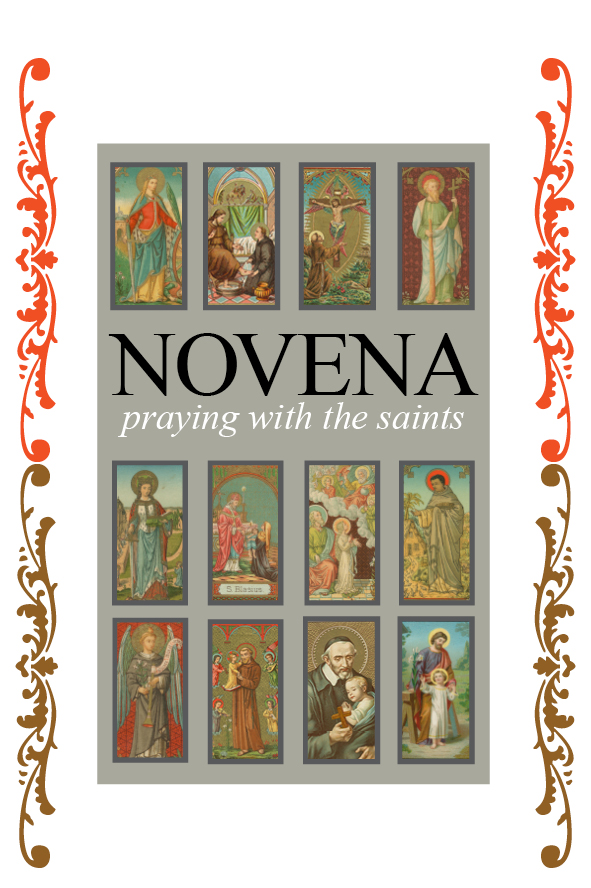
During Lent I will be gifting Novena App. Please send me your email: sandra@sandradipasqua.com. It will work on all apple products.(Not for android yet)
Praying With the Saints: A novena is a prayer repeated to obtain a requested intention or spiritual grace. Recitation of a novena and adherence to its rules of repetition can be the act of sacrifice necessary to invoke a power greater than our own. It can express one’s willingness to accept divine intervention in the solution of a problem. The repetition of the prayer helps to gradually clear the mind of all distraction in order to put its focus on the requested intention. Not only is it a spiritual sacrifice, but it is also a way to allow the subconscious to face a real problem and to consider solutions for it.
Copy link below to see Novena App on the Apple Store.
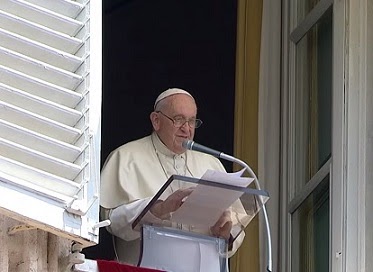
In today’s Gospel, Jesus says, “The one who receives a prophet because he is a prophet will receive a prophet’s reward” (Mt 10:41). The word “prophet” appears three times. But what type of prophet? There are some who imagine a prophet to be some type of magician who foretells the future. But this is a superstitious idea and a Christian does not believe in superstitions, such as magic, tarot cards, horoscopes and other similar things. In parentheses, many, many Christians go to have the palms read…. Please…. Others depict a prophet as a character from the past only, who existed before Christ to foretell his coming. And yet, Jesus himself speaks today of the need to welcome prophets. Therefore, they still exist. But who are they? What is a prophet?
Each one of us, brothers and sisters, is a prophet. In fact, with Baptism, all of us received the gift of the prophetic mission (cf. Catechism of the Catholic Church, 1268). A prophet is the one who, by virtue of Baptism, helps others read the present under the action of the Holy Spirit. This is very important: to read the present not like news, no… to read it as enlightened and under the action of the Holy Spirit, who helps to understand God’s plans and correspond to them. In other words, the prophet is the one who points Jesus out to others, who bears witness to him, who helps live today and to build the future according to his designs. So we are all prophets, witnesses of Jesus, so “that the power of the Gospel might shine forth in daily social and family life” (Lumen Gentium, 35). A prophet is a living sign who points God out to others. A prophet is a reflection of Christ’s light on the path of the brothers and sisters. And so, we can ask ourselves: Do I, — each one of us – Do I, who am “a prophet by election” through Baptism, do I speak, and above all, do I live as a witness of Jesus? Do I bring a little bit of his light into the life of another person? Do I evaluate myself on this? I ask myself: What is my bearing witness like, what is my prophecy like?
In the Gospel, the Lord also asks to welcome the prophets. So it is important to welcome each other as such, as bearers of God’s message, each one according to his state and vocation, and to do it right where we live – that is, in the family, in the parish, in the religious community, in other places in the Church and in society. The Spirit has distributed gifts of prophecy in the holy People of God. This is why it is good to listen to everyone. For example, when an important decision needs to be made – let us think about this – it is good to pray first of all, to call on the Spirit, but then to listen and dialogue trusting that each person, even the littlest, because they have something important to say, a prophetic gift to share. Thus, the truth is sought and the climate is spread of listening to God and our brothers and sisters where people do not feel welcome because they say what I like, but they feel accepted and valued as the gifts they are.
Let us reflect on how many conflicts could be avoided and resolved in this way, listening to others with the sincere desire to understand each other! So, finally, let us ask ourselves: Do I know how to welcome my brothers and sisters as prophetic gifts? Do I believe that I need them? Do I listen to them respectfully, with the desire to learn? Because each of us needs to learn from others. Each of us needs to learn from others.
May Mary, Queen of Prophets, help us see and welcome the good that the Spirit has sown in others.
An Anglican priest reflects on matters of faith in private life and public discourse.
Happy Easter! Easter marks the high point of the Christian liturgical calendar, when billions of Christians around the world celebrate the resurrection of Jesus, the central hope of the Christian faith. Perhaps no one on earth has studied that event and the subsequent responses to it more than N.T. Wright. He serves as senior research fellow at Wycliffe Hall, Oxford, and is emeritus professor of New Testament at the University of St. Andrews. He has written over 80 books focused on Jesus and his first followers. He is also a Christian and a former bishop of Durham in the Church of England. One of his books, “The Resurrection of the Son of God,” is an exhaustive dive into the scholarship and debates around the resurrection of Christ. I asked Wright to speak with me about his research and this baffling, world-altering claim of resurrection. This interview has been edited and condensed.
Tish Harrison Warren: Your book presents the resurrection of Jesus as an actual, physical, historical event, not simply a metaphor or spiritual experience. Why does the idea that this was an actual event matter to you?
N.T. Wright: I’m well aware that many people — including some in churches — have treated the resurrection and Easter as a general way of talking about the rebirth of hope or a spiritual metaphor. Indeed, in the New Testament, the idea of resurrection is sometimes used metaphorically to talk about a new moral life, a life where everything is going to be different. But in the New Testament, that’s always rooted in the claim that when they’re talking about resurrection, they’re talking about something that actually happened.
In the first century, the word for resurrection, the Greek word “anastasis,” was never about a vague sense of possibility or the rebirth of hope or anything like that. It was always about people who had been bodily dead now discovered to be bodily alive. I’ve shown in great detail in the book that all the early Christians for whom we have any evidence, right through until around 150 years after the time of Jesus, when they’re talking about resurrection, that’s what they’re talking about.
It’s beyond question that when the first followers of Jesus used that language about him, they intended to say something definite about his being bodily alive, albeit in a whole new way. He seemed to have gone through death and out the other side, but into a new world in which he was emphatically embodied. Unless we are prepared to acknowledge that, we’re simply not taking their words seriously.
Then, as now, claiming that somebody was alive again — particularly somebody who made the sort of claims that Jesus made or were made about him — was revolutionary. It was dangerous talk. So if people don’t like dangerous talk, then stay away from Easter is my advice.
There’s a funny line where you write, “The discovery that dead people stayed dead was not first made by the philosophers of the Enlightenment.” That’s obvious, of course, but we sometimes assume that skepticism is a recent phenomenon. How would ancient Jewish audiences and Gentile audiences think about the apostles talking about the resurrection?
Early Christianity was born into a world where everybody knew that its central claim was ridiculous, and the early Christians knew it themselves. It’s not that they thought resurrection might just happen to a few people here and there. But they said it had happened in this case.
This claim seemed absolutely crazy. Ordinary, sober people knew perfectly well that dead people don’t get raised up again.
Many Jewish people for two centuries before Jesus and on for at least the next century believed that in the end, all God’s people would be raised because they believed that the God of Israel, the Creator God, would remake the whole world. But this is about one person being raised from the dead ahead of everybody else.
In the non-Jewish world, there is no evidence that anyone is expecting dead people to come back again. There’s lots of speculation about other places they might go. The Platonic speculation about going off to the Isles of the Blessed and having lovely conversations about philosophy all day. The Stoics believed that there would be a great Phoenixlike conflagration and the whole world would then be reborn.
But most people knew that when you died, that was basically it. That’s why when Paul, in Athens, said this had happened, most of them laughed at him. It didn’t fit their worldview. That’s crucial because you can’t fit the resurrection into the existing worldviews that we’ve got. The resurrection brings its own worldview with it and says, if you’re going to understand the way things are, you start with this and work out. If Jesus really has been raised, then everything is different.
You spend time in the book looking at Jesus’ post-resurrection appearances in the Gospels. It seems that the disciples’ testimony about seeing Jesus matters to you. Why do you trust their testimony?
If you understand how people thought about death and life after death in the ancient world, you will need two strands of converging evidence.
On the one hand, there are extraordinary reports about people going to the tomb of Jesus and finding that there was no body in it. In that world, grave robbery was a common occurrence, so an empty tomb by itself says, “This is odd,” but we can tell some stories about this that are much more credible than the idea that he’s alive again.
However, if at the same time this person turns up and is seen and felt to be bodily alive and speaks to people and cooks breakfast by the shore, then that is totally unexpected as well. Those two things kind of interpret one another. We know many experiences that people have — and I’ve known of experiences like this in our own family — that somebody who recently died will suddenly show up in a room or somewhere, for a moment or two, to people that they have known, then disappear again. They knew about that kind of thing in the first century as well. They had language for that. It was like an angel visiting. There’s a place in the New Testament where the disciples think that Peter has been killed in prison in Acts Chapter 12, and he’s knocking on the door and they say, “It can’t be Peter. It must be his angel.” They think this is a kind of angelic visitation before he goes off to wherever he will go.
You need those two bits of evidence put together and then the testimony makes sense. Otherwise, empty tomb? Somebody has taken the body. That’s what Mary Magdalene thought. Appearances? “Oh, yeah, we know about those. Just go and check in the tomb. You will find there’s still a body there.” But if there isn’t, then we are into something different. So that’s why that evidence is so important.
It seems like these appearances meant something to the apostles themselves. Paul reminded people in his letters that at the time of his writing there were people still living who had seen Jesus after his resurrection.
Exactly. At the beginning of the 15th chapter of Paul’s First Letter to Corinth, he mentions the people to whom the risen Jesus appeared. To Peter and to the rest of the apostles, and various others. And then he says that Jesus appeared to 500 people all at once. And most of them are still alive. The implication strongly being: “You go and ask them. You find out what they saw.” In other words, they can’t all be just making it up or all be deluded.
We have evidence of other revolutionary or messianic movements whose founder or leader was killed by the authorities. In such cases, either the movement died out or they got another leader. The central and undisputed leader of the early Jerusalem Christians was James, known widely as the brother of Jesus. Josephus, a first-century Jewish historian who was in Jerusalem at the time when James was killed in the early 60s, refers to James as “the brother of the so-called Messiah,” i.e. Jesus. But nobody ever suggested that James was the Messiah. Had Jesus stayed dead, this makes no sense. An executed Messiah is a failed Messiah.
Was there a time that you didn’t believe the resurrection occurred? Was there a moment for you or a series of moments over time that tethered you to belief?
I think until I was probably in my middle or late teens, I’d assumed that resurrection was more like a kind of Platonic “going to heaven” hope, souls going to heaven, and that Jesus had to be raised from the dead in order to lead the way to heaven or something like that.
When I was a student studying ancient history in Oxford I read C.S. Lewis’s book “Miracles.”Lewis is very good on the appearances of the risen Jesus and how the people who first saw Jesus did not immediately recognize him. He was definitely embodied but his body seemed to be different. The way they cash that out is that he’s gone through death and out the other side, beyond the reach of pain, corruption, decay or death itself.
That did not comport with the sermons I was hearing in churches, which were more or less, like the hymn says, “You asked me how I know he lives. He lives within my heart.” I realized that actually, that’s not good enough. The gift of the Holy Spirit is the presence of Jesus within your heart. But the truth of the resurrection is a truth about something that actually happened in history.
Let’s say that what the Gospels claim is true: Jesus is risen. It seems that the world keeps going and there’s still oppression, suffering and grief. There’s still death. So what difference does it make that Jesus is raised from the dead?
It’s exactly the same objection that people made right at the beginning, including during the public career of Jesus. He went about saying, “This is what it looks like when God becomes king.” And people would say, well, there’s still an awful lot of bad stuff going on. Caesar is still ruling the world. And Jesus constantly told stories to say, no, this is what God’s kingdom looks like: It’s like a seed that grows secretly. It’s like somebody planting lots of seed and some go bad. But look, there’s a huge harvest coming up over here.
People regularly say, if there really was a God, if he really wanted to sort the place out, then he would come and, bang, it would be done. He would send in the tanks — metaphorically speaking, or perhaps not — and sort out the evil and wickedness in the world. But the Sermon on the Mount says that when God comes to sort out the world the Jesus way, he doesn’t send in tanks. He sends in the poor and the brokenhearted and the hungry-for-justice people and the meek and the people who are ready to suffer for getting the world sorted out. The way the Sermon on the Mount works is exactly the same way that the gospel of the resurrection works. Jesus, risen from the dead, is the planting of that great seed. And now the plant has spread in all directions.
Obviously bad things happen. Bad things happen in and through the church. We all know that. I know that as well as anyone. But all sorts of great and good things do happen. Healing happens, hope happens, and ultimately it all goes back to this single seed of the raising of Jesus from the dead.
How did the resurrection change the disciples’ lives? And is that instructive for how it would change Christians’ lives today?
It’s hugely instructive because even Jesus’ most loyal disciples clearly had not expected him to be raised from the dead. They were flattened by his death. But then his resurrection, plus what happened afterward, which was Jesus doing this very strange thing of somehow bequeathing them his own personal presence, which they came to call the Spirit, or the Holy Spirit. This absolutely revolutionized them. And it’s not just that they were fearful before and completely emboldened and ready to go to the ends of the earth afterward. It’s that the agenda changed.
When Jesus was arrested, one of his closest followers had a sword and was prepared to do battle. But as soon as the resurrection happens, we find that everything has changed and they are embodying Jesus’ agenda, which is to love your enemies and pray for your persecutors. So that when the first Christian martyr is killed, Stephen, in Acts Chapter 7, as he’s dying, he says, “Lord, do not hold this sin against them.”
The deep spirit of Jesus’ way of going about doing God’s kingdom has changed within them because the resurrection has shown them that the way to victory is not by fighting, is not by force of arms, but is by the Way of the Cross and the resurrection which follows. And that is as radical today as ever it was.
Tish Harrison Warren (@Tish_H_Warren) is a priest in the Anglican Church in North America and the author of “Prayer in the Night: For Those Who Work or Watch or Weep.”
I’m sharing this from today’s edition of the New York Times, which I subscribe to.
St. Thomas speculates that those who are in purgatory are more perfect than we insofar as they are not able to sin, but they are less perfect than we insofar as the punishment which they are suffering is concerned.14 In this latter respect, they are not in a state of prayer for us, but rather in a state which requires us to pray for them. But nothing stops them from praising, thanking, adoring, petitioning and the like but Thomas does not develop this notion of their prayer life.
Are the souls in purgatory capable of praying for us?
St. Thomas had taught: “The dead by nature of their case do not know things which take place in this world, especially the interior thoughts of the heart”. . . .15 It would not make sense therefore to think that they could “hear” our prayers and supplicate for us. Also, since they can no longer merit for us, therefore it would mean that we can pray for them but not the reverse.
By the time of the Jesuit theologians Francisco Suarez (1548-1617) and St. Robert Bellarmine (1542-1621), it became popular among the laity to request prayers from the souls in purgatory. And by the time of the eighteenth century, St. Alphonsus Liguori (1696-1787) is teaching that the Church does not officially pray to them because it is not known if they hear us or not but a Catholic can piously believe that “God makes our prayers known to them.”16 Thomas in this context had taught that since the blessed see the Word, he can give them ideas about what is going on in the world but those in purgatory do not see the Word “by which they are able to know what we think or say.”17 So it follows that “we do not implore their assistance by prayer. . . .” But, using Thomas’s other principles, it is not contradictory for God to give infused ideas to souls in purgatory if he chooses just as it is possible for God to permit a soul in purgatory to appear before others on earth to entreat them for prayers and Masses to be said for them.18
Suarez opines that the souls in purgatory are holy and near to God and love us in a general way because they know the dangers we are in and how great then is our need of Divine help and grace.19St. Robert Bellarmine in his work adds to that idea and maintains that the souls in purgatory have a great love of God and their union with him makes their prayers more powerful since they are superior to us in love of God and intimacy of union with him.20 From Thomas’s perspective, even though Aquinas taught that no one can merit for others once dead, his theology of prayer could be applied here in favor of praying to the poor souls without necessarily agreeing with all that Bellarmine asserts:
Nevertheless, God sometimes hears sinners, when, to wit, they ask for something acceptable to God. For God dispenses his goods not only to the righteousness but also to sinners (Matth. V. 45) …, not indeed on account of their merits, but of his loving kindness.21
So, one could say that the prayers of the souls in purgatory may obtain from God a favorable answer of our prayers to them because of the mercy of God both to them and us. It might also be possible that some souls in purgatory could favorably answer our prayers because of their previous merits here on earth. In any case, while the Magisterium remained silent on this question other than tolerating the practice of the people, the new Catechism clearly teaches:
958 Communion with the dead. “In full consciousness of this communion of the whole Mystical Body of Jesus Christ, the Church in its pilgrim members, from the very earliest days of the Christian religion, has honored with great respect the memory of the dead; and ‘because it is a holy and a wholesome thought to pray for the dead that they may be loosed from their sins’ she offers her suffrages for them.” Our prayer for them is capable not only of helping them, but also of making their intercession for us effective.
With this last sentence, there can be no mistaking that the Church has approved both the practice of the faithful in this regard and, at least, the conclusions of Suarez and Bellarmine without granting or denying their reasoning. This last sentence of the Catechism does not indicate that any individual soul can necessarily intercede for us, nor does the number in question tell us anything about how the souls would know what to pray for but it does clearly state that they intercede for us and their efforts can succeed. This conclusion leaves theologians free to speculate (and disagree) on the “how” and “what” transpires in purgatory for them to help us.
How poor are the poor souls?
It would seem that in addition to the mysterious sufferings of purgatory, there are its joys as well. First and foremost, no matter what the duration, each soul knows with certitude that he or she is saved. This must be very consoling and give a kind of strength to endure whatever sufferings the soul has to endure. Second, the entire ensemble of gifts which exists in a newly baptized soul exists in purgatory. What this means is that the “poor” souls also possess sanctifying grace, the indwelling of the Holy Trinity, faith, hope, charity, (possibly the infused moral virtues according to Thomists) the seven gifts of the Holy Spirit, and the characters of certain sacraments. Since one can petition God during this period of suffering, though without meriting anything (according to Aquinas), this is a great period for meditation and contemplation still being informed by divine love and possibly infused as well. Therefore, since there are purifying acts of the soul, then the virtue of charity must elicit joy which co-exists with the sorrow for having been negligent in one’s relationship to God while on earth. Third, it would seem reasonable to assume that since all the members of the Church in purgatory are united by infused divine love, they will encourage one another in their sufferings. This too can be a source of consolation. Finally, as one sees himself becoming more rectified interiorly, this must produce joy knowing that at some interval one will be ready to hurl oneself into the abyss of the all-loving God. Perhaps that is the greatest suffering which goes on in purgatory which some mystics have experienced here on earth: a overwhelming desire to be “dissolved” in the Triune God and still not yet being worthy to possess Them in such completeness.
If a soul is brought to heaven from purgatory in part because of the prayers and sacrifices made by a member of the Church on earth, then it follows that such a soul will always be in deep gratitude toward and will also watch over that person with his prayers. For this and other reasons, it becomes evident that part of the growth in one’s spiritual life on earth must include these persons in purgatory in our prayer life. When one is tempted to give up on prayer in general, one necessarily abandons these souls as well. It seems as if this ability or power to help loved ones after death by sacrifices, prayers, Masses and indulgences, is the Triune God’s way, therefore, to keep us from falling away from Them provided we continue to have faith in God’s Word on these matters.
Let’s not forget The Forgotten Souls in Purgatory. Pray for them.
This item 1210 digitally provided courtesy of CatholicCulture.org.
The pope said that all pastoral activities “will be fruitless unless we put Jesus at their center and fall down in worship before him.”
“Like the Magi, let us fall down and entrust ourselves to God in the wonder of worship. Let us worship God, not ourselves; let us worship God and not the false idols that seduce by the allure of prestige and power … let us love God and not bow down before passing things and evil thoughts, seductive yet hollow and empty.”—Pope Francis
The Three Kings
Caspar
Caspar is sometimes identified as the King of Tarsus and is represented as an old man with white hair and beard. He wears a green cloak and crown and is the first to kneel in adoration of the Christ child. Caspar is often associated with the gift of gold (though this is sometimes Melchior).
Melchior
Melchior is the middle-aged King of Arabia and brings the gift of frankincense from his homeland. He is portrayed with brown hair and beard, wearing a gold cloak
Balthasar
Balthasar is the young black King of Ethiopia and wears a purple/blue cloak. Balthasar is traditionally associated with the gift of myrrh.
Mr. Wehner is a senior fellow at the Trinity Forum.
The enduring significance of Christmas is that it represents perhaps the most distinctive feature of the Christian faith — the concept of the incarnation, the belief that God took human form in Jesus. Theologians refer to the “hypostatic union” of Jesus, meaning the mysterious fusion of his divinity and his humanity.
The humanity of Jesus manifests itself in his moments of grief, agony, anger, frustration, joy and compassion. But one particular aspect of that humanity that has long intrigued me is his professed friendship with the rest of us.
In the New Testament, this point is made emphatically in the 15th chapter of the Gospel of John. The context is Jesus’ discourse with his disciples, in which he tells them that as God the father has loved him, so he loves them. His command to his disciples is that they love one another. Jesus then says this: “Greater love has no one than this: to lay down one’s life for one’s friends. You are my friends if you do what I command. I no longer call you servants, because a servant does not know his master’s business. Instead, I have called you friends, for everything that I learned from my father I have made known to you.”
John Swinton, an ordained minister of the Church of Scotland and a professor at the University of Aberdeen, calls this shift from servant to friend a “profound act of renaming.”
I understand why the relationship between an all-powerful deity and less than all-powerful human beings — between the creator and the created, the perfect and the imperfect — would be defined by the latter’s awe, reverence and obedience. But a relationship between God and us — between God and me, between God and you — that is defined by true friendship is startling. Why would a divine, transcendent entity, referred to in the Scriptures as the everlasting God, the Lord Most High, not only condescend to become human but also initiate a relationship with us that is defined by mutual affection, intimacy and self-revelation? So I reached out to ministers and theologians to ask: What does it mean for Jesus to call us his friends?
The thread of friendship can be traced back to the Old Testament, to the book of Isaiah, where the prophet conveys God’s description of Abraham as “my friend.” The concept of God as a friend is not foreign to the Hebrew Scripture, then, though it seems to have been limited to Abraham and, in a somewhat different way, to Moses, “as if they have an especially intimate relationship with God in distinction from others,” in the words of the Old Testament scholar Tremper Longman III. “But there is an intensification and expansion of intimacy as we move to John 15.”
Several people I heard from mentioned how revolutionary this concept of friendship was, pointing out that it would have been almost unheard-of for an ancient king, let alone God, to refer to his subjects as friends in the way Jesus did. An earthly king would certainly not have walked and lived among them in the way Jesus did. In ancient times people of unequal wealth and status were very unlikely to be friends. But Jesus shattered those expectations and the hierarchical relationship between God and human beings.
“Jesus is elevating his listeners,” the philosopher Nicholas Wolterstorff told me, “treating them as on a level with him.” Jesus is recognizing the intrinsic worth of human beings, who are not only made in the divine image but also are his confidants and companions.
Scott Dudley, senior pastor at Bellevue Presbyterian Church in Bellevue, Wash., pointed out to me that the exchange in John revealed God’s radical love and grace. “You would expect God to befriend worthy people, educated people, brave people, or, at bare minimum, moral people,” he told me. But instead, Jesus chose to be his followers the uneducated (several fishermen), the reviled (Matthew, a tax collector for the hated Roman regime), a person who would deny him (Peter) and even betray him (Judas). Access to the divine is no longer the province of a special caste of influential, privileged people. And what Jesus did in the process is profoundly alter the understanding of the power dynamic between God and mortals.
“Power cannot generate love,” Pastor Dudley told me. “Power can generate obedience, fear, awe, grudging submission — but not love. The God who comes to us in Jesus doesn’t want grudging submission; he wants us to love him and be loved by him. He wants relationship, including friendship, and so he came in vulnerability, not in power.”
The concept of a vulnerable God, meek and lowly in heart, was almost unfathomable to many at the time, and for many people it still is. But a vulnerable God is an essential part of the Christian story. We see it in Jesus’ life, from his birth in a manger to his weeping over the death of his friend Lazarus to the anguish in the Garden of Gethsemane, where he was betrayed on the night before his crucifixion. Jesus was accompanied by three of his closest friends — Peter, John and James — whom he asked to stay awake and pray with him. (They failed, with Jesus finding them sleeping, “exhausted from sorrow.”)
Renée Notkin, a co-pastor of Union Church in Seattle, in explaining the friendship verses in John, told me that Jesus’ words “Love one another as I have loved you” are essential to understanding what Jesus meant. Among other things, a proper understanding of friendship radically changes our perspective on how we are to live in community.
“Our witness is not right doctrine; it is our relational orientation,” Pastor Notkin told me. “As friends of Jesus, we love one another — and that includes people different from us. In fact, no one can be an ‘other’, because in Christ we belong to one another.” We are called to love one another, honor one another, welcome one another, encourage one another and bear one another’s burdens. “Instead of being people who stink with judgment and criticism,” she told me, “we are to be an aroma of blessing, hope, joy, peace and love.”
John Swinton contrasts friendship as understood in contemporary Western society with what Jesus had in mind: “The friendship modeled by Jesus is for ‘the outsider,’ the socially marginalized, the stigmatized, the outcast, the prostitute, the sinner.”
“If the church claims to be the community of the friends of Jesus,” he adds, “it must engage in Christ-like friendships toward allpeople, particularly those who have been and are marginalized. The gift of friendship shows and reminds people that they are valued and indeed valuable individuals. That is a gift the church must offer all people.”
The theologian Curtis Chang told me that in the lives of Christians, friendship with Jesus doesn’t replace the call to be obedient to him or his authority. Mr. Chang compared it to an employer-employee relationship that has moved to a deeper level of trust and shared knowledge. In this reading, we must still submit to the authority of our employer, but the relationship has expanded to include much more than just that. Jesus does not relinquish his role as Lord and teacher; he has added new dimensions to it.
“In true friendship, there is mutuality,” Shirley Hoogstra, president of the Council for Christian Colleges and Universities, told me. “When Jesus called his disciples his friends, he both elevated them and brought them closer.” Their worlds merged.
When Jesus told his disciples he would call them friends rather than servants, he was expressing in words what he showed during his life, which is that God is seeking above all else to be in a meaningful relationship with us. Jesus modeled what it means to take us into his confidence, to self-disclose, to encourage and correct us, to weep with us, to love us, even to die for us.
Those are the qualities — more than God’s power, more than his perfection — that ultimately won the affections of my heart as a person of the Christian faith. It is the knowledge that we can be seen and known by God, and that we can see and know God. That we need him, but that also, in some essential way, he needs us.
But the friendship Jesus speaks of comes with a condition attached. In articulating what Gail R. O’Day calls his “theology of friendship,” Jesus says if we are his friends, we will do what he commands, and several times in John 15 he is specific about what that means: Love each other as I have loved you. There are countless ways to love others, based on our talents and life circumstances, but the command is clear enough. We are not only to experience love; we are to extend it to others.
So often throughout history, and certainly in the present day, Christians have fallen short, far short, of Jesus’ command; in so many cases the Christian faith has been shorn of love. When that happens, Christianity becomes a religion characterized by hard edges and judgmentalism, by brittleness and moral arrogance, by mercilessness and gracelessness. Those who claim to be followers of Jesus but behave in this way become not his friends but his enemies.
For 2,000 years, despite the failures, there has always been at least a remnant who patterned their lives in the way Jesus asked them to — men and women whose lives have been touched and transformed by the grace and love of God. I know such people. For me, when my own faith was jumbled, uncertain and abstract, when I had more questions than answers, when God seemed a million miles away, they have been reflections of the divine.
These people have shared in the joys of my life and helped sustain me through times of grief and loss. They have loved me, as Jesus loved them. They are friends of Jesus; they are also friends of mine. And that has made all the difference.
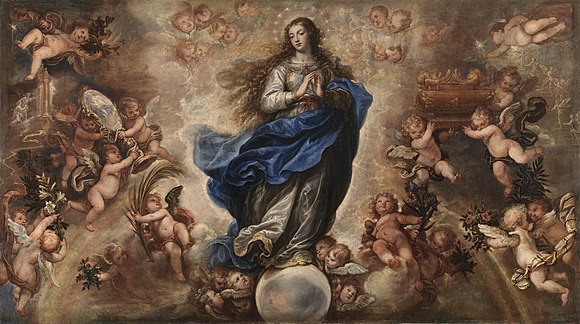
“The most Blessed Virgin Mary was, from the first moment of her conception, by a singular grace and privilege of almighty God and by virtue of the merits of Jesus Christ, Savior of the human race, preserved immune from all stain of original sin.”
In 1854, Pope Pius IX’s solemn declaration, “Ineffabilis Deus,” clarified with finality the long-held belief of the Church that Mary was conceived free from original sin. Mary was granted this extraordinary privilege because of Her unique role in history as the Mother of God. That is, she received the gift of salvation in Christ from the very moment of her conception.
Even though Mary is unique in all humanity for being born without sin, she is held up by the Church as a model for all humanity in Her holiness and Her purity in her willingness to accept the Plan of God for her.
Every person is called to recognize and respond to God’s call to their own vocation in order to carry out God’s plan for their life and fulfill the mission prepared for them since before the beginning of time. Mary’s “Let it be done to me according to Thy Word,” in response of the Angel Gabriel’s greeting, is the response required of all Christians to God’s Plan.
The Solemnity of the Immaculate Conception is a time to celebrate the great joy of God’s gift to humanity in Mary, and to recognize with greater clarity, the truth that each and every human being has been created by God to fulfill a particular mission that he and only he can fulfill.
“The word of the Lord came to me thus: “Before I formed you in the womb I knew you, before you were born I dedicated you, a prophet to the nations I appointed you.” (Jeremiah 1:5-6)
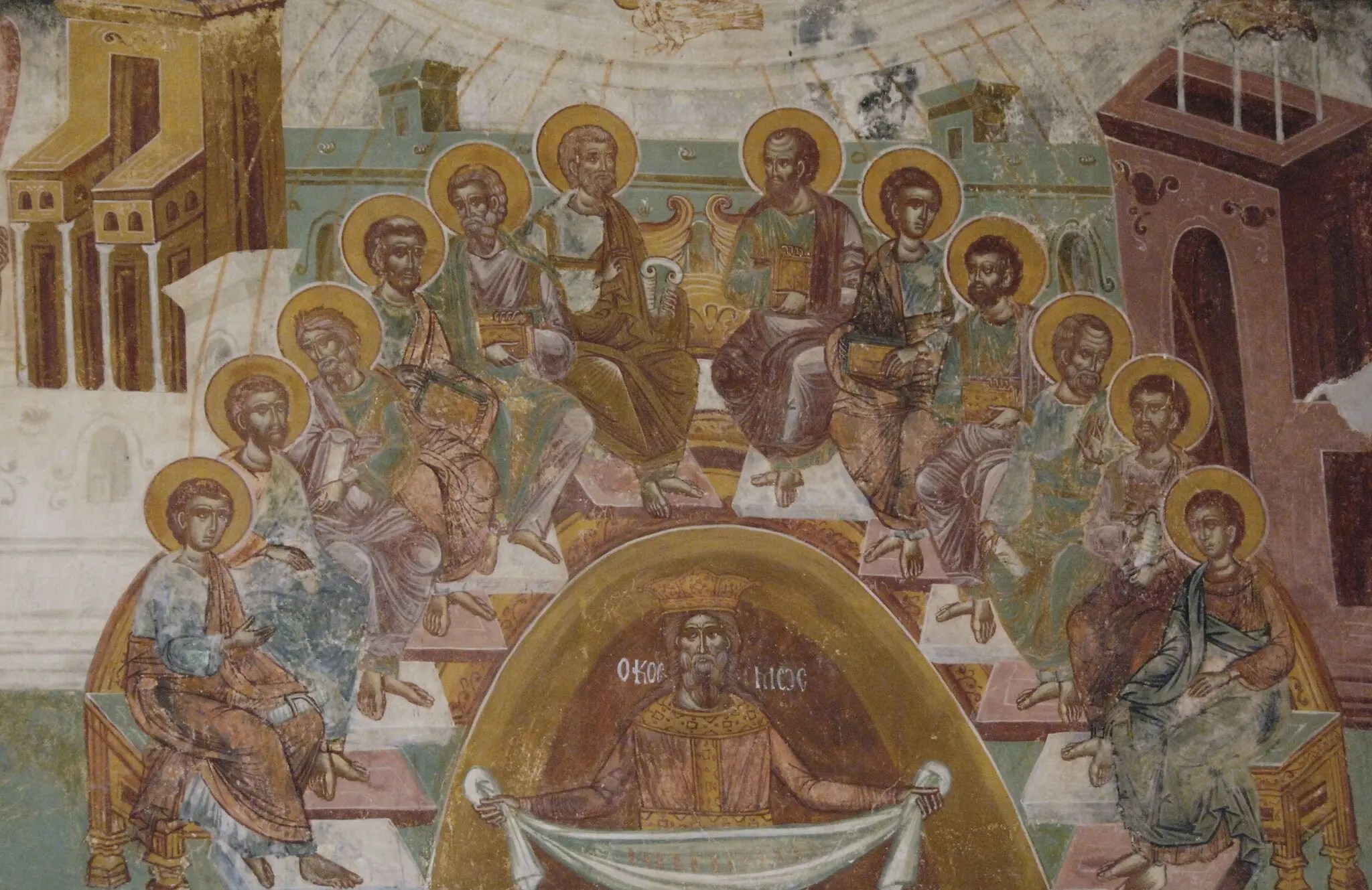
Catholics consider the very first novena to have been created by Jesus Christ himself. Before Christ rose into heaven he instruct-ed his apostles to spend nine days praying for divine guidance as they awaited the arrival of the Holy Spirit. After the apostles spent this allotted time in prayer, the Holy Spirit appeared to them in the form of tongues of fire coming from the sky. These tongues rested on each apostle, giving them the gift of many languages and the burning desire to spread the story of Jesus Christ. It is thought that the nine—day tradition of prayer comes from this first novena. The novena of the Holy Spirit was written in the Middle Ages to commemorate this event, and so it is presented as the last and most important novena in this book.
Invoking the saints for help in healing illnesses and stopping plagues became very common by the first millennium. As the cult of saints grew from early times to the Middle Ages, their legends and relics became more revered. Because it was thought that these people lived the most Christ—like lives, they were honored for their sanctity and their bodies were considered more than human, inviolable by death and invested with divine healing powers. That is why the bodies of many of these early saints were cut up and distributed to churches in various loca-tions to be venerated and used in blessings. It was thought to be a physical way for the average person to share in the divine presence. In seventeenth—century Spain the Christmas novena was instituted. For nine days preceding Christmas Day, each symbolizing a month the infant Jesus spent in the womb, a spe-cial novena was said. Many towns in France and southern Italy began doing nine—day novenas in preparation for their local saint’s feast day. It became customary to invoke the saint for a requested favor that would be granted in this time of celebra-tion. Fearing that novenas would be used in superstition, the Church began to recognize them only in the mid—1800s. Of the many novenas, only thirty—two are officially recom-mended, mainly in honor of a feast day. Personal novenas for individualized intentions continue to be a very private form of prayer.
If you would like this ebook please email me at sandra@sandradipasqua and I will send you a copy.




 novena.com