Volcanic Eruptions / Januarius, d. 304, Feast Day: September 19

A bishop martyred in nearby Pozzuoli, Januarius’ relics were moved to Naples, where a church was built to house them. A vial of his blood is preserved there. The residents of Naples traditionally
invoke the saint when they are threatened by the eruption of nearby Mount Vesuvius. The blood in the vial boils three times a year: on his feast day and on the anniversaries of successful interventions. When it does not boil, there are eruptions from the volcano.

Other patronages: Naples; blood banks; nail makers

Invoked: against the evil eye


Philologists / Hildegard of Bingen, 1098–1179, Feast Day: September 17

An abbess living on the banks of the Rhine, Hildegard of Bingen is considered one of the greatest minds of the twelfth century. She was a poet, composer, prophetess, and physician, equally at home in the arts and sciences. Her compositions are widely performed today. An adviser to popes, emperors, and other abbots and abbesses, Hildegard credited a mystical episode that occurred at the age of forty-two when she was infused with divine understanding of all she read and saw.


Algeria / Cyprian of Carthage, 190–258, Feast Day: September 16

Known as “the African Pope,” Cyprian did not convert to Christianity until the age of fifty. After living so long as a wealthy dissolute, he began to devote his life to chastity, obedience, and poverty. He was extremely popular throughout northern Africa and was proclaimed bishop one year after becoming a priest. His writings did much to shape the early Church. He was martyred by the Romans in his own villa.
Other patronages: North Africa

Invoked: against plague

Difficult Marriages / Catherine of Genoa, 1447–1510, Feast Day: September 15

Born into Genoese nobility, Catherine was married to a rival family’s son. Her husband was an unfaithful spendthrift who reduced them to bankruptcy. He frequently complained about Catherine’s shrewish behavior. Estranged from each other, they had no children. Ten years into their marriage, Catherine experienced a blinding ray of light that completely changed her life. She converted her husband and they devoted themselves to tending the sick and the poor. Catherine’s mystical writings on purgatory are well known.

Other patronages: brides, childless people, those ridiculed for piety, victims of adultery, widows

Invoked: against temptation

Injustice / Nicholas of Tolentino, 1245–1305, Feast Day: September 10

Born in Umbria, Italy, Nicholas was a preacher known for working miracles. When he was born, and again in the year before his death, a star was seen wherever he went. He was a peacemaker in a town torn by political strife. Nicholas worked with the poor and with prisoners, many of whom he worked to free. He was especially devoted to praying for the recently dead and the souls in purgatory.

Other patronages: Cordoba (Spain), Lima; partridges, sick animals; boatmen; babies, dying people, souls in purgatory, women in labor

Invoked: against fever, fire, thunderstorms, pestilence

Missions / Peter Claver, 1580–1654, Feast Day: September 9

A Spanish Jesuit, Peter went to the New World as a missionary. In Cartagena, Colombia, he was  appalled at the plight of the thousands of slaves being brought in from Africa each month. He stayed for forty-four years as a “slave of the slave,” meeting the slave boats and tending their human cargo as best he could. This made him the enemy of the slave traders and the upper classes. He was known as the prophet and miracle worker of Cartagena and is credited with saving that city from earthquake.

Other patronages: Colombia, Lake Charles (Louisiana); black missions, interracial justice, race relations; African-Americans

Invoked: against slavery


Reptiles / Magnus of Füssen, seventh century, Feast Day: September 6

An Irish missionary, Magnus settled in Germany. He is credited with banishing snakes from the town of Kempten and driving out a dragon in Füssen before founding a monastery there. A bear showed him where to mine iron ore, and that became the leading industry there.

Other patronages: crops

Invoked: against caterpillars, hail, lightning, vermin

Gout / Gregory the Great, 540–604, Feast Day: September 3

A wealthy Roman patrician enjoying a luxurious life, Gregory turned his home into a monastery upon the death of his parents. Against his own wishes, he was named pope. He was responsible for groundbreaking advances in literature and music. Because of the rich diet and wines enjoyed in his youth, he suffered greatly from indigestion and gout.

Other patronages: music; popes, scholars, schoolchildren, singers, teachers

Invoked: against fires of purgatory, plague

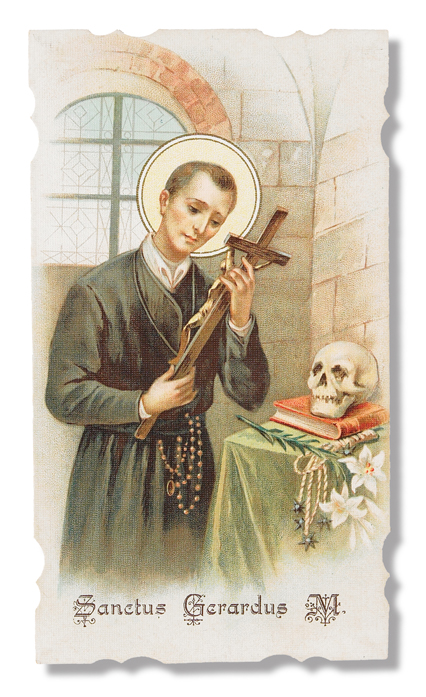
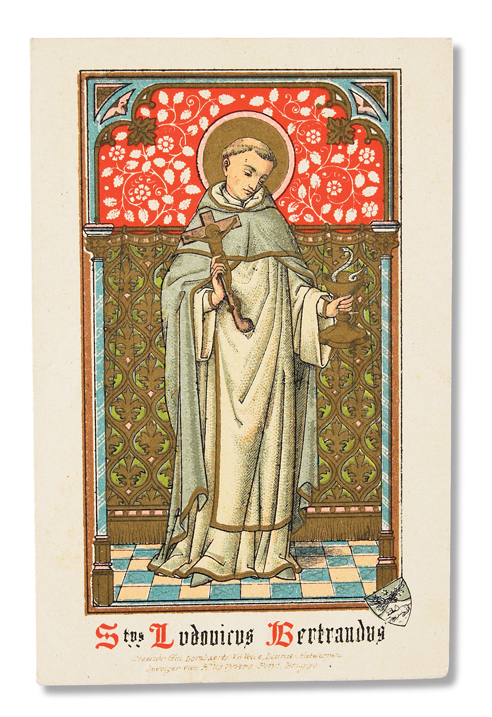
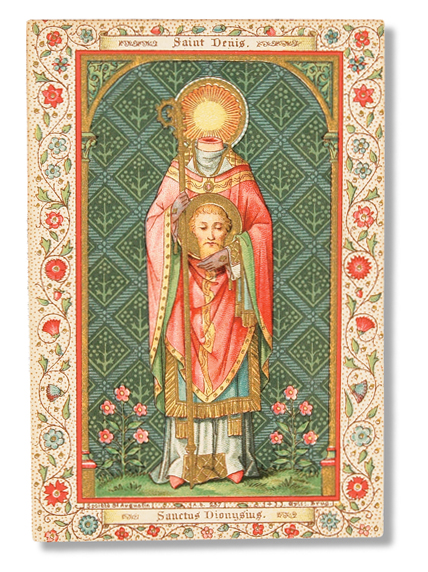
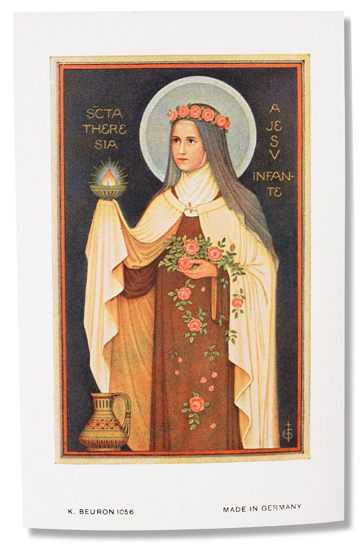
The above patron saints have been extracted from the book “Patron Saints: A Feast of Holy Cards” by Barbara Calamari and Sandra DiPasqua. All images are from the collection of Father Eugene Carrella.

Novena for August

Novena To Saint Monica

Exemplary Mother of the Great Augustine,
You perserveringly pursued your wayward son
Not with wild threats
But with prayerful cries to heaven.

Intercede for all mothers in our day
So that they may learn
To draw their children to God.

Teach them how to remain
Close to their children,
Even the prodigal sons and daughters
Who have sadly gone astray.

Dear St Monica, troubled wife and mother,
Many sorrows pierced your heart
During your lifetime.
Yet you never despaired or lost faith.
With confidence, persistence and profound faith,
You prayed daily for the conversion
Of your beloved husband, Patricius
And your beloved son, Augustine.

Grant me that same fortitude,
Patience and trust in the Lord.
Intercede for me, dear St. Monica,
That God may favorably hear my plea
For

(mention your petition here)

And grant me the grace
To accept his will in all things,
Through Jesus Christ, our Lord,
In the unity of the Holy Spirit,

Dining With the Saints

Saint Augustine

 Saint Augustine, our most philosophical and prolific Saint, was born in 354 AD in Thagaste, a provincial Roman city in North Africa, what is now a part of Algeria. The Roman inhabitants of this territory were thoroughly Romanized citizen but very likely linked biologically to the North African Berbers. There are many African saints who exerted a great influence in the early church. Saint Augustine’s mother, Saint Monica, was a North African  Christian, his father was a minor Roman official.  The food of North Africa has always been sophisticated in its use of spices and fresh ingredients. Indeed, when the Romans conquered that part of the world, they introduced many North African ingredients into their own cuisine. Below is a carrot recipe using the same flavors available to those who lived in the time of Saint Augustine.

I’ve been finding the most amazing carrots this summer at my local greenmarket, not only the standard orange ones, but ones in deep crimson, yellow, and dark burgundy. Seeing these carrots reminded my of a beautiful North African carrot salad that I hadn’t made in a long time. It’s traditionally seasoned with cumin, cinnamon, spicy paprika, a touch of sugar and fresh mint. You can add black olives or dates, depending on whether you want to sway it in the sweet or savory direction. It seemed like the perfect recipe to celebrate August 28th, Augustine’s Saint day. If you can find any of these heirloom carrot varieties, try making this fragrant salad with a mix of colors, but it’s also quite beautiful and delicious made with all orange carrots. This salad goes very nicely with grilled lamb and a side of cous cous.

 Carrot Salad with Cinnamon, Cumin, and Fresh Mint


2 tablespoons extra virgin olive oil

1 tablespoon unsalted butter

1 pound carrots, peeled and cut into rounds, on an angle

2 summer garlic cloves, peeled

1 1/2 teaspoons sugar

1/4 teaspoon ground cumin

1/4 teaspoon ground cinnamon

1/2 teaspoon medium spicy paprika

Salt

Extra virgin olive oil

A handful of black Moroccan olives

A handful of fresh mint leaves


In a large skillet, heat the olive oil and the butter over medium heat. When hot add the carrots and the garlic cloves and sauté a minute to release the garlic’s flavor. Add the sugar, cumin, cinnamon, paprika, and a little salt and sauté a minute longer to deepen the flavors of all the spices. Add a splash of warm water to the skillet and cover it, letting the carrots steam cook until just tender but not falling about, about 6 minutes or so. Give them a stir from time to time and add a little more water if the skillet becomes completely dry. When done, they should have a nice glaze on them. Transfer to a serving bowl. Add the olives and scatter on the mint leaves. Serve hot or warm.

 By chef and food writer Erica De Mane. Please check out her food blog at http://www.ericademane.com