St. Agatha D. 251

agatha20001“Do not offend Agatha’s nation, because she will avenge all insults”.Inscription on the façade of the Cathedral of St. Agatha in Catania, Sicily
Patron of: Breast Cancer

A national heroine to Sicilians, a great figure in art and one of the few saints mentioned in the Catholic mass, St. Agatha is a fierce and fearless role model for anyone who lives in modern times. A martyr, she is most often invoked by those suffering from diseases of the breast. Her tomb has been a place of miraculous healing since her death. Because of her courage in standing up to the Roman authorities, anyone persecuted by them, Pagans, Jews and Christians all made pilgrimages in her honor. In modern times, her feast day is an important holiday, attracting hundreds of thousands of devotees who process through the streets of Catania.

An orphaned daughter of wealthy Christians, Agatha was considered an attractive marriage prospect by Quintianus, the ruling Roman consul of Sicily. Taking advantage of the recent Roman decree outlawing Christianity, Quintianus assumed Agatha would renounce her religion and acquiesce to his proposal of marriage. She refused him on both counts, telling him that she had dedicated her virginity to Jesus Christ. Refusing to marry and bear children was considered an act of political defiance in those times. Agatha’s rejection of him so enraged Quintianus that he had Agatha taken to a brothel and forced her to live as a prostitute for thirty days. When she was brought back before him, he ordered her to sacrifice to the Roman gods. She pointed out that no Roman wife would dare live like Venus and no Roman husband could legally do the things that Jupiter was known for, why would she follow such gods? Christ lived what he preached, love and forgiveness; she would follow him instead. Agatha was then tortured by having her breasts slowly rushed and cut off. Thrown back in prison and left to die, an elderly man and a young boy came into her cell. Revealing himself as St. Peter, Agatha was miraculously healed. The next day, Quintianus ordered her to be rolled in broken pottery and hot coals. As this torture was being inflicted, an earthquake leveled Catania. The citizens of that city, declaring that this was God’s vengeance for what was happening to Agatha, chased Quintianus out of town and the terrified consul drowned in the river. Agatha offered her soul up to Christ and died.

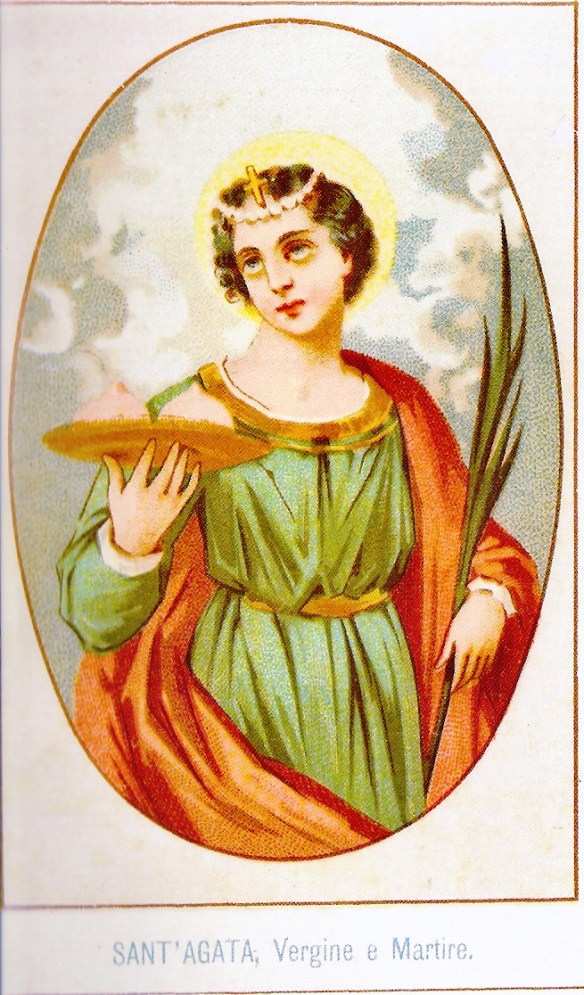
The year after her death Mount Etna erupted and a lava flow threatened Catania. Agatha’s death shroud was taken out and held aloft which immediately stopped the lava. This same shroud has been used many times over the years to protect the city. Because of her tortures Agatha is the patron of those suffering from breast disease as well as those suffering from burns. Trades that use burning coals also claim her. Bells, which are signals for fire alarms and also resemble breasts are closely identified with this saint. Saint Agatha’s bread, shaped like breasts or bells are a specialty served around the time of her feast. Explanation of symbols: Mt. Etna in the background: Agatha protects Sicilians against its eruptions. She is the patron and protector of Sicily. Offering breasts on a dish: Agatha suffered the gruesome torture of having her breasts cut off. Because of her faith, she easily endured this torture and offered it up to God. Palms: a sign of martyrdom. Christ was showered in palms the Sunday before he was executed.

Novena to Saint Agatha

O Saint Agatha, who withstood the unwelcome advances from unwanted suitors, and suffered pain and torture for your devotion to our Lord, we celebrate your faith, dignity, and martyrdom. Protect us against rape and other violations, guard us against breast cancer and other afflictions of women, and inspire us to overcome adversity. O Saint Agatha, virgin and martyr, mercifully grant that we who venerate your sacrifice may receive your intercession.

(Mention your request).

Amen.

St. Thomas Aquinas 1225 – 1274

FullSizeCard_1@2“There must be must be a first mover existing above all – and this we call God.”
Feast Day: January 28

Patron of: Students

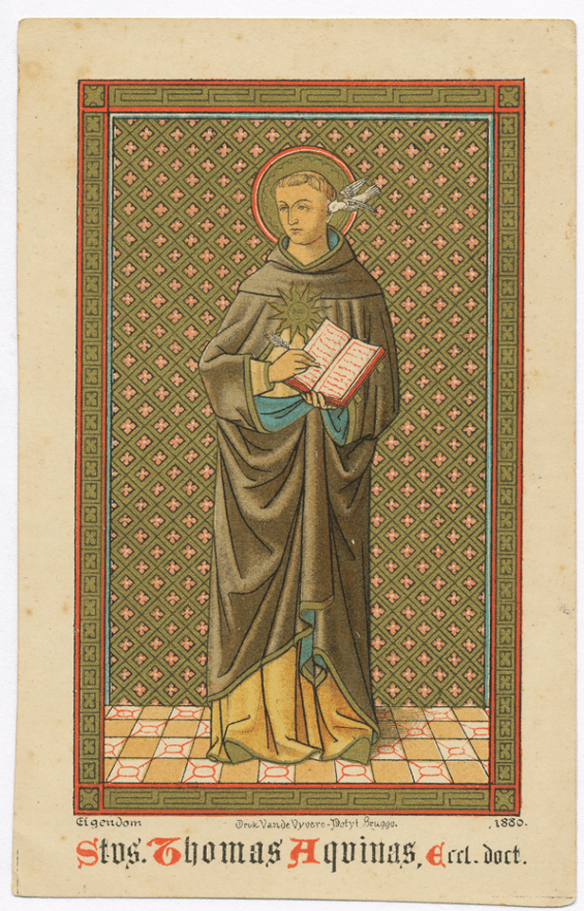
One of the greatest philosophers of the Middle Ages. Yet on his deathbed, this intensely popular teacher and lecturer, who had lived in the cosmopolitan environments of Paris, Cologne and Naples, was said to give the innocent final confession of a child. Known in his lifetime as “The Angelic Doctor”, Thomas lived through his higher mind, taking intense pleasure in intellectual pursuits. Because he was an excellent teacher, able to clarify the most complicated points of learning, Thomas Aquinas is invoked by students whenever they are presented with a challenging test, a demanding course of studies or difficulty in passing an entrance exam. Thomas was born in his noble family’s castle just outside of Naples, the youngest of four brothers and two sisters. As a child, one of his sisters was killed by lightning while sleeping in the same room as Thomas. He was forever fearful of thunderstorms, he is invoked by those with the same fears for protection against lightning strikes and sudden death. At the age of five Thomas was sent to study to the legendary Monastery of Monte Cassino. Considered the seat of Western Civilization through the dark ages, all manners of the arts and sciences were taught there. By the time Thomas left at the age of thirteen to attend the University of Naples, he was already tutoring his elders in their studies.

While a student in Naples he horrified his noble family by joining the new order of mendicant Friars known as the Dominicans. Instead of begging in the streets with the Dominicans, his parents wanted to see Thomas using his great intellectual gifts to earn a higher ecclesiastical office. His brothers kidnapped him and locked him up in another family home, tempting him with every worldly thing they could think of. When they presented him with a prostitute, Thomas chased her out with a burning brand from the fireplace. After two years of confinement, his family relented and freed him The Dominicans sent Thomas to Cologne, Germany to study with Albert the Great, the most famous teacher of his times. Because of his quiet, kindly manner and his large size, his fellow students labeled him “the dumb ox”. Thomas quietly surpassed every student he ever had and Albert insisted he go to the University of Paris where he was made a teacher and received a doctor’s chair. His writings attracted both the Pope and the King of France who consulted him on matters of state.

In 1272, the Dominicans sent him to Naples to run their school there. It was during the following year that experienced an ecstasy that caused him to suddenly stopped writing his greatest work , Summa Theologica, a tome that consisted of over two million words and he had spent the last seven years on. Compared to his vision, he declared, “all that I have written seems like so much straw.”

Novena to St. Thomas Aquinas
Saint Thomas Aquinas, patron of students and schools, I thank God for the gifts of light and knowledge God bestowed on you, which you used to build up the church in love. I thank God, too, for the wealth and richness of theological teaching you left in your writings. Not only were you a great teacher, you lived a life of virtue and you made holiness the desire of your heart. If I cannot imitate you in the brilliance of your academic pursuits, I can follow you in the humility and charity that marked your life. As Saint Paul said, charity is the greatest gift, and is open to all. Pray for me that I may grow in holiness hand charity. Pray also for Catholic schools and for all students. In particular, please obtain the favor I ask during this novena. (Mention your request). Amen.

Infant of Prague

77b97e63f97a4b724c6a98f404789011

Feast Day: January 14
Patron of: Financial Distress
Quote: “The more you honor me the more I shall bless you.”
Symbols: raised right hand, globe, crown

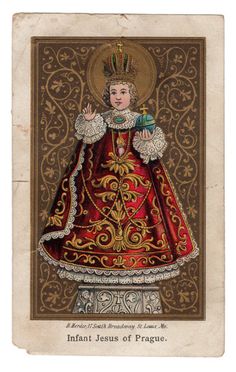
Surrendering oneself to this doll-like image of Christ as a child requires one to cast off the world of adult preoccupations to live in a state of faith and pure belief. Honoring the Infant of Prague is a tradition that is kept in many homes throughout the world as some believe that it guarantees financial stability and abundance. There are several novenas to the Infant of Prague, one reflecting the intensity of an emergency situation, is to be done in one day’s time, the prayer said once every hour for nine hours in a row.
Devotion to Christ as a young child dressed as a king has its roots in the Carmelite order of Spain. According to tradition, in 1555, Saint Teresa of Avila gave a statue of the Christ child, dressed in actual royal robes to a noblewoman who was marrying into an aristocratic family in Bohemia. Taking it with her to what is now the city of Prague, her daughter, the Princess Polysena inherited it. In 1623, Princess Polysenia was widowed and chose to devote the rest of her life to charitable causes. When she saw the need that the poverty stricken Carmelite order had, she donated the statue to them, saying, “I give you my dearest possession. As long as you venerate this image, you will not lack anything.” The monks credited this image with the immediate upturn of their fortunes. When they were forced out of their monastery due to a war in 1631, they left the statue behind and the invading army threw it in a rubbish heap. Within seven years the Carmelites were back in their monastery in Prague, desperately attempting to rebuild it. One monk, Father Cyril, who had a particularly strong devotion to the Divine Infant found the little wax statue among the rubble. The only damage done to the statue was its crushed hands.
It was decided that the scarce funds the community had should go to more practical things than the repair of a statue. As the monks struggled to rebuild their former home and church, Father Cyril heard the words: “Have pity on me and I will have pity on you. Give me my hands and I shall give you peace.” After the statue was repaired, the monks again displayed it in the main church. As the city of Prague suffered an epidemic, parishioners began invoking the little statue for aid. The quick answer to their prayers brought many in the surrounding region to seek help. Gradually, the devotion spread to many other countries. Today, the church in Prague built to hold the statue, Our Lady of Victory, is a site of pilgrimage with visitors from all over the world paying their respects to the Divine Infant.

Nine Day Novena to the Infant of Prague

O Infant Jesus, I run to You, begging You through Your Holy Mother to save me in this need (you may name it here), for I truly and firmly believe that Your Divinity can defend me. Full of trust I hope in You to obtain Your holy grace. I love You with all my heart, I am painfully sorry for my sins and on my knees I beg You, o Little Jesus, to free me from them. My resolution is to improve and never more to offend You. Therefore, I offer myself to You, ready to suffer everything for You and to serve You faithfully. I will love my neighbour as myself from my heart for the love of You. O Little Jesus, I adore You, o Mighty Child, I implore You, save me in this need (you can mention it here), that I may enjoy You eternally, with Mary and Joseph see You and with all the angels adore You.
Amen

Nine Hour Devotion to the Infant of Prague

O Jesus, Who has said, ask and you shall receive, seek and you shall find, knock and it shall be opened to you, through the intercession of Mary, Your Most Holy Mother, I knock,I seek, I ask that my prayer be granted.

(Make your request)

O Jesus, Who has said, all that you ask of the Father in My Name, He will grant you through the intercession of Mary. Your Most Holy Mother. I humbly and urgently ask Your Father in Your Name that my prayer be granted.

(Make your request)

O Jesus, Who has said, “Heaven and earth shall pass away but My word shall not pass”,
through the intercession of Mary, Your Most Holy Mother, I feel confident that my prayer will be granted.

(Make your request)
Amen
Say this novena nine times in a row once every hour for nine hours in a single day.


The Epiphany of The Lord

IMG_0156“We often make do with looking at the ground: it’s enough to have our health, a little money and a bit of entertainment,” Francis added. “I wonder if we still know how to look up at the sky. Do we know how to dream, to long for God, to expect the newness he brings”—Pope Francis
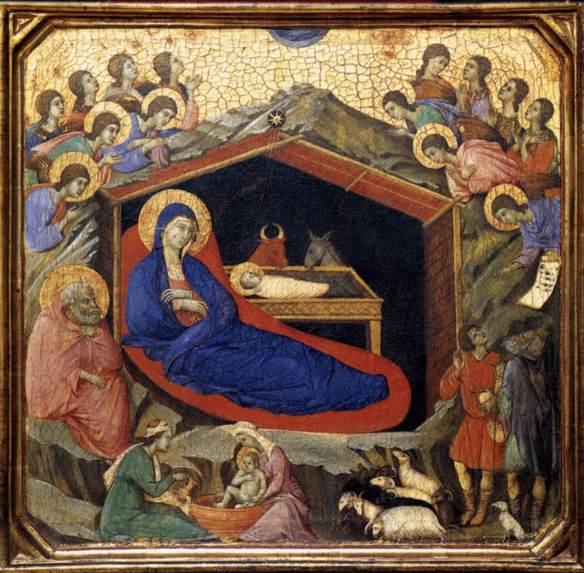
Solemnity of Mary, Mother of God

duccio natale“May the Mother Mary, God’s finest human creation, guard and keep this year, and bring the peace of her Son Jesus to our hearts and our world.”— Pope Francis
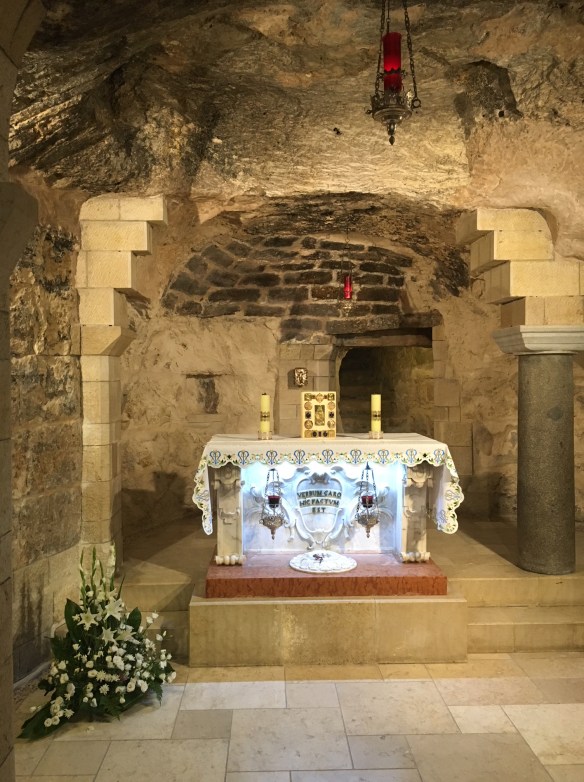
Merry Christmas…

IMG_1195 … from all of us here at novena.com.
Pictured The Church of The Assumption in the Holy Land.

Feast of Our Lady Of Guadalupe

guadalupe

“Am I not your mother?”

This image of Mary is the preeminent cultural icon of Mexico and the American Southwest, cherished by Catholics and non-Catholics alike. Unlike other apparitions of Mary, where she sometimes issues warnings to mankind, in her visitation to the Aztec people, she promised hope, love and comfort at a time when their own way of life had been destroyed.

We invoke Our Lady of Guadalupe anytime we need the wisdom and comfort of a motherly force. In December of 1531, the world of the once great Aztec civilization lay in ruins. The native inhabitants of what would become Mexico City were suffering brutally under the domination of Spanish Colonialists who had first invaded in 1519. Within two short years the forces of Hernan Cortes, with the help of native enemies of the Aztecs had completely overrun and destroyed a dual culture of light and dark, one of gracious cities and blood filled temples. Believing that their superiority and way of life depended on feeding their gods human sacrifices, the Aztecs routinely invaded neighboring tribes, sacrificing tens of thousands of captives a week. Gradually, the images of their own gods, particularly the female ones, took on more monstrous and grotesque features. The Spanish responded to these sacred sites by wreaking havoc and destruction upon them. Within ten years the remaining Aztec residents were heart-sick, depressed and dying off.

On December 9, 1531, and Aztec convert to Catholicism called Juan Diego, was on his way to mass. Distracted by the singing of birds on a hillside, he stopped. He then heard the kindly calling of his name in his native Nahuatl language. He approached the noble Aztec woman n the hill and was stunned at the heightened glow of her surroundings. She introduced herself as the perfect maiden Saint Mary, honorable mother of the true God. She asked him to go to the bishop and request a temple be built to her on the hill. She added, “I am the compassionate mother of you and your people, here in this land and of all the people who love me, search for me and confide in me…” After a long wait, the bishop told Juan Diego that he needed a sign proving that this was a true appearance of Mary. In subsequent days, when Juan Diego again saw the woman on the hill, he begged her to get someone who the bishop would respect more to deliver her request. She kindly replied that he was the perfect one for her message.

The next day Juan Diego walked another way into town in order to avoid the woman as his uncle was sick and he did not want to waste any time doing her errands. Nonplussed, she came down from the other side of the hill to meet him. Flustered, he told her he had to tend to his uncle and had no time to wait for the bishop who did not believe him anyway. The woman assured him that his uncle was already well and then told him to gather roses among the rocks. This being winter he was amazed at how many roses were in full bloom. The woman arranged the roses in his cloak and again sent him off to the bishop. When he was finally granted this audience, it was the bishop’s turn to gasp in amazement.

As Juan Diego unwrapped his cloak of roses, there imprinted on his cloak was the exact image of the lady on the hill. The bishop fell to his knees and begged Juan’s forgiveness. Today, tens of millions of pilgrims flock to Mexico City to see this original cloth which is in the cathedral named after this apparition of Mary, Our Lady of Guadalupe. The Virgin Mary appears to each visionary as a member of their own culture. This image of a kindly, loving mother figure so impressed the native people of Mexico, that thousands of them came to be baptized within the first few months of the cloth being put on display.

Novena

Our Lady of Guadalupe, according to your message in Mexico I venerate you as “the Virgin Mother Of the true God for whom we live, the Creator of all the world, maker of heaven and earth.” In spirit I kneel before your most holy image which you miraculously imprinted upon the cloak of the Indian Juan Diego. And with the faith of the countless numbers of pilgrims who visit your shrine, I beg you for this favor: (mention your request).

Remember, O Immaculate Virgin, the words you spoke to your devout client, “I am a merciful Mother to you and to all your people who love me and trust in me and invoke my help. I listen to their lamentations and solace all their sorrows and their sufferings.” I beg you to be a merciful Mother to me, because I sincerely love you and trust in you and invoke your help. I entreat you, Our Lady of Guadalupe, to grant my request, if this should be the will of God, in order that I may bear witness to your love, your compassion, your help and protection. Do not forsake me in my needs. Amen. Our Lady of Guadalupe, pray for us.

Our Lady of The Rosary

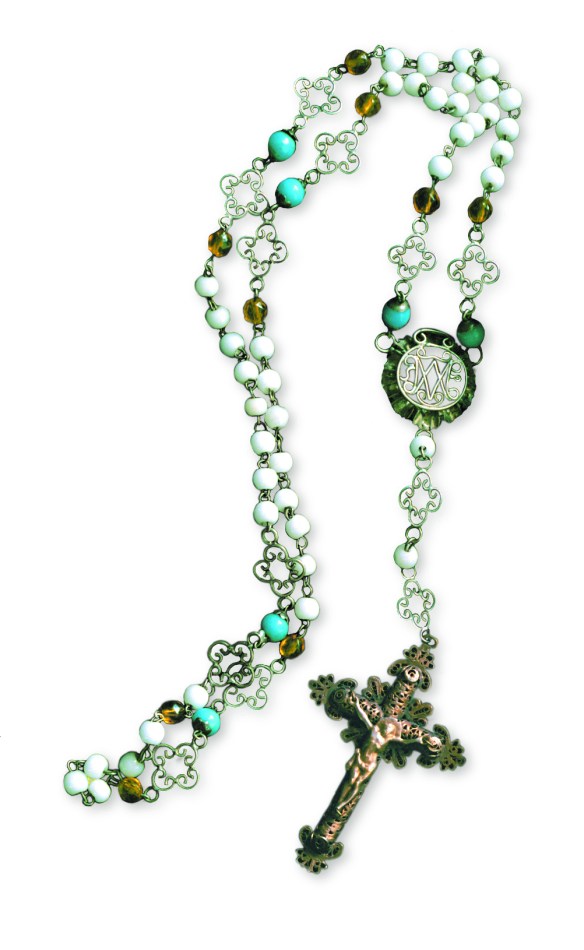
rosary silo whiteIn many of her apparitions, particularly those of the twentieth century, the Virgin Mary has implored all of humanity to say the Rosary in order to change the hearts of humankind. Why the insistence on this repetitive prayer?

The world’s most ancient religions have used repetitive prayer to raise followers’ mental states to a more mystical plane. The practice of counting prayers with stones goes back thousands of years before Christ. The earliest Christian monks retired from the world repeating a simple prayer over and over, “Lord Jesus Christ, Son of God, have mercy upon me.” Medieval monks reported entering an altered state where they saw a powerful light around them after repeating this prayer for hours in a day. Even if one has no feeling for the words in the prayer, it is a starting point to empty the clutter of the material world out of the mind. Scientific research on individuals who habitually chant mantras or repeat prayers documented that these subjects had lower stress levels, higher immune systems, less frequent insomnia, and lower blood pressure than the average population. They also had a calmer reaction to stressful situations and were much less apt to react in a violent or paranoid manner.

Medieval people loved Mary. The Hail Mary was developed from the scriptural greetings of the angel Gabriel in Luke’s Gospel. Like the Our Father, this was a simple prayer, easy for the uneducated laity to remember. Repeating these prayers several times brought one into a heightened state of grace. Eventually, the monks taught the great events of Jesus Christ’s life through the Rosary by developing a ritualistic, formulaic series of prayers that was accessible to the masses. The method of using prayer beads to count one’s prayers goes back to the earliest monks. The Rosary, a series of fifty beads divided up into tens separated by an individual one, has evolved from the Middle Ages. The directions for saying the Rosary are very simple: for each bead in the decade one says a Hail Mary, for each separating bead an Our Father is said. On each decade while one is repeating the rote prayer, a scriptural event in the life of Christ is meditated on. On one day the Joyful Mysteries are considered, on another the Sorrowful Mysteries and on another the Glorious Mysteries.

The Joyful Mysteries: The Annunciation (Luke 1:30–33), The Visitation (Luke 1:50–53), The Nativity (Luke 2:10–11), The Presentation (Luke 2:29–32), The Finding in the Temple (Luke 2:48–52). The Sorrowful Mysteries: The Agony in the Garden (Matthew 26:38–39), The Scourging at the Pillar (John 19:1), The Crowning with Thorns (Mark 15:16–17), The Carrying of the Cross (John 19:17), The Crucifixion (John 19: 28–30). The Glorious Mysteries: The Resurrection (Mark 16:6–8), The Ascension (Acts 1:10–11), The Coming of the Holy Spirit (Acts 2:1–4), The Assumption of Mary (Song of Songs 2:3–6), The Coronation of Mary (Luke 1:51–54). Saying five decades of the Rosary takes approximately fifteen to twenty minutes each day. The beads tend to regulate the amount of time one spends concentrating on each mystery.

When Mary requests the world to say the Rosary, she is asking us to review the story of Christ’s life. The act of saying the Rosary is one that pulls the mind out of the material world and brings on a state of calm. Violent feelings and blind hatreds dissipate. The recitation of rote prayers is just a starting point in entering a more spiritual level of thought. In the early thirteenth century Saint Dominic had a vision of the Virgin Mary where she handed him a Rosary and made fifteen promises to those who said it on a daily basis: 1] Whoever shall faithfully serve me by the recitation of the Rosary, shall receive signal graces. 2] I promise my special protection and the greatest graces to all those who shall recite the Rosary. 3] The Rosary shall be a powerful armor against hell, it will destroy vice, decrease sin, and defeat heresies. 4] It will cause virtue and good works to flourish; it will obtain for souls the abundant mercy of God; it will withdraw the hearts of people from the love of the world and its vanities, and will lift them to the desire of eternal things. O, that souls would sanctify themselves by this means. 5] The soul which recommends itself to me by the recitation of the Rosary, shall not perish. 6] Whoever shall recite the Rosary devoutly, applying themselves to the consideration of its Sacred Mysteries, shall never be conquered by misfortune.

God will not chastise them in His justice, they shall not perish by an unprovided death; if they be just, they shall remain in the grace of God, and become worthy of eternal life. 7] Whoever shall have a true devotion for the Rosary shall not die without the Sacraments of the Church. 8] Those who are faithful to recite the Rosary shall have during their life and at their death the light of God and the plentitude of His graces; at the moment of death they shall participate in the merits of the Saints in Paradise. 9] I shall deliver from purgatory those who have been devoted to the Rosary. 10] The faithful children of the Rosary shall merit a high degree of glory in Heaven. 11] You shall obtain all you ask of me by the recitation of the Rosary. 12] All those who propagate the Holy Rosary shall be aided by me in their necessities. 13] I have obtained from my divine Son that all the advocates of the Rosary shall have for intercessors the entire celestial court during their life and the hour of death. 14] All who recite the Rosary are my children, and brothers and sisters of my only Son, Jesus Christ. 15] Devotion of my Rosary is a great sign of predestination.

Feast Days of Mary

January 1  Mary, Mother of God
January 21  Our Lady of Altagracia
January 23  Espousal of the Virgin Mary
January 24  Madonna del Pianto (Our Lady of Tears)
February 2  Purification of Mary
February 11 Our Lady of Lourdes
March 25 The Annuciation
April 25 Our Lady of Good Counsel (at Genazzano)
April 26 Our Lady of Good Counsel (elsewhere)
May 13 Our Lady of Fatima
May 13 Our Lady of the Most Blessed Sacrament
May 24  Mary, Help of Christians
May 31  Mary, Mediatrix of All Graces
May 31 The Visitation
June 9  Mary, Virgin Mother of Grace
June 27  Our Lady of Perpetual Help
July 2  Visitation by Mary to Saint Elizabeth
July 16  Our Lady of Mount Carmel
July 17  Humility of the Blessed Virgin Mary
August 2  Our Lady of the Angels
August 5  Our Lady of the Snow
August 5  Our Lady of the Copacabana
August 13  Our Lady, Refuge of Sinners
August 15  The Assumption into Heaven
August 21  Our Lady of Knock
August 22  Immaculate Heart of Mary
August 22  Queenship of Mary
September 8  Nativity of Mary
September 8  Our Lady of Charity
September 12  Most Holy Name Mary
September 15  Our Lady of Sorrow
September 24  Our Lady of Mercy
September 24  Our Lady of Walsingham
October 1  Holy Protection of the Mother of God
October 7  Our Lady of the Most Holy Rosary
October 11  Maternity of the Blessed Virgin Mary
October 16  Maternity of the Blessed Virgin Mary
November 21  Presentation of Mary at the Temple
December 8  The Immaculate Conception
December 12  Our Lady of Guadalupe
December 18  Expectation of the Blessed Virgin Mary

Moveable Feasts:
Saturday after Ascension Our Lady, Queen of the Apostles Saturday before the last Sunday in August Our Lady, Health of the Sick Saturday after the Feast of Saint Augustine (August 28)  Our Lady of Consolation Saturday before third Sunday of November  Mary, Mother of Divine Providence

St. Frances Xavier Cabrini 1850-1917

mother cabrini

“We must pray without tiring, for the salvation of mankind does not depend on material success; nor on sciences that cloud the intellect. Neither does it depend on arms and human industries, but on Jesus alone.”
Invoked For: Help for Immigrants

The first American citizen to be named a saint, St. Frances Xavier Cabrini never desired to travel to, much less spend her life in her adopted country of the United States of America. Born Maria Francesca Cabrini in northern Italy, she intended to use her schoolteacher’s degree to work as a missionary in China. Suffering through a smallpox epidemic which killed her parents, she was turned down by two convents she attempted to join. When she was finally accepted by one, she was sent to a small town to run an orphanage which was eventually closed. Enthralled by the works of Saint Francis Xavier, the Jesuit Missionary, she took his name and founded an order of nuns, the Missionary Sisters of the Sacred Heart. Many were shocked to see how quickly her new order was approved by the Pope. Instead of granting her wish to continue her namesake’s work in China, Pope Leo XIII told her, “Your China will be the United States.”

At that time 50,000 Italian immigrants lived crammed in a filthy ghetto in New York City. There was no one there to help or intercede for them. Arriving with six other nuns, Mother Cabrini was told to go home by the archbishop of New York. Instead, she moved her nuns into the Italian slums and immediately opened an orphanage. Through her personal tenacity as well as her willingness to live among the poor, Mother Cabrini set an impressive example for those trying to enact social reforms. Gifted with an innate business sense, and due to the great success her order had in caring for the destitute and displaced, Mother Cabrini was able to raise money from all levels of society. Within a few short years the Missionary Sisters of the Sacred Heart had opened orphanages, schools, hospitals and nurse’s homes throughout the United States, Central America, Argentina, Brazil, France, Spain, England and Italy. She became a United States citizen in 1909.

Though she was a tireless worker and an excellent administrator, Mother Cabrini felt the most important part of her day was the time she spent in mediation. Devoted to the Sacred Heart of Jesus, she felt great strength was to be found in humility, obedience and a quiet atmosphere. In her own case, by following the Pope’s orders at the expense of her personal dreams, she found more success in her mission than she could ever imagine was possible. At the time of her death, she had sixty seven foundations and over thirteen hundred missionaries carrying out her work.

Prayer

O loving Savior, infinitely generous, seeking only our interest, from your Sacred Heart, came these words of pleading love: “Come to me all you that labor and are burdened and I will refresh you.” Relying on this promise of your infinite charity, we come to you and in the lowliness of our hearts earnestly beg you to grant us the favor we ask in this novena, (mention your request here) through the intercession of your faithful servant, Saint Frances Xavier Cabrini. Amen.

Saint Martin de Porres

St.Martin de

Feast Day: November 3

Patron of: Peru, barbers, blacks, hairdressers, hoteliers, interracial justice, jurists, those of mixed races, the poor, public health, public schools, racial harmony

Symbols: broom, cat, crucifix, dog, dove

“Compassion, my dear brother, is preferable to cleanliness. Reflect that with a little soap I can easily clean my bed covers but even with a torrent of tears I would never wash from my soul the stain that my harshness toward the unfortunate would create.”

As a mixed-race man born in Peru, Saint Martin de Porres is a representative of three continents; his mother was of African descent, his father was from Spain, and he himself was born in the New World. A highly esteemed healer and friend to all living creatures, Martin is one of the most popular saints in Latin America.

Born in Lima, Peru, Martin was the illegitimate child of a Spanish knight and a freed black woman from Panama, whose family had been African slaves. Dark complected like his mother, he was not legally recognized by his father until he was a teenager. He and his sister shared a poor and neglected childhood, and at the age of twelve, he was apprenticed to a barber so that he might have a trade. In those days, in addition to cutting hair, barbers performed surgery, made medicines, and were much sought out for cures of every ailment.

Deeply religious, it was Martin’s habit to pray as he mixed his herbal healing potions, and it was said that he healed as many with his prayers as with his herbs. He met with great success in his new profession, but in his desire to serve God with childlike humility, he routinely gave all his money to the poor. By the age of fifteen he wanted to become a foreign missionary and decided to enter the Dominican Rosary Convent as a Third Order Tertiary or Lay Brother. He chose to perform the lowliest house chores, all the while meditating on the Passion of Christ, a subject of much fascination for him. As a farm laborer and gardener, Martin developed a deep attunement to nature. Animals flocked to him and he in turn showed them a respect and kindness that bewildered his European brothers.

Since the majority of the Dominican priests were from Spain, they had little experience with people from other cultures. Believing in the superiority of their own civilization, they were basically in the New World to minister to the newly arrived soldiers and merchants from their mother country. During a plague, Martin quietly taught them the true meaning of Christian charity when he volunteered to help out in the infirmary. He ceaselessly nursed African slaves, the native population, and Spanish nobility with the same grace and ardor. Because of the spectacular success of his treatments, he was installed as head of the infirmary, a job he claimed to be unworthy of. One day, when the infirmary was overcrowded with the sick, Martin was told not to admit anyone else. Yet when he found an Indian bleeding to death from a knife wound, he immediately took the man in and treated him. Martin’s Superior chastised him for this open disobedience of his order, and Martin replied, “Forgive my error, and please instruct me, for I did not know that the precept of obedience took precedence over that of charity.” From then on, Martin was given the liberty to follow his own decisions on treating patients. Martin proved to add such a valuable contribution to his religious community that, at the insistence of his prior, racial stipulations were abolished so that he could be made a fully professed brother in the Dominican Order.

As a priest, Martin put his missionary instincts to work, traveling through the city to tend the sick of Lima. He was particularly devoted to improving the lot of the poor and the racially oppressed. Having great practical instincts, he opened hospitals and orphanages, raising money from the newly wealthy Spanish elite. Because of his ability to budget and allocate the charitable donations he was given, Martin was promoted to almoner of the monastery at a time when it was floundering for financial support. He amassed steady donations totaling two thousand dollars per week, an astounding sum at that time, to cover the monastery’s operating expenses as well as, provide food for the hungry. Every day at noon he had the gates of the monastery opened so that he could distribute food to anyone who needed it. Regardless of the number of people waiting, no one was ever turned away. His charity extended to the animal kingdom, and he inaugurated the first shelter for stray cats and dogs. It was his sincere belief that all creatures were equally loved by God so all were deserving of his compassion and servitude–even those of the lowliest order. An example of this belief was evident when the monastery became overrun by mice and rats. The prior ordered poison to be set out to end the infestation. Martin went out to the garden and softly called the rodents out of their hiding places. He reprimanded them for invading the monastery and promised to feed them every day out in the garden if they would stay away from the building. Both sides kept to this agreement, and Saint Martin is still invoked today to prevent infestations of these pests.

If Martin’s great love for animals seemed inexplicable to his Spanish brethren, they grew to accept it as just another proof of his sanctity. He ceaselessly prayed and enjoyed menial tasks because they enabled him to keep his silent union with God. Martin’s wisdom seemed to come from a source deep within him and was much sought after. Archbishops and students of religion came to him for spiritual guidance and direction.

This was no doubt a difficult role for him, since he preferred a life of humility and anonymity. But with such mystical gifts, he could not remain overlooked. In the chapel, he would go so deeply into meditation that he would levitate off the ground. His intuitive abilities enabled him to read minds and slip through locked doors. Like other mystical saints, he was gifted with bilocation, the ability to be in two places at once, transcending all laws of time and space. Spanish traders who knew him from Lima reported meeting him in the Philippines and Japan. An African slave who Martin treated in Peru told Martin that he was extremely happy to see him again and asked how his voyage was. When he was told by another brother that Martin had never left Lima in his life, the slave vehemently dsagreed. He insisted that Martin had come to the slaves in the hull of the boats as they were transported in irons, offering consolation and comfort. By the time of his death from a high fever, Martin de Porres was a great celebrity in Lima.

The poor considered him a folk hero and called him The Father of Charity, and he was honored by the upper classes for his good works and ability as a healer. His funeral was open to the entire city and was attended by noblemen, ex-slaves, and religious authorities whom he had served and advised with equal respect in life. After his death, Martin maintained the love of the Peruvian people, and his cult is particularly strong in South America. In art, Saint Martin de Porres is depicted in a Dominican habit with a broom, little animals at his feet as a reminder of the life of humility he led, doing menial work, his love for all of God’s creatures evident. The dove of the Holy Spirit is also present, stressing the divine wisdom Martin had. He carries a cross because of his devotion to Christ’s Passion. Since Martin was of mixed race, he is the patron of racial harmony. Because he began his life as a barber, barbers and hairdressers claim him. He is the patron of jurists because so many important people came to him for advice.

Prayer to Saint Martin de Porres
To you Saint Martin de Porres we prayerfully lift up our hearts filled with serene confidence and devotion. Mindful of your unbounded and helpful charity to all levels of society and also of your meekness and humility of
heart, we offer our petitions to you. [state request here] Pour out upon our families the precious gifts of your solicitous and generous intercession. Show to the people of every race and color the paths of unity and of justice. Implore from our Father in heaven the coming of His kingdom, so that through mutual benevolence in God men may increase the fruits of grace and merit the rewards of eternal life. Amen.