Unknown's avatar

About sandra dipasqua

graphic designer

Novena for April

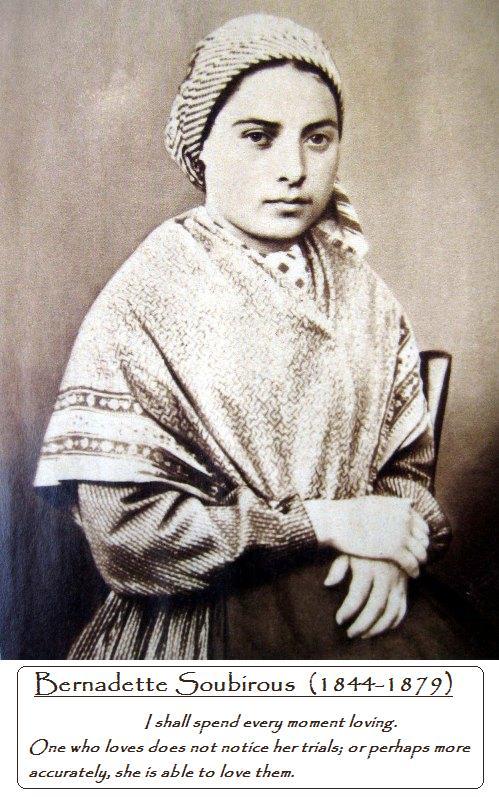
Novena Prayer to Saint Bernadette

Feast Day: April 16

Patron of: Illness, Sick People, Shepherds, Shepherdesses, People ridiculed for piety; Lourdes, France

Dear Saint Bernadette,

Chosen by Almighty God as a channel of His Graces and Blessings, and through your humble obedience to the requests of Our Blessed Mother, Mary, you gained for us the miraculous waters of spiritual and physical healing.

We implore you to listen to our pleading prayers that we may be healed of our Spiritual and physical imperfections.
Place our petitions in the Hands of our Holy Mother, Mary, so that she may place them at the feet of her beloved Son, Our Lord and Savior Jesus Christ, that he may look on us with mercy and compassion: (Make Petition)

Help, O Dear Saint Bernadette to follow your example, so that irrespective of our own pain and suffering we may always be mindful of the needs of others, especially those whose sufferings are greater than ours.
As we await the Mercy of God, remind us to offer up our pain and suffering for the conversion of sinners, and in reparation for the sins and blasphemies of mankind.

Pray for Saint Bernadette, that like you, we may always be obedient to the will of Our Heavenly Father, and that through our prayers and humility we may bring consolation to the Most Sacred Heart of Jesus and the Immaculate Heart of Mary that have been so grievously wounded by our sins.
Holy Saint Bernadette of Lourdes, Pray for us.

Amen

Dining With the Saints

Image

A Simple Ricotta Cake to Celebrate Easter

When I was a kid, Easter, culinarily speaking, meant Italian ricotta cake. We never made them at home, but purchased a Pastiera, the only-made-at-Easter time version of this cake from Rocco’s bakery on Long Island. The Pastiera contains whole wheat berries, candied fruit, and a beautiful lattice top. Rocco’s version was flavored with  orange flower water and vanilla, aromas that made the shop smell exotic.

This is a fabulous cake and a great Southern Italian tradition. It’s also, as I discovered when I finally decided to bake one myself, quite time consuming. This Easter I’ve decided to play around with the classic recipe, streamlining it, but without losing any of its alluring flavor. It wasn’t as hard as I thought. I did away with the crust and lightened the filling with beaten egg whites. I keep the vanilla and orange flower water flavoring which, for me, really makes this cake special. The resulting recipe, to my amazement, baked up elegant, incredibly fragrant, and almost as light as a soufflé, and this version, I kid you not, takes only 5 to 8 minutes to assemble. You think you don’t have the time or patience to bake a beautiful ricotta cake this Easter? Think again.

Ricotta Cake With Orange Flower Water and Honey

About a tablespoon or so of softened butter to grease the pan

6 extra large eggs

½ cup sugar

½ cup orange blossom honey

A big pinch of salt

1 teaspoon vanilla extract

½ teaspoon orange flower water

The grated zest from 1 large lemon

½ teaspoon freshly grated nutmeg

1 large container of whole milk ricotta (about 30 ounces)

Preheat the oven to 325 degrees

Grease a nine inch spring form pan with the butter.

Separate the eggs, placing the yolks in a food processor and the whites in the bowl of the mixer (either a standing or handheld one).

Add the sugar, honey, salt, vanilla, orange flower water, and lemon zest to the food processor and give it a few good pulses. Now add the ricotta and the nutmeg and process until the mixture is smooth. Pour this into a large bowl.

Whip the egg whites until they achieve the classic stiff peak stage.

Add half the egg whites to the bowl and gently fold them in. Now add the rest of the egg whites and fold until just blended.

Pour this into the greased pan and bake until the cake is browned and puffy and feels fairly firm in the center, about 50 minutes to an hour.

Place the cake on a rack. It’ll immediately deflate a bit, but that’s normal. Let it cool and then remove the rim of the pan.

Dining With the Saints is written by writer and chef Erica De Mane. Visit her at ericademane.com.

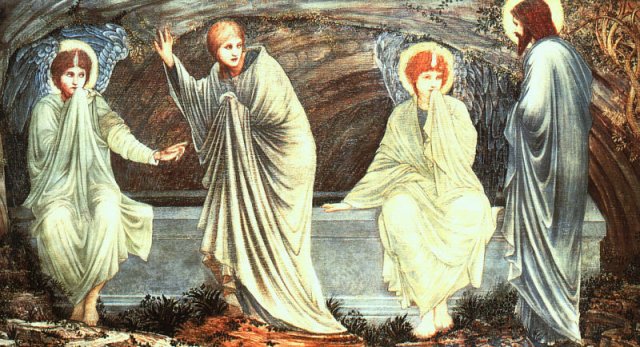
Image: “Morning of the Resurrection” by Edward Burne-Jones  1882

Dining With the Saints

Image

Saint Joseph’s Day

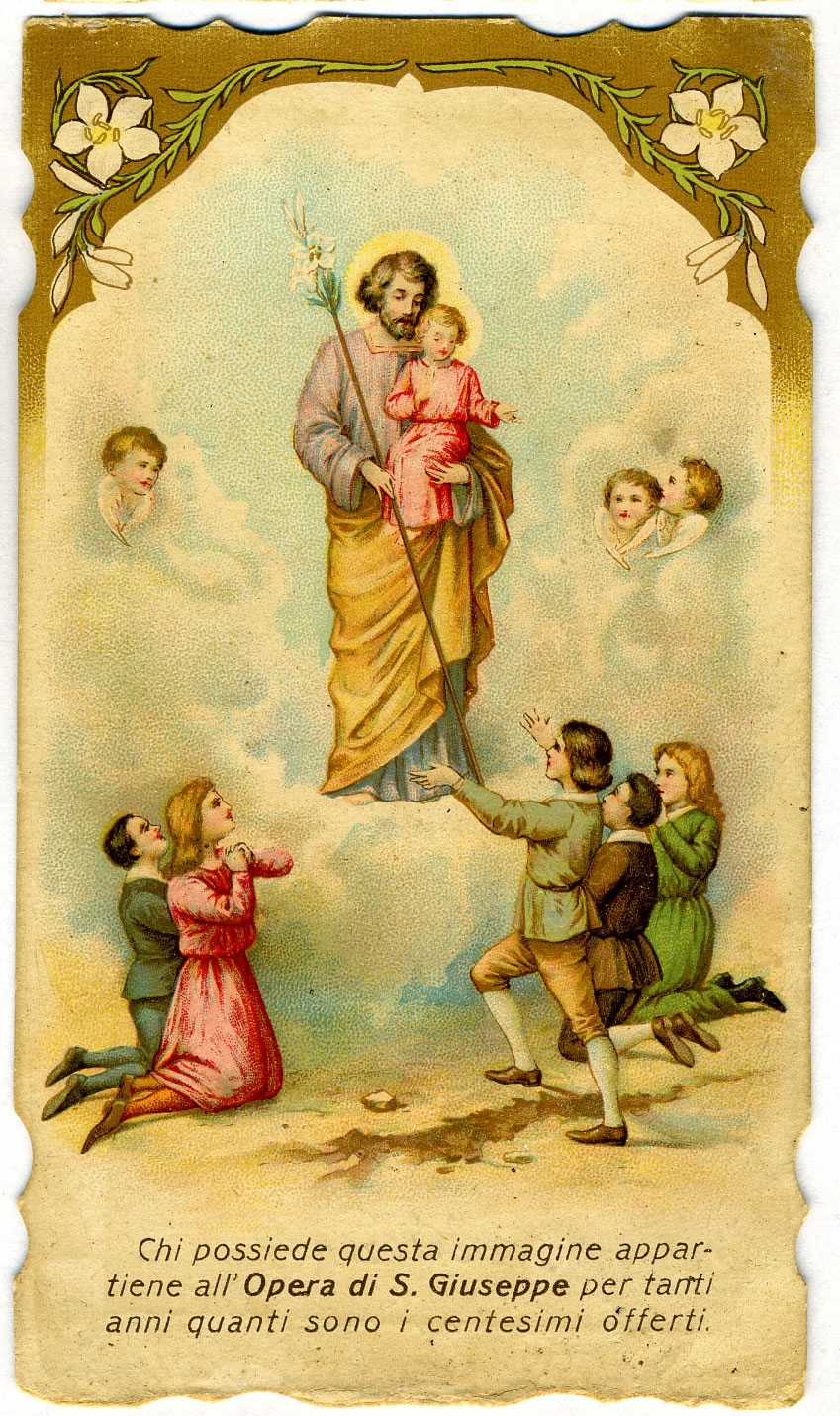
March 19th is Saint Joseph’s feast day. This is a huge holiday for Italians and for Italian-Americans. At one time it was actually an Italian national holiday. As a kid our next door neighbor always made the traditional Neapolitan St. Joseph day fritters called Zeppole di San Guiseppe. They were the most delicious sweet I could imagine and I waited for them every year. She’d hoist a big pot of oil up onto her outdoor barbeque and drop in balls of sweetened dough, cooking them until they were golden and puffy. Then she injected them inside, using a small turkey baster type thing, with a lemon custard. And just to make them richer, each one was topped with a dollop of sweetened ricotta and a cherry. There are many variations on this pastry through the South. In Sicily they’re called sfinci and are usually filled with a cannoli-like filling.

Considering that Saint Joseph’s day falls during Lent, a period of liturgical fasting that coincides with the fasting imposed by nature, this extremely decadent pastry always seemed to me a bit inappropriate for the occasion. That’s Southern Italy for you.

But before anyone gets to bite into one of these treats, everyone sits down to a bowl of bean soup. In Sicily Maccu di San Guiseppe, a soup made from dried favas, chick peas, and chestnuts is one of the bean dishes served, and many families cook up large pots of pasta e fagioli, serving it to anyone who happens to drop by. Here’s my version of an old pasta e fagioli recipe from around Naples. It’s made with a home-made, eggless pasta called lagane and chick peas flavored with hot chilis, parsley and garlic. It’s a beautiful way to celebrate the Feast of Saint Joseph.

Lagane e Ceci

(Serves 4)

For the lagane:

1 teaspoon salt
3/4 cup warm water
2 cups fine durum wheat flour

For the sauce:

1 cup dried chickpeas, soaked overnight in cool water to cover
1 bay leaf, fresh if possible
Extra-virgin olive oil
Salt
1 small onion, cut into small dice
2 garlic cloves, thinly sliced
1/2 small, fresh red peperoncino pepper, minced
A sprig of rosemary, the leaves chopped
A splash of dry white wine
A handful of flat-leaf parsley, the leaves lightly chopped
A chunk of firm Caciocavallo cheese (optional)

To cook the chickpeas:

Drain the chickpeas and place them in a large pot. Cover them with cool water by at least 2 inches. Add the bay leaf and turn the heat to high. When the water comes to a boil, lower the heat and let them simmer gently, partially covered, until tender, about 1 1/2 hours, but it really depends on how hard your chic peas are. Some can take longer, so start testing them after about 1 1/2 hours. Add more warm water if needed to keep the chickpeas covered. When they’re tender, season them with salt and a generous drizzle of olive oil, and turn off the heat.

To make the pasta:

Pour the water and the salt into the bowl of a food processor and give it a few pulses. Start adding the flour a little at a time, giving it a few pulses each time to work it in. When the flour is incorporated and everything has formed a slightly sticky ball, dump the dough out onto a lightly floured surface (if the dough seems too dry, drizzle in a tiny bit more warm water and pulse a few more times). Knead until the dough is smooth and shiny, about 8 minutes. Wrap the dough in plastic wrap and set it aside to rest for about 1/2 hour.

Cut the dough into 4 parts. Flour the first piece of dough lightly and run it through a hand-cranked pasta machine several times at each setting until you get to the third-to-last setting. The lagane should be a little thicker than standard fettuccine. Do this with each piece of dough. Lay all the pasta sheets out on a floured surface and let them sit to firm up for about 5 minutes. Now cut the sheets into approximately 1/4-inch-wide strips. Cut the strips into 2-inch lengths. Sprinkle the lagane with a little flour and lay them out so that the pieces don’t touch.

To make the sauce:

Drain the chickpeas, saving all their cooking liquid.

Set up a large pot of pasta cooking water and bring it to a boil. Add a generous amount of salt.

In a large skillet, heat 3 tablespoons of olive oil over medium heat. Add the onion, and sauté until softened, about 4 minutes. Add the peperoncino, rosemary, and the garlic, and sauté a minute longer, just to release their fragrances. Add about half of the chickpeas, and sauté them in the oil for about 3 or 4 minutes, letting them turn a little golden. Season with salt. Add the splash of white wine, and let it boil way. Add 1/2 cup of the chickpea cooking water, and let the sauce simmer. You’ll have some chickpeas left over to use for a salad or a side dish (it seems to me if I’m going to take the time to cook dried chickpeas, I might as well make a good amount and use them for different dishes).

Drop the lagane into the water and cook until al dente, about 3 minutes. Drain well and add them to the skillet. Toss everything together briefly in the skillet, adding a generous drizzle of fresh olive oil and the parsley. Add more salt if needed. You can also add a little extra ceci cooking liquid if it seems dry (the consistency shouldn’t be too soupy, but a little moisture is the traditional texture). Transfer to a warmed serving bowl, and serve with grated Caciocavallo if desired. Often in Southern Italy dishes that contain hot chilies are serves without cheese, but this is not a hard rule, so just follow your taste. I like my lagane e ceci with a little cheese.

(Dining With the Saints is written by chef and writer Erica De Mane. Check out her blog: EricaDeMane.com)

Lenten Novena

Novena Prayer for the Forty Days of Lent

Father, all-powerful and ever-living God, during the Holy Season of Lent You call us to a closer union with Yourself. Help me to prepare to celebrate the Paschal Mystery with mind and heart renewed. Give me a spirit of loving reverence for You, our Father, and of willing service to my neighbour. As I recall the great events that gave us new life in Christ, bring the image of Your Son to perfection within my soul.

This great season of grace is Your gift to Your family to renew us in spirit. Give me strength to purify my heart, to control my desires, and so to serve You in freedom. Teach me how to live in this passing world with my heart set on the world that will never end.

I ask for the grace to master my sinfulness and conquer my pride. I want to show to those in need Your goodness to me by being kind to all.

Through my observance of Lent, help me to correct my faults and raise my mind to You, and thus grow in holiness that I may deserve the reward of everlasting life.

In your mercy grant me this special favour: (Mention your request).

The days of the life-giving Death and glorious Resurrection of Jesus Christ, Your Son, are approaching. This is the hour when He triumphed over Satan’s pride, the time when we celebrate the great event of our Redemption. The Suffering and Death of Your Son brought life to the whole world, moving our hearts to praise Your glory.

The power of the Cross reveals Your judgement of this world and the kingship of Christ crucified. Father, through His love for us and through His Sufferings, Death and Resurrection, may I gain eternal life with You in heaven.

Amen.


Dining With the Saints in Honor of Carnevale

Image

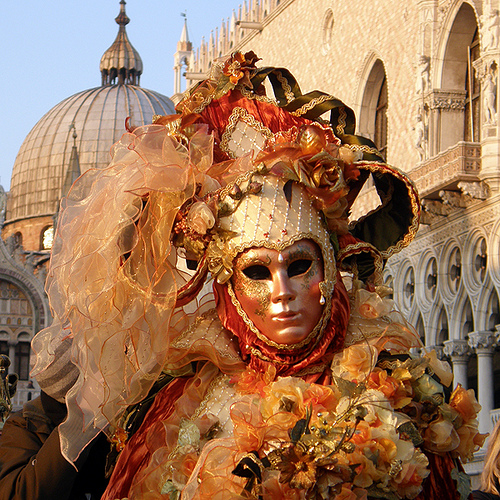
Carnevale literally means ‘good-bye to the flesh’ and this celebratory time of the year, coming right before the restraints of Lent, is when the people of Venice, Italy (and people throughout the Christian world) go to great excesses. Here is their last chance to over eat and carry on with other hedonistic activities until ash Wednesday, when fasting begins. Carnevale also symbolizes the agricultural year put to rest until the spring earth begins again to pour forth its abundance.

Carnevale in Venice is a blaze of color and activity with people drinking prosecco in the streets, stylish balls held on the piazza, fireworks, elaborate floats, and masked processions on the Grand Canal. Masks supposedly give the partying wearer the amnominity to engage in excesses of all types without being recognized.

If you’d like to celebrate Carnevale, Venetian style, an elegant pork dish is really in order. Here’s my version of  a recipe from the Veneto for maile al latte, pork cooked in milk. It’s made with a boneless pork loin so it’s very tender and easy to carve. Serve it with sautéed greens such as spinach or Swiss chard, and a glass or two of Valpolicella.

Maiale al Latte

(Serves six)

An approximately 2 pound boneless pork loin, tied

3 garlic cloves, slivered

10 fresh sage leaves, cut into strips, plus about 5 extra leaves, lightly chopped, for garnish

The zest from 1 small lemon, cut into thin strips

Salt

Freshly ground black pepper

¼ teaspoon grated nutmeg

Extra virgin olive oil

½ quart whole milk, heated to just boiling

Make a bunch of slits all over the pork with a thin knife. Insert the garlic, sage, and lemon strips into the slits. Season the pork well with salt, black pepper, and the nutmeg.

In a high sided casserole, heat about 2 tablespoons of olive oil over medium-high flame. Add the pork and brown it all over. Now pour on the hot milk, reduce the heat to low, and simmer, uncovered, turning the meat occasionally, until it is just cooked through, about an hour. When the pork is done, the milk will have cooked down to a mass of curdles. This is what you want.

Remove the pork to a cutting board and let it sit for a few minutes. Take off the string and slice in thinly. Lay the pork out on a platter. Spoon the milk curds on top, leaving any that have become too browned in the casserole. Garnish with the remaining sage. Serve hot or warm.

Erica De Mane is a writer and chef. Check out her blog: EricaDeMane.com

Aside

Prayer for Toothache to Saint Apollonia

Feast Day: February 9

Patron of: Dentists, Tooth Ache

0 Glorious Apollonia, patron saint of dentistry and refuge to all those suffering from diseases of the teeth, I consecrate myself to thee, beseeching thee to number me among thy clients. Assist me by your intercession with God in my daily work and intercede with Him to obtain for me a happy death. Pray that my heart like thine may be inflamed with the love of Jesus and Mary, through Christ our Lord. Amen. 0 My God, bring me safe through temptation and strengthen me as thou didst our own patron Apollonia, through Christ our Lord. Amen.

Image: Andy Warhol

Novena for January

A Novena for the Solemnity of Mary January 1


Remember, O most gracious Virgin Mary, that never was it known, that anyone who fled to your protection, implored your help, or sought your intercession, was left unaided. Inspired by this confidence, I fly to you, O Virgin of Virgins, my mother. To you I come; before you I stand, sinful and sorrowful. O Mother of the Word Incarnate, despise not my petitions, but in your mercy hear and answer me.  (Mention your request.) Amen.


(Say this novena nine times in a row for nine days in a row.)


Merry Christmas from Dining With the Saints


Lasagna for Christmas Day


Most Italians and Italian-Americans prepare a meatless meal, usually many fish courses, to celebrate La Vigilia, Christmas Eve. My family always made shrimp, calamari, clams, sea bass, and sometimes served caviar. It entailed a huge amount of preparation and we’d all be exhausted when it was over. The next day we’d get up early. My father would slice up a pannetone, make a pot of strong coffee, and we’d open presents. Then we’d all pile into the car and drive over to my grandmother’s house where she’s have a big antipasto plate already on the table. And then she’s bring out a beautiful ragu filled lasagna. This was pure heaven. The lasagna varied from year to year, but I was especially found of one she made with turkey and a creamy béchamel sauce. I never got her recipe but have come up with my own version. It’s pretty close in spirit to my grandmother’s but I’ve included fresh rosemary, an herb I don’t remember her using very much. She would have chosen fresh oregano or basil, but the rosemary gives it a real wintery aroma.

Merry Christmas to you.

Christmas Lasagna with Turkey and Rosemary

(Serves six as a main course)

 Extra virgin olive oil

2 tablespoons unsalted butter

½ cup medium diced pancetta or guanciale

2 sweet Italian pork sausages, casings removed

1 1/2 pounds freshly ground turkey

A generous pinch of sugar

1 large onion, cut into small dice

1 carrot, cut into small dice

2 garlic cloves, thinly sliced

4 sprigs of fresh rosemary, leaves well chopped

1 fresh bay leaf

A few big scrapings of nutmeg

3 ground allspice

Salt

Freshly ground black pepper

½ cup dry white wine

½ cup turkey or chicken broth

1 35 oz. can Italian plum tomatoes, well chopped, with juice

½ cup of whole milk

For the besciamella:

3 tablespoons butter
3 tablespoons all-purpose flour
3 cups whole milk
⅛ teaspoon grated nutmeg
1 fresh bay leaf
Freshly ground black pepper
Salt
A pinch of sugar
⅛ teaspoon hot paprika (I used the Basque piment d’espelette)

Plus:

1 pound of very thinly rolled fresh egg pasta, cut for lasagna, boiled until just tender

1 1/2 cups grated grana padano cheese

In a large casserole fitted with a lid, heat 2 tablespoons of olive oil over medium heat. When hot, the butter and the pancetta and let the pancetta brown. Add the sausage and the turkey, and the pinch of sugar, mashing the meat up with a wooden spoon, and brown it lightly all over. This will probably take about 10 minutes. Add the onion, carrot, garlic, rosemary, bay leaf, nutmeg, and allspice. Season everything with salt and black pepper and sauté until the vegetables are tender and fragrant, about 8 minutes. Add the white wine and let it bubble until almost evaporated. Add the turkey or chicken broth and the tomatoes with their juice. Bring the sauce to a boil and then turn the heat down low, cover the casserole, and simmer for 1 1/2 hours, stirring it occasionally. Now add the milk and simmer for about 10 minutes longer. Turn off the heat and let the ragu sit and settle for about ½ hour. This will allow the flavors to blend and it’ll also make it easier for you to scoop excess fat from the surface. Check for seasoning, adding more salt or pepper, if needed.


To make the besciamella: Melt the butter in a medium-size saucepan over medium heat. Add the flour, whisking it to blend it into the butter. Cook, while continuing to whisk, for about a minute, without letting the mix color. You’ll smell a sweet, lightly toasted flour aroma. Add all the milk, and continue whisking. Add all the seasonings, and continue cooking, whisking often, until the sauce has thickened. This will happen around the time it comes to a boil. When bubbles appear on the surface, turn the heat down a bit, and continue cooking for another minute or so or until the sauce is thick and very smooth.

Preheat the oven to 400 degrees.

In an approximately 8 x 12 inch baking dish, spoon out a thin layer of the ragu. Now put down a layer of the pasta sheets. Spoon on some beciamella, smoothing in out, and sprinkle on a thin layer of grated grana padano. Make another layer of ragu, another one of pasta sheets, more beciamella, and more grated cheese. Spoon of the remaining ragu, put down a last layer of pasta, finish up the beciamella, and then sprinkle on a light layer of grana padano. Give the top a little salt and pepper and a fresh drizzle of olive oil. Cover the dish with aluminum foil and bake for about 20 minutes. Remove the foil, turn the oven up to 425 degrees and bake until the lasagna is bubbling and nicely browned on the top, about 15 minutes longer. Let it rest about 10 minutes before serving.

Erica DeMane is a writer and chef. Find her blog: EricaDeMane.com

Painting: Nativity with St. Francis and St. Lawrence by Caravaggio

Christmas Novena

To be said from December 16 – December 25

Divine Infant,

after the wonders of Your birth in Bethlehem,

You wished to extend Your infinite mercy to the whole world

by calling the Wise Men by heavenly inspiration to Your crib,

which was in this way changed into a royal throne.

You graciously received those holy men

who were obedient to the divine call

and hastened to Your feet.

They recognized and worshipped You as Prince of Peace,

the Redeemer of mankind,

and the very Son of God.

Show us also Your goodness and almighty power.

Enlighten our minds,

strengthen our wills,

and inflame our hearts to know You,

to serve You, and to love You in this life,

that we may merit to find our joy in You

eternally in the life to come.

Jesus, most powerful Child,

I implore You again to help me:

(State your intention here…)

Divine Child,

great omnipotent God,

I implore through Your most Holy Mother’s most powerful intercession,

and through the boundless

mercy of Your omnipotence as God,

for a favorable answer to my prayer during this Novena.

Grant me the grace of possessing You eternally

with Mary and Joseph

and of adoring You with Your holy angels and saints.

Amen.


Say the above novena nine times in a row for nine days in a row

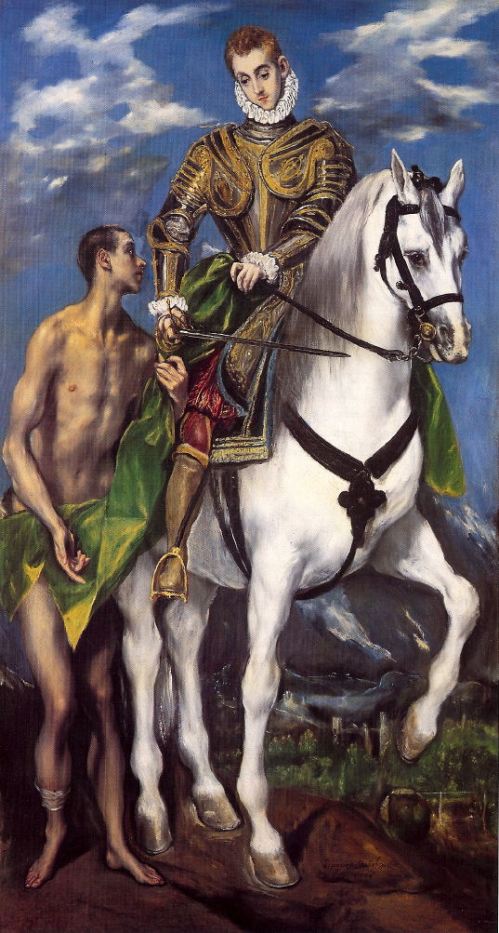
Dining With the Saint in Honor of Saint Martin of Tours

The Feast of St. Martin of Tours, or Martin le Misercordieux, is a time for celebration in many parts of the Catholic world. The feast, celebrated on November 11th, not only coincides with the end of All Soul’s but with the Fall harvest, a time when autumn wheat seeding is completed, when the new wine is just ready to drink, and with the beginning of winter preparations, which include putting up the last of the warm weather vegetables and butchering and preserving of animals. This is a celebration of the earth’s bounty, much like Thanksgiving is in the United States. Goose is part of the traditional St. Martin’s Day festival in many countries since the goose is a symbol of St. Martin himself. Legend has it that as he was hiding from the people who wanted to make him bishop, a honking goose gave away his hiding spot.

Goose used to be a standard Thanksgiving or Christmas offering in many American homes, but cooking a whole goose can be tricky and the amount of fat thrown off I think has put off some of today’s more health conscious cooks. I’ve learned that cooking a goose breast instead of dealing with the whole goose is a fast and leaner way to prepare this delicious meat, and a boneless breast is very easy to slice and serve. My butcher sells boned goose breasts around the holidays. If your local butcher doesn’t generally carry this cut, he might be able to special order one for you.

Stuffed Goose Breast with Calvados and Apples

(serves four as a main course)

1 whole goose breast, boned, with skin

6 large fresh rosemary sprigs, leaves chopped

12 fresh thyme sprigs, leaves chopped

Extra virgin olive oil

¼ cup dry white wine

Salt

Freshly ground black pepper

2 large shallots, diced

4 tart apples, such as Granny Smith, peeled, cored and cut into small cubes

2 big splashes of Calvados (apple brandy)

½ cup dry bread crumbs, not too finely ground

6 big gratings of nutmeg

A handful of flat leaf Italian parsley, leaves chopped

1 large egg

Place the goose breast in a ceramic or glass baking dish. In a small bowl mix together the rosemary, thyme, about ¼ cup olive oil, and the white wine. Season with salt and black pepper and pour this over the goose, turning the breast over in the marinade to coat it well. Refrigerate for at least 3 hours.

Pre-heat the oven the 425 degrees.

In a large sauté pan, heat about 2 tablespoons of olive oil over medium flame. Add the shallots and the apples and sauté until the apples are just tender when poked with a fork, but not falling apart. Add a splash of Calvados and let it bubble for about 30 seconds. Let this cool. Add the bread crumbs, parsley, nutmeg, and the egg. Season with salt and black pepper and mix everything well. Drizzle on a little extra olive oil if it seems dry.

Remove the goose from the marinade and lay it out, skin side down, on a work surface. Press the stuffing out evenly over the goose and roll it up lengthwise, tying it with butcher’s twine in 4 or 5 places. Place the goose back in the roasting pan, skin side up. Add a splash of calvados to the bottom of the pan, stirring it into the remaining marinade. Spoon some of the marinade over the goose. Roast for about 40-45 minutes, or until the temperature in the middle of the breast reaches 145-150 degrees. Let it rest about 10 minutes before carving.


Erica DeMane is a writer and chef.  Read her blog at EricaDemane.com.

Image: “Saint Martin of Tours by El Greco