Unknown's avatar

About sandra dipasqua

graphic designer

Novena for November

Image

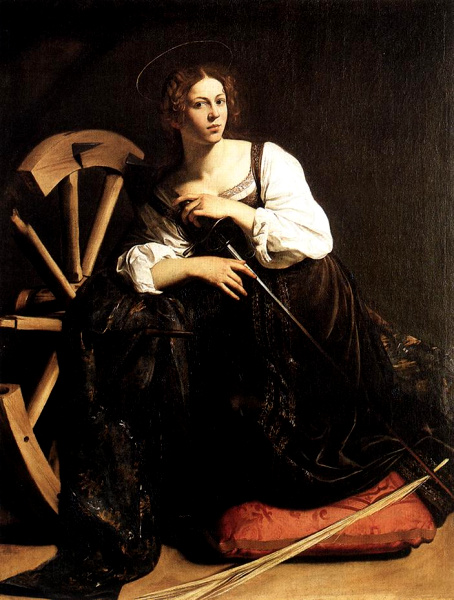
Saint Catherine of Alexandria

290 – 305

Feast Day: November 25

Patron of: Philosophers

Keywords: librarians, mechanics, millers, nurses, philosophers, potters, scholars, students, wheels, unmarried women

Symbols: crown, sword, martyrs palms, wheel

Quote: “If you are ruled by the mind you are king, if by the body you are a slave.”

Brilliant and beautiful, Catherine of Alexandria was a force to be reckoned with. While still in her teens she had mastered philosophy, several languages and medicine. Because of her clarity of mind, she had great poise and self-confidence. One of the Fourteen Heavenly Helpers, the people of the Middle Ages believed she was one of the most powerful of early saints and invoked her for everything. Definite in her beliefs, we call on her for help in our studies or before we begin a major project, as she will clearly guide us.

The daughter of a governor, Catherine lived in a sumptuous palace among beautiful objects and scientific wonders. It is said she told her mother that she refused to marry anyone who was not as brilliant or beautiful as herself. Her mother readily agreed, not realizing that Catherine had discovered Christianity in her philosophical studies and had vowed herself to Christ. While working in her palace she heard the screams of a group of Christians who were being tortured . for refusing to give up their faith. Catherine went straight to the Emperor Maxentius and demanded he stop this persecution. Charmed by Catherine’s beauty, he invited her to debate the leading philosophers in the region to see if she could be persuaded to abandon Christianity by reasonable arguments. Instead of these fifty great scholars winning over the young girl with their scholarly knowledge, Catherine converted them to Christianity. Enraged, the Emperor had all fifty of these great men burned in the public square.

The Emperor then tried to charm Catherine with promises of great riches if she would become his concubine. Reminding him of her promise to  Christ, she refused and was instantly imprisoned. While Maxentius was away on a trip, his wife visited Catherine in prison aand Catherine converted her to Christianity along with her prison guards and the Captain of the Emperor’s Legion. Upon his return to Alexandria, Maxentius was outraged at what he regarded to be the betrayal of his wife and legion. He ordered Catherine to be killed by being rolled on a spiked wheel. Catherine was fastened to the giant wheel and just as it was about to be rolled, her straps broke and she was released as the wheel shattered into hundreds of pieces killing many in the crowd. Catherine was then beheaded by sword. According to legend, angels then transported her body to the top of Mount Sinai, where a monastery and church devoted to Saint Catherine still exists.

St. Catherine is always depicted with a wheel and she is the patron of any occupation that requires a wheel. During the Middle Ages St. Cahterine was viewed as an exemplary example for unmarried women. Therefore, in France and England St. Catherines’s Day is celebrated by unmarried women asking for husbands.

Invoked: to find a husband

Explanation:

Spiked Wheel: her instrument of torture which broke

Sword: used to behead her

Palms: symbol of martyrdom

Novena to St. Catherine of Alexandria

Almighty and eternal God! With lively faith and reverently worshiping Thy divine Majesty, I prostrate myself before Thee and invoke with filial trust Thy supreme bounty and mercy. Illumine the darkness of my intellect with a ray of Thy heavenly light and inflame my heart with the fire of Thy divine love, that I may contemplate the great virtues and merits of Saint Catherine of Alexandria in whose honor I make this novena, and following her example imitate, like her, the life of Thy divine Son.

Moreover, I beseech Thee to grant graciously, through the merits and intercession of this powerful Helper, the petition which through him I humbly place before Thee, devoutly saying, “Thy will be done on earth as it is in heaven.”  (Mention your request here.) Vouchsafe graciously to hear it, if it redounds to Thy greater glory and to the salvation of my soul.

Saint Catherine of Alexandria, pray for us!

Amen.

(Excerpted from the soon to be released app: “Novena: Praying with the Saints” by Barbara Calamari and Sandra DiPasqua).

ALL SOULS DAY NOVEMBER 2

Image

All Souls Day Novena Prayer

O God, the Creator and Redeemer of all the faithful, grant to the souls of thy servants and handmaids departed, the remission of all their sins; that through pious supplications they may obtain the pardon they have always desired. Who livest and reignest with God the Father in the unity of the Holy Ghost, God, world without end. Amen.


Novena for October

Image

Saint Jude Thaddeus

First Century

 Patron of: Impossible Causes

Feast Day: October 28

Invoked: for help in Desperate Times

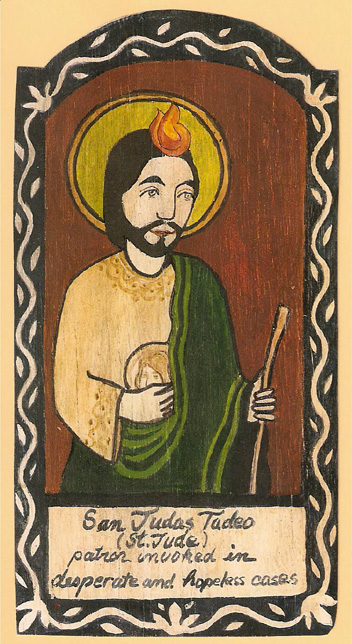
Attributes: Club, Cloth with image of Jesus, Flame over head

 When all else fails, when we are in the most difficult of situations, we turn to Saint Jude, “Helper of the Helpless” and Saint of the Impossible.

 One of the original 12 apostles, Jude is depicted with the flame of knowledge received from the Holy Spirit at the Pentecost burning above his head. Brother of James the Lesser and cousin of Jesus, Jude was one of Christ’s earliest followers.  He earned his title of Patron Saint of Impossible Causes because of a letter he wrote in 60AD to persecuted Christian converts in the East, exhorting them to stay strong in the face of all difficulties. 

 The name Jude means giver of joy and the name Thaddeus means great hearted one and  this saint was said to live up to his name, attracting immense crowds by preaching in an entertaining way, outwitting magicians and local priests.   Abgar, the King of Edessa was quite impressed with Jude and appealed to Jesus cure his leprosy. He sent an artist to draw Christ’s image. The artist was so shaken by the glow in Christ’s eyes, he could not draw. Christ wiped his face with a cloth and the image of his face was transferred to it. Jude brought the cloth back to Abgar and the king rubbed the cloth over his body, curing himself of leprosy. Many depictions and statues of Saint Jude include this cloth with Christ’s image on it. Jude was martyred along with Saint Simon in the city of Samir by being beaten with a club. This club, as well as the palms of martyrdom are also part of his iconography

The cult of Saint Jude all but died out after the Middle Ages because people confused him with Judas Iscariot, the apostle who betrayed Christ. Despite being cited as a great influence by the mystics Saint Bernard of Clairvaux and Saint Bridget of Sweden, Jude was rarely invoked by the faithful for anything. It is said that because of this, he became the saint to call on in the most impossible of situations. So anxious was he to be of help, he would turn heaven and earth to rectify a desperate situation. By the nineteenth century, it became customary to thank the saint for help with answered prayers by taking an ad in the newspaper. This helped to resurrect his popularity and these small “Thank you Saint Jude” ads can be found in many weekly and daily periodicals in present day.


Unfailing Prayer to Saint Jude

Glorious apostle, Saint Jude Thaddeus, I salute you through the Sacred Heart of Jesus. Through his heart I praise and thank God for all the graces he has bestowed upon you. I implore you, through his love, to look upon me with compassion. Do not despise my poor prayer. Do not let my trust be confounded! God has granted to you the privilege of aiding mankind in the most desperate cases. Oh, come to my aid that I may praise the mercies of God! All my life I will be your grateful client until I can thank you in heaven.

(Mention your request here).

Saint Jude, pray for us, and for all who invoke your aid.

(Say this novena nine times in a row for nine days in a row. It is customary to place a small ad in a newspaper or on some public posting thanking Saint Jude after a request is granted).

(Excerpted from the soon to be released Novena App: Praying with the Saints by Barbara Calamari and Sandra DiPasqua).
 

Novena for September

St. Vincent de Paul

1581 – 1660

Feast Day: September 27

Patron of: Abandoned Children

Keywords: charity, orphans, nurses, slaves, convicts, prisoners

Quote: “Go to the poor. You will find God.”

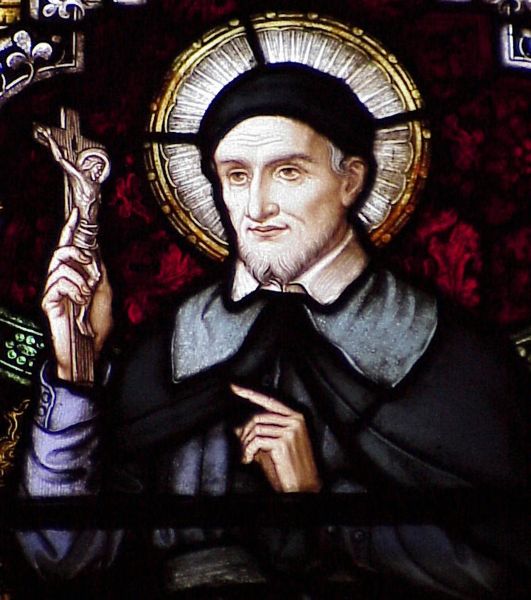
Symbols: cross, sheltering children

Born into a peasant family in Gascony, France, Vincent de Paul was an exceptional student.  Assigned by his order to attend to the spiritual needs of French royals, Vincent’s life as a priest would present him with vast contrasts. While on a journey he was unexpectedly taken prisoner by Turkish pirates and sold into slavery. When he converted one of his slave owners, he was released, and on his return to France, founded numerous charitable organizations dedicated to the needs of prisoners, orphans, and the poor. These organizations were the first of their kind and still thrive today. Because he improved the lives of so many of them, he is especially called on to protect children who have been abandoned by their families.

Vincent de Paul was ordained a priest at the age of nineteen. Staying in Toulouse, he made a voyage to Marseille to claim an inheritance. Upon his return by sea, he was kidnapped by pirates and taken to Tunis. After being enslaved by three different owners, he returned to France in 1607 upon his last owner’s conversion. As a parish priest in Paris, he came in contact with some of the wealthiest and most influential families in France. In 17th century Europe, the poor, the orphaned and the abandoned were all considered of the same invisible class as convicts. Seeing the face of God in these forgotten people, he used his numerous connections with the upper classes to help tend to their needs.  Vincent de Paul introduced a much needed concept of Christian compassion to society by forming the Daughters of Charity. This organization gave pious wealthy women a way of serving the poor. Financial donations poured in, and Vincent started “Servants of the Poor” and “Ladies of the Poor”, each charity devoted to either the sick, the orphaned, or the imprisoned.

Within a few years Vincent’s charities were started in other countries, Italy, Poland, Ireland, Scotland, the Hebrides, and Madagascar each had a mission. He never forgot or gave up on the lot of prisoners, and sent missionaries to ransom and spiritually tend those in Tunis and Algeria. He also dedicated much time and money to alleviating the suffering of convicts in France.

Living during a time of religious wars, Vincent encouraged peace between Protestants and Catholics. Offering refuge to exiled Catholics from England and Ireland, he also ordered his missionaries in the French countryside to respect and help out any needy Protestants. Though he was frequently welcomed by the King and Queen of France, his first devotion was to the poor and he used his royal audiences to obtain state funds for his many missions and hospitals. Vincent de Paul worked tirelessly until his death and it is said that he did more than any other person to relieve the burden of the poor in the seventeenth century.

Image:

Sheltering child – one most in need of protection

Black cassock for simplicity

Crucifix – the face of God is in the poor

NOVENA PRAYER

God you were patient with St. Vincent de Paul as you moved him from

self-centeredness to be centered on you. Help me through his intercession

to grant me this petition and to know that you will grant what I desire in

your own time (your intention here) .  I thank you God for everything and I

will imitate St. Vincent de Paul in growing in holiness through prayer,

participation in the sacraments and service to my neighbor especially the

poor.

Amen.

(Excerpted from the soon to be released ‘Novena App’ by Barbara Calamari and Sandra Di Pasqua).

Dining With the Saints in Honor of Our Lady of Cobre

Nuestra Señora de la Caridad del Cobre

Our Lady of Charity is the patroness of Cuba, her Basilica is situated in the village of El Cobre, near Santiago del Cuba. She may not be as well known in American culture as Our Lady of Guadalupe, but her feast day on September 8th is celebrated where ever Cuban refugees have resettled. You can now find her image in churches around the world. She is a powerful force in Cuban culture, one that has not been eroded by Castro’s long regime.

Her story, I discovered, actually has somewhat of a culinary background. Around 1600, three boys were sent to gather salt needed to preserve the meat of the town’s slaughter house, which supplied food for the workers of the Spanish copper mines near Santiago, Cuba. On their way back from this labor, their frail boat was almost destroyed by a terrible storm. The boys feared for theirs lives. But then suddenly the waters became calm and they saw, in the distance, a white bundle floating on a piece of wood. It soon became apparent that it was a small statue of the Mother Mary holding the infant Jesus in her left arm and a gold cross in her right. Inscribed on the wooden boards below her were the words, “You soy la Virgen de la Caridad” (I am the Virgin of Charity).

So it seems only natural, given the initial reason for the boys’ journey, to celebrate Our Lady of Charity’s feast day with one of Cuba’s most famous and beloved beef dishes, Ropa Vieja. Here’s an easy and very traditional recipe. The meat needs to cook for several hours, but you can, after assembling everything, just put it in the oven and leave it unattended. After some lengthy cooking, the aroma of this stew, with its flavorings of roasted chilies, cumin, garlic, and sherry, will amaze you. Serve it with rice and fried sweet plantains and you’ll have a beautiful Cuban meal in honor of ‘La Caridad’.


Ropa Vieja


Olive oil

Salt

2 pounds flank steak, cut into 2 pieces

1 medium onion, chopped

1 Poblano chili, roasted, peeled, and cut into strips

1 red bell pepper, roasted, peeled, and cut into strips

3 garlic cloves, thinly sliced

1/2 cup dry sherry

1 cup light beef broth

1 small can of chopped tomatoes, with juice

2 bay leaves, fresh if possible

1 1/2 teaspoons ground cumin

2 teaspoons fresh lime juice

A handful of cilantro, lightly chopped

Preheat the oven to 325 degrees.


In a large casserole fitted with a lid, heat 3 tablespoons of olive oil over medium-high heat. Salt the flank steak well on both sides and then brown it in the oil, turning it once. Now add the onion, the Poblano and bell pepper strips, and the garlic, and sauté for a few minutes. Add the sherry and let it boil away. Add the beef broth and the tomatoes, the bay leaves, cumin, and lime juice. Bring to a boil.

Cover the casserole and transfer it to the oven. Let it slow simmer for at least 3 hours (longer is even better). The meat should be very tender and falling apart. Now, using two forks, shred the meat into very thin strips. Add the cilantro and a drizzle of fresh olive oil, mixing it into the sauce. Taste to see if it needs a little more salt.

Erica De Mane is a writer and chef, check out her column at EricaDeMane.com).


Novena for August

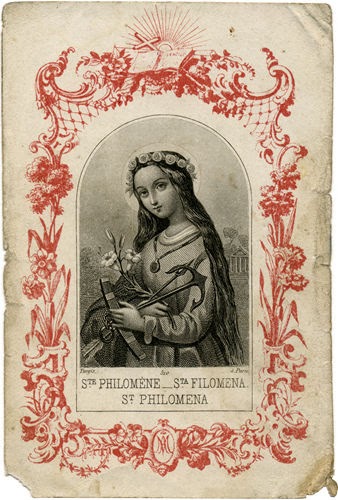
Saint Philomena


291 – 304

Feast Day: August 11

Patron of: the Poor


Keywords: the poor, children, babies, priests, lost causes, youth

Symbols: palms, arrows, anchor, crown


Quote:  “For the love of God!  It might well be that her name is not Philomena, but this Saint has performed many miracles and it is not the name that did them.”   Padre Pio


Never official canonized, and listed in the local Calendar of Saints for only 130 years before being removed, Saint Philomena enjoys a unique and fervid following among common people, popes and saints. Her remains discovered seventeen centuries after her death, Saint Philomena is known as one of the great Wonder Workers of the nineteenth century and is the only person declared a saint based solely on their intercessionary powers. Recognized for her miraculous influence by six popes and ten different saints who have claimed personal experiences through her intervention, she is called upon when things look most hopeless. Discovered by a priest who hailed from a poverty-stricken parish near Naples, she is said to be particularly in tune with the needs of the poor.


In 1802, the bones of a girl between the ages of 13 and 15 were discovered in the Catacombs of Priscilia in Rome, Italy. Three tiles closing off her space hollowed into the rock read, “Peace be with thee, Philomena”. Entombed with the girl was a vial thought to contain blood as well as drawings of a palm, two anchors and three arrows. Because these images were well known symbols used by early Christians to convey martyrdom, it was established that the girl was one of the many virgin martyrs in the early, underground church. In 1805 a young priest from the diocese of Nola (a district near Naples) requested the Vatican to allow him to obtain a relic for the new altar in the Church of Our Lady of Grace in Mugnano. Because he felt a spiritual affinity when he was near her remains, he was allowed to take the relics of the recently discovered virgin martyr back with him. Before her remains were translated to the church, they were put on display in Naples. Almost immediately, there were reports of miraculous healing. When her relics arrived in Mugnano on August 11, 1805, a cult rapidly grew, attributing many miracles to the intercession of the little martyr.


In 1833 a Neapolitan nun, Sister Maria Luisa de Gesu, claimed to have a vision of Philomena who relayed her life story. According to her vision, Philomena was the daughter of the king of Corfu in Greece. When the Emperor Diocletian of Rome threatened her father’s kingdom with war, he traveled to Rome with his family in order to obtain peace. There Philomena discovered Christianity and vowed her virginity to Christ. When the Emperor saw how beautiful she was, he asked to marry her. When the young girl refused him, she was tortured and then drowned with an anchor tied around her neck. When two angels raised her up out of the sea, she was shot with arrows. After this failed to kill her, she was decapitated. According to the nun’s vision, Philomena declared that August 11th, the day her relics were installed in Mugnano, was also the anniversary of her death.


In 1835, when Pauline Jaricot, the well-known and respected French reformer was gravely ill with heart disease, she made a pilgrimage to Mugnano and was completely cured by Philomena. News of this event spread throughout France and Spain and Philomena attracted such notable devotees as Saint Anthony Mary Claret from Spain and Saint John Vianney of France who built his own shrine to the little martyr. Several popes, while still cardinals paid visits to Philomena’s shrine. Pope Pius IX credits her with curing him of epilepsy. Saints such as Francis Xavier Cabrini, Padre Pio and Father Damian are numbered among her devotees. When the Calendar of Saints was reassessed to only list saints who had historical proof of their existence, Philomena lost her place. Her cult is still very strong and pilgrims from around the world visit her shrine in Mugnano.


Symbols:

Crown – of royal birth

Anchor – early Christian symbol of being ‘anchored by Christ’

Palms – martyrdom

Arrows – method of martyrdom


NOVENA PRAYER TO SAINT PHILOMENA


O Faithful Virgin and glorious martyr, St. Philomena, who works so many miracles on behalf of the poor and sorrowing, have pity on me. Thou knowest the multitude and diversity of my needs. Behold me at thy feet, full of misery, but full of hope. I entreat thy charity, O great Saint! Graciously hear me and obtain from God a favorable answer to the request which I now humbly lay before thee.. (mention your intention).

I am firmly convinced that through thy merits, through the scorn, the sufferings and the death thou didst endure, united to the merits of the Passion and death of Jesus, thy Spouse, I shall obtain what I ask of thee, and in the joy of my heart I will bless God, who is admirable in His Saints. Amen.


End with:

Saint Philomena, powerful with God, pray for us!
Saint Philomena, powerful with God, hear our prayers!


(Redacted from the soon to be released “Novena” app by Barbara Calamari and Sandra DiPasqua.)

Novena for July

Saint Ann and Saint Joachim

First Century B.C.

Feast Day: July 26

Patron of : Grandparents

Keywords: child rearing, childless people, fathers, family crisis, infertility, mothers, pregnancy

Quote: “O blessed couple, all the world is indebted to you, for it is by your means that it can offer to its Creator the most excellent gift possible, her who is worthy to be Mother of His only Son.”   -St. JohnDamascene

Symbols: two white doves, meeting at the golden gate, teaching the Virgin Mary

Grandparents are the foundation of a family and we invoke Saints Joachim and Ann for strength in every sort of family crisis. As  parents of the Virgin Mary and the grandparents of Jesus Christ, they offer a vast array of earthly experiences relatable to every human being. Infertility, late parenthood, an unmarried pregnant daughter, a grandson who was imprisoned and executed, are all parts of their life together which they accepted with grace and dignity.

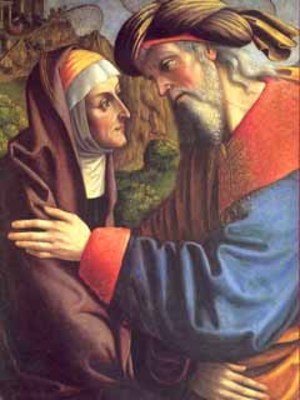
Joachim and Ann are  important as moral examples  rather than truthful historical figures. According to legend, Joachim and Ann were married twenty years and still had not conceived a child. Living inNazareththey were upstanding citizens, always tithing one third of their income to the temple. After many years, their barrenness was considered a form of divine judgment and eventually their contribution to the temple was refused and they were ostracized by their community. In shame, Joachim went off to live with his shepherds. There he was visited by an angel who told him, that Ann was pregnant with a child named Mary who was to be dedicated to the Lord. He was to return home and find his wife, who would be waiting at the golden gate, the entrance to the city. Doing as he was told, his joyful reunion with Ann at the golden gate has become a famous image in art history.

Mary was raised according to the instructions of the angel, she was consecrated to the Lord at infancy and sent off to live in the temple, away from the world, at the age of three. Accepting this great sacrifice of giving up what is most cherished to God, Joachim and Ann acted out an almost impossible act of faith. Though Saint Annwas younger and lived much longer than her husband, she and Joachim are inseparable in sharing the important patronage of grandparents.

Explanation:

A rare image of Joachim as an older father, instructing the Virgin Mary to listen to God.

God is directly speaking to this Father and daughter.

Lily: the purity of Mary.

Novena to Saints Joachim and Ann

Saints Joachim and Ann, grandparents of Jesus and parents of Mary, we seek your intercession. We beg you to direct all our actions to the greater glory of God and the salvation of souls. Strengthen us when we are tempted, console us during our trials, help us when we are in need, be with us in life and in death.

O divine savior, we thank you for having chosen saint Joachim and Ann to be the parents of our Blessed Mother Mary and so to be your beloved grandparents. We place ourselves under their patronage this day. We recommend to them our families, our children, and our grandchildren. Keep them from all spiritual and physical harm. Grant that they may ever grow in greater love of God and others.

Saints Joachim and Ann, we have many great needs. We beg you to intercede for us before the throne of your divine grandson. All of us here have our special intentions, our own special needs, and we pray that through your intercession our prayers may be granted. Amen.

(Mention your request here)

(Excerpted from the new NOVENA APP by Barbara Calamari and Sandra DiPasqua, available soon).

Dining With the Saints in Honor of Saint Rosalia

Image


The Feast Day of Santa Rosalia


Santa Rosalia is the patron Saint of Palermo, Sicily and her feast day on July 15th, known for centuries as Il Festino, was once on of the most elaborate events in all of Europe, stretching out sometimes to eight days of grand Baroque celebration with gloriously decorated guilt chariots, fireworks, and a passeggiata of nobility that made the throngs of spectators crazy with excitement. There was no better place to witness this extravaganza than in Palermo itself.

Il Festino, although not as lavish as it once was, is still quite the occasion, lasting two full days, beginning on July13th. The centerpiece of the feast of Santa Rosalia has always been a huge, ornate chariot shaped like a ship and decorated with golden seashells.  A modern and scaled down model of the original chariot, first unveiled in 1701, is still  pulled down Palermo’s main streets by six horses and filled with a forty piece orchestra dressed in pink and purple velvet, all in honor of the Saint the Sicilians have nicknamed La Santuzza, the little saint, the women who in 1624 appeared to a hunter in a vision, after not being seen since 1159, to save Palermo from a devastating plague.

Sicily’s unusual assortment of street food is what occupies the spectators while they wait for the golden chariot of Santa Rosalia to pass by and then the grand finale fireworks show. Small painted carts, some drawn by donkeys, are loaded with roasted fava beans and chick peas, carob pods, salty lupini beans, roasted hazelnuts, fried rice balls known as arancine, anchovies, octopus, and babbaluci, tiny garlic and parsley flavored snails that everyone digs out of their shells with toothpicks.

Sicily’s famous ice cream and sorbetti is also very  much a presence at this feast, offered in traditional flavors such as lemon, jasmine, cinnamon, mandarin, orange flower water, watermelon and cantaloupe. You can also sample Palermo’s famous gelo di melone, a classic cold watermelon gelatin decorated with chocolate, pistachios, almond paste, and candied fruits, a perfect example of the Sicilian’s love of elaborate sweets. I was once served this in a restaurant and it came presented in a pastry shell and decorated with fresh jasmine flowers. Watermelon sorbetto, also flavored with cinnamon, chocolate, and pistachios, and sometimes jasmine water, is a lot easier to make than the gelatin version. Here’s my version. It’s exotic and amazingly refreshing, the perfect way to celebrate the feast of Santa Rosalia, and to help you get through a hot July day. Choose a dark pink, locally grown watermelon for best flavor and color.

Watermelon Sorbetto with Bittersweet Chocolate

(This recipe is from my book The Flavors of Southern Italy, published by John Wiley & Sons)

2/3 cup sugar

½ cup water

1 5 pound piece of ripe watermelon, peeled and cut into chunks

1 teaspoon vanilla extract

1/8 teaspoon ground cinnamon

The grated zest from 1 small lemon

1 egg white, whisked until foamy

A handful of unsalted, shelled pistachios

½ cup bittersweet chocolate chips

Fresh mint sprigs for garnish

In a small saucepan, combine the sugar and the water. Bring it to a boil and let it bubble for about 2 minutes, stirring to dissolve the sugar. Let this cool completely.

Add the watermelon chunks to a food processor a handful at a time, pulsing them to a fairly smooth puree (don’t worry about the seeds). Strain the juice through a fine mesh sieve into a large bowl (help it along by whisking it). Continue until you’ve used up all the watermelon. You should have about 4 ½ cups of juice. Add the sugar syrup, vanilla, cinnamon, lemon zest, and egg white, mixing everything well. Chill the watermelon mixture for several hours, or until very cold.

Now pour it into an ice cream maker and process according to the manufacturer’s instructions until halfway frozen. Add the pistachios and the chocolate and continue freezing until firm. Garnish each serving with a few mint sprigs (or fresh jasmine flowers if you happen to have any).


Dining with the Saints is a monthly feature written by the chef and food writer Erica De Mane. Check out her blog at http://www.ericademane.com

Novena for June

Saint Aloysius Gonzaga

1568–1591

Feast Day: June 21

Patron: AIDS sufferers, AIDS caregivers

Keywords: teenagers, lust, AIDS, pulmonary disease, youth

Quote: “It is better to be a child of God then king of the whole world.”

Symbols: lily, cross, skull, rosary

A duke from the legendary Gonzaga family of Mantua, Aloysius Gonzaga was born to inherit great wealth and to rule alongside the best families of Europe. While still a teenager he defied his powerful father, renouncing his birth rite in order to become a Jesuit novice. Weak in physical health but living a strong interior life, he knew he would not live long. He happily accepted his destiny and put himself into the hands of the Virgin Mary. Despite his fragile constitution, he insisted on caring for plague victims during a particularly virulent outbreak quickly decimating the city of Rome. He fell ill and lingered for months fully knowing his fate. Because his life was cut short at such an early age, and because he understood both the caregiver and patient side of serious illness, he is invoked by those with AIDS as well as those who tend sufferers of that disease. His novena is written by himself, commending his future to the Virgin Mary who he had a strong devotion to.

Though his father wanted him to be a great soldier, Aloysius Gonzaga was always a pious youth. He obediently served as a page in the Florentine court of Lorenzo de Medici and in the more auspicious Spanish noble court. Still, political ambition held no interest for him and he was appalled by the corruption and licentious behavior of the nobility. While in Spain he read a book about Jesuit missionaries in India and decided to join them for foreign missionary work. His father did everything in his power to prevent his son from giving up all his earthly privileges. When it appeared that Aloysius could not be persuaded away from the religious life, his family implored him to at least accept a higher office in the Italian church. Instead, he insisted on his birth rite being transferred to his younger brother and entered the Jesuit house of Sant’ Andrea in Rome as a lowly novice.

The Jesuits found Aloysius too extreme in his devotions and force him to eat better, mix with his fellows more and to distract himself with physical recreation. As the plague swept Rome in 1591, the Jesuits opened their own hospital, forbidding Aloysius from working there due to his fragile physical disposition. As many of his brethren were felled by the illness, Aloysius threw himself into the role of caregiver with all his capabilities. No chore was considered too humble for him to do. He himself fell in March of that year and was given the last rites. He surprised everyone by recovering from that bout. Three months later, he was bedridden with a low grade fever. Though his condition seemed routine, he announced his impending death. Once again he was given the last rites and died during the prayers for the departing.

Because of Aloysius Gonzaga’s personal inner strength at such a young age, he is called upon by teenagers at times of peer pressure. Since he knew exactly wanted to be as a teenager, he is also called upon by the young to help recognize an occupation or state of life.

Symbols:

Lily: purity

Rosary: devotion to Mary

Cross: contemplation

Skull: a contemplative life

Invoked: for help in choosing a state of life; against lust


Prayer Commending Oneself to Mary by Saint Aloysius Gonzaga

O holy Mary, my Mistress, into thy blessed trust and special blessing, into the bosom of thy tender mercy, this day, every day of my life and at the hour of my death, I commend my soul and body; to thee I entrust all my hopes and consolations, all my trials and miseries, my life and the end of my life, that through thy most holy intercession and thy merits, all my actions may be ordered and disposed according to thy will and that of thy divine Son. Amen.

(redacted from the upcoming Novena app by Barbara Calamari and Sandra DiPasqua)

Novena for May

Novena to the Holy Spirit

To be said between Ascension Thursday and Pentecost

(For 2012 Ascension Thursday falls on May 17th)

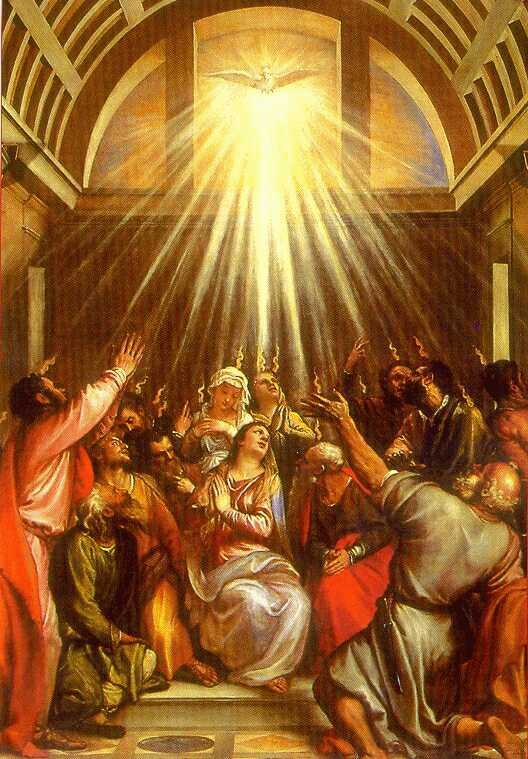
This is the oldest novena, dating back to the very birth of the church and its importance cannot be underestimated. When Christ first appeared to the apostles forty days after the crucifixion, he sent them to Jerusalem to await the Holy Spirit and instructed them to pray for nine days. This novena, written in the Middle Ages, is said for nine days prior to Pentecost, the fiftieth day after Easter, and is still the only novena officially prescribed by the Church. Addressed to the Third Person of the Blessed Trinity, it is a powerful plea for the light, strength, love, and wisdom needed by all. In art, the Holy Spirit is always depicted as a white dove.

Each of the nine days was given a different prayer with a different subject to contemplate. After each daily prayer, the Our Father and Hail Mary are to be recited once each and the Glory Be is to be recited seven times.

The following two prayers are said every day with your novena:

Act of Consecration to the Holy Spirit

On my knees before the great multitude of heavenly witnesses I offer myself, soul and body, to you, Eternal Spirit of God. I adore the brightness of your purity, the unerring keenness of your justice, and the might of your love. You are the strength and light of my soul. In you I live and move and am. I desire never to grieve you by unfaithfulness to grace, and I pray with all my heart to be kept from the smallest sin against you. Mercifully guard my every thought, and grant that I may always watch for your light and listen to your voice and follow your gracious inspirations. I cling to you and give myself to you and ask you, by your compassion, to watch over me in my weakness. Holding the pierced feet of Jesus and looking at his five wounds, and trusting in his precious blood and adoring his opened side and stricken heart, I implore you, adorable Spirit, helper of my infirmity, to keep me in your grace so that I may never sin against you. Give me grace, O Holy Spirit, Spirit of the Father and the Son, to say to you always and everywhere, “Speak, Lord, for your servant is listening.” Amen.

Prayer for the Seven Gifts of the Holy Spirit

O Lord Jesus Christ, who before ascending into heaven promised to send the Holy Spirit to finish your work in the souls of your apostles and disciples, to gran the same Holy Spirit to me that he may perfect in my soul the work of your grace and your love. Grant me the Spirit of Wisdom, that I may despise the perishable things of this world and aspire only after the things that are eternal: the Spirit of Understanding, to enlighten my mind with the light of your divine truth; the Spirit of Counsel, that I may ever choose the surest way of choosing God and gaining heaven; the Spirit of Fortitude, that I may bear my cross with you and that I may overcome with courage all the obstacles that oppose my salvation; the Spirit of Knowledge, that I may know God and know myself and grow perfect in the science of the saints; the Spirit of Piety, that I may find the service of God sweet and amiable; the Spirit of Fear, that I amy be filled with a loving reverence toward God and may dread in any way to displease him. Mark me, dear Lord, with the sign of your true disciples and animate me in all things with your Spirit. Amen.

FIRST DAY: The Holy Spirit

Holy Spirit! Lord of Light!

From thy clear celestial height,

Thy pure beaming radiance give!

Almighty and eternal God, who have vouchsafed to regenerate us by water and the Holy Spirit, and have given us forgiveness of all our sins, vouchsafe to send forth from heaven upon us your sevenfold, Spirit, the Spirit of Wisdom and Understanding, the Spirit of Counsel and Fortitude, the Spirit of Knowledge and Piety, and fill us with the Spirit of Holy Fear. Amen.

SECOND DAY: The Gift of Fear

Come, thou Father of the poor!

Come, with treasures which endure!

Come, thou light of all that live!

Come, O blessed Spirit of Holy Fear, penetrate my inmost heart that I may set you, my Lord and God, before my face forever; help me to shun all things that can offend you, and make me worthy to appear before the pure eyes of your Divine Majesty in heaven, where you llive and reign in the unity of the Blessed Trinity, God without end. Amen.

THIRD DAY: The Gift of Piety

Thou, of all consolers best,

Visiting the troubled breast

Dost refreshing peace bestow.

Come, O Blessed Spirit of Piety, possess my heart; enkindle therein such a love for God that I may find satisfaction only in his service, and for his sake lovingly submit to all legitimate authority. Amen

FOURTH DAY: The Gift of Fortitude

Thou in toil are comfort sweet,

Pleasant coolness in the heat;

Solace in the midst of woe.

Come, O Blessed Spirit of Fortitude, uphold my soul in times of trouble and adversity, sustain my efforts after holiness, strengthen my weaknesses, give me courage against all the assaults of my enemies, that I may never be overcome and separated from you, my God and greatest Good. Amen.

FIFTH DAY: The Gift of Knowledge

Light immortal! Light divine!

Visit thou these hearts of thine,

And our inmost being fill.

Come, O Blessed Spirit of Knowledge, and grant that I may perceive the will of the Father; show me the nothingness of earthly things, that I may realize their vanity and use them only for your glory and my own salvation, looking ever beyond them to you, and your eternal rewards. Amen.

SIXTH DAY: The Gift of Understanding

If thou take thy grace away,

Nothing pure in man will stay,

All his good is turned to ill.

Come, O Spirit of Understanding, and enlighten our minds, that we may know and believe all the mysteries of salvation, and may merit at last to see the eternal light in your light, and in the light of glory to have a clear vision of you and the Father and the Son. Amen.

SEVENTH DAY: The Gift of Counsel

Heal our wounds – our strength renew;

On our dryness pour thy dew;

Wash the stains of guilt away!

Come, O Spirit of Counsel, help and guide me in all my ways, that I may always do your holy will. Incline my heart to that which is good, turn it away from all that is evil, and direct me by the straight path of your commandments to that goal of eternal life for which I long. Amen.

EIGHTH DAY: The Gift of Wisdom

Bend the stubborn heart and will;

Melt the frozen, warm the chill;

Guide the steps that go astray!

Come, O Spirit of Wisdom, and reveal to my soul the mysteries of heavenly things, their exceeding greatness, power, and beauty. Teach me to love them above and beyond all passing joys and satisfactions of the earth. Help me to attain them and possess them forever. Amen.

NINTH DAY: The Fruits of the Holy Spirit

Thou, on those who evermore

Thee confess and thee adore,

In thy sevenfold gifts, descend;

Give them comfort when they die;

Give them life with thee on high;

Give them joy which never ends. Amen.

Come, O Divine Spirit, fill my heart with your heavenly fruits, your charity, joy, peace, patience, benignity, goodness, faith, mildness, and temperance, that I may never weary in the service of God, but by continued faithful submission to your inspiration, may merit to be united eternally with you in the love of the Father and the Son. Amen.

(From the book, “Novena: The Power of Prayer” by Barbara Calamari and Sandra DiPasqua)